
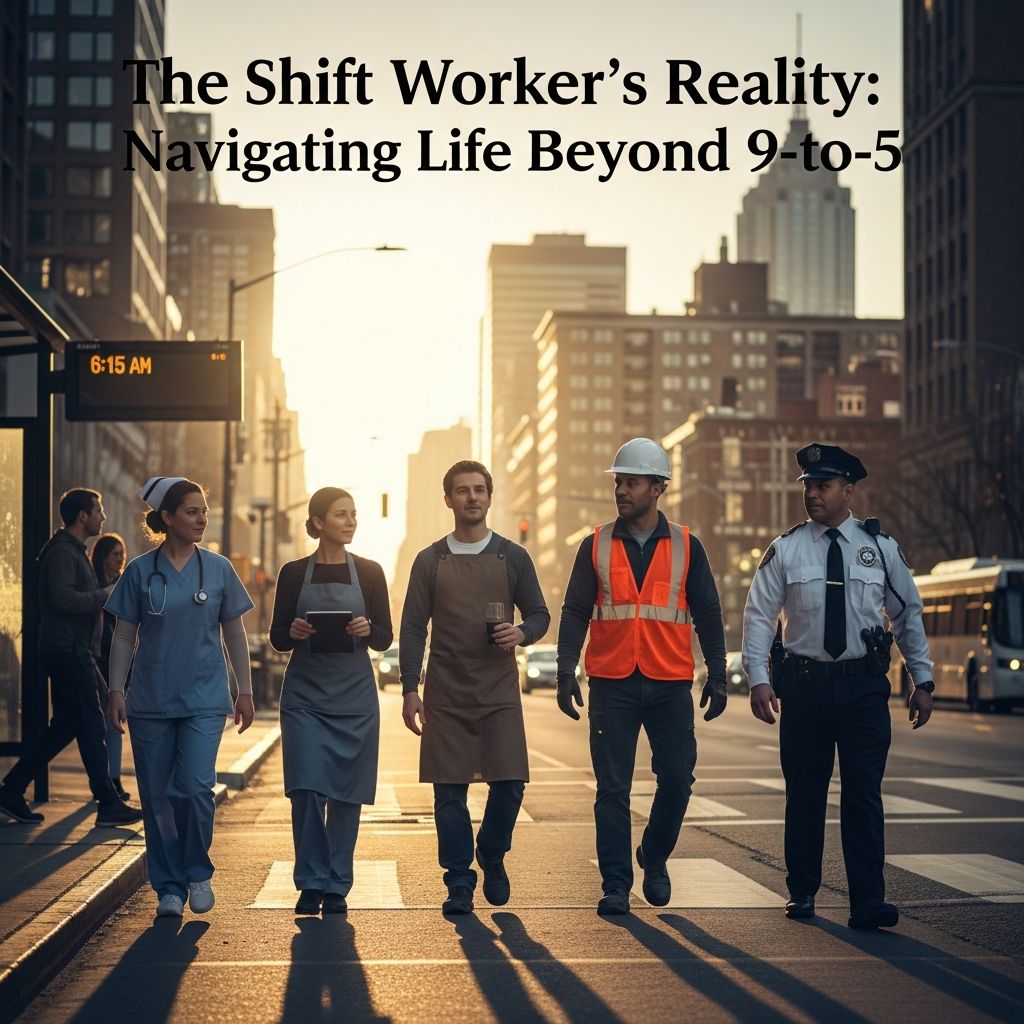
Understanding the World of Non-Traditional Work Schedules
Shift work represents a fundamental departure from the conventional 9-to-5 employment model that has dominated the workforce for decades. Millions of individuals across various industries—from healthcare and manufacturing to retail and security—operate on schedules that place them working when most people sleep, eat dinner, or spend time with family. This unconventional approach to work creates a distinct lifestyle with profound implications for finances, health, relationships, and personal development.
The reality of shift work extends far beyond simply clocking in at different hours. It fundamentally reshapes how workers interact with the world, manage their responsibilities, and navigate the expectations of a society built around daytime activities. Understanding this lifestyle requires examining both the genuine advantages and the substantial challenges that come with working outside traditional hours.
Financial Rewards and Economic Advantages
One of the most immediate and tangible benefits of shift work is the enhanced earning potential. Companies recognize that overnight and non-traditional shifts are less desirable and harder to fill, prompting them to offer financial incentives to workers willing to adapt their schedules. This premium compensation, commonly known as shift differentials, can significantly impact long-term financial stability.
- Higher base pay: Many employers provide 10-20% wage premiums for night shift positions compared to equivalent daytime roles.
- Overtime opportunities: The reduced applicant pool for night shifts creates abundant overtime opportunities, allowing workers to substantially boost their earnings.
- Flexible income boosting: Workers can strategically pick up additional shifts when financial needs arise, providing a safety net during unexpected expenses.
- Long-term financial growth: Over months and years, these earnings differentials accumulate substantially, making shift work an attractive option for those prioritizing financial goals.
The financial advantage of shift work proves particularly valuable for workers managing student loans, saving for major purchases, or building emergency funds. The ability to earn significantly more than peers in comparable daytime positions provides genuine economic mobility for many workers.
Workplace Dynamics and Professional Environment
The atmosphere of a workplace during night hours differs dramatically from daytime operations. Shift workers experience a fundamentally different professional environment characterized by reduced chaos and increased autonomy. The absence of upper management, the quieter overall activity level, and fewer interruptions create conditions that many workers find more conducive to focus and productivity.
Autonomy and reduced supervision emerge as significant workplace benefits. Night shift teams often operate with minimal management presence, requiring workers to demonstrate independence and decision-making capability. This environment fosters self-reliance and can accelerate professional development for those willing to embrace the responsibility.
The camaraderie among night shift colleagues deserves particular attention. Unlike the often-transactional relationships of busy daytime workplaces, night shift teams frequently develop strong bonds and mutual support systems. The shared experience of working unconventional hours creates unique connections between coworkers who understand each other’s challenges intimately.
Career advancement opportunities exist within night shift roles despite misconceptions to the contrary. Demonstrating reliability, strong work ethic, and problem-solving skills during off-hours can actually accelerate career progression. Many organizations operate 24/7 and actively seek night shift workers for supervisory and specialized roles, recognizing that the ability to function independently on night shifts indicates significant professional capability.
Time Management and Daily Life Flexibility
Working nights fundamentally transforms how individuals structure their days and accomplish personal responsibilities. While daytime workers navigate crowded stores, busy appointment schedules, and peak traffic hours, shift workers enjoy a dramatically different reality when conducting personal business.
The practical advantages of daytime availability create measurable quality-of-life improvements:
- Shopping and errands: Completing necessary tasks during uncrowded hours reduces stress and saves substantial time.
- Appointment scheduling: Medical, dental, and administrative appointments typically scheduled during business hours become easier to secure and less disruptive.
- Commute benefits: Traveling to and from work during off-peak hours eliminates rush-hour congestion, reducing commute time and stress considerably.
- Hobby and personal development time: The quiet hours following shift work completion provide opportunities for exercise, creative pursuits, and skill development.
For parents, shift work arrangements create unique possibilities. When partners work opposite shifts, children benefit from individual parental attention and a more relaxed evening environment compared to the rushed dinnertime-homework-bedtime sequence of traditional schedules. This staggered arrangement can reduce childcare costs and increase quality family interactions.
Health Considerations and Physical Wellbeing Challenges
Despite the genuine advantages shift work provides, the health implications represent a serious counterbalance that workers must carefully consider and actively manage. The human body evolved to sleep during darkness and remain active during daylight, a pattern deeply embedded in circadian rhythms—the biological processes governing sleep, hormone production, and countless physiological functions.
Night shift work creates direct conflict with these fundamental biological patterns. Research demonstrates measurable health consequences for those working extended periods outside traditional hours:
- Cardiovascular disease: Night shift workers face a 37% elevated risk of heart attacks compared to daytime workers, driven by sleep deprivation, elevated stress, poor diet choices, and irregular exercise patterns.
- Sleep disorders: Chronic insomnia and Sleep and Circadian Rhythm Disorder (SCRD) affect night shift workers at significantly higher rates, causing persistent fatigue and cognitive impairment.
- Metabolic complications: Disrupted circadian rhythms interfere with the body’s ability to regulate blood sugar, contributing to increased diabetes risk.
- Gastrointestinal issues: Eating at abnormal hours and irregular meal timing contribute to digestive problems and increased gastrointestinal disease risk.[10]
The cumulative effect of extended shift work creates what researchers term “circadian disruption.” The longer individuals maintain shift schedules, the higher their risk of developing chronic health conditions. This risk accumulates over years, making long-term shift work planning essential for health preservation.
Mental Health and Emotional Consequences
Beyond physical health concerns, shift work creates significant mental and emotional challenges rooted in sleep deprivation and social disruption. The connection between adequate sleep and mental health is well-established, and night shift workers face unavoidable sleep challenges regardless of personal discipline or commitment to rest.
Mental health effects commonly reported by shift workers include:
- Depression and mood disorders: Sleep deprivation directly triggers mood disturbances and increases depression risk significantly.
- Cognitive impairment: Memory problems, decreased focus, and reduced decision-making capability accumulate over time.
- Irritability and emotional regulation: The exhaustion accompanying shift work reduces emotional resilience and increases interpersonal conflict risk.
- Social isolation: Missing family dinners, social events, and community activities creates emotional distance and loneliness.
The social isolation component deserves particular emphasis. Shift workers often find themselves operating on different schedules than partners, family members, and friends, creating a persistent sense of disconnection from normal social rhythms. Research indicates that people working night shifts face divorce rates six times higher than those working traditional hours—a sobering statistic reflecting the relationship strain that unconventional schedules impose.
Relationship Dynamics and Family Impact
The interpersonal consequences of shift work extend beyond individual mental health to fundamentally challenge romantic partnerships and family structures. When one partner works nights while another works days, the couple operates on nearly opposite schedules, reducing shared time and creating coordination challenges across all aspects of family life.
Specific relationship challenges include:
- Limited couple time: Coordinating schedules becomes an ongoing negotiation, reducing spontaneous intimacy and shared activities.
- Parenting complexity: While staggered shifts provide individual parent-child time, they complicate family meal times and group activities.
- Sleep proximity issues: Different sleep schedules create bedroom disruption and reduce physical closeness.
- Social event conflicts: Weekend shifts prevent participation in social gatherings and family traditions.
Successfully navigating these challenges requires explicit communication, intentional planning, and sometimes professional counseling support. Couples managing shift work schedules benefit from treating their limited shared time as precious and protecting it from routine obligations.
Sleep Quality and Daytime Fatigue
The relationship between shift work and sleep quality represents perhaps the most universal challenge all night workers encounter. Sleeping during daytime hours contradicts biological programming and environmental conditions—windows allow light, neighbors create noise, and household activities proceed normally around sleeping shift workers.
Practical strategies for improving daytime sleep include:
- Light control: Blackout curtains and sleep masks block daytime light that signals wakefulness to the brain.
- Sound management: White noise machines and quality earplugs mask environmental sounds.
- Sleep scheduling: Maintaining consistent sleep times, even on days off, helps regulate circadian rhythms.
- Pre-sleep routine: Developing relaxation techniques before sleep improves quality regardless of timing.
- Environment optimization: Cooler, dedicated sleep spaces enhance daytime rest quality.
Despite these interventions, most shift workers acknowledge that daytime sleep remains physiologically inferior to nighttime sleep, creating an ongoing fatigue baseline that requires active management.
Social Life and Community Engagement
Operating on a schedule fundamentally different from mainstream society creates predictable social challenges. Most social activities, community events, and recreational opportunities occur during evening and weekend hours when shift workers are either working or recovering from work.
The social impact of shift work includes:
- Event exclusion: Evening gatherings, concerts, and entertainment become inaccessible during work shifts.
- Friendship maintenance: Coordinating social time with friends on traditional schedules requires extraordinary effort.
- Community participation: Volunteering, religious activities, and community organizations typically operate on traditional schedules.
- Hobby limitations: Recreational activities and classes often conflict with shift schedules.
Over time, this social displacement can create feelings of disconnection from normal community life. Shift workers often develop parallel social networks with other shift workers who understand their schedule constraints, creating distinct subcultures within broader communities.
Nutritional Challenges and Dietary Impact
Maintaining proper nutrition while working night shifts presents practical challenges that most workers underestimate. Traditional meal timing aligns with social eating patterns—breakfast in the morning, lunch at midday, dinner in evening. Shift workers often eat at unusual times, in unconventional situations, and without normal social context around eating.
Common nutritional challenges include:
- Irregular meal timing: Eating at inconsistent hours disrupts digestive rhythms and metabolic processes.
- Limited food availability: Late-night food options often emphasize fast food and processed items over nutritious meals.
- Appetite disruption: Sleep deprivation and circadian disruption create unpredictable hunger patterns.
- Beverage choices: Reliance on caffeine for evening alertness can interfere with daytime sleep quality.
Proactive dietary management—preparing healthy meals in advance, packing nutritious snacks, and maintaining hydration—helps shift workers mitigate these challenges, though success requires deliberate planning.
Strategies for Thriving in Shift Work
Successfully managing shift work requires treating it as a deliberate lifestyle choice rather than simply accepting whatever consequences emerge. Workers who develop comprehensive strategies demonstrate markedly better health, relationship, and career outcomes.
Sleep prioritization: Treating sleep as non-negotiable and investing in optimal sleep conditions yields substantial returns. This may include blackout curtains, white noise machines, sleep apps, or consulting sleep specialists.
Routine establishment: Maintaining consistent sleep and activity schedules even on days off helps stabilize circadian rhythms. This consistency signals the body to adapt more effectively to shifted schedules.
Health monitoring: Regular medical check-ups monitoring cardiovascular health, metabolic markers, and mental health allow early intervention when problems develop.
Relationship communication: Explicit discussion with partners about schedule impacts and intentional protection of couple time prevents relationship deterioration. Many couples benefit from treating their limited shared time as special and protecting it from routine obligations.
Community building: Connecting with other shift workers provides understanding and support that friends on traditional schedules cannot offer. Many shift workers maintain close friendships specifically with colleagues who understand their schedule constraints.
Frequently Asked Questions
Q: Do all shift workers experience health problems?
A: While research demonstrates elevated health risks for night shift workers, individual experiences vary considerably based on genetics, lifestyle choices, and how long someone maintains the schedule. Implementing health-protective strategies can significantly reduce negative outcomes.
Q: Can relationships survive when both partners work different shifts?
A: Yes, many couples successfully maintain strong relationships while working opposite shifts. Success requires explicit communication, intentional couple time, and mutual understanding of schedule challenges. Professional counseling can help when strain emerges.
Q: Is shift work better for introverts or extroverts?
A: Both personality types can thrive in shift work for different reasons. Introverts often appreciate the quieter work environment and reduced social demands, while extroverts may struggle with social isolation unless they actively build alternative social networks.
Q: How long can someone safely work night shifts?
A: There’s no universal answer, as individual tolerance varies significantly. However, research suggests that cumulative health risks increase substantially after 10-15 years of continuous shift work. Periodic breaks or schedule rotations can help mitigate long-term effects.
Q: Can sleep supplements help shift workers sleep during the day?
A: While some supplements may provide short-term assistance, environmental factors like light control and sound management typically prove more effective long-term. Consulting healthcare providers before using sleep aids is essential, as dependency can develop.
References
- Benefits, Challenges, and Tips for Surviving the Night Shift — Job Skills. 2024. https://www.jobskills.org/balancing-the-night-shift-life-the-benefits-challenges-and-tips/
- 9 Benefits of Working the Night Shift — LeaderStat. 2024. https://www.leaderstat.com/knowledge-base/9-benefits-of-working-the-night-shift
- Why Work the Night Shift? Benefits, Tips & Success — CoworX Staffing. 2024. https://www.coworxstaffing.com/blog/working-night-shift-tips-benefits/
- 10 Effects of Working Night Shifts (and How To Combat Them) — GetSling. 2024. https://getsling.com/blog/effects-of-working-night-shifts/
- The Health Effects of Night Shift Work: What You Need to Know — Night Club. 2024. https://www.night-club.org/news-posts/health-effects-of-night-shift-work
- 5 Long-Term Health Effects of Shift Work — UCLA Health. 2024. https://www.uclahealth.org/news/article/5-long-term-health-effects-shift-work
- Consequences of Shift Work and Night Work: A Literature Review — Silva, D.I. et al. PLOS Medicine. 2023. https://pmc.ncbi.nlm.nih.gov/articles/PMC10218650/

- Integrated M.A. in Applied Linguistics, University of Hyderabad
- 5+ years in editorial, instructional, SEO, and research-based writing
Sneha is a relationships and lifestyle writer with a strong foundation in applied linguistics and certified training in relationship coaching. She brings over five years of writing experience to theskillvault, crafting thoughtful, research-driven content that empowers readers to build healthier relationships, boost emotional well-being, and embrace holistic living. Her writing and insights reflect the belief that beauty, happiness, and wellness…