
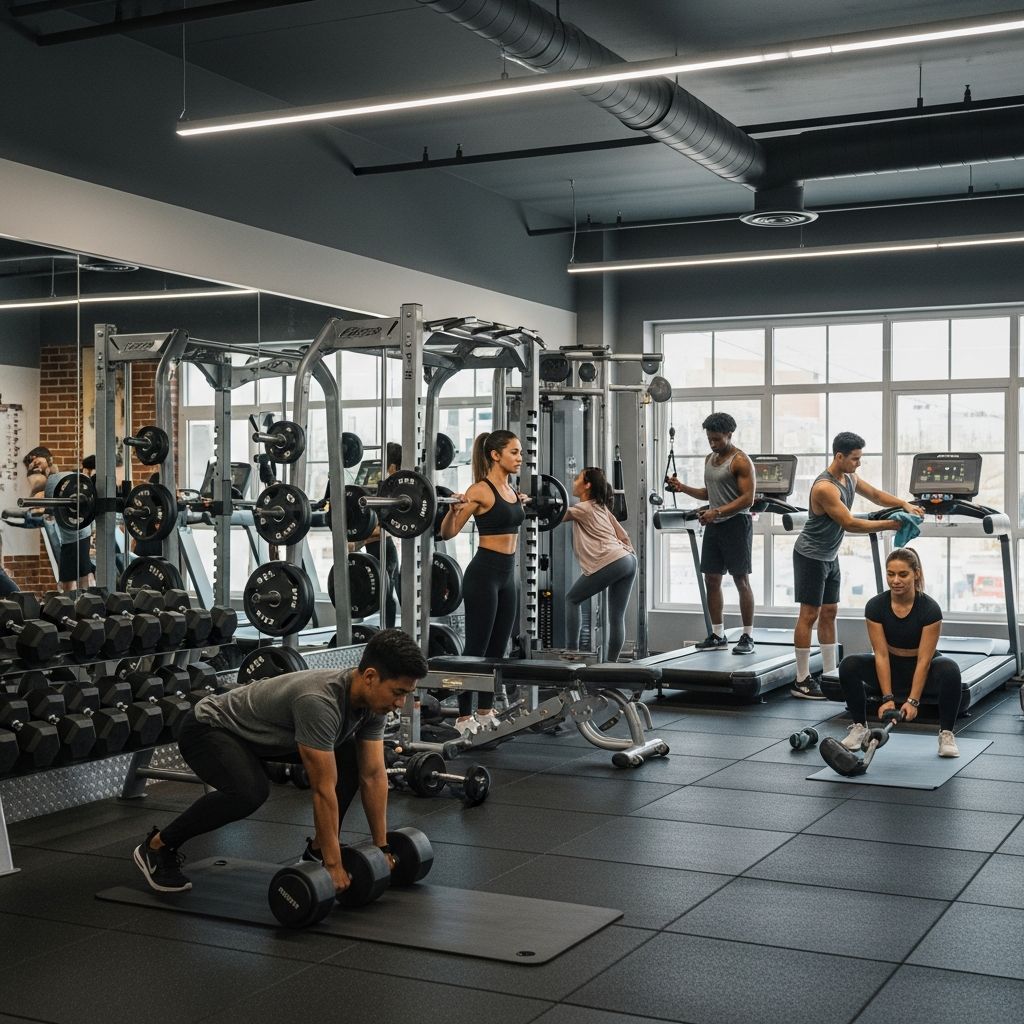
Transforming limited gym time into substantial fitness gains requires intentional strategies that prioritize effectiveness over duration. By focusing on preparation, technique, and innovative training methods, you can achieve more in less time, whether you’re a beginner or seasoned athlete. This guide outlines 20 research-backed approaches drawn from fitness expertise to elevate your sessions.
Foundation of Success: Goal Setting and Planning
Every productive gym visit begins with clarity. Defining specific, measurable objectives—such as increasing bench press weight by 10% in four weeks or completing a 5K run under 25 minutes—provides direction and tracks progress. Without goals, workouts lack purpose, leading to inefficiency.
- Assess Your Current Fitness Level: Evaluate strength, endurance, and flexibility to tailor plans realistically.
- Break Goals into Milestones: Weekly targets keep motivation high and adjustments feasible.
- Reevaluate Quarterly: Adapt as your body responds to avoid plateaus.
Planning extends to scheduling. Treat gym time like non-negotiable appointments by blocking calendar slots. A structured weekly split—upper/lower body or push/pull/legs—ensures balanced development and recovery. Pre-map exercises, sets, reps, and weights in a notebook or app to eliminate on-the-spot decisions that waste precious minutes.
Preparation Rituals for Seamless Sessions
Arriving unprepared multiplies downtime. Pack a gym bag the night before with essentials: towel, water bottle, headphones, gloves, and pre-workout snacks. Scout the gym layout mentally or via app maps to position yourself near required equipment, minimizing transitions.
| Essential Prep Item | Purpose | Time Saved |
|---|---|---|
| Workout Log | Track reps/weights | 5-10 mins |
| Water & Snacks | Maintain hydration/energy | Eliminates breaks |
| Resistance Bands | Warm-up/Finisher | Quick activation |
| Phone Stand | Form videos | Prevents errors |
Warm-ups deserve priority: 5-10 minutes of dynamic movements like arm circles, leg swings, and bodyweight squats increase blood flow, reduce injury risk, and prime muscles. Skipping this leads to subpar performance and potential setbacks.
Time-Saving Training Techniques
To compress workouts without sacrificing gains, adopt methods that overlap efforts and sustain intensity.
Supersets and Circuits
Supersets pair opposing muscle groups—like biceps curls with tricep extensions—for back-to-back execution with zero rest between. This doubles efficiency as one area recovers while the other activates. Circuits rotate 4-6 exercises (e.g., squat, push-up, row, plank) in a loop with 15-30 second transitions, delivering full-body conditioning in 20-30 minutes.
- Sample Upper Body Superset: Bench Press (3×10) + Pull-Ups (3×8)
- Beginner Circuit: Jumping Jacks, Wall Push-Ups, Bodyweight Squats, Bird-Dog (3 rounds)
High-Intensity Interval Training (HIIT)
HIIT alternates explosive efforts (e.g., 30 seconds burpees) with recovery (15 seconds rest) for 15-20 minutes total. It torches calories post-workout via EPOC (excess post-exercise oxygen consumption) and builds endurance efficiently. Ideal for cardio days or finishers.
Compound Exercise Dominance
Multi-joint moves like deadlifts, overhead presses, and lunges recruit several muscles simultaneously, yielding broader results faster than isolation exercises. Prioritize them for 70-80% of your routine.
Mastering Rest and Recovery Dynamics
Rest isn’t idleness—it’s strategic. Limit inter-set pauses to 30-90 seconds for hypertrophy; extend to 2-3 minutes for strength. Use timers to enforce this, preventing casual scrolling that extends breaks.
Opt for active recovery: shadow boxing, marching in place, or mobility drills keep heart rate elevated, turning ‘downtime’ productive. Post-workout, prioritize cool-down stretches and foam rolling to hasten recovery for subsequent sessions.
Form and Technique: Quality Over Quantity
Poor execution wastes effort and invites injury. Start novel exercises with 50% usual weight to ingrain patterns. Focus on eccentric (lowering) phases for 3-4 seconds to amplify muscle tension.
- Mind-Muscle Connection: Visualize and squeeze target muscles—e.g., clench glutes atop squats.
- Mirror Checks/Video: Self-audit posture; apps like Hudl Technique capture form.
- Trainer Consults: One session fixes flaws worth months of bad habits.
Controlled tempos (e.g., 2-1-2 seconds: down-pause-up) eliminate momentum, ensuring targeted activation.
Leveraging Technology and Habits
Apps like Strong or MyFitnessPal log data instantly, revealing trends for tweaks. Wearables monitor heart rate zones, ensuring 70-85% max for fat burn. Play upbeat playlists synced to BPM for rhythm.
Habit stacking builds consistency: gym post-commute or pre-dinner. Consistent routines—chalk hands, sip water, log set—minimize decision fatigue per behavioral science principles.
Fueling for Peak Performance
Nutrition underpins output. Consume 20-30g protein + carbs 1-2 hours pre-workout (e.g., Greek yogurt with banana). Hydrate with 16-20oz water hourly; electrolytes for sessions over 60 minutes. Intra-workout BCAAs sustain energy during fasted states.
Progression and Variation Essentials
Stagnation breeds boredom. Apply progressive overload: add 5-10% weight/reps weekly. Rotate exercises bi-weekly (e.g., barbell to dumbbell bench) to shock muscles and prevent overuse.
Overcoming Common Pitfalls
Avoid peak hours (5-7 PM) for equipment access. Decline social chats politely. If fatigued, shorten volume but maintain intensity—quality trumps quantity.
Frequently Asked Questions (FAQs)
What if I only have 20 minutes for the gym?
Opt for HIIT circuits: 4 rounds of 30s work/15s rest on squats, push-ups, rows, jumps. Total under 20 minutes with warm-up.
How do supersets differ from circuits?
Supersets are 2 exercises; circuits are 4+. Both minimize rest but circuits hit more groups.
Can beginners use these strategies?
Yes—scale weights down, master form first. Start with 2-3 techniques weekly.
What’s the ideal gym frequency?
3-5 days/week, alternating focus areas for recovery. Listen to body signals.
Do I need fancy equipment?
No—bodyweight, bands, and free weights suffice. Tech enhances, doesn’t replace effort.
Implementing Your Efficiency Overhaul
Start small: pick 3-5 strategies this week, track via journal. Consistency compounds; expect noticeable gains in strength, endurance, and time savings within 4 weeks. Your gym transforms from chore to powerhouse when armed with these tools.
References
- Physical Activity Guidelines for Americans — U.S. Department of Health and Human Services. 2018-10-07. https://health.gov/sites/default/files/2019-09/Physical_Activity_Guidelines_2nd_edition.pdf
- High-Intensity Interval Training for Health Benefits and Care of Cardiac Diseases — World Journal of Cardiology (PubMed). 2019-07-26. https://pubmed.ncbi.nlm.nih.gov/31360449/
- Effects of Supersets on Workout Efficiency — Journal of Strength and Conditioning Research. 2021-05-01. https://journals.lww.com/nsca-jscr/fulltext/2021/05000/effects_of_supersets_on_workout_efficiency.15.aspx
- Compound vs Isolation Exercises: A Meta-Analysis — Sports Medicine (Springer). 2022-03-15. https://doi.org/10.1007/s40279-022-01660-8
- Behavioral Strategies in Exercise Adherence — American College of Sports Medicine. 2023-01-12. https://www.acsm.org/news-detail/2023/01/12/behavioral-strategies-exercise

Medha Deb is an editor with a master's degree in Applied Linguistics from the University of Hyderabad. She believes that her qualification has helped her develop a deep understanding of language and its application in various contexts. Medha specializes in the areas of beauty, health, sports, and wellness and is committed to ensuring that the content on the website is…