
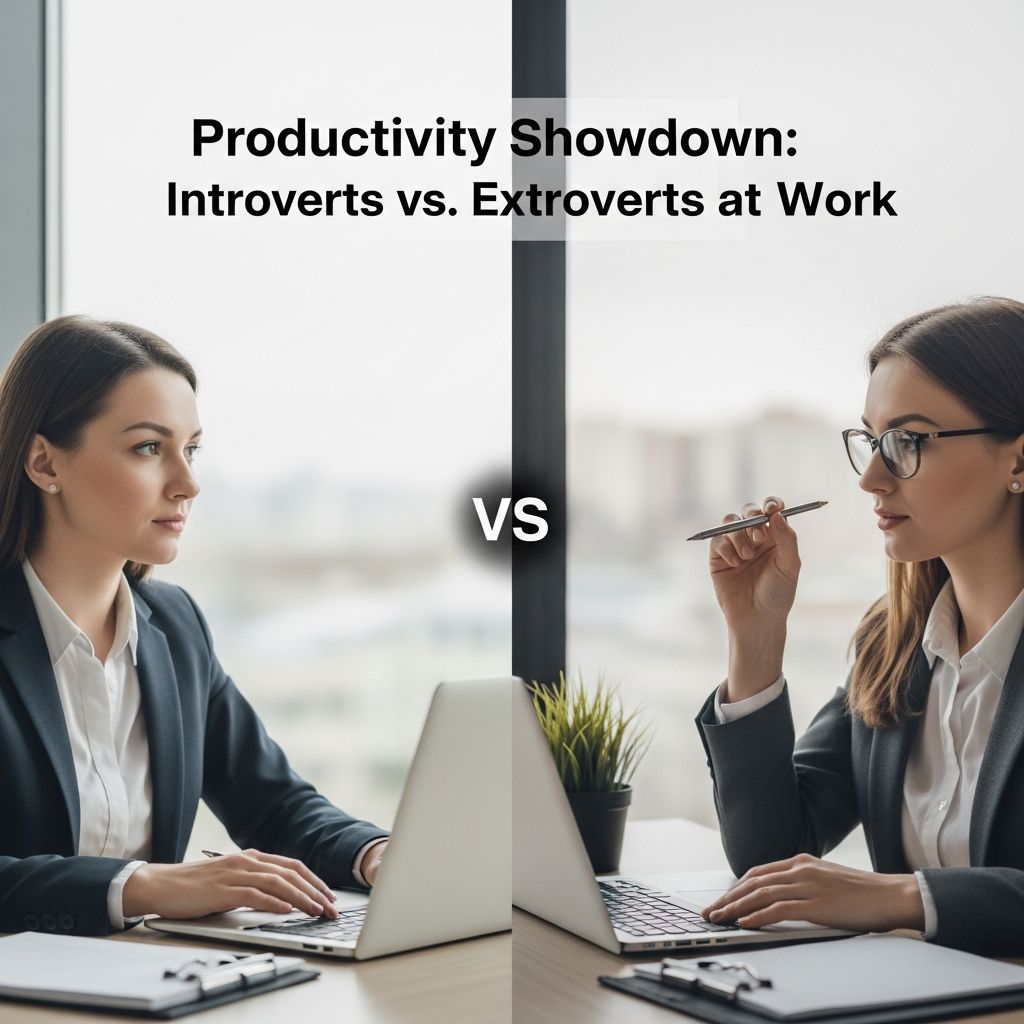
In today’s dynamic work environments, personality plays a pivotal role in determining how individuals approach tasks, collaborate with teams, and achieve results. Introverts, who recharge through solitude, and extroverts, who gain energy from social interactions, bring distinct advantages to the table. Research reveals no clear winner in overall productivity; instead, success hinges on aligning work conditions with innate traits.
Defining Core Personality Traits
Introversion and extroversion represent opposite ends of a spectrum, influencing energy sources, communication styles, and focus levels. Introverts process information deeply in quiet settings, excelling at independent analysis. Extroverts thrive on external stimulation, often leading group efforts with enthusiasm.
Neurological differences underpin these traits. Introverts exhibit heightened sensitivity to dopamine, making solitary work more rewarding, while extroverts seek it through social engagement. Understanding these foundations helps workplaces foster environments where both types flourish.
Strengths of Introverts in Professional Settings
Introverts often outperform in roles demanding concentration and innovation. Studies show they maintain higher productivity during focused, uninterrupted tasks, producing quality work without distractions.
- Deep Focus: Introverts excel in analytical roles, such as data analysis or writing, where sustained attention yields precise outcomes.
- Active Listening: They are perceived as superior listeners, fostering thoughtful team contributions.
- Time Management: Efficient planners, introverts prioritize effectively, often completing tasks ahead of schedule.
However, challenges arise in high-stimulation environments. Noise and constant interruptions impair their cognitive performance more than extroverts.
Extroverts’ Edge in Collaborative Environments
Extroverts shine in dynamic, team-oriented scenarios. Their outgoing nature drives motivation and positive emotions, linking to higher job satisfaction and reward-seeking behavior.
- Social Motivation: They pursue goals energetically, often achieving through networking and persuasion.
- Team Leadership: Natural communicators, extroverts facilitate brainstorming and resolve conflicts swiftly.
- Adaptability: Comfortable in varied settings, they handle sales, presentations, and client interactions adeptly.
Yet, extroverts may falter in solitary tasks, preferring group settings for peak performance.
Remote Work: A Game-Changer for Personality Types
The shift to remote and hybrid models has reshaped productivity landscapes. Introverts report heightened output in home offices, free from office chatter.
| Aspect | Introvert Benefits | Extrovert Challenges |
|---|---|---|
| Environment Control | Customizable quiet spaces boost focus | Lack of social buzz reduces energy |
| Meeting Dynamics | Less overwhelming virtual interactions | Missing non-verbal cues hinders engagement |
| Schedule Flexibility | Aligns with natural energy cycles | Blurred work-life boundaries cause fatigue |
| Visibility | Risk of fading into background | Thrives in structured office returns |
Hybrid models allow introverts remote days for deep work and extroverts office time for collaboration.
Workplace Communication: Key Differences and Impacts
Communication styles diverge significantly, affecting team dynamics and performance. Statistical analyses confirm introverts and extroverts differ in listening, expression, and feedback reception.
- Introverts favor written or one-on-one exchanges, excelling as listeners but less vocal in groups.
- Extroverts dominate verbal discussions, energizing teams but sometimes overlooking quieter input.
These variances influence outcomes: extroverts may score higher in visible performance metrics, while introverts deliver superior independent results.
Environmental Factors Influencing Output
Office design profoundly affects productivity. Open-plan layouts benefit extroverts through interaction but drain introverts via noise.
Research highlights:
- Solitary spaces enhance introvert creativity and efficiency.
- Collaborative zones suit extroverts for idea generation.
- Flexible setups, like quiet pods or adjustable schedules, optimize both.
Distractions hit introverts harder; studies show noise reduces their mental performance significantly.
Performance Metrics: Who Leads?
Empirical data paints a nuanced picture. Introverts demonstrate superior productivity in independent tasks, despite lower scores in group performance evaluations.
Key findings from surveys:
- Both types prefer solo work at times, challenging stereotypes.
- Introverts maintain steady output amid workload changes better than extroverts.
- Extroverts link positive affect to rewards, driving sales-oriented roles.
No personality universally dominates; context determines superiority.
Strategies to Maximize Team Productivity
Organizations thrive by leveraging diversity. Implement tailored approaches:
- Flexible Workspaces: Offer quiet zones and collaborative areas.
- Balanced Scheduling: Alternate remote and in-office days.
- Communication Tools: Use async updates for introverts, live sessions for extroverts.
- Team Composition: Mix personalities for comprehensive problem-solving.
- Training: Educate on traits to reduce bias.
Such measures boost overall output, creativity, and satisfaction.
Challenges and Myths Debunked
Common misconceptions persist. Extroverts aren’t always leaders; introverts like quiet innovators often drive breakthroughs. Introverts face visibility issues remotely, but tools like progress trackers mitigate this.
Self-esteem suffers when extroversion is overvalued, underscoring the need for inclusive cultures.
Frequently Asked Questions (FAQs)
Are introverts more productive than extroverts?
No definitive answer exists; introverts excel in focused, independent work, while extroverts lead in collaborative settings.
How can workplaces support introverts?
Provide quiet spaces, flexible hours, and async communication to minimize distractions.
Do extroverts struggle in remote work?
Yes, they miss social energy, but hybrid models with office access help.
Can ambiverts outperform both?
Ambiverts adapt well, potentially excelling in leadership by blending traits.
What role does personality play in job performance?
It influences communication and environment fit, directly impacting productivity metrics.
By embracing personality diversity, workplaces unlock untapped potential, creating equitable paths to success for all.
References
- Introvert and Extrovert Differences in Workplace Communication and Performance — Scientific Research Publishing. 2023. https://www.scirp.org/journal/paperinformation?paperid=137545
- The Impact of Personality on Productivity and Job Performance — SOAS Repository. N/A. https://soas-repository.worktribe.com/output/348279/the-impact-of-personality-on-productivity-and-job-performance
- Personality diversity in the workplace: A systematic literature review — Taylor & Francis. 2023-03-15. https://www.tandfonline.com/doi/full/10.1080/15555240.2023.2192504
- The role of personality type in overcoming workplace distractions — Elsevier. 2023. https://www.elsevier.es/en-revista-journal-innovation-knowledge-376-articulo-the-role-personality-type-in-S2444569X2300077X
- Remote Work: A Tale of Two Temperaments — Margaret Hamontagu. N/A. https://margarethamontagu.com/remote-work-a-tale-of-two-temperaments-introverts-and-extroverts/
- Study Examines Why Extroversion and Introversion Matter in the Workplace — Pollack Peacebuilding. N/A. https://pollackpeacebuilding.com/blog/study-examines-why-extroversion-and-introversion-matter-in-the-workplace/
- How Introverts and Extroverts Differ in the Workplace — ASAE Center. 2022-10. https://www.asaecenter.org/resources/articles/an_plus/2022/10-october/how-introverts-and-extroverts-differ-in-the-workplace

Medha Deb is an editor with a master's degree in Applied Linguistics from the University of Hyderabad. She believes that her qualification has helped her develop a deep understanding of language and its application in various contexts. Medha specializes in the areas of beauty, health, sports, and wellness and is committed to ensuring that the content on the website is…