
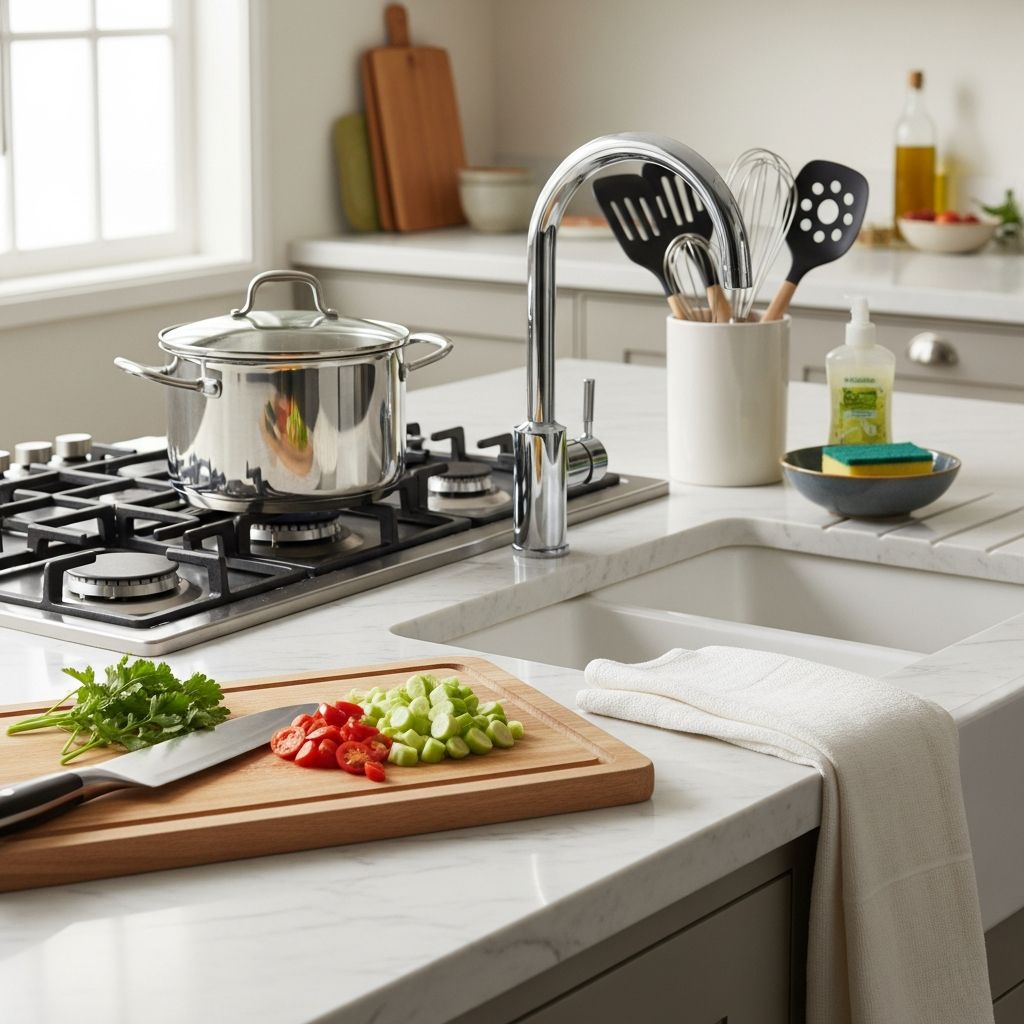
Establishing Your Foundation: The Clean Kitchen Advantage
One of the most overlooked aspects of efficient cooking is the state of your kitchen before you begin. When you start your culinary process with a clean canvas, you establish a psychological and physical environment that promotes both food safety and easier cleanup. Beginning with an empty dishwasher, clear countertops, and an organized sink provides multiple advantages that extend far beyond aesthetics.
A clean starting point allows you to designate specific zones for your cooking process. Rather than having to navigate around clutter, you can strategically position ingredients, utensils, and prepared components in logical locations. This organizational approach reduces unnecessary movement, minimizes the potential for accidental spills, and creates a workspace that feels intentional rather than chaotic.
Consider this initial preparation as an investment in your cooking experience. Spending ten to fifteen minutes before you begin ensures that when you start preparing food, your focus remains entirely on creating quality meals rather than managing the mental burden of a disorganized space.
Strategic Tool and Equipment Organization
As you cook, you accumulate an increasing number of tools, utensils, and equipment that must find homes throughout your workspace. Rather than allowing these items to scatter across your counters and sink, implementing a strategic organization system prevents the creation of multiple small messes that collectively become overwhelming.
Establish designated zones for different categories of items:
- A specific tray or bowl for measuring spoons and cups after use
- A dedicated cutting board station where soiled boards can be temporarily placed
- A utensil holder or container near your cooking surface for frequently used implements
- A pre-soaking station where utensils with stubborn residue can sit undisturbed
This compartmentalization reduces the cognitive load of tracking dozens of items and creates visual boundaries that help maintain order. When each category of tool has an assigned location, cleanup at the end becomes a process of consolidating rather than hunting through your kitchen for scattered items.
Preparation Materials That Simplify Cleanup
The materials you use during preparation significantly influence the effort required for cleanup. By strategically selecting certain products and tools, you can dramatically reduce the time and physical effort needed after cooking concludes.
Protective liners and covers serve multiple purposes in the cleanup equation. Parchment paper, aluminum foil, and silicone baking mats prevent direct contact between food and cooking surfaces, meaning that oils, sauces, and residues deposit onto removable layers rather than permanent fixtures. Once cooking completes, you simply remove and discard these liners, leaving your baking sheets and pans immediately clean.
For stovetop cooking, splatter guards function as invisible shields against oil splattering. These mesh covers rest atop your cooking pans, capturing splatters that would otherwise coat your stovetop, backsplash, and surrounding surfaces. The investment in this single item can save considerable scrubbing time later.
Equip yourself with abundant dishtowels specifically designated for cooking activities. High-quality flour sack towels or microfiber cloths excel at absorbing spills and moisture, providing immediate response capabilities to minor accidents before they expand into larger messes.
Real-Time Response Strategies
The moment a spill or splatter occurs represents your optimal window for cleanup action. This principle cannot be overstated, as immediate response prevents the hardening, drying, and adhesion of food particles to surfaces. Messes that sit for extended periods develop stubborn coatings that require significantly more scrubbing effort.
Maintain a damp cloth or sponge within arm’s reach of your primary cooking area. When you notice splatters on the stovetop, drips on cabinet fronts, or spills on the counter, pause briefly to wipe these areas immediately. This takes mere seconds but prevents exponential growth of cleaning requirements.
Keep paper towels readily available and consider pre-portioning them to avoid unnecessary contact with the roll itself, particularly when handling raw proteins or oily substances. Some cooks find it beneficial to have dedicated paper towel stations at different points around their kitchen to minimize travel distance during active cooking.
Managing Ingredient Waste Systematically
Food preparation naturally generates waste materials—vegetable scraps, trimmings, peels, and discarded portions. Rather than allowing these materials to accumulate across your work surface, establish a centralized collection system that confines waste to a single manageable location.
Position a small bowl, container, or compost bin immediately adjacent to your primary prep area. As you process ingredients, direct all waste directly into this receptacle rather than leaving scraps scattered across your cutting board or counter. This approach accomplishes several objectives simultaneously: it preserves valuable counter space, prevents the accumulation of debris, maintains hygiene by containing potential attractants, and creates a single disposal point rather than multiple trips to the garbage.
For those with composting capabilities, this same system works particularly well. A dedicated compost container allows you to easily transfer accumulated materials without repeatedly handling individual scraps.
Utilizing Downtime for Productive Cleanup
Professional and experienced cooks recognize that the cooking timeline includes numerous intervals of inactivity—moments when food simmers, bakes, roasts, or rests without requiring active attention. Rather than standing idle during these periods, utilize them productively for intermediate cleanup tasks.
When your main dish requires twenty minutes of simmering, this represents a perfect opportunity to wash and dry items used during prep work. Clear cutting boards, wash measuring cups and spoons, wipe down counter surfaces, and organize your workspace. This approach serves multiple purposes: it keeps your hands active during what would otherwise be idle time, prevents the accumulation of dirty items in your sink, reduces post-meal cleanup substantially, and maintains a sense of control over your workspace.
Many cooks find that this “clean as you wait” philosophy transforms the cooking experience from a process that generates mounting chaos to one that maintains equilibrium throughout. By the time the cooking phase concludes, a significant portion of cleanup has already occurred.
Addressing Problematic Cookware
Certain pots, pans, and dishes accumulate stubborn, stuck-on food residues that resist immediate cleaning. Rather than attempting to scrub these items while still encrusted with hardened material, employ a soaking strategy that softens the buildup significantly.
As soon as cookware leaves active use, fill it with hot water and add dish soap or a mild detergent. Allow this mixture to work on the stuck-on food while you continue with other activities. The combination of heat and moisture begins breaking down the adhesion between food and metal or ceramic surfaces. By the time you return to cleaning this cookware, the residue loosens considerably, requiring significantly less scrubbing force and time.
For particularly stubborn situations, add baking soda to the water for additional abrasive action, or consider white vinegar as a natural alternative that cuts through grease and mineral deposits effectively.
Moisture Management and Preparation Techniques
A frequently overlooked factor in kitchen cleanliness involves the moisture content of ingredients being cooked. When you pan-fry foods, moisture on their surface converts to steam that creates pressure against hot oil, causing it to splatter explosively outward. By controlling moisture, you control splattering.
Before placing ingredients into hot cooking oil, pat them thoroughly dry with cloth or paper towels. This simple action removes the moisture that would otherwise cause dramatic splattering. Combined with the use of splatter guards, this technique creates a multiplied benefit—you eliminate both the moisture trigger and capture any remaining splatters with your protective barrier.
This approach proves particularly valuable when cooking proteins or larger vegetable pieces that might otherwise create substantial mess.
Chemical-Free Cleaning Alternatives
For oven maintenance and other deep-cleaning tasks, you need not rely exclusively on commercial chemical products that produce strong fumes. Natural alternatives provide effective cleaning power with minimal environmental impact and respiratory concerns.
Combinations of water with lemon juice or vinegar create powerful cleaning solutions that cut through grease and baked-on residues. Baking soda mixed with water forms a gentle paste suitable for delicate surfaces. These alternatives work particularly well when applied as preventive treatments rather than waiting for heavy buildup to occur.
The key principle remains consistent: address messes promptly rather than allowing them to develop into hardened, set-in problems. Whether using commercial or natural products, prevention through immediate response outperforms heavy-duty chemical assault on months-old buildup.
Creating an All-Purpose Preventive Solution
Many efficient cooks maintain a spray bottle containing a simple homemade solution of water, dish soap, and optional essential oils. This mixture functions as a pre-treatment agent that can be applied to dishes, pans, and surfaces throughout your cooking process. As soon as cookware cools sufficiently, a generous application of this solution begins breaking down stuck-on material.
This proactive approach means that items soaking in this solution while you eat dinner will require minimal scrubbing afterward. The dish soap and water work continuously on loosening residue, essentially extending your cleaning effort across multiple hours rather than concentrating it into an intense post-dinner session.
For particularly stubborn situations, keep baking soda available to add extra abrasive power to this same solution, creating a mildly enhanced version for challenging situations.
Specialized Tools and Accessories for Targeted Problems
A properly equipped kitchen contains tools designed to address specific mess-related challenges. A vacuum cleaner, while seemingly unusual in a kitchen context, effectively removes small crumbs and debris that fall into ovens, accumulate beneath stovetops, or scatter across floors. Rather than attempting to wipe up tiny fragments individually, a quick vacuum pass captures everything efficiently.
Utensil soaks represent another specialized approach. By filling a sink or large bowl with hot soapy water and placing heavily-used utensils there during cooking, you allow the solution to work on residues. During downtime, a quick rinse and dry makes these utensils immediately reusable or ready for storage, eliminating the need to load them into your dishwasher and wait for a full cycle.
Comprehensive Planning for Large-Scale Cooking
When preparing multiple dishes simultaneously or hosting occasions requiring substantial meal preparation, the organizational principles become even more critical. Multiple cutting boards prevent cross-contamination while allowing you to swap boards when one becomes soiled, immediately providing a clean surface without interrupting your workflow.
Establishing multiple cleanup stations, additional waste containers, and multiple sets of measuring implements ensures that you never reach a bottleneck where insufficient clean tools halts your progress. This preparation prevents the common scenario where one person finds themselves completely stalled because every pot, pan, and utensil has become dirty.
Hand Hygiene as Foundation
Before executing any of these strategies, remember that clean hands represent the fundamental beginning point for food safety and general cleanliness. Washing thoroughly with warm soapy water for at least twenty seconds eliminates bacteria and prevents cross-contamination throughout your cooking process. This simple step establishes the hygiene foundation upon which all other cleaning strategies build.
Frequently Asked Questions
Q: How can I prevent oil splatter while cooking without using a commercial splatter screen?
A: Pat ingredients completely dry with paper towels before adding them to hot oil, as moisture is the primary cause of explosive splattering. Additionally, you can create a makeshift shield using aluminum foil formed into a dome shape, or use a metal colander inverted over the pan. The principle remains the same—creating a barrier to capture splatters while allowing steam to escape.
Q: What is the most efficient order for washing items if I don’t have a dishwasher?
A: Start with lightly soiled items like utensils and measuring cups, then move to more heavily soiled cutting boards and pans. This sequence prevents having to repeatedly change your rinse water and allows you to use increasingly cooler water for items that don’t require high heat. Save the most challenging items for last after they’ve had time to soak in pre-treatment solution.
Q: How often should I clean my oven during cooking activities?
A: Address oven spills immediately when you notice them while the oven is cool. Small spills that remain unattended for even one or two additional cooking cycles harden significantly. However, reserve deep oven cleaning for periodic maintenance rather than attempting it during active cooking sessions.
Q: Can I use the same cloth for cleaning multiple surfaces without rinsing?
A: No, you should rinse your cloth between surfaces to avoid transferring bacteria or residues from raw food preparation areas to eating or serving surfaces. This simple hygiene practice prevents cross-contamination and maintains food safety standards throughout your kitchen.
Q: What temperature water works best for soaking cookware?
A: Hot water works more effectively than cold water for breaking down stuck-on food and grease. However, ensure the water is not so hot that it causes thermal shock to your cookware. Warm to hot water that you can comfortably touch with your hand usually represents the optimal temperature range.
References
- Food Safety: Clean Hands and Food Safety — Centers for Disease Control and Prevention (CDC). 2024. https://www.cdc.gov/foodsafety/communication/steps-clean-hands.html
- Food Safety Basics: Prevent Cross-Contamination — U.S. Department of Agriculture (USDA) Food Safety and Inspection Service. 2024. https://www.fsis.usda.gov/food-safety/safe-food-handling-and-preparation/cross-contamination
- Keeping Your Kitchen Clean and Safe — Olives for Dinner. Accessed January 2026. https://olivesfordinner.com/keeping-a-clean-kitchen/
- 5 Tips to Keep Your Kitchen Clean While Cooking — Clean My Space. Accessed January 2026. https://cleanmyspace.com/5-tips-to-keep-your-kitchen-clean-while-cooking/
- Green Cleaning Methods: Natural Alternatives to Chemical Cleaners — The Environmental Protection Agency (EPA). 2024. https://www.epa.gov/students/environmental-facts
- Kitchen Cleaning Tips for a Spotless, Stress-Free Home — Maid Brigade. Accessed January 2026. https://www.maidbrigade.com/blog/healthy-home/important-things-to-remember-before-cooking-at-home/

- Integrated M.A. in Applied Linguistics, University of Hyderabad
- 5+ years in editorial, instructional, SEO, and research-based writing
Sneha is a relationships and lifestyle writer with a strong foundation in applied linguistics and certified training in relationship coaching. She brings over five years of writing experience to theskillvault, crafting thoughtful, research-driven content that empowers readers to build healthier relationships, boost emotional well-being, and embrace holistic living. Her writing and insights reflect the belief that beauty, happiness, and wellness…