
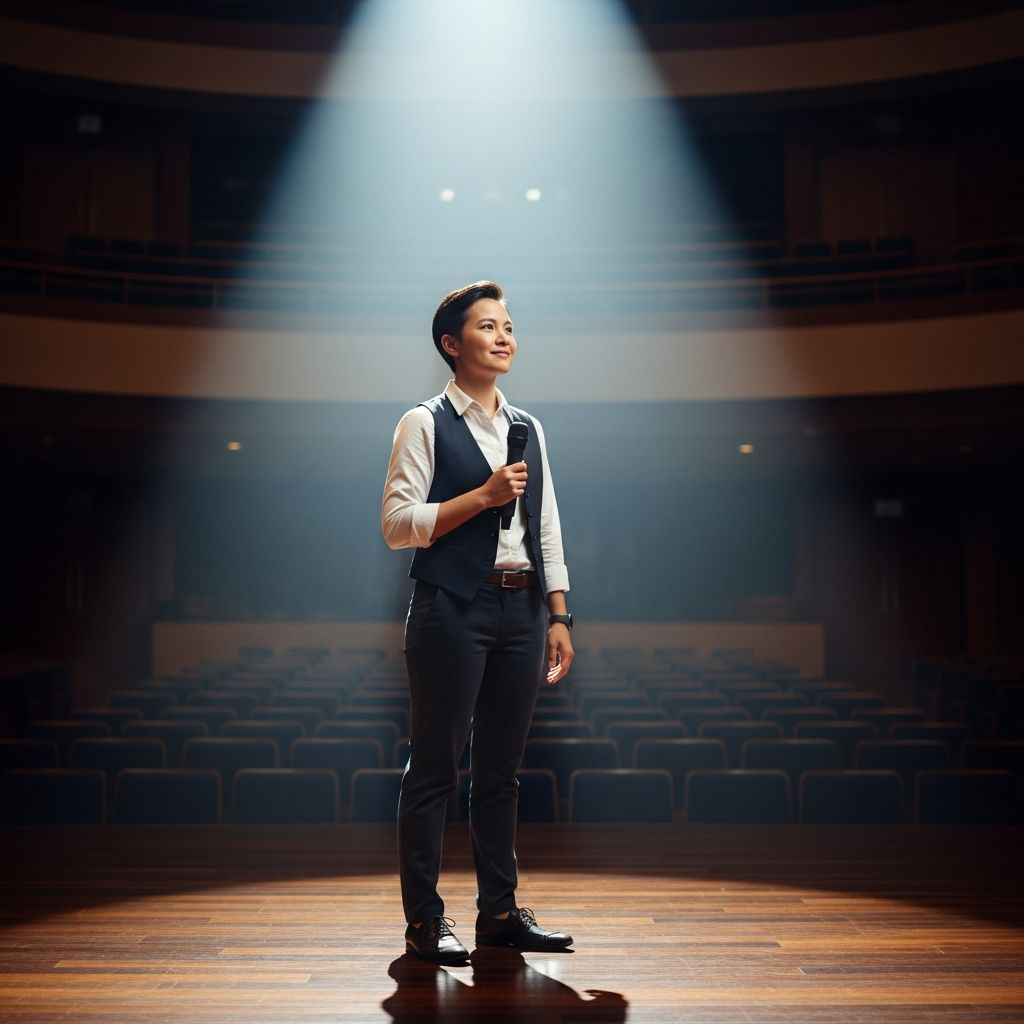
Performance anxiety affects millions, triggering rapid heartbeats, sweaty palms, and mental fog right when you need to shine. Whether delivering a keynote, playing an instrument, or leading a meeting, stage fright is a universal challenge. The good news: evidence-based techniques can transform this fear into focused energy. This guide draws from psychological research and expert recommendations to equip you with practical tools for confidence.
Understanding the Physiology of Performance Anxiety
Stage fright stems from the body’s fight-or-flight response, where the amygdala signals danger during high-stakes exposure. Adrenaline surges, increasing heart rate and shallow breathing, which amplifies panic. According to the Anxiety and Depression Association of America (ADAA), this response is adaptive for survival but maladaptive for modern performances. Recognizing it as a biological glitch—not personal failure—is the first step to control.
Chronic anxiety can lead to avoidance, but targeted interventions rewire neural pathways. Studies show regular practice of relaxation techniques reduces amygdala hyperactivity, fostering calm under pressure.
Breathing Techniques: Your Instant Calm Anchor
Deep breathing activates the parasympathetic nervous system, countering adrenaline. Mayo Clinic experts recommend slow, diaphragmatic breaths before speaking: inhale deeply through the nose for four counts, hold for four, exhale for four. This ‘box breathing’ lowers cortisol levels within minutes.
- 4-7-8 Method: Inhale for 4 seconds, hold for 7, exhale for 8. Interlude.hk highlights its efficacy for musicians facing performance anxiety.
- Abdominal Breathing: Place a hand on your stomach; ensure it rises more than your chest. The Strad advises this for string players to maintain steady bow control.
- Pre-Performance Routine: Practice 5-10 breaths backstage to stabilize heart rate.
Incorporate daily: Start meetings with a group breath to normalize the practice and reduce collective tension.
Visualization: Rehearse Success in Your Mind
Athletes and performers use mental imagery to prime the brain. Close your eyes and vividly picture delivering flawlessly: hear applause, feel steady posture, see engaged faces. Rumie Learn notes this activates the same motor cortex regions as physical practice, building neural familiarity.
School of Rock instructors guide students to visualize ideal gigs, reporting reduced jitters and better execution. Enhance by pairing with sensory details—imagine the microphone’s weight or stage lights’ warmth.
| Visualization Step | Duration | Benefits |
|---|---|---|
| Relax body with breaths | 1 min | Quiets mind |
| Picture setup and start | 2 min | Builds familiarity |
| Envision peak moments | 2 min | Boosts confidence |
| Feel triumphant end | 1 min | Reinforces positivity |
Practice nightly for upcoming events; research in Peak Performance confirms it enhances concentration via deep relaxation.
Grounding Exercises: Anchor Yourself in the Now
When thoughts spiral to ‘what ifs,’ grounding redirects focus to the present. Calm.com suggests feeling feet on the floor, wiggling toes, or gripping an object like a ring. This sensory input interrupts anxiety loops.
- 5-4-3-2-1 Technique: Name 5 things you see, 4 you touch, 3 you hear, 2 you smell, 1 you taste.
- Body Scan: Mentally sweep from head to toe, releasing tension. APAC recommends this pre-speech.
- Posture Power: Stand tall with open shoulders; it signals safety to your brain.
These take seconds yet yield outsized calm, as Psychology Today affirms for easing public speaking tension.
Preparation and Exposure: Build Confidence Through Action
Thorough rehearsal demystifies the stage. Record yourself, practice in front of mirrors or friends, volunteer for small talks. Rumie Learn’s progression—from solo to groups—desensitizes via controlled exposure.
ADAA advises shifting focus from self to audience value: ‘How can I help them?’ This purpose reframes nerves as excitement. Limit caffeine/sugar, exercise for endorphins, and smile to trigger dopamine.
Mindset Mastery: Affirmations and Cognitive Shifts
Replace ‘I’ll bomb’ with ‘I’m prepared and capable.’ The Strad’s self-hypnosis involves progressive relaxation then positive scripting: ‘I command the stage’. Daily affirmations rewire self-talk, per Calm’s inner critic tools.
Accept imperfection—mistakes humanize you. ADAA: ‘Be natural; it’s okay to err’. Connect via eye contact and smiles, viewing audiences as allies.
Lifestyle Habits for Long-Term Resilience
Sustained calm requires holistic support. Regular meditation (10 min/day) builds emotional regulation. Exercise releases tension; avoid stimulants pre-event. APAC pairs workouts with funny videos for mood lifts.
For severe cases, CBT challenges distorted thoughts, while exposure therapy gradually builds tolerance.
Real-World Applications Across Scenarios
Speeches: Rehearse aloud, pause for breaths mid-delivery[10].
Music: Beta-blockers as last resort, but prioritize techniques.
Meetings: Start with grounding, focus on contribution.
Frequently Asked Questions (FAQs)
What if breathing doesn’t work mid-performance?
Slow your pace, sip water, or grip podium. Shift to audience questions for reset.
Is stage fright curable long-term?
Yes, via consistent practice and therapy. Many report full remission.
How much visualization is enough?
5-10 minutes daily for a week pre-event.
Can kids learn these techniques?
Absolutely—simplify for age, like games.
What’s the role of medication?
For acute cases, consult pros; techniques often suffice.
Integrate for Peak Performance
Combine: Breathe, visualize, ground, prepare. Track progress in a journal. Top performers treat anxiety as fuel—channel it. With these tools, stage fright becomes your edge.
References
- 8 mindful tips to help you cope with stage fright — Calm Blog. 2023-06-15. https://www.calm.com/blog/stage-fright
- 7 Tips and Techniques for Overcoming Stage Fright — APAC. 2024-02-10. https://apac.edu.au/blog/tips-and-techniques-for-overcoming-stage-fright/
- 7 techniques to combat stage fright — The Strad. 2022-11-20. https://www.thestrad.com/playing-hub/7-techniques-to-combat-stage-fright/154.article
- 5 tips that helped me overcome stage fright — Rumie Learn. 2023-08-05. https://learn.rumie.org/jR/bytes/5-tips-that-helped-me-overcome-stage-fright/
- How to Overcome Stage Fright — School of Rock. 2024-01-12. https://www.schoolofrock.com/resources/music-industry/how-to-overcome-stage-fright
- Conquering Stage Fright — Anxiety and Depression Association of America (ADAA). 2023-05-18. https://adaa.org/understanding-anxiety/social-anxiety-disorder/treatment/conquering-stage-fright
- Fear of public speaking: How can I overcome it? — Mayo Clinic. 2024-03-22. https://www.mayoclinic.org/diseases-conditions/specific-phobias/expert-answers/fear-of-public-speaking/faq-20058416

Medha Deb is an editor with a master's degree in Applied Linguistics from the University of Hyderabad. She believes that her qualification has helped her develop a deep understanding of language and its application in various contexts. Medha specializes in the areas of beauty, health, sports, and wellness and is committed to ensuring that the content on the website is…