
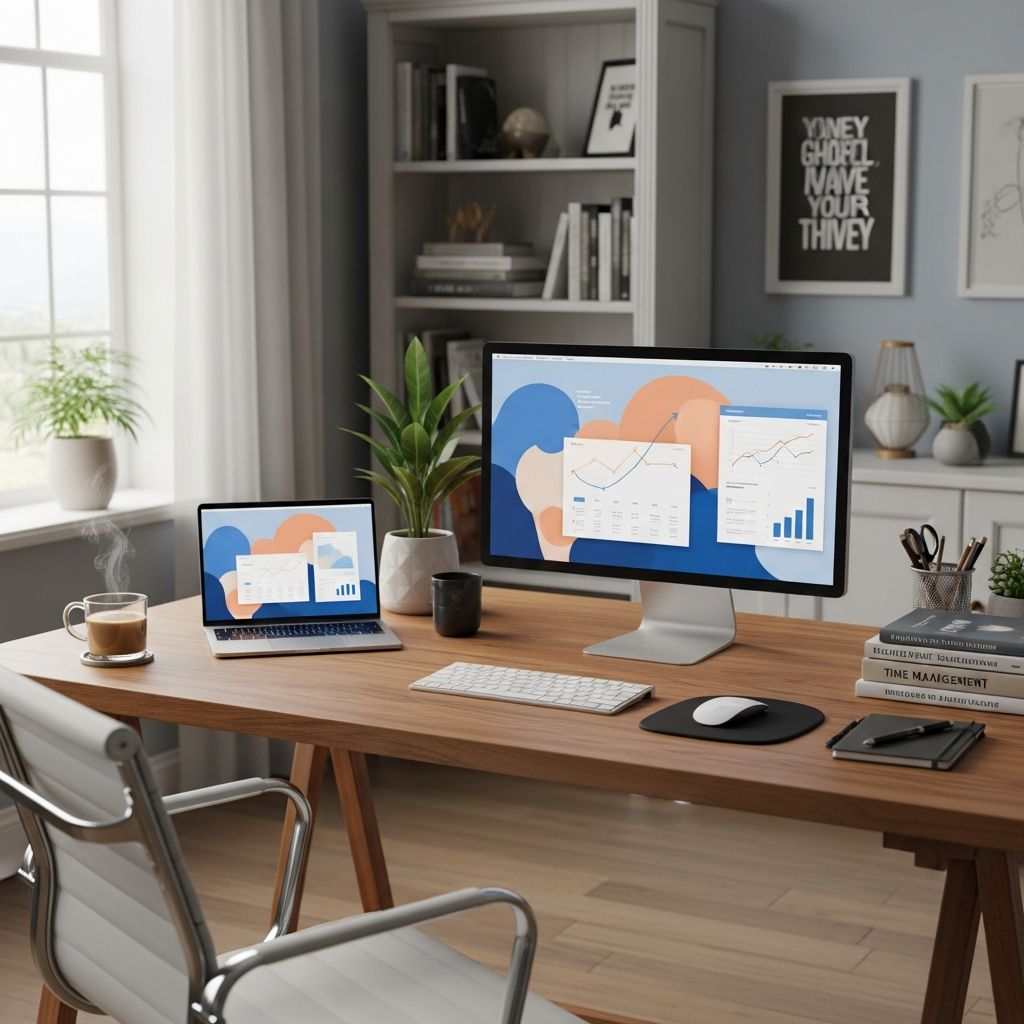
Working from home offers flexibility but often brings challenges like distractions, blurred boundaries, and fluctuating motivation. By implementing targeted strategies, remote workers can create an environment that fosters deep focus and consistent output. This guide outlines 12 practical approaches drawn from established productivity methods, helping you structure your day for maximum efficiency while prioritizing well-being.
Establishing a Productive Physical Environment
Your surroundings directly influence your ability to concentrate. A dedicated workspace signals to your brain that it’s time for professional mode, reducing the temptation to mix leisure with labor.
- Choose an ergonomic setup: Select a spot with natural light, away from high-traffic areas. Invest in an adjustable chair and desk to prevent strain during long sessions.
- Declutter ruthlessly: Keep only essential items visible. Use organizers for cables, notebooks, and supplies to minimize visual noise.
- Enhance comfort: Add plants for air quality or a small rug for warmth, making the space inviting yet purpose-driven.
A tidy environment not only boosts focus but also improves posture and reduces fatigue, setting a strong foundation for daily success.
Simulating a Morning Commute Ritual
Without the physical transition from home to office, it’s easy to dive into work unrefreshed. Mimicking a commute with a short outdoor walk exposes you to fresh air and sunlight, kickstarting alertness.
Step outside for 10-15 minutes before logging in. This simple act refreshes your mind, elevates mood via endorphins, and creates a mental divide between personal and work time. Studies show brief nature exposure enhances cognitive function throughout the day.
Leveraging Energy Cycles for Optimal Scheduling
Productivity isn’t uniform; it ebbs and flows with your natural rhythms. Track your peak hours—often mornings for analytical tasks—and low points for routine chores.
| Energy Phase | Ideal Tasks | Example Schedule |
|---|---|---|
| High (e.g., 9-11 AM) | Creative or complex work | Strategy planning, writing |
| Medium (e.g., 11 AM-1 PM) | Collaborative efforts | Meetings, calls |
| Low (e.g., 2-4 PM) | Administrative duties | Email, filing |
Aligning tasks with energy prevents burnout and maximizes output.
Implementing Time Blocking for Structured Days
Time blocking divides your calendar into dedicated segments for specific activities, curbing multitasking and overcommitment.
- Color-code categories: Use blue for deep work, red for meetings, green for breaks.
- Add buffers: Insert 10-15 minutes between blocks for transitions.
- Reserve reactive slots: Limit email checks to twice daily, like 11:30 AM and 4 PM.
This method provides visual clarity and protects focus periods, leading to fewer overruns.
Adopting the Pomodoro and 90-Minute Variations
Short, intense work bursts combat procrastination. The Pomodoro Technique uses 25-minute sprints followed by 5-minute breaks, while the 90-minute rule aligns with ultradian rhythms for deeper immersion.
- Pomodoro suits quick tasks; set a timer and commit fully.
- 90-minute cycles allow flow states, with 20-30 minute recoveries away from screens.
Users report 40% more output with fewer hours, as breaks recharge without derailing momentum.
Mastering Task Batching to Minimize Switching Costs
Context switching erodes efficiency—grouping similar tasks preserves mental energy.
Identify repeats like emails or reports, then assign batches: communications from 9-9:45 AM, content creation post-lunch. Match batches to energy: high-cognition early, low later. Prep resources beforehand for seamless execution.
Applying the Two-Minute Rule for Quick Wins
Handle tasks under two minutes immediately to avoid backlog. For home workers juggling micro-duties, designate ‘two-minute windows’ like post-lunch for batching them.
This builds momentum, clears mental clutter, and prevents small items from snowballing.
Incorporating Movement into Your Workflow
Sedentary habits harm focus; schedule hourly alarms for 5-10 minute walks or stretches. Pair with mobile tasks like calls or podcasts.
- Movement boosts blood flow, sharpening cognition.
- Varied posture reduces strain, sustaining longer sessions.
Remote workers see improved mood and output from these integrations.
Decluttering Digital Spaces for Fewer Interruptions
Notifications and tab overload fragment attention. Audit and disable non-essentials, use tools to consolidate tabs, and organize files into folders.
Set boundaries: communicate availability to teams, favoring async updates via video Loom clips over instant chats.
Harnessing Voice Assistants for Seamless Organization
Devices like smart speakers streamline routines—set timers, add calendar events, or create lists hands-free, reducing app-switching.
They provide subtle companionship, aiding solo workers.
Crafting End-of-Day Shutdown Rituals
Close strong: review wins, plan tomorrow’s top 3 priorities, tidy space, and log off. This curbs evening rumination and ensures fresh starts.
Frequently Asked Questions (FAQs)
What if I lack space for a dedicated office?
Use a foldable desk or consistent corner; the key is consistency over size.
How do I stick to time blocks with unexpected interruptions?
Build in flexible buffers and communicate your schedule to stakeholders.
Can these tips work for teams?
Yes—share calendars, align on batch times, and hold weekly planning syncs.
What’s the best break activity?
Non-screen: walk, hydrate, or meditate for true recharge.
How soon will I see results?
Most notice gains in 1-2 weeks with consistent application.
References
- 8 Essential Remote Work Productivity Tips for 2026 — Nearshore Business Solutions. 2026-01-01. https://nearshorebusinesssolutions.com/news/remote-work-productivity-tips/
- 10 working from home productivity tips in 2026 — Career Gappers. 2026-01-01. https://careergappers.com/working-from-home-productivity-tips/
- 10 Productivity Hacks to Beat Distractions and Work Smarter in 2026 — Nextiva. 2026-01-01. https://www.nextiva.com/blog/productivity-hacks.html
- Best work-from-home routines in 2026 — CloudTalk. 2026-01-01. https://www.cloudtalk.io/blog/best-work-from-home-routines/
- Working from Home Tips for Success — University of Michigan HR. 2023-01-01. https://hr.umich.edu/working-home-tips-success

Medha Deb is an editor with a master's degree in Applied Linguistics from the University of Hyderabad. She believes that her qualification has helped her develop a deep understanding of language and its application in various contexts. Medha specializes in the areas of beauty, health, sports, and wellness and is committed to ensuring that the content on the website is…