
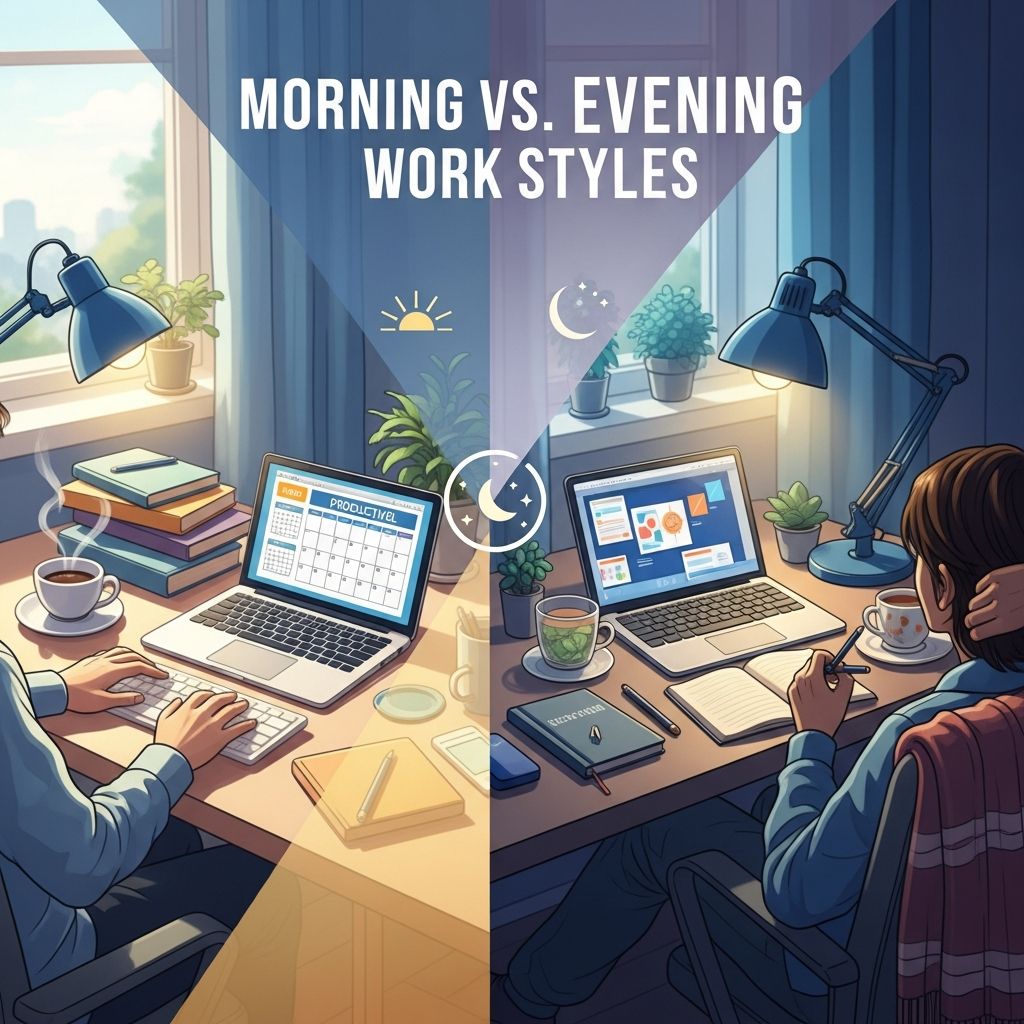
Understanding Your Natural Work Rhythm: Beyond the Morning Person Myth
The debate over whether early risers or night-focused individuals are more successful has persisted for decades. Society often celebrates the “early bird gets the worm” philosophy, yet research reveals a more nuanced reality. Both morning and evening chronotypes possess distinct advantages that, when understood and leveraged correctly, can lead to exceptional performance and fulfillment. Rather than viewing these patterns as advantages for some and disadvantages for others, it’s more accurate to recognize them as different operating systems that function optimally at different times.
Your chronotype—the biological preference for wakefulness and sleep at certain times—plays a significant role in determining when you perform best. Approximately 40% of our productivity tendencies stem directly from this natural preference, making it one of the most influential factors in how we approach work and manage our daily responsibilities.
The Personality Divide: Perfectionism Versus Spontaneity
Research from the University of Barcelona has identified a fascinating personality distinction between these two groups. Morning-oriented individuals demonstrate heightened levels of persistence and conscientiousness. They approach their work with a methodical mindset, preferring stability, predictability, and systematic progress toward their goals. This disciplined approach makes them well-suited to environments that demand consistency and adherence to established processes.
Evening-oriented individuals, by contrast, display greater openness to novelty and spontaneity. They tend toward what researchers call “extravagance and impulsiveness,” but these traits shouldn’t be viewed negatively. Instead, they represent an embrace of flexibility and a willingness to explore unconventional solutions. This orientation makes evening types natural innovators who thrive when faced with unexpected challenges or opportunities requiring quick adaptation.
The key distinction isn’t that one approach is superior to the other, but rather that they represent different strategic approaches to problem-solving and task completion. Morning types build momentum through consistency, while evening types generate breakthroughs through flexibility.
Morning Mood Versus Evening Energy Levels
Perhaps one of the most observable differences between these chronotypes manifests in their emotional states at different times of day. Morning people typically greet the start of their day with enthusiasm and positive energy. They wake naturally, often without requiring multiple alarm reminders, and feel genuinely ready to engage with their day. This natural elevation in mood doesn’t require external stimulation like caffeine—their circadian rhythm naturally elevates cortisol and other alertness-promoting hormones at the appropriate time.
Evening-oriented individuals experience the opposite pattern. The morning hours present a genuine struggle. They often hit the snooze button repeatedly, emerging from sleep in a fog-like state that can persist for hours. However, as the day progresses and evening approaches, a dramatic transformation occurs. After 6 PM, evening types experience what researchers describe as a euphoric shift—their energy increases, their mental clarity sharpens, and they enter a state of heightened alertness and engagement with their surroundings.
Understanding this distinction matters tremendously for workplace dynamics. When organizations design their schedules around early morning starts, they inadvertently place evening types in a perpetual state of sub-optimal performance, while morning types operate in their natural zone of peak functioning.
Cognitive Performance Across Different Hours
| Cognitive Dimension | Morning Chronotype Peak Hours | Evening Chronotype Peak Hours |
|---|---|---|
| Analytical Problem-Solving | 9 AM – 12 PM (Optimal performance) | 4 PM – 11 PM (Optimal performance) |
| Decision-Making Quality | Morning (High willpower) | Evening (Enhanced focus) |
| Creative Ideation | During low-energy periods (Late afternoon) | During low-energy periods (Early morning) |
| Focus and Concentration | Sustained through midday | Builds throughout day, peaks at night |
| Risk of Procrastination | After 3 PM (Post-lunch dip) | Before 10 AM (Morning struggle) |
Morning types demonstrate superior cognitive function during conventional business hours. Between 9 AM and noon, early risers exhibit enhanced focus, superior decision-making abilities, and stronger willpower—all protective factors against procrastination. However, a predictable decline occurs in the afternoon. Scientists identify this as the “post-lunch dip,” a physiologically-driven period when energy naturally decreases, making tasks scheduled after 3 PM particularly vulnerable to delay and abandonment.
Evening types struggle most during morning hours when their cortisol awakening response—the natural hormone that generates alertness—hasn’t yet peaked. This biological reality explains why evening types consistently postpone morning obligations. Yet during afternoon and evening hours, their cognitive functions align with demanding intellectual work. Research measuring intelligence through mathematics, reading comprehension, working memory, and processing speed consistently shows evening types scoring higher on these assessments.
The Intelligence Question: Dispelling Common Misconceptions
A persistent myth suggests that morning people achieve greater success because they possess superior work ethic or intelligence. This oversimplification misses the complete picture. Studies do indicate that evening types demonstrate slightly higher average intelligence scores on standardized testing. However, this advantage doesn’t automatically translate to greater career success or achievement.
The reason is straightforward: morning types operate during the hours when society conducts most business. The 9-to-5 structure, prevalent in traditional workplaces, aligns perfectly with morning chronotypes’ peak performance windows. Evening types, despite potentially superior cognitive abilities in certain domains, must fight against their biological clocks to participate in these standard work schedules. This misalignment doesn’t reflect inferior capability—it reflects a structural mismatch between individual biology and societal convention.
The Paradox of Creativity During Off-Peak Hours
A surprising finding from research conducted by Mareike Wieth and Rose Zacks challenges conventional productivity wisdom. Their study presented both morning and evening types with analytical and creative problem-solving tasks, measuring performance during their preferred hours versus their non-preferred hours.
The results were counterintuitive: participants solved routine analytical problems best during their peak performance windows. However, when tackling insight problems requiring creative breakthroughs, performance improved during their non-optimal hours. This phenomenon suggests that the slight mental fatigue experienced during off-peak times actually facilitates creative thinking. When we’re not at our sharpest, we approach problems less rigidly and make unexpected mental connections.
This finding has profound implications. Morning people shouldn’t reserve all creative work for their peak hours—some of their most innovative solutions may emerge during evening hours when they’re naturally less sharp. Conversely, evening types might generate breakthrough ideas during their difficult morning hours when their minds operate in a different mode.
Dietary Preferences and Meal Timing
The influence of chronotype extends into something as fundamental as eating patterns. Morning types typically prioritize breakfast, often consuming a nutritious meal while simultaneously engaging in productive activities—reading, planning, or working. This meal serves as an integral part of their morning ritual, setting a positive tone for the day ahead.
Evening types frequently skip breakfast entirely, viewing the morning as simply a transition period they must navigate before their real day begins. They rush to work or their primary responsibilities with minimal food intake. Dinner and mid-day meals become their primary eating occasions, often substantial meals that fuel their evening and night hours. This pattern reflects their natural energy distribution throughout the day.
These dietary patterns carry health implications worth considering. Morning types benefit from early nutrition that supports their high morning energy expenditure. Evening types, consuming most calories later in the day, may experience different metabolic effects. Understanding these natural preferences allows individuals to align their nutrition with their chronotype rather than fighting against their instinctive eating patterns.
Social Dynamics and Evening Engagement
Social life presents another arena where chronotype significantly impacts experience and performance. Morning types often prefer quieter evenings and may find late-night social gatherings draining rather than enjoyable. Their natural energy depletion by evening makes sustained social interaction feel effortful rather than energizing.
Evening types demonstrate the opposite pattern. Their peak energy and mental sharpness coincide with evening hours, making late-night social activities genuinely enjoyable and stimulating. They engage more fully in evening-based social contexts, often becoming the most animated and creative participants in late-hour gatherings.
This difference has workplace implications. Team events scheduled for after-work hours may feel mandatory and exhausting for morning types while providing genuine rejuvenation for evening types. Recognizing these natural tendencies allows organizations to design social and team-building activities that don’t penalize one group for not aligning with the other’s natural preferences.
Chronotype Matching and Workplace Alignment
The intersection of chronotype and work environment creates what researchers call “social jet lag” when misalignment occurs. Morning types in evening-focused positions or evening types in strictly morning-scheduled roles experience chronic circadian stress. This misalignment exacerbates procrastination, reduces sleep quality, and diminishes overall well-being.
Organizations that remain rigidly structured around single-schedule models inadvertently optimize for approximately 50% of their workforce while creating chronic friction for the remaining half. Companies implementing flexible work arrangements—where evening types can adjust their start times or work partial evening hours—often see productivity improvements and increased retention among these employees.
The modern remote work environment offers unprecedented opportunity to match individual chronotypes with work schedules. Rather than viewing flexibility as a perk, it represents an alignment of human biology with operational necessity.
Strategies for Chronotype Optimization
For Morning Types:
- Schedule cognitively demanding tasks and important decisions between 9 AM and noon when peak focus occurs
- Reserve afternoon hours for routine tasks, administrative work, and collaborative meetings
- Anticipate the post-lunch productivity dip and plan accordingly rather than attempting complex work during this period
- Use morning energy surplus to establish momentum that carries through the entire week
- Recognize that evening hours represent recovery time and plan social obligations accordingly
For Evening Types:
- Shift important decision-making and creative work to afternoon and evening hours when cognitive function peaks
- Use morning time for routine tasks, email management, and administrative responsibilities requiring minimal cognitive load
- Implement time-blocking techniques that protect afternoon and evening hours from interruptions and meetings
- Consider workplace arrangements allowing later start times aligned with natural wake times
- Recognize that your morning struggle reflects biology, not work ethic or capability
For Both Types:
- Establish transition rituals—consistent routines signaling to your brain that work mode is beginning
- Schedule important meetings during your individual peak hours rather than assuming a universal optimal time
- Approach creative problems during your non-optimal hours to leverage the unexpected cognitive benefits
- Communicate your chronotype preferences to colleagues and supervisors to enable better scheduling
- Allow sleep schedules to align with natural preferences rather than fighting against biological rhythms
Frequently Asked Questions
Q: Can someone change their chronotype?
A: While genetics significantly influence chronotype, exposure to light, consistent sleep schedules, and certain lifestyle factors can create modest shifts. However, attempting to fundamentally reverse a strong chronotype typically creates chronic stress. Working with your natural preference rather than against it yields better outcomes than forced reversal.
Q: Are night owls at a disadvantage in traditional careers?
A: In strictly scheduled 9-to-5 environments, evening types face structural disadvantages due to misalignment between their peak performance hours and standard work schedules. However, careers offering flexible hours, evening-shift opportunities, or remote work arrangements allow evening types to leverage their natural advantages. Many creative fields and modern companies accommodate these variations.
Q: Does chronotype affect health outcomes?
A: Yes, significant evidence shows that individuals forced to work against their chronotype experience higher stress, worse sleep quality, and increased risk of mood disorders. Early risers generally report higher well-being when able to maintain early schedules, while evening types forced into early starts show elevated depression and anxiety. Chronotype alignment with daily obligations improves both physical and mental health.
Q: Is intelligence correlated with chronotype?
A: Research shows evening types score slightly higher on certain intelligence measures, but this doesn’t predict career success. Success depends more on opportunity, environment alignment, and task-chronotype matching than on raw intelligence differences. Both types can excel when working during their optimal hours.
Q: How can managers accommodate different chronotypes?
A: Flexible start times, core hours with flexible surrounding time, asynchronous communication options, and meeting scheduling that rotates to various times throughout the week all help. Allowing individuals to handle their peak-performance work during their optimal hours while scheduling less demanding tasks during their lower-energy periods maximizes overall team productivity.
References
- What’s The Difference Between Early Birds And Night Owls? — Weave Home. 2024. https://weavvehome.com/blogs/news/difference-between-early-birds-and-night-owls
- 7 Differences Between Early Birds And Night Owls — Lifehack. 2024. https://www.lifehack.org/articles/productivity/7-differences-between-early-birds-and-night-owls.html
- Night Owls vs Early Birds: How Procrastination and Sleep Patterns Connect — Ahead App. 2024. https://ahead-app.com/blog/procrastination/night-owls-vs-early-birds-how-procrastination-and-sleep-patterns-connect
- Early bird or night owl? How your chronotype affects your wellness — UCLA Health. 2024. https://www.uclahealth.org/news/article/early-bird-or-night-owl-how-your-chronotype-affects-your
- The Productivity Puzzle: Night Owls vs. Early Birds at Work — My Perfect Resume Career Center. 2024. https://www.myperfectresume.com/career-center/careers/basics/performance-and-working-hours

- Integrated M.A. in Applied Linguistics, University of Hyderabad
- 5+ years in editorial, instructional, SEO, and research-based writing
Sneha is a relationships and lifestyle writer with a strong foundation in applied linguistics and certified training in relationship coaching. She brings over five years of writing experience to theskillvault, crafting thoughtful, research-driven content that empowers readers to build healthier relationships, boost emotional well-being, and embrace holistic living. Her writing and insights reflect the belief that beauty, happiness, and wellness…