
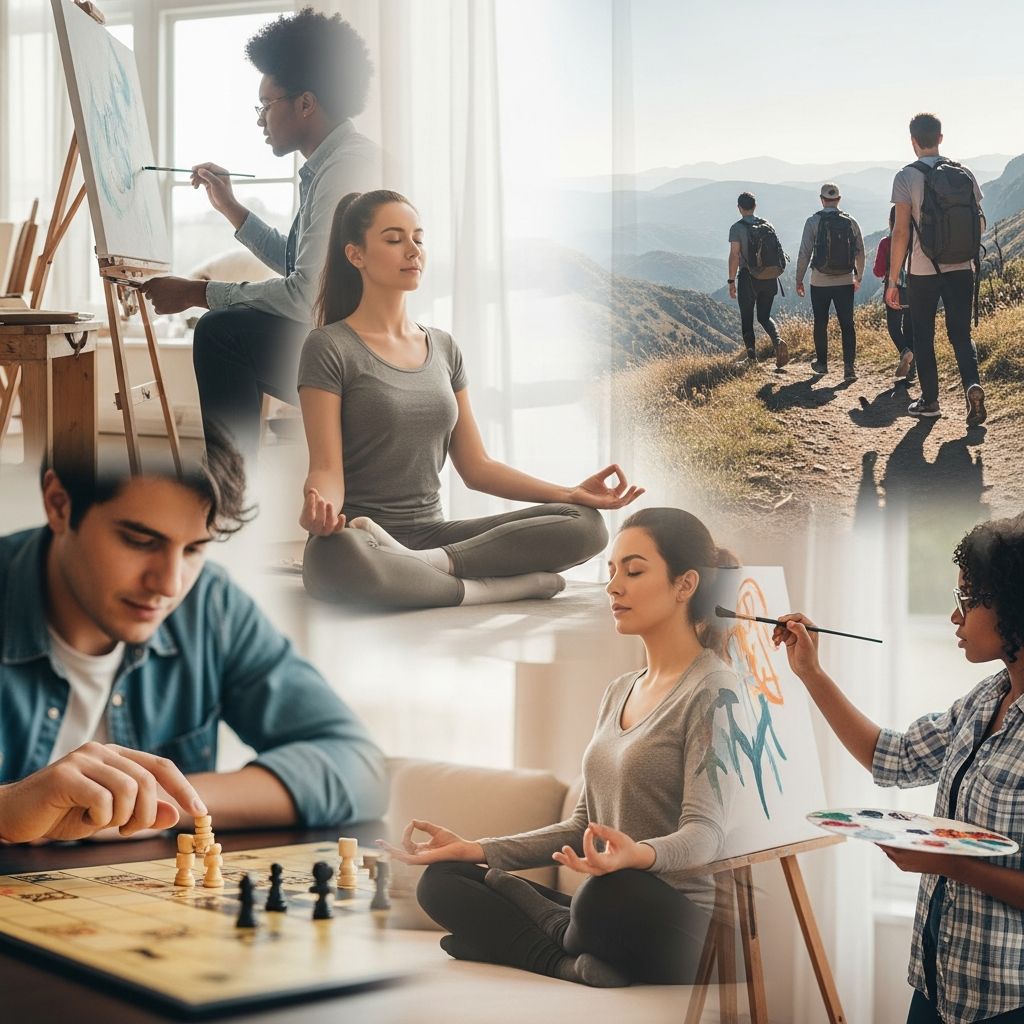
The Science Behind Leisure and Workplace Excellence
For decades, the conventional wisdom suggested that maximum productivity required unwavering focus on work tasks. However, contemporary research reveals a counterintuitive truth: structured engagement with leisure activities outside the office can substantially enhance your professional capabilities and workplace satisfaction.
A groundbreaking study conducted by researchers at the University of East Anglia and Erasmus University Rotterdam demonstrated that intentional leisure crafting—deliberately shaping your free time through goal setting, skill development, and social engagement—produces measurable improvements in job performance. Participants who approached their hobbies with purpose reported heightened feelings of workplace meaning, increased creative behaviors, and stronger emotional well-being.
What makes this research particularly significant is an unexpected finding: the benefits observed at work exceeded those in personal life. This suggests that hobbies function as a catalyst for professional transformation when pursued with intention rather than passive consumption.
Understanding Leisure Crafting: Beyond Entertainment
The distinction between passive entertainment and active leisure crafting proves crucial. Watching television or mindless scrolling represents passive consumption, whereas intentional hobbies involve deliberate engagement aimed at personal development.
Leisure crafting encompasses three fundamental dimensions:
- Autonomy and Goal Setting: Establishing personal objectives related to your hobby and maintaining control over how you pursue it
- Skill Acquisition: Continuously learning and developing competencies through your leisure activity
- Social Connection: Engaging with others who share similar interests or seeking feedback to enhance your practice
When hobbies incorporate these elements, they transition from mere time-filling activities into meaningful pursuits that strengthen cognitive abilities, emotional resilience, and creative thinking patterns applicable to professional environments.
The Neuroscience of Creative Hobbies and Stress Recovery
Research from San Francisco State University reveals that employees engaging in creative pursuits outside work environments demonstrate superior job satisfaction, enhanced collaborative abilities, and elevated creative performance within their professional roles. This phenomenon operates through multiple physiological pathways.
Creative hobbies activate the parasympathetic nervous system—the biological system responsible for rest, recovery, and restoration. This activation provides essential psychological relief from workplace demands, preventing the accumulation of chronic stress that impairs cognitive function and creative thinking.
Studies examining hospital workers discovered that those participating in creative activities experienced significantly better recovery from occupational stress. Notably, 41 percent of hospital workers reported moderate to poor recovery periods when lacking structured leisure practices. Workers without effective recovery mechanisms face substantially elevated risks of burnout and professional cynicism within one year.
The mastery and control gained through hobby engagement builds psychological resilience—the capacity to maintain emotional stability and cognitive flexibility when confronting workplace challenges. This resilience directly translates into improved problem-solving abilities and sustained productivity across demanding work periods.
Expanding Your Cognitive Toolkit Through Diverse Pursuits
One mechanism explaining hobby-enhanced productivity involves acquiring knowledge and perspectives transferable to professional contexts. When engaged in hobbies, individuals encounter novel challenges, develop new mental frameworks, and practice adaptive thinking strategies.
Consider how activities requiring different cognitive approaches expand your mental flexibility. A hobby emphasizing pattern recognition strengthens analytical abilities applicable to strategic workplace problems. Creative pursuits develop divergent thinking—the capacity to generate multiple solutions to complex challenges. Movement-based activities improve attention regulation and reduce mental fatigue that accumulates during sustained intellectual work.
This cognitive expansion explains why individuals with active hobbies frequently report sudden insights about work problems. The alternative mental pathways developed through leisure pursuits provide fresh perspectives on occupational obstacles that previously seemed intractable.
Movement-Based Hobbies and Mental Clarity
Physical activity hobbies deserve particular attention for their profound effects on cognitive function. Walking, whether pursued solo or as a group activity, disrupts the mental patterns that contribute to creative stagnation. Research consistently demonstrates that individuals experiencing creative blockades benefit tremendously from movement breaks that incorporate engaging activities.
The mechanisms underlying this benefit operate on multiple levels. Physical movement increases cerebral blood flow, enhancing oxygen delivery to brain regions governing creative thinking. The rhythmic nature of many movement activities—walking, swimming, cycling—induces a meditative state that quiets internal dialogue and permits unconscious processing of complex problems.
Beyond neurochemistry, movement hobbies provide environmental variety and sensory stimulation that refreshes mental energy depleted by sustained desk work. The combination of physical exertion, environmental engagement, and temporal separation from workplace demands creates optimal conditions for cognitive restoration and renewed creative capacity.
Strategic Thinking Development Through Games and Puzzles
Games requiring strategic planning, such as chess, cultivate mental patterns directly applicable to organizational decision-making. Chess demands recognition of complex patterns, integration of previous experience into current decision-making, and consideration of multiple future scenarios. These exact cognitive capacities drive effective workplace strategy and problem resolution.
The structured nature of strategic games provides a low-stakes environment for practicing sophisticated thinking without occupational consequences. Over time, the pattern-recognition and planning abilities strengthened through gameplay transfer automatically to professional contexts, enabling faster strategic analysis and more innovative solution development.
Social Engagement and Team-Based Hobbies
Hobbies incorporating social engagement and teamwork offer distinct advantages beyond individual skill development. Research examining workplace dynamics found that employees participating in team sports demonstrate enhanced morale and contribute to measurably more productive work environments.
Team-based hobbies develop multiple competencies simultaneously. Coordination with teammates strengthens communication abilities and collaborative problem-solving skills. Working toward shared objectives builds resilience and focus, particularly when the hobby competes with less demanding alternatives for time allocation. The discipline required to maintain team commitments strengthens self-control applicable to workplace responsibilities.
Additionally, hobbies shared with colleagues deepen professional relationships and build social cohesion. Observing coworkers in contexts beyond their professional roles humanizes them and builds trust networks that enhance workplace cooperation and support systems.
Creative Expression and Emotional Well-Being
Activities emphasizing creative expression—arts, crafts, gardening, woodworking—produce measurable improvements in mental health metrics. Individuals increasing time devoted to gardening report reductions in depressive and anxiety symptoms alongside enhanced life satisfaction. Similar associations emerge with visual arts, craft activities, and DIY projects.
The psychological benefits stem from multiple sources. Creative hobbies provide opportunities for self-expression and autonomous control—fundamental psychological needs. Success and mastery experiences within creative pursuits boost self-esteem and competence beliefs. The tangible results produced through creative hobbies offer concrete evidence of capability and progress, countering the intangible nature of much professional work.
These emotional and psychological benefits create the foundation for sustained professional engagement and motivation. Individuals experiencing positive emotions, enhanced self-worth, and psychological well-being approach workplace responsibilities with greater enthusiasm and resilience.
Hobby Engagement Across Age Demographics
Research examining leisure crafting revealed particularly pronounced benefits for older employees. Participants over age 61 pursuing hobbies with intentional goals reported increased positive emotions and greater life satisfaction. This finding suggests that structured hobby engagement offers especially valuable benefits for experienced workers maintaining professional engagement across longer careers.
The protective effects of hobbies against cognitive decline also merit consideration. Longitudinal research following individuals over eighty demonstrated that those engaging in creative hobbies maintained higher cognitive function, better physical health, and superior performance in daily living activities. These benefits extend career longevity and maintain the professional contributions of experienced workers.
Implementing Hobby Engagement for Maximum Benefit
Research-backed strategies for maximizing hobby-related productivity benefits include:
- Establish Clear Objectives: Define specific goals related to your hobby rather than pursuing vague involvement
- Commit to Consistent Practice: Regular engagement produces more substantial benefits than sporadic participation
- Pursue Social Dimensions: Seek opportunities for group participation, feedback, or collaboration within your hobby context
- Emphasize Skill Development: Focus on continuous learning and capability expansion rather than passive participation
- Maintain Separation: Ensure sufficient temporal and environmental distance between hobby engagement and work to achieve genuine psychological recovery
The Long-Term Professional Impact
Extended research examining young adults revealed that hobby engagement reduces depression odds by 22 percent and improves mental well-being odds by 38 percent, even when adjusting for health behaviors and occupational stress factors. These psychological improvements translate into sustained professional performance, reduced absenteeism, and enhanced job tenure.
The cumulative effects of regular hobby engagement fundamentally reshape professional trajectories. Individuals maintaining active leisure pursuits demonstrate greater resilience through career transitions, higher satisfaction across changing work circumstances, and sustained creative contribution across extended professional lifespans.
Frequently Asked Questions
Q: How much time should I dedicate to hobbies to experience productivity benefits?
A: Research suggests that consistent engagement matters more than duration. Even 30-45 minutes of intentional hobby pursuit several times weekly produces measurable improvements in workplace creativity and emotional well-being. The key is maintaining regular practice rather than occasional intensive engagement.
Q: Can passive hobbies like watching entertainment provide similar benefits?
A: No. Studies specifically distinguish between passive media consumption and active hobbies. While entertainment provides temporary relaxation, passive activities fail to produce the cognitive strengthening, skill development, and psychological resilience associated with active leisure pursuits. Creative and physical hobbies demonstrate substantially greater professional benefits.
Q: What types of hobbies produce the strongest professional benefits?
A: Hobbies combining multiple beneficial elements—movement, creativity, strategic thinking, or social engagement—tend to produce the most pronounced effects. Walking, team sports, creative arts, chess, gardening, and woodworking all demonstrate strong research support. The optimal hobby matches your interests while incorporating intentional goal-setting and continuous learning.
Q: How quickly can I expect to notice improved workplace performance?
A: Research studies typically observed measurable benefits within 5-6 weeks of consistent hobby engagement. However, some improvements in stress recovery and emotional well-being emerge within 2-3 weeks. The timeline varies individually based on hobby choice, engagement consistency, and baseline stress levels.
Q: Can hobby engagement help with specific workplace challenges like creative blocks?
A: Yes. Evidence specifically demonstrates that movement-based hobbies and diverse creative pursuits help resolve creative stagnation by providing alternative mental frameworks and perspectives. Even brief hobby engagement during work-related obstacles frequently yields fresh insights and solution approaches.
References
- Hobbies don’t just improve personal lives, they can boost workplace performance — EurekAlert, University of East Anglia. 2024-01-09. https://www.eurekalert.org/news-releases/1111881
- Unlocking Your Inner Artist: How Creative Hobbies Can Help You Destress — IE University Center for Health and Well-being. 2024. https://www.ie.edu/center-for-health-and-well-being/blog/unlocking-your-inner-artist-how-creative-hobbies-can-help-you-destress/
- How Hobbies Make You More Productive and Creative — Asian Efficiency. 2024. https://www.asianefficiency.com/productivity/hobbies-make-you-productive-creative-7-hobbies-take-today/
- Creative leisure activities, mental health and well-being during COVID-19 lockdown — PMC/NIH National Center for Biotechnology Information. 2023-04-19. https://pmc.ncbi.nlm.nih.gov/articles/PMC10086468/
- Exploring the Impact of Hobbies on Mental Health and Well-Being — Taylor & Francis Online. 2025-01-15. https://www.tandfonline.com/doi/full/10.1080/01612840.2025.2512006

Medha Deb is an editor with a master's degree in Applied Linguistics from the University of Hyderabad. She believes that her qualification has helped her develop a deep understanding of language and its application in various contexts. Medha specializes in the areas of beauty, health, sports, and wellness and is committed to ensuring that the content on the website is…