
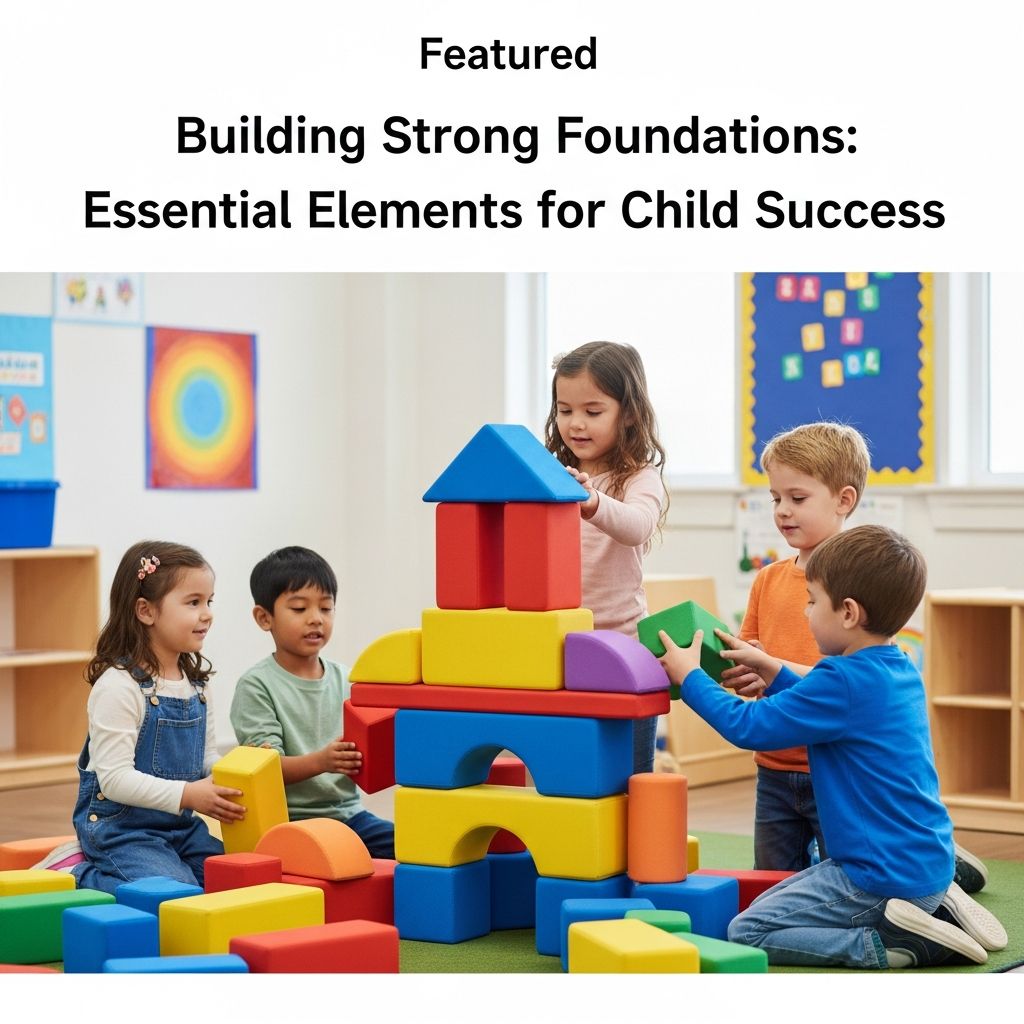
Establishing the Cornerstone of Childhood Achievement
The pathway to a fulfilling and successful life begins long before a child enters formal education. Research demonstrates that the early years of development are pivotal in determining how a child progresses through school and ultimately navigates adulthood. Parents, caregivers, and educators increasingly recognize that success is not determined by a single factor but rather by a comprehensive combination of elements that work in concert to support healthy development.
Understanding what children fundamentally need to flourish enables families and communities to make intentional investments in their futures. When children receive consistent support across multiple developmental domains, they build resilience, confidence, and the skills necessary to face life’s challenges. This exploration examines the critical components that form the foundation for long-term achievement and well-being.
The Role of Cognitive Stimulation in Early Learning
Intellectual development represents one of the most crucial areas influencing a child’s trajectory toward success. The brain’s capacity to absorb, process, and retain information expands dramatically during the early years, making this period an optimal window for cognitive investment. Research shows that children who receive consistent cognitive stimulation through enriched learning environments demonstrate measurably stronger performance in foundational academic skills including reading, mathematics, and logical reasoning.
Cognitive stimulation extends beyond formal classroom instruction. It encompasses everyday interactions that parents and caregivers provide through conversation, exposure to varied experiences, and engagement with age-appropriate learning materials. When adults talk with children, read together, visit educational venues, and encourage exploration, they activate neural pathways that strengthen the brain’s architecture. These interactions need not be expensive or elaborate; the quality of engagement matters more than the resources expended.
The disparity in cognitive stimulation between households of different economic backgrounds has documented effects on children’s academic trajectories. Children from families with greater educational resources receive more exposure to vocabulary-rich conversations and literacy experiences, which translates to advantages in language development and academic readiness. Recognizing this gap allows communities and schools to implement targeted interventions that level the playing field for all children, regardless of their home circumstances.
Emotional Well-Being and Psychological Resilience
A child’s emotional health forms the psychological infrastructure upon which all other development occurs. When children feel secure, valued, and emotionally supported, they develop the confidence necessary to take intellectual risks, engage socially with peers, and persist through challenges. Emotional well-being encompasses both the child’s capacity to understand and manage their own feelings and their ability to recognize and empathize with the emotions of others.
The development of emotional resilience—the ability to bounce back from setbacks and adapt to change—proves particularly valuable throughout life. Children who experience consistent, nurturing relationships with adults learn that difficult emotions are manageable and that support is available during times of stress. This foundation prevents the internalization of anxiety and creates a template for healthy coping mechanisms that serve them into adulthood.
When children lack adequate emotional support, they often experience difficulties with self-regulation, behavioral control, and social relationships. These challenges can compound over time, affecting academic performance and creating patterns of behavior that persist unless addressed. Conversely, children who grow up with emotionally attuned caregivers develop superior abilities to manage impulses, navigate conflicts, and maintain emotional equilibrium in the face of adversity.
The Importance of Strong Relational Networks
Children do not develop in isolation. The quality and consistency of relationships they experience within their family, school, and community significantly shape their developmental outcomes. Secure attachments with primary caregivers create the emotional safety net from which children can venture into the world with confidence. When caregivers are responsive, predictable, and attuned to a child’s needs, they facilitate the development of secure attachment patterns that influence relationship formation throughout life.
Extended family networks, community connections, and peer relationships also contribute substantially to a child’s development. Research indicates that children benefit from diverse social interactions that expose them to different perspectives, model varied communication styles, and provide multiple sources of support. Strong family involvement in school settings enhances children’s academic outcomes and creates a bridge between home and learning environments.
The concept of “ideal early childhood environments” transcends specific family structures. What matters is not the configuration of the household but rather the presence of consistent, nurturing adults who provide stability, guidance, and emotional responsiveness. Communities that cultivate these supportive networks—through extended family involvement, mentoring programs, and neighborhood connections—create environments where children flourish regardless of family composition.
Foundational Health and Nutritional Requirements
Optimal child development cannot occur without adequate attention to physical health and nutrition. A child’s body and brain require proper nutrition to grow and function effectively. Nutritional deficiencies during critical developmental periods can result in stunted growth, impaired cognitive function, and reduced capacity for learning. Beyond basic nutrition, children need access to preventive healthcare, vaccinations, and treatment for health conditions that might otherwise impede their development.
Safe housing and stable living conditions form the bedrock upon which all other development occurs. Children who experience housing instability, unsafe living environments, or inadequate shelter face barriers to learning and emotional development. The stress associated with housing insecurity diverts cognitive resources away from learning and toward survival concerns, making academic and social achievement significantly more challenging.
Physical activity and outdoor exposure contribute to both physical health and cognitive development. Active play supports motor skill development, promotes cardiovascular health, and provides opportunities for social interaction and problem-solving. The combination of adequate nutrition, regular physical activity, preventive healthcare, and safe living conditions creates the physical foundation necessary for children to engage fully in learning and social development.
Parental Involvement and Family Engagement
The level of engagement parents and primary caregivers maintain in their child’s education and development correlates strongly with academic success and long-term achievement. When families actively participate in school settings, communicate with educators, and reinforce learning at home, children benefit from a unified approach to their development. This partnership between home and school creates coherence in messages, expectations, and support systems.
Parental involvement extends beyond school participation to encompass the daily interactions, guidance, and modeling that shape a child’s values, work ethic, and approach to challenges. Parents serve as the primary interpreters of the world for their children, helping them make sense of experiences and develop their understanding of how to navigate life. The time and attention parents invest in these relationships have documented effects on children’s academic performance, emotional health, and social competence.
Parental stress, mental health challenges, and limited educational backgrounds can constrain the resources parents have available for engagement with their children. Recognizing these constraints allows communities to provide targeted support that enables all families to engage meaningfully with their children’s development, regardless of their starting circumstances. When parents receive support for their own well-being and skill development, they become more effective in supporting their children.
Access to Quality Early Childhood Programs
High-quality early childhood education programs provide structured environments where children receive cognitive stimulation, social interaction, and developmental support alongside their home experiences. When these programs exceed minimal standards and provide enrichment opportunities, they produce measurable improvements in children’s academic skills, social-emotional development, and behavioral self-regulation.
The quality of care within these programs depends on multiple factors, including educator training and qualifications, appropriate child-to-adult ratios, curriculum design, and the creation of emotionally supportive relationships. Continuity of care—where children experience consistent relationships with the same caregivers over extended periods—enhances developmental benefits. Children benefit from programs that recognize and address individual needs while providing universal opportunities for learning and growth.
Comparison of Development Outcomes by Program Quality
| Developmental Domain | High-Quality ECE Programs | Standard Care Settings |
|---|---|---|
| Language Development | Significant measurable gains | Minimal gains |
| Mathematics Readiness | Above-average progression | Age-appropriate baseline |
| Social-Emotional Skills | Accelerated competence | Standard development |
| Self-Regulation Abilities | Enhanced capacity | Developing capacity |
| Behavioral Problems | Reduced incidents | Variable outcomes |
Environmental Factors and Social Determinants
A child’s immediate environment—the neighborhoods where they live, the schools they attend, and the communities that surround them—profoundly shapes their development and opportunities. Children growing up in disadvantaged environments face cumulative challenges that affect their health, education, and long-term prospects. These environmental constraints include limited access to quality education, healthcare disparities, reduced availability of enrichment opportunities, and exposure to stressors including violence, environmental hazards, and community instability.
Poverty exerts particular influence on child development through multiple pathways. Economic constraint limits access to basic necessities including nutritious food, safe housing, and quality childcare. Additionally, the stress associated with financial insecurity affects parental well-being and the quality of parent-child interactions. When families experience economic pressure, they often have reduced capacity for the cognitive stimulation and emotional engagement that supports optimal development.
Understanding these environmental and social determinants allows communities and policymakers to target interventions effectively. Rather than viewing disparities in child outcomes as inevitable, recognizing the modifiable factors that create these disparities enables strategic investment in environments and supports that level opportunities across all children.
Building Resilience Through Adversity
Contrary to assumptions that children thrive only in perfectly protected environments, research demonstrates that experiencing manageable challenges builds resilience and competence. Children who face difficulties with adequate support develop problem-solving abilities, emotional regulation skills, and confidence in their capacity to overcome obstacles. The key distinction lies between adversity that children face with supportive adults present and adversity that leaves children isolated and unsupported.
Resilience develops through experiencing challenges, receiving guidance and encouragement from trusted adults, and successfully navigating difficulties. Children benefit from opportunities to make age-appropriate decisions, experience natural consequences, and learn from mistakes within safe contexts. Overprotection that prevents children from facing any difficulty can actually undermine the development of resilience and competence.
The Long-Term Impact of Early Investment
Research following children from early intervention programs into adulthood reveals that investments made during childhood produce measurable returns throughout the lifespan. Children who receive comprehensive support for their cognitive, emotional, and social development during early years demonstrate higher educational attainment, greater earnings potential, and improved health outcomes in adulthood. These benefits extend beyond the individual to create positive effects on communities through reduced involvement in the juvenile justice system, lower adolescent pregnancy rates, and greater civic participation.
The productivity of early investment is particularly high when multiple domains of development receive simultaneous attention. Programs that address nutrition, health, cognitive stimulation, and emotional support while engaging families produce the most substantial gains. When interventions focus narrowly on single domains without addressing the broader context of children’s lives, benefits tend to be more modest and transient.
Frequently Asked Questions
Q: At what age should parents begin focusing on child development?
A: Development begins at birth and even before. The prenatal period and infancy are particularly critical for brain development. However, every period of childhood offers opportunities for growth and learning. Parents should maintain focus on development throughout childhood and adolescence, as different skills and competencies emerge at different stages.
Q: Can children overcome developmental disadvantages from early childhood?
A: Yes, children demonstrate remarkable capacity for growth and development. While early experiences establish important foundations, subsequent experiences and interventions continue to shape development. However, addressing challenges becomes progressively more difficult and expensive the later intervention occurs, making early prevention and support particularly valuable.
Q: How important is formal schooling compared to home learning experiences?
A: Both formal education and home learning experiences matter significantly. Research shows that children benefit most when schools and families work together, reinforcing consistent messages and supporting development across multiple settings. Neither school nor home experiences alone can fully replace the other; optimal outcomes require coordination between both environments.
Q: What role do peer relationships play in child development?
A: Peer relationships become increasingly important as children grow, particularly during school years and adolescence. Through friendships, children learn social skills, practice negotiation and conflict resolution, develop empathy, and experience belonging. Difficulties in peer relationships can affect academic engagement and emotional well-being, making support for healthy peer interactions an important parenting focus.
Q: Can single parents or non-traditional families support optimal child development?
A: Absolutely. Research shows that family structure matters less than the quality of relationships and consistency of support. Children thrive in diverse family configurations when they experience stable, nurturing relationships with available adults who provide guidance, emotional support, and cognitive stimulation. Extended family networks and community connections can provide additional support regardless of family structure.
Q: How can parents balance cognitive stimulation with unstructured play?
A: Both structured learning and unstructured play contribute to development. Unstructured play allows children to develop creativity, problem-solving skills, and social competence through peer interaction and exploration. Cognitive stimulation occurs through both intentional teaching and naturally through play experiences. A balanced approach includes both types of activities rather than emphasizing one at the expense of the other.
References
- Success in School and in Life: It Starts at Birth — Cognia. Accessed January 2026. https://source.cognia.org/issue-article/success-school-and-life-it-starts-birth/
- Early Childhood Development and Social Determinants — National Center for Biotechnology Information (NIH). PMC9596089. Accessed January 2026. https://pmc.ncbi.nlm.nih.gov/articles/PMC9596089/
- Child Development Research Is Changing Early Childhood Education — Rasmussen University. Accessed January 2026. https://www.rasmussen.edu/degrees/education/blog/child-development-research/
- Understanding Early Childhood Development and Its Importance — National Bureau of Economic Research (NBER). October 2024. https://www.nber.org/reporter/2024number3/understanding-early-childhood-development-and-its-importance
- The Science Behind Raising Successful Kids — University of Chicago News. Accessed January 2026. https://news.uchicago.edu/big-brains-podcast-science-behind-raising-successful-kids
- Children’s Learning and Development Benefits from High-Quality Early Care and Education — U.S. Department of Health and Human Services, Administration for Children and Families. 2023. https://acf.gov/sites/default/files/documents/opre/%232023-226%20Benefits%20from%20ECE%20Highlight%20508.pdf
- The Science of Early Childhood Development — Harvard University Center on the Developing Child. October 2024. https://developingchild.harvard.edu/wp-content/uploads/2024/10/Science_Early_Childhood_Development.pdf

- Integrated M.A. in Applied Linguistics, University of Hyderabad
- 5+ years in editorial, instructional, SEO, and research-based writing
Sneha is a relationships and lifestyle writer with a strong foundation in applied linguistics and certified training in relationship coaching. She brings over five years of writing experience to theskillvault, crafting thoughtful, research-driven content that empowers readers to build healthier relationships, boost emotional well-being, and embrace holistic living. Her writing and insights reflect the belief that beauty, happiness, and wellness…