
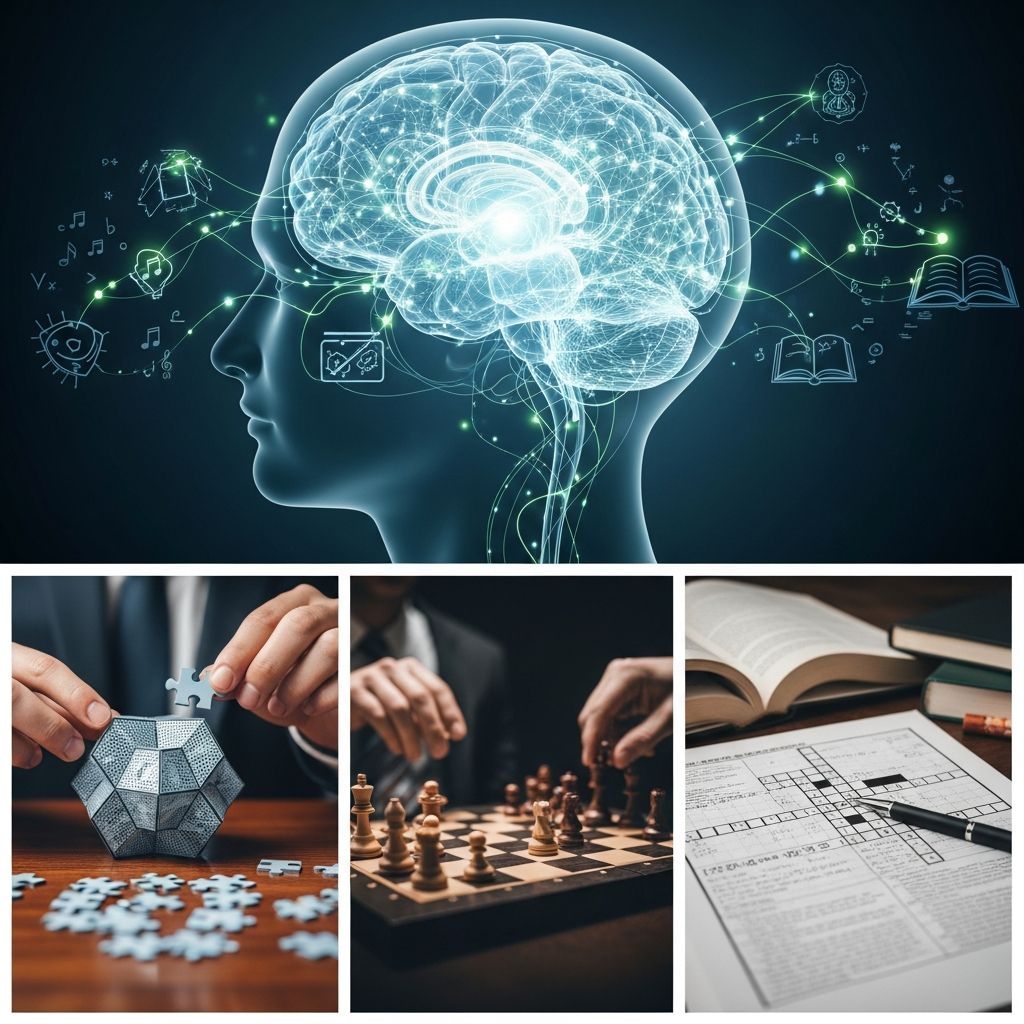
Keeping your brain sharp is essential in today’s fast-paced world. Just as physical workouts strengthen muscles, targeted mental exercises can enhance cognitive abilities like memory, attention, and problem-solving. Research shows that consistent brain training leads to measurable improvements in key areas, making it a vital practice for people of all ages.
Why Your Brain Needs Regular Workouts
The human brain thrives on challenge and novelty. Without stimulation, cognitive functions can decline over time, especially with age. Studies demonstrate that engaging in specific brain exercises increases performance in tasks involving speed, accuracy, attention, and working memory. For instance, healthy adults who used computerized brain training games for just three weeks showed significant gains in attention and motor speed compared to controls.
Physical inactivity also impacts brain health negatively. Regular aerobic exercise boosts blood flow to the brain, promotes new neuron growth in the hippocampus—a region crucial for learning and memory—and reduces risks of cognitive decline. Combining mental and physical routines creates a synergistic effect, optimizing overall mental fitness.
Digital Brain Training: Games That Deliver Results
Computerized brain training games (BTGs) target multiple cognitive domains through interactive challenges. A randomized study with 51 healthy participants using a program like Lumosity for 15 minutes daily over three weeks reported enhancements in executive functions, processing speed, attention, and memory. Participants improved on standardized tests like the Cambridge Neuropsychological Test Automated Battery (CANTAB), outperforming untrained controls.
These games adapt to user performance, ensuring progressive difficulty. Benefits include better visuo-motor coordination and global cognitive function, with correlations to biomarkers like brain-derived neurotrophic factor (BDNF), which supports neuron survival and growth.
Key Benefits of Digital Training Programs
- Improved Working Memory: Tasks that require holding and manipulating information yield up to 30% gains.
- Enhanced Attention: Sustained focus exercises reduce distractibility in daily tasks.
- Boosted Processing Speed: Faster reaction times translate to quicker decision-making.
- Executive Function Gains: Better planning and flexibility in complex scenarios.
Dual N-Back: The Gold Standard for Memory Training
Among brain exercises, the dual n-back task stands out for its proven efficacy. In a Johns Hopkins study, young adults practicing this exercise for a month achieved a 30% improvement in working memory—nearly double that of other methods like complex span tasks. Dual n-back involves tracking two simultaneous stimuli (e.g., visual position and auditory pitch) from ‘n’ steps back, demanding constant updating in the prefrontal cortex.
EEG scans revealed significant brain activity changes in this higher-learning region, underscoring structural adaptations from training. Unlike generic games, it focuses on fluid intelligence components vital for school, work, and novel problem-solving. Researchers recommend it as the most reliable for cognitive enhancement.
| Training Type | Working Memory Gain | Brain Changes Observed | Study Duration |
|---|---|---|---|
| Dual N-Back | 30% | Prefrontal cortex activity increase | 1 month |
| Complex Span | 15-20% | Minimal | 1 month |
| Control Task | No change | None | 1 month |
This table summarizes findings from the Johns Hopkins research, highlighting dual n-back’s superiority.
Physical Activities That Supercharge Cognition
Movement isn’t just for the body—it’s a powerhouse for the brain. The CDC emphasizes that physical activity improves thinking, learning, problem-solving, memory, and emotional balance while reducing anxiety and depression. Rodent studies confirm exercise increases hippocampal blood supply and neurogenesis, effects mirrored in humans.
Aerobic exercises like running or brisk walking for 30 minutes daily enhance episodic memory—the ability to recall specific events. Even moderate activities promote vascular connections and neural growth, countering sedentary lifestyles’ detrimental impacts.
Top Physical Brain Boosters
- Aerobic Cardio: Running or cycling elevates BDNF levels, aiding memory consolidation.
- Yoga and Tai Chi: Combine movement with mindfulness for attention and stress reduction.
- Team Sports: Require strategy, coordination, and quick thinking.
- Dancing: Engages rhythm, memory sequences, and spatial awareness.
Mindfulness and Meditation for Focus
Mindfulness practices train sustained attention and emotional regulation. Regular meditation thickens the prefrontal cortex and improves connectivity in attention networks, complementing game-based training. Short daily sessions—10-20 minutes—yield benefits comparable to longer cognitive drills.
Combining meditation with BTGs amplifies results, as seen in studies linking BDNF elevations to both interventions. Techniques like focused breathing or body scans reduce mind-wandering, enhancing performance in demanding tasks.
Puzzles and Strategy Games for Problem-Solving
Traditional puzzles build logical reasoning and pattern recognition. Sudoku hones numerical processing, crosswords expand vocabulary and semantic memory, while chess develops foresight and risk assessment.
Video-based strategy games simulate real-world scenarios, improving multitasking and decision-making under pressure. A consensus from scientists notes that while not all games transfer broadly, targeted puzzle training supports reasoning and episodic memory over time.
Learning New Skills: The Ultimate Brain Challenge
Acquiring novel abilities—like a language, instrument, or craft—forces neuroplasticity. This creates dense neural pathways, enhancing overall cognition. Studies show small but sustained gains in reasoning from diverse skill practice.
- Languages: Boosts executive control and gray matter density.
- Music: Improves auditory processing and inter-hemispheric communication.
- Juggling: Enhances visual-motor integration and coordination.
Daily Habits to Integrate Brain Workouts
Consistency trumps intensity. Aim for 15-30 minutes daily across varied exercises to prevent adaptation plateaus. Track progress with apps or journals to stay motivated.
Sleep (7-9 hours), nutrition rich in omega-3s and antioxidants, and hydration further amplify gains. Social interactions, like debates or book clubs, add relational memory training.
Frequently Asked Questions (FAQs)
How often should I do brain exercises?
Daily sessions of 15-30 minutes, 5-7 days a week, yield optimal results without burnout. Consistency over months leads to lasting neural changes.
Do brain training apps really work?
Yes, when targeting specific skills like working memory. Evidence supports programs improving trained and related functions, especially dual n-back.
Can physical exercise replace mental training?
No, but it complements it powerfully. Exercise boosts foundational brain health, while targeted mental workouts refine specific skills.
Are brain exercises effective for older adults?
Absolutely. They mitigate age-related decline, with studies showing executive function and speed improvements in seniors.
What if I don’t see immediate results?
Benefits accrue over weeks. Measure via self-tests or biomarkers; persistence is key to neuroplastic adaptations.
Potential Limitations and Realistic Expectations
Not all brain training transfers equally to untrained tasks. While domain-specific gains are robust, broad IQ boosts are modest. Individual factors like genetics (e.g., APOE variants) influence outcomes. Consult professionals for cognitive concerns.
References
- Brain Training Games Enhance Cognitive Function in Healthy Subjects — Al-Thuayb A, et al. 2018-04-26. https://pmc.ncbi.nlm.nih.gov/articles/PMC5930973/
- This training exercise boosts brain power — Johns Hopkins University Hub. 2017-10-17. https://hub.jhu.edu/2017/10/17/brain-training-exercise/
- Working out boosts brain health — American Psychological Association. N/A. https://www.apa.org/topics/exercise-fitness/stress
- A Consensus on the Brain Training Industry from the Scientific Community — Stanford Center on Longevity. N/A. https://longevity.stanford.edu/a-consensus-on-the-brain-training-industry-from-the-scientific-community-2/
- Physical Activity Boosts Brain Health — Centers for Disease Control and Prevention (CDC). N/A. https://www.cdc.gov/physical-activity/features/boost-brain-health.html

- Integrated M.A. in Applied Linguistics, University of Hyderabad
- 5+ years in editorial, instructional, SEO, and research-based writing
Sneha is a relationships and lifestyle writer with a strong foundation in applied linguistics and certified training in relationship coaching. She brings over five years of writing experience to theskillvault, crafting thoughtful, research-driven content that empowers readers to build healthier relationships, boost emotional well-being, and embrace holistic living. Her writing and insights reflect the belief that beauty, happiness, and wellness…