
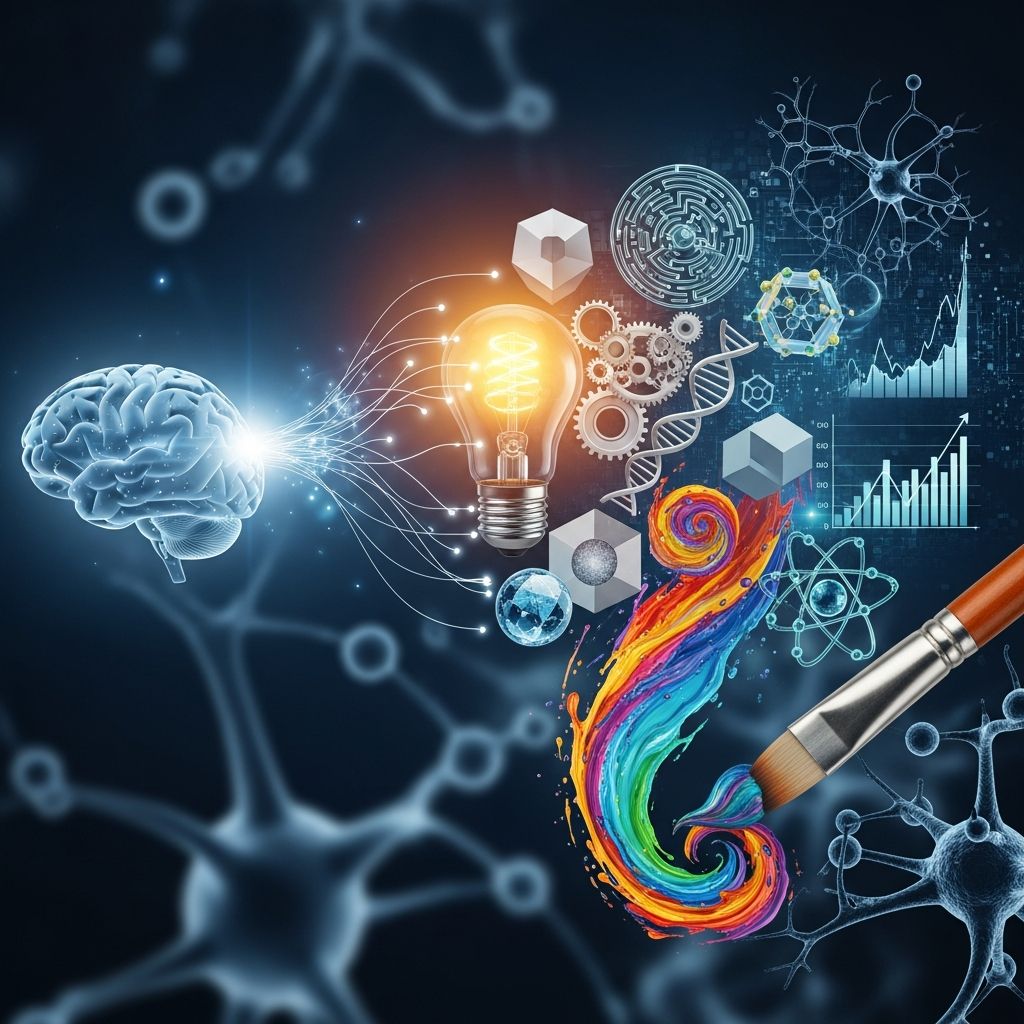
Understanding the Neuroscience of Creative Capacity
Creativity is far from being an innate talent reserved for artists and inventors. Rather, it represents a trainable cognitive skill that responds positively to deliberate practice and environmental modification. Neuroscience research demonstrates that creativity engages multiple brain systems simultaneously, drawing on memory networks, emotional processing centers, and executive function areas. The encouraging news is that individuals can systematically strengthen these neural pathways through targeted interventions and lifestyle adjustments.
The traditional misconception portrays creativity as spontaneous inspiration striking without warning. However, contemporary neuroscience reveals a more nuanced picture. Creative breakthroughs emerge from the interplay between focused attention and diffuse, wandering thought patterns. Your brain contains specialized regions responsible for divergent thinking—the ability to generate multiple solutions to open-ended problems—and these regions can be deliberately activated and strengthened.
Memory Systems as Foundations for Creative Expression
The relationship between memory and creativity proves more intricate than initially apparent. Different memory systems contribute uniquely to creative output. Working memory enables the mental manipulation of information currently in your conscious awareness, facilitating problem-solving when clear answers exist. Conversely, long-term memory systems provide the experiential database from which creative connections emerge. Even seemingly mundane memories—observations of everyday situations, conversations with acquaintances, or forgotten books read years ago—serve as raw material for innovative thinking.
This understanding suggests that expanding your experiential repertoire directly enhances creative capacity. By intentionally seeking diverse experiences and deliberately encoding these memories through reflection and discussion, you populate your mental database with richer material. Your brain then makes novel associations between these varied experiences, producing creative insights that feel sudden but actually emerge from accumulated knowledge.
Movement and Physical Activity as Cognitive Catalysts
Physical activity transcends its well-known benefits for cardiovascular and muscular health, extending into cognitive domains. Research demonstrates that walking specifically enhances creative thinking compared to remaining seated. The rhythmic, moderate intensity of walking appears to unlock cognitive pathways that remain dormant during static positioning. This phenomenon may relate to increased blood flow to the brain, enhanced oxygenation, or the particular neurochemical cascade triggered by ambulatory movement.
Implementing movement into your creative practice need not involve strenuous exercise. Simple strategies prove effective:
- Schedule walking meetings or thinking sessions for problem-solving
- Take periodic breaks from seated work to move about your environment
- Combine physical exercise with creative tasks, such as journaling after a run
- Use outdoor walking as an incubation period for current creative challenges
Meditation and Mindfulness Practices for Cognitive Flow
Writer’s block and creative stagnation frequently result from disrupted cognitive flow—that absorbing state of complete task engagement where self-consciousness dissolves and creativity flourishes. Meditation offers a powerful antidote to this frustration. Unlike common misconceptions, meditation doesn’t require emptying the mind of all thoughts. Instead, open monitoring meditation—where practitioners remain receptive to any thoughts or sensations without focusing on particular objects—correlates with increased divergent thinking and novel idea generation.
The mechanism underlying meditation’s creative benefits involves reducing mental rumination and the anxiety that typically crowds consciousness during creative work. By observing emotions and thoughts without judgment, practitioners create psychological space for creative material to emerge. Consistent meditation practice appears to strengthen attention networks and reduce the tendency toward perfectionistic self-criticism that inhibits creative expression.
Establishing a meditation routine need not demand extensive time commitment. Even brief daily sessions—ten to fifteen minutes of focused breathing or body awareness—produce measurable improvements in creative thinking over sustained periods.
Environmental Design: Lighting, Color, and Nature Integration
The physical environment profoundly influences creative capacity through mechanisms that operate largely outside conscious awareness. Lighting conditions demonstrate surprising effects on creative performance. Research comparing workers in rooms of varying luminosity reveals that individuals in dimmer environments generate more creative insights than those in brightly lit spaces. This counterintuitive finding suggests that reduced visual stimulation paradoxically enhances internal cognitive focus and imaginative thinking.
Color exposure presents another environmental lever for enhancing creativity. The color green, in particular, demonstrates measurable associations with improved creative performance. Exposure to green imagery or natural views activates mental associations with growth, renewal, and possibility, which correlate with enhanced divergent thinking. Conversely, the color red appears to trigger cautionary associations that may inhibit creative exploration.
Incorporating natural elements into your workspace compounds these benefits. Surrounding yourself with plant imagery, views of vegetation, or even desk-mounted photographs of natural landscapes measurably increases creative output. The human brain appears programmed to respond positively to natural visual stimuli, and this response extends directly into enhanced cognitive creativity.
Strategic Use of Boredom and Mental Wandering
Modern life conspires against boredom. Digital devices provide constant stimulation, filling every idle moment with notifications, entertainment, and social connection. Yet this relentless engagement comes at a cognitive cost. Research reveals that bored individuals actually outperform their stimulated counterparts on creativity tests. Additionally, boredom facilitates daydreaming—the wandering of attention away from immediate surroundings—which strengthens creative thinking.
The neurological mechanism appears to involve reduced activation of the default mode network’s inhibitory structures when boredom prompts mind-wandering. During these unstructured mental states, your brain makes unexpected associations between disparate concepts, generating novel ideas that wouldn’t emerge during focused, goal-directed thinking. Boredom signals that your current situation lacks sufficient engagement or novelty, motivating the search for fresh perspectives and innovative solutions.
Deliberately incorporating unstructured time into your schedule—periods without planned activities, entertainment, or digital engagement—provides essential space for this creative incubation process. Even uncomfortable stretches of idleness ultimately serve creative development.
Collaborative and Social Approaches to Ideation
While creativity often gets portrayed as solitary endeavor, collaborative thinking amplifies creative output significantly. Brainstorming sessions, where multiple participants contribute ideas in rapid succession without immediate criticism, generate numerous original concepts efficiently. Group brainstorming leverages the phenomenon where participants build upon and extend each other’s ideas, creating cascading chains of increasingly creative proposals.
Interactive group brainstorming outperforms solo ideation substantially. Research comparing group brainwriting (written idea exchange) with individual brainstorming found that groups produced 28 percent more possible applications for a common object. Importantly, these collaborative benefits extend beyond face-to-face interaction to include distributed teams communicating electronically, making remote collaboration viable for creative work.
Mind mapping represents a structured variant of collaborative thinking that externalizes the brain’s natural organizational processes. By creating visual networks of themes and branches, participants develop more systematic approaches to complex problems while still benefiting from the cross-pollination of ideas inherent in group participation.
Constraint-Based Thinking and Creative Limitations
Counterintuitively, imposing constraints often enhances creativity rather than diminishing it. While complete freedom in ideation appeals intuitively, many individuals find this openness overwhelming or anxiety-provoking. Establishing specific parameters—whether time limits, resource restrictions, or thematic boundaries—paradoxically stimulates more creative solutions. These constraints force the brain to explore less obvious pathways and combinations, preventing reliance on default solutions.
Constraints work neurologically by narrowing the solution space, requiring more deliberate search through possibility landscapes. The brain engages more fully when faced with specific challenges rather than unlimited possibilities. Professional creative practitioners across fields—writers working with word counts, designers constrained by budgets or technical specifications, musicians working within genre conventions—often report that limitations enhance rather than inhibit their creative output.
Novelty Seeking and Experience Diversification
Since memories provide the foundation for creative associations, systematically expanding your experiential repertoire directly enhances creative capacity. Pursuing novel experiences—whether through travel, museum visits, or even simple neighborhood walks—creates new memories that enrich your creative database. Diverse experiences prove more valuable than repeated exposure to similar situations, as novelty forces your brain to develop new mental representations and associations.
Exposure to diverse perspectives amplifies this benefit. Engaging with literature from unfamiliar traditions, discussing substantive topics with people from different backgrounds, and deliberately consuming media outside your typical preferences all contribute to cognitive flexibility and creative innovation. The brain adapts to variety by developing more sophisticated categorization systems and more numerous potential connections between concepts.
Stress Management and Mental Bandwidth Optimization
Chronic stress represents a significant barrier to creative thinking. Mental rumination—the circular, anxious replaying of concerns—occupies cognitive capacity that would otherwise support creative ideation. Additionally, stress activates the brain’s threat-detection systems, which prioritize safety over exploration, the neurological opposite of creativity.
Addressing stress through multiple channels proves more effective than single interventions. Physical exercise and meditation both reduce stress while simultaneously enhancing creative capacity. However, addressing stress sources directly produces the most substantial benefits. Setting workplace boundaries, delegating appropriate responsibilities, arranging childcare support, or otherwise reducing the actual sources of stress frees cognitive resources for creative work rather than merely managing symptoms.
Disinhibition and Spontaneous Expression
The dorsolateral prefrontal cortex, one of the brain’s most advanced regions, serves the protective function of risk assessment and behavioral censorship. While these functions prevent impulsive harm, they also suppress creative expression by filtering out unconventional ideas before conscious awareness. Brain imaging of jazz musicians and freestyle rappers reveals reduced activation in this inhibitory region during performance. Deliberately relaxing self-censorship—practicing spontaneous expression without immediate self-criticism—enhances creative output.
This doesn’t mean abandoning all judgment, but rather separating ideation phases from evaluation phases. During initial creative generation, suppressing the inner critic allows more raw material to emerge. Refinement and critical assessment occur in subsequent stages, after abundant raw creative material exists to evaluate and develop.
Technological Tools and Digital Resources
While excessive digital engagement inhibits creativity, strategically selected tools genuinely support creative development. Creativity-focused applications facilitate brainstorming, journaling, and idea organization. Gamification approaches—escape rooms requiring collaborative problem-solving, chess, puzzles, and Sudoku—engage cognitive systems underlying creative thinking. These structured challenges force novel approaches to familiar problem types, strengthening cognitive flexibility.
Digital platforms also enable connection with creative communities that provide accountability, motivation, and collaborative opportunity. Online writing groups, art collectives, and communities of practice offer support structures that individual efforts often lack.
Building Sustainable Creative Communities
Isolated creative practice often leads to stagnation and discouragement. Participation in communities explicitly organized around creative development produces superior outcomes. Such communities take numerous forms: college courses fostering close-knit collaborative projects, writing groups providing peer feedback, art collectives sharing resources and exhibition opportunities, or public speaking organizations like Toastmasters developing communication skills essential for sharing creative work.
These communities function through multiple mechanisms. They provide accountability that maintains consistent practice. They offer diverse perspectives that stimulate creative thinking. They create safe spaces for experimentation and failure, essential elements of creative development. And they provide motivation through mutual support and shared enthusiasm for creative pursuits.
Measuring Creative Progress and Sustained Development
Formal training programs focusing on creative skill development produce measurable results. Research examining structured creativity training found that participants who engaged with specialized exercises targeting four core skill areas increased their rate of new idea generation by 55 percent. Over eight months, this translated into documented revenue generation and cost savings exceeding several million dollars in an organizational context.
Sustained creative development requires treating creativity as a skill requiring consistent practice rather than waiting for inspiration to strike. Establishing regular practices—daily writing or sketching, weekly brainstorming sessions, monthly exposure to new experiences—creates the conditions under which creative capacity flourishes. Progress may initially feel imperceptible, but accumulated practice produces substantial transformations in creative output and innovation capacity.
Frequently Asked Questions
Q: How long does it take to develop improved creative capacity?
A: Research indicates measurable improvements within weeks of consistent practice, with more substantial changes emerging after several months. The creativity training study mentioned earlier documented significant improvements over an eight-month period, though individual timelines vary based on baseline capacity and practice intensity.
Q: Can anyone develop creative capacity regardless of age?
A: Yes. While some research suggests certain creative capacities peak at particular life stages, neuroscience demonstrates that the brain maintains neuroplasticity—the ability to form new neural connections—throughout life. Creative skill development remains possible and beneficial across all age ranges.
Q: Which single intervention produces the fastest creative improvement?
A: While individual responses vary, regular physical activity, particularly walking, demonstrates rapid effects on creative thinking. Movement produces immediate neurochemical changes that enhance cognitive flexibility and divergent thinking capacity.
Q: How do I balance creative freedom with structured constraints?
A: Most effective creative practice alternates between phases. Initial brainstorming and ideation benefit from minimal constraints and maximum freedom. Once abundant raw ideas exist, applying constraints and structure helps refine and develop the most promising concepts.
Q: Can meditation alone substantially improve creativity?
A: Meditation effectively reduces mental obstacles to creativity like anxiety and rumination, but combining it with other interventions—movement, novel experiences, collaborative engagement—produces more comprehensive creative development than any single technique alone.
References
- The Science of Creativity: How to Train Your Brain for Innovative Thinking — University of Pennsylvania LPS Online. 2024. https://lpsonline.sas.upenn.edu/features/science-creativity-how-train-your-brain-innovative-thinking
- 10 Psychological Tricks to Boost Creativity — Denver Health Medical Plan. 2024. https://www.denverhealthmedicalplan.org/blog/10-psychological-tricks-boost-creativity
- 16 Scientifically Proven Ways to Enhance Your Creativity — Idea to Value. June 2021. https://www.ideatovalue.com/crea/nickskillicorn/2021/06/16-scientifically-proven-ways-to-enhance-your-creativity/
- The Science of Creativity — American Psychological Association. 2009. https://www.apa.org/gradpsych/2009/01/creativity
- 5 Science-Based Methods to Increase Your Creativity — Association for Talent Development. 2024. https://www.td.org/content/atd-blog/5-science-based-methods-to-increase-your-creativity
- Train Your Brain to Be More Creative — Harvard Business Review. June 2021. https://hbr.org/2021/06/train-your-brain-to-be-more-creative

- Integrated M.A. in Applied Linguistics, University of Hyderabad
- 5+ years in editorial, instructional, SEO, and research-based writing
Sneha is a relationships and lifestyle writer with a strong foundation in applied linguistics and certified training in relationship coaching. She brings over five years of writing experience to theskillvault, crafting thoughtful, research-driven content that empowers readers to build healthier relationships, boost emotional well-being, and embrace holistic living. Her writing and insights reflect the belief that beauty, happiness, and wellness…