
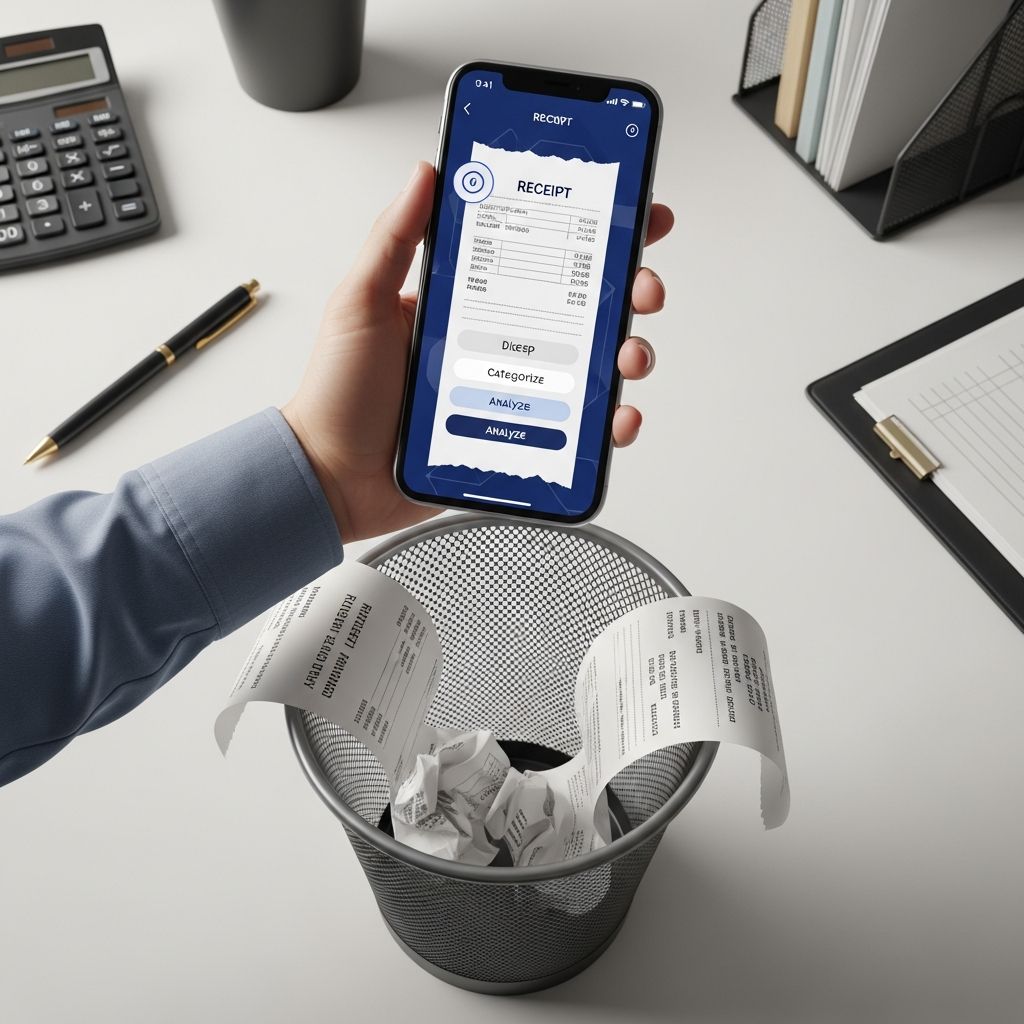
Receipts accumulate quickly in wallets, drawers, and bags, creating chaos that complicates finances and taxes. Effective management involves distinguishing essential documents from disposable ones, ensuring compliance while minimizing clutter. This guide provides clear rules based on IRS guidelines and practical advice to organize your papers digitally or physically.
Why Receipt Retention Matters for Your Finances
Maintaining the right receipts protects against audits, supports returns, and verifies warranties. The IRS requires records proving income, deductions, and credits for specific periods. Discarding prematurely risks penalties, while hoarding wastes space. Proper habits save time during tax season and disputes with retailers.
Start by categorizing: tax-related, purchase proofs, and routine transactions. Digitize where possible for easy access. The standard retention is three years for most personal tax documents, aligning with audit statutes of limitations.
Tax-Related Receipts: Essential Long-Term Keeps
For taxes, retain supporting evidence like receipts backing deductions or income. The IRS mandates keeping these “as long as needed to prove” claims, generally three years from filing or due date. Filed early? Use the due date as the clock start.
- Income proofs: W-2s, 1099s, bank deposit slips.
- Deduction backups: Charitable donations, medical expenses, home office supplies.
- Credit evidence: Energy-efficient purchases qualifying for rebates.
Exceptions extend periods: unreported income over 25% of gross requires six years; bad debts or worthless securities, seven years. Businesses keep employment records four years after taxes due.
| Scenario | Retention Period | Source |
|---|---|---|
| Standard audit window | 3 years | IRS Statute |
| Omitted income >25% | 6 years | IRS Rule |
| Bad debt deductions | 7 years | IRS Exception |
| Employment taxes | 4 years | Payroll Records |
| Property sales/assets | Until disposal +3 years | Asset Rules |
Big-Ticket Purchases: Warranty and Return Guardians
High-value items demand receipt retention beyond taxes. Electronics, appliances, furniture often carry 1-3 year warranties; keep until expired plus buffer. For homes or cars, indefinite storage proves ownership and basis for capital gains.
- Electronics/appliances: Save until warranty ends; scan for digital backup.
- Vehicles/real estate: Permanent files for loans, sales, improvements.
- Jewelry/furs: Indefinite for insurance claims.
Pro tip: Note warranty details on receipt copies. Retailers like Best Buy require proof for repairs; without it, coverage denies.
Everyday Expenses: When to Pitch Immediately
Not all slips need saving. ATM receipts verify balances—discard post-statement reconciliation. Grocery or coffee slips? Toss unless deductible (rare for individuals).
- Non-deductible small buys: Meals, gas (unless business).
- ATM/bank slips: Confirm online, shred after 1 month.
- Disposable income items: Clothing, entertainment without returns.
Audit risk low for minor items; focus energy on substantiables.
Business Owners: Stricter Record Rules
Self-employed or small businesses face longer holds: six years recommended for complexity. Track all expenses: invoices, payroll, petty cash.
Employment taxes demand four years; property/depreciation until disposal. Digital tools like QuickBooks auto-categorize, but backups essential.
- Cash tapes, credit slips, canceled checks.
- Vendor invoices, receivable ledgers.
- Payroll stubs, contractor 1099s.
Transitioning to Paperless: Safe Digitization Steps
Go digital to reclaim space. IRS accepts scans if legible, complete. Apps like Expensify or Adobe Scan capture via phone; organize folders by year/category.
- Photograph clearly, high-res PDF.
- Tag with date, amount, purpose.
- Cloud store (Google Drive, Dropbox) with backups.
- Physical? Shred securely post-scan.
Hold originals 1-2 extra years initially for caution. Banks provide digital statements—print only if needed.
Organizing Your Receipt System
Implement a foolproof setup:
- Weekly purge: Sort mail, scan keeps, trash tosses.
- Binders/folders: Tax year sections, big buys separate.
- Apps/filing cabinets: Hybrid for accessibility.
For families, assign zones: one per person. Annual review pre-tax season verifies completeness.
Special Cases: Insurance, Medical, and Legal
Beyond taxes:
- Insurance claims: All home/auto repair receipts indefinite.
- Medical: Bills for reimbursements, 3-7 years.
- Legal docs: Contracts, wills—permanent.
Retirement accounts: Keep until full withdrawal +3 years.
Frequently Asked Questions (FAQs)
What is the minimum time to keep most tax receipts?
Three years from filing or due date, per IRS.
Can I shred originals after scanning?
Yes, if digital copies are accurate and backed up; retain physical 1-2 years extra.
How long for business receipts?
Generally six years, longer for payroll/assets.
Do I need receipts for online purchases?
Yes, emails/digital confirmations suffice as proof.
What if audited after three years?
Rare, but exceptions like fraud allow indefinite IRS access—keep longer if risky.
Streamline Today: Actionable Next Steps
Grab a box, sort pile by category. Scan keepers, shred rest. Set calendar reminders for purges. Financial peace follows organized papers.
References
- How Long to Keep Business Tax Records and Receipts — Bench.co. 2023. https://www.bench.co/blog/tax-tips/small-business-recordkeeping
- How long to keep tax returns — Adobe Acrobat. 2024. https://www.adobe.com/acrobat/hub/how-long-to-keep-tax-returns.html
- How Long To Keep Tax Records — H&R Block. 2024. https://www.hrblock.com/tax-center/filing/personal-tax-planning/how-long-to-keep-tax-returns/
- How Long To Keep Tax Returns and Records — TurboTax Intuit. 2024. https://turbotax.intuit.com/tax-tips/tax-planning-and-checklists/how-long-do-federal-and-state-tax-returns-need-to-be-kept/L43GK2Wcs
- How Long Do You Need to Keep Tax Records? — AARP. 2024. https://www.aarp.org/money/taxes/how-long-to-keep-records/
- Recordkeeping — Internal Revenue Service (IRS.gov). 2026-01-01. https://www.irs.gov/businesses/small-businesses-self-employed/recordkeeping

Medha Deb is an editor with a master's degree in Applied Linguistics from the University of Hyderabad. She believes that her qualification has helped her develop a deep understanding of language and its application in various contexts. Medha specializes in the areas of beauty, health, sports, and wellness and is committed to ensuring that the content on the website is…