
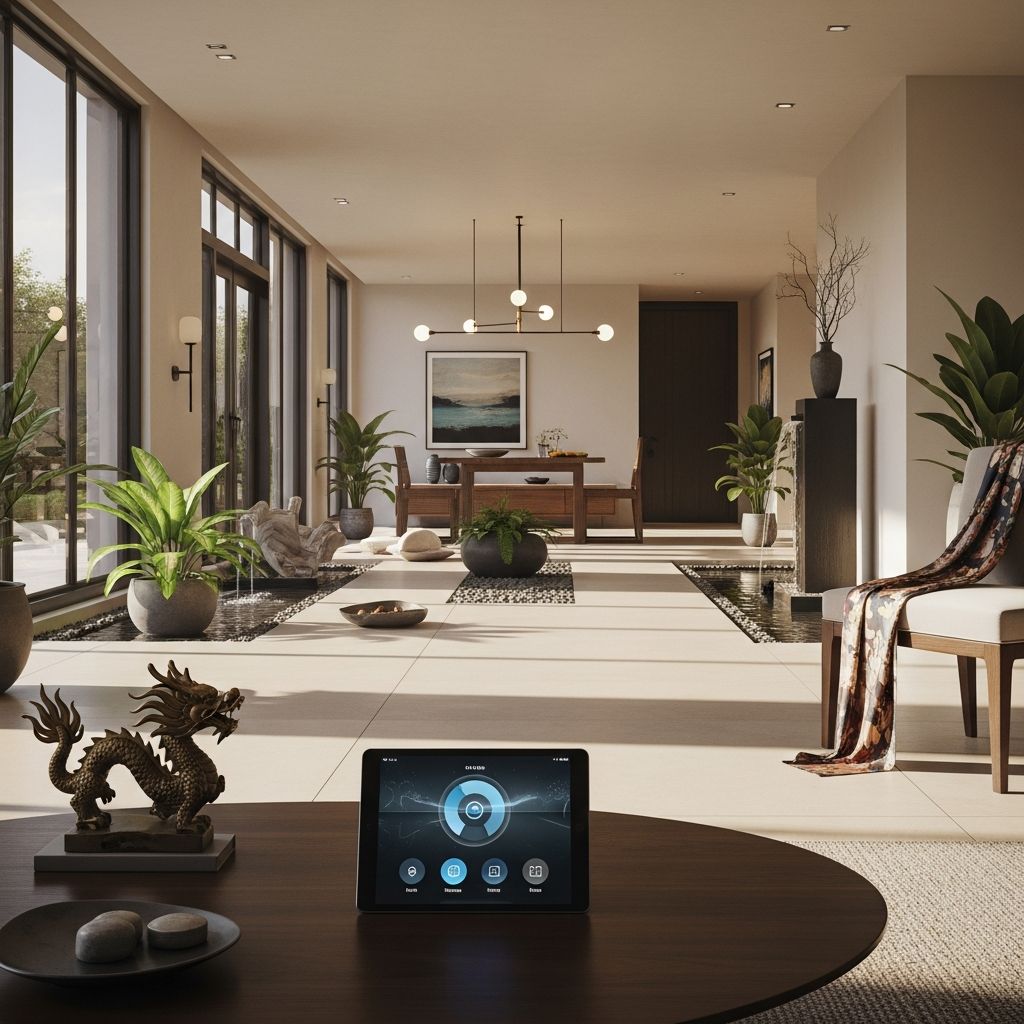
Selecting a new home transcends mere aesthetics or location convenience; it involves attuning to the subtle energies that influence daily life. Feng Shui, an ancient Chinese practice, emphasizes balancing qi—the vital life force—to foster prosperity, health, and serenity. By integrating these principles into your house-hunting process, you can identify properties that naturally support your goals rather than ones requiring extensive remedies.
Understanding Qi Flow in Property Selection
Qi represents the dynamic energy that permeates environments, and its quality determines a home’s potential to uplift or drain its occupants. Auspicious homes channel qi smoothly, avoiding stagnation or aggressive disruptions. During viewings, observe how energy moves: does it invite you in warmly, or does it feel rushed and chaotic? Trusting intuition here is key, as it often signals underlying harmony.
Ideal sites mimic nature’s supportive formations, like a structure backed by stable terrain and open to gentle inflows from the front. This configuration, often called the ‘armchair’ position, provides protection while allowing nourishment—much like a person seated comfortably with a view ahead.
Evaluating the External Landscape
The surroundings set the foundation for a home’s energy. Start with the broader topography before zooming into immediate features.
- Topographical Support: Seek properties with gentle rises or hills behind, symbolizing reliability and backing. Flat lands with distant elevations are preferable to hilltops, where winds disperse qi rapidly. Avoid valleys prone to pooling stagnation.
- Water Elements: Flowing water nearby enhances wealth if positioned favorably—ideally curving gently in front, from right to left when facing the home. Rear water features erode support, symbolizing instability.
Street Dynamics and Road Configurations
Roads act as modern rivers, directing qi toward or away from your home. Certain alignments invite prosperity; others deliver disruptive sha qi.
| Configuration | Feng Shui Impact | Recommendation |
|---|---|---|
| T-Junction Facing Home | Direct sha qi arrow, causing stress and accidents | Avoid entirely |
| Cul-de-Sac Center | Stagnant qi pooling, leading to inertia | Steer clear; edges may be tolerable |
| Curved Road Inside Bend | Slow, nurturing qi accumulation | Highly favorable |
| Straight Driveway to Door | Rushes qi away too quickly | Prefer curving or screened approaches |
Properties below street level invite overwhelming external energies, often manifesting as financial leaks or health issues. Elevated or level positioning commands respect and containment.
Assessing Neighborhood Vitality
A vibrant community reflects healthy qi circulation. Scan for signs of decline: clusters of for-sale signs, vacant lots, or unkempt properties signal stagnant energy. Conversely, active streets with greenery and foot traffic indicate dynamic positivity.
Research local hazards—flood zones, fault lines, or industrial sites—introduce toxic sha qi that’s hard to mitigate. Proximity to parks balances urban intensity, providing natural qi refreshment.
Scrutinizing Architectural Harmony
The home’s form should promote even energy distribution. Irregular shapes disrupt balance, potentially affecting specific life areas.
- Land and Building Shape: Rectangular or square lots and footprints are optimal, aligning with the Bagua map—a Feng Shui grid linking directions to life aspects. Missing segments (over 33% absent) correlate with deficiencies in wealth, relationships, or health.
- Front-to-Back Proportions: Larger rear yards provide metaphorical ‘support,’ sloping subtly toward the house to gather qi.
Entryway and Facade Analysis
The front door is the ‘mouth of qi.’ Ensure clear visibility without obstructions like poles or overhanging branches, which block intake. Recessed doors weaken presence; protruding sections beyond the entry may fall outside protective energies. Avoid direct alignments with neighbors’ doors to prevent energy clashes.
Interior Layout Insights
Once exteriors pass muster, delve inside. Floor plans reveal how qi navigates living spaces.
Straight-shot paths from entrance to rear exits accelerate qi outflow, starving rooms of vitality. Central staircases act as drains, pulling energy upward or downward inefficiently.
- Staircase Placements to Avoid:
- Directly opposite the front door: Qi bypasses the home.
- Over bedrooms or bathrooms: Disturbs rest and amplifies negatives.
- Open under-stairs: Creates energy voids.
Kitchens, symbolizing nourishment, thrive facing breadwinners’ auspicious directions. Bedrooms demand solidity—no water views or beams overhead.
Advanced Checks for Multi-Level Homes
In two-story dwellings, vertical flow matters. Elevators or stairwells shouldn’t dominate centrally. Basements, if present, suit storage over living to prevent sinking qi.
Bagua Alignment for Life Enhancement
Overlay the Bagua on your floor plan post-viewing. Align the entry with career/prosperity sectors for momentum. Missing corners? Note them for future cures, but prioritize complete forms.
Practical House-Hunting Checklist
Use this streamlined tool during open houses:
- Exterior: Roads, water, terrain support? Neighborhood buzz?
- Shape: Rectangular lot/building, no major cuts?
- Entry: Clear, unblocked, proportional?
- Interior: Qi path inviting, stairs well-placed?
- Vibe: Does it feel welcoming and energizing?
Frequently Asked Questions
What if my dream home has minor Feng Shui flaws?
Small issues like a nearby pole can often be remedied with plants or mirrors post-purchase. Major defects, like T-junctions, warrant passing.
Can renters apply these principles?
Absolutely—focus on portable adjustments, but initial site selection profoundly impacts leasing too.
Is professional consultation necessary?
For complex cases, yes; experts screen plans deeply, ensuring directional alignments match personal charts.
How does Feng Shui affect property value?
Harmonious homes often appreciate faster, attracting stable owners drawn to positive vibes.
What’s the role of personal intuition?
Paramount—Feng Shui enhances but doesn’t replace gut feelings about a space.
Long-Term Benefits of Feng Shui-Aligned Homes
Buyers who prioritize these elements report smoother family dynamics, career boosts, and fewer unexplained setbacks. A well-sited home acts as a silent ally, compounding daily positives into lasting fulfillment. As urbanization intensifies, such discernment becomes a competitive edge in real estate.
Expand your search criteria beyond square footage: invest time in energy audits. The right property doesn’t just shelter—it elevates.
References
- Feng Shui Buying a House Rules | Mind-blowing, Proven Tips — Feng Shui Balanz. 2023-05-15. https://www.fengshuibalanz.com/feng-shui/home/house-buying/
- Feng Shui House Hunt — Master Sean Chan. 2022-11-10. https://www.masterseanchan.com/feng-shui-house-hunt/
- Feng Shui Guide: Essential Tips for Optimal House Selection — LoveToKnow. 2024-03-22. https://www.lovetoknow.com/home/design-decor/feng-shui-tips-house-hunting
- Feng Shui Tips When House-Hunting Part I: External Environment — Vicki Iskandar. 2023-08-07. https://vickiiskandar.com/blog/feng-shui-tips-when-house-hunting-part-i-external-environment
- Home Buying Checklist for Good Feng Shui — MS Feng Shui. 2024-01-12. https://www.msfengshui.com/blog/home-buying-checklist-for-good-feng-shui

- Integrated M.A. in Applied Linguistics, University of Hyderabad
- 5+ years in editorial, instructional, SEO, and research-based writing
Sneha is a relationships and lifestyle writer with a strong foundation in applied linguistics and certified training in relationship coaching. She brings over five years of writing experience to theskillvault, crafting thoughtful, research-driven content that empowers readers to build healthier relationships, boost emotional well-being, and embrace holistic living. Her writing and insights reflect the belief that beauty, happiness, and wellness…