
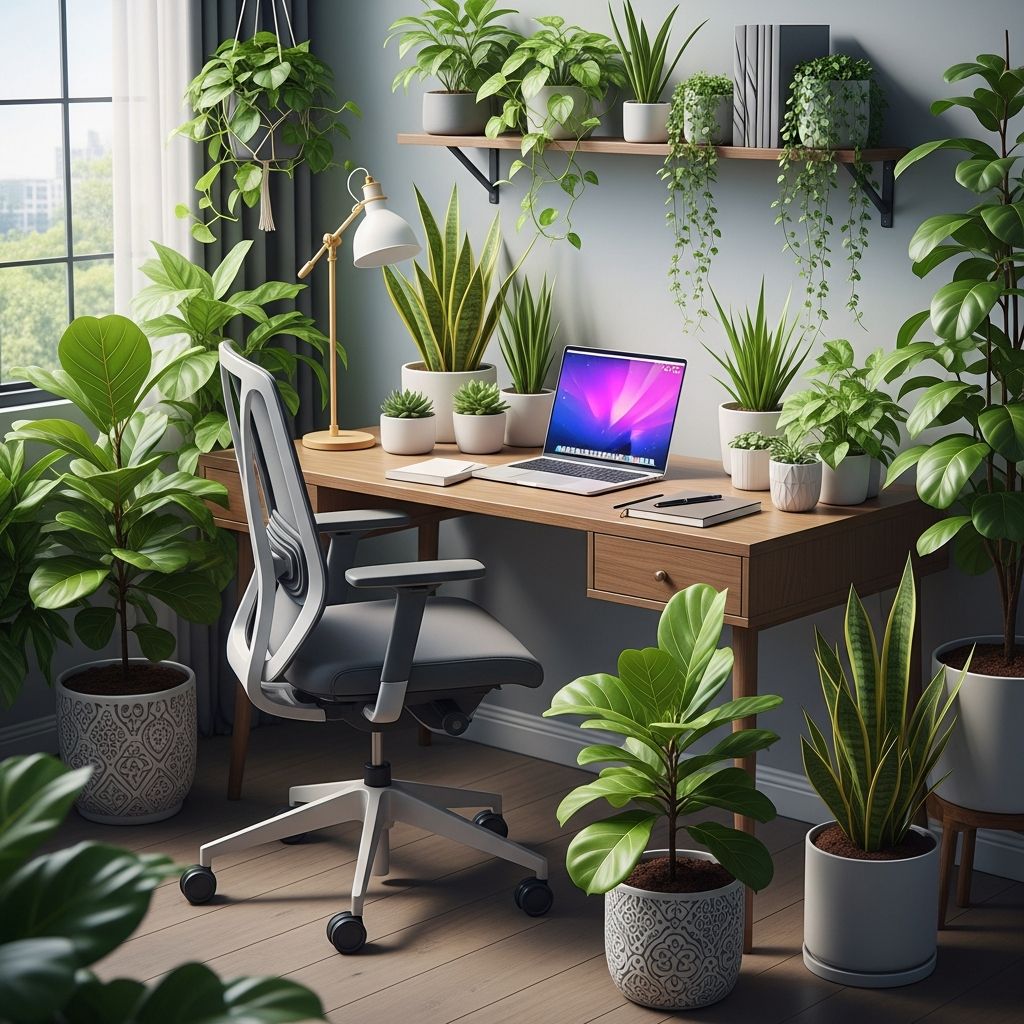
The Transformative Power of Greenery in Your Professional Space
The modern workplace constantly demands focus, efficiency, and innovation. Yet one of the simplest and most effective tools for enhancing these qualities remains underutilized in many offices: living plants. Beyond their aesthetic appeal, scientific research demonstrates that incorporating greenery into your work environment creates measurable improvements in both individual performance and organizational health. The presence of plants triggers a profound shift in how our brains function, how we manage stress, and how we interact with our surroundings. Understanding these benefits provides compelling reasons to integrate plants into your professional workspace.
Unlocking Mental Performance and Concentration Gains
One of the most remarkable discoveries in workplace research involves the direct relationship between plant presence and cognitive function. Studies conducted at Exeter University revealed that indoor plants can enhance concentration, productivity, and overall staff well-being by as much as 47%. When employees worked in environments containing plants, their ability to focus on complex tasks improved substantially, allowing them to work with greater precision and speed.
The mechanism behind this improvement lies in how our brains respond to natural elements. Exposure to greenery reduces mental fatigue, which accumulates throughout the workday as we concentrate on screens and demanding tasks. Plants provide natural visual breaks that refresh our attention systems, similar to how a short walk outside revitalizes focus. In practical terms, this means employees make fewer errors in their work, complete tasks more quickly, and retain information with greater accuracy. For knowledge workers, analysts, programmers, and anyone performing detail-oriented tasks, this cognitive boost represents a substantial competitive advantage.
The improvement extends beyond immediate concentration. Research indicates that plants can enhance memory retention by up to 20%, while also strengthening other cognitive abilities such as creative thinking and spatial processing. These enhancements accumulate over time, compounding the value of maintaining a plant-filled workspace.
Stress Reduction and Emotional Well-Being
Workplace stress has become increasingly recognized as a significant health concern, affecting both employee well-being and organizational performance. The constant pressure to meet deadlines, manage interpersonal dynamics, and maintain productivity creates a physiological stress response that compromises health and work quality. Plants offer a natural antidote to this widespread problem.
Simply viewing greenery activates calming responses in the nervous system, lowering stress hormones and creating a more peaceful psychological state. Employees surrounded by plants report feeling less anxious and more content compared to those in sterile environments. This reduction in stress produces cascading benefits: lower blood pressure, decreased anxiety levels, and improved overall mood. The presence of plants signals to our brains that we are in a safer, more natural environment, even when surrounded by office infrastructure and technology.
Beyond stress reduction, plants contribute to improved mental health by reducing feelings of depression and workplace hostility. The visual stimulation provided by varied plant shapes, colors, and textures breaks the monotony that often characterizes office environments, preventing the psychological fatigue that accompanies bland, uniform spaces. This enhanced emotional state strengthens workplace relationships and fosters a more collaborative, supportive culture.
Physical Health Improvements and Air Quality
While psychological benefits capture much attention, plants deliver equally important physical health advantages. Indoor plants function as natural air purification systems, actively removing carbon dioxide, dust, and mold from the surrounding environment. These airborne pollutants contribute to drowsiness, respiratory issues, and minor illnesses that drive absenteeism and reduce work quality.
The air-cleaning capacity of plants produces measurable health outcomes. Employees in plant-rich offices experience lower rates of minor illnesses, reduced absenteeism, and fewer health-related complaints. Additionally, research documents reduced complaints about dry air in environments containing plants, suggesting they may help regulate humidity levels that affect comfort and respiratory health.
These physical benefits translate directly into business value. When employees take fewer sick days and experience fewer health complaints, organizations avoid the productivity losses and coverage costs associated with illness. The investment in plants becomes a cost-effective health intervention that improves the fundamental conditions under which work occurs.
Biophilic Design and Our Innate Connection to Nature
Human beings possess an evolutionary connection to natural environments known as biophilia—an innate tendency to seek affiliation with nature and other living systems. This fundamental aspect of human psychology suggests that our optimal functioning occurs when we maintain contact with natural elements.
Modern office design often removes these natural elements in pursuit of minimalism or efficiency, creating what workplace psychologists describe as toxic environments for human cognition and emotion. Research from Dr. Craig Knight at Exeter University, conducted over a decade of studying workplace environments, found that offices designed to eliminate so-called distractions—including plants, personal items, pictures, and views of nature—actually harm worker performance and well-being.
Biophilic design principles reverse this trend by intentionally integrating natural elements into artificial spaces. When workplaces incorporate plants strategically, they tap into our evolutionary preference for natural environments, reducing the cognitive and emotional stress of working in entirely constructed settings. This approach recognizes that humans function best when some aspect of our environment connects us to the living world.
Boosting Creative Thinking and Innovation
Organizations increasingly recognize creativity as a competitive asset, yet many workplace designs inadvertently suppress innovative thinking. Research consistently shows that exposure to natural elements, including plants, enhances creative problem-solving and innovative ideation. The varied shapes, colors, and textures of plants provide visual stimulation that breaks monotonous patterns, stimulating fresh thinking and novel approaches to challenges.
This creative enhancement works through multiple pathways. Plants reduce mental fatigue that inhibits innovative thinking, provide visual breaks that refresh attention systems, and create environmental variety that stimulates lateral thinking. For organizations in creative industries—advertising, design, software development, marketing—this cognitive enhancement directly translates to more valuable output and competitive differentiation.
Acoustic Improvement and Environmental Comfort
Open-plan offices have become standard in many organizations, yet they create acoustic challenges that undermine concentration and increase stress. Excess noise from multiple conversations, equipment, and activity generates distraction that forces employees to expend extra cognitive effort to maintain focus.
Plants provide a natural solution to acoustic problems. Strategically positioned greenery absorbs, diffracts, and reflects background noise, reducing overall sound levels and creating quieter, more focused work zones. Large plants or groupings of smaller ones can establish psychological and acoustic separation without requiring physical barriers, allowing open-plan flexibility while improving acoustic comfort.
Strategic Plant Placement and Workspace Design
The benefits of plants depend substantially on thoughtful placement and selection. Simply placing random plants throughout an office produces minimal benefits; strategic design maximizes their impact on productivity and well-being.
Effective workplace plant strategies include:
- Proximity to work areas: Plants positioned near desks, meeting areas, and breakrooms where employees spend most of their time deliver the greatest psychological and cognitive benefits.
- Species variety: Combining large leafy plants with smaller table plants creates balanced environmental diversity and ensures coverage of different workspace zones.
- Computer-area placement: Positioning plants in high-screen-use areas provides visual relief for tired eyes and reduces the eye strain associated with extended digital work.
- Acoustic clustering: Grouping plants in noise-prone areas maximizes their sound-absorption capacity, creating quieter zones within open spaces.
- Function-specific design: Different workspace functions benefit from different plant strategies—call centers require noise reduction and privacy boundaries, while collaborative spaces benefit from plants that encourage communication.
Professional guidance from workplace designers or plant specialists ensures that plant selection and placement align with specific office environments and employee needs, maximizing effectiveness and sustainability.
Long-Term Organizational Benefits and Cost Effectiveness
While individual employee benefits provide compelling reasons to add plants, organizations benefit from substantial long-term returns on their investment. A healthier, more engaged workforce translates directly into improved performance metrics and reduced operational costs.
Key organizational benefits include:
- Reduced absenteeism: Healthier office environments mean employees take fewer sick days, reducing coverage costs and maintaining team continuity.
- Improved retention: Attractive, comfortable workspaces increase job satisfaction and employee loyalty, reducing expensive turnover and recruitment costs.
- Enhanced collaboration: Plants create inviting spaces where employees feel more comfortable communicating and collaborating, strengthening team dynamics.
- Workplace attractiveness: Plant-filled offices report higher satisfaction with their workspace and greater sense of privacy, improving the employee experience.
- Sustainable branding: Green offices reinforce organizational commitment to sustainability, attracting environmentally conscious clients and talent.
- Productivity metrics: Businesses consistently report measurable efficiency and creative gains in plant-integrated environments.
The productivity improvement of up to 15% documented in research represents a substantial return on the relatively modest investment required to establish and maintain a plant program. For organizations seeking cost-effective strategies to improve performance, workplace plants offer one of the highest value-to-investment ratios available.
Creating Your Plant-Filled Workspace
Implementing a successful plant program requires consideration of several practical factors. Begin by assessing your office’s lighting conditions, as different plants thrive in different light environments. Evaluate space constraints and select plants appropriately sized for your workspace. Consider maintenance requirements and establish sustainable care practices, whether through employee participation or professional plant services.
Start modestly with one plant per square meter of workspace, as research suggests this density delivers measurable productivity gains. Gradually expand your greenery based on maintenance capacity and visible results. Monitor employee feedback and workspace conditions to optimize plant selection and placement over time.
Frequently Asked Questions
Q: How many plants do I need to see productivity benefits?
A: Research indicates that just one plant per square meter of office space produces measurable productivity gains of up to 15%. You don’t need an indoor jungle—even modest plant presence delivers significant benefits.
Q: Which plants work best for office environments?
A: Plants requiring low maintenance and thriving in office lighting conditions work best. Examples include pothos, snake plants, peace lilies, and spider plants. Professional plant specialists can recommend species suited to your specific office conditions.
Q: Can plants improve air quality in offices?
A: Yes, plants actively remove carbon dioxide, dust, and mold from office air, contributing to better health outcomes and fewer employee health complaints.
Q: Do office plants require significant maintenance?
A: Many office-suitable plants require minimal care—occasional watering and indirect light. Professional plant maintenance services are available if internal resources are limited.
Q: How quickly will I see productivity improvements?
A: Research shows measurable improvements in workspace satisfaction and attractiveness appear relatively quickly, with cognitive and productivity gains becoming evident within weeks of plant integration.
References
- The Science Behind Why Plants Boost Employee Productivity — The Wright Gardner. Accessed 2026. https://thewrightgardener.com/blog/the-science-behind-why-plants-boost-employee-productivity/
- Green Office: How Office Plants Boost Productivity & Satisfaction — McCoy Rockford. Accessed 2026. https://www.mccoyrockford.com/blog/office-plants-productivity-and-employee-satisfaction/
- Office Plants: Boost Workplace Productivity, Wellness & Design — New Pro Containers. Accessed 2026. https://www.newprocontainers.com/blog/office-plants-breathing-life-productivity-well-being/
- How Plants Boost Workplace Productivity — Plant Club. Accessed 2026. https://www.plantclub.io/blog-en/how-plants-boost-workplace-productivity
- Effects of Indoor Plants on Office Workers: A Field Study in Multiple Offices — PubMed Central (PMC10346441). National Center for Biotechnology Information. Accessed 2026. https://pmc.ncbi.nlm.nih.gov/articles/PMC10346441/
- How Office Plants Lower Stress and Boost Focus — Bloomscape. Accessed 2026. https://bloomscape.com/green-living/office-plants-lower-stress-improve-concentration/

- Integrated M.A. in Applied Linguistics, University of Hyderabad
- 5+ years in editorial, instructional, SEO, and research-based writing
Sneha is a relationships and lifestyle writer with a strong foundation in applied linguistics and certified training in relationship coaching. She brings over five years of writing experience to theskillvault, crafting thoughtful, research-driven content that empowers readers to build healthier relationships, boost emotional well-being, and embrace holistic living. Her writing and insights reflect the belief that beauty, happiness, and wellness…