
Understanding the Cost of Workplace Interruptions
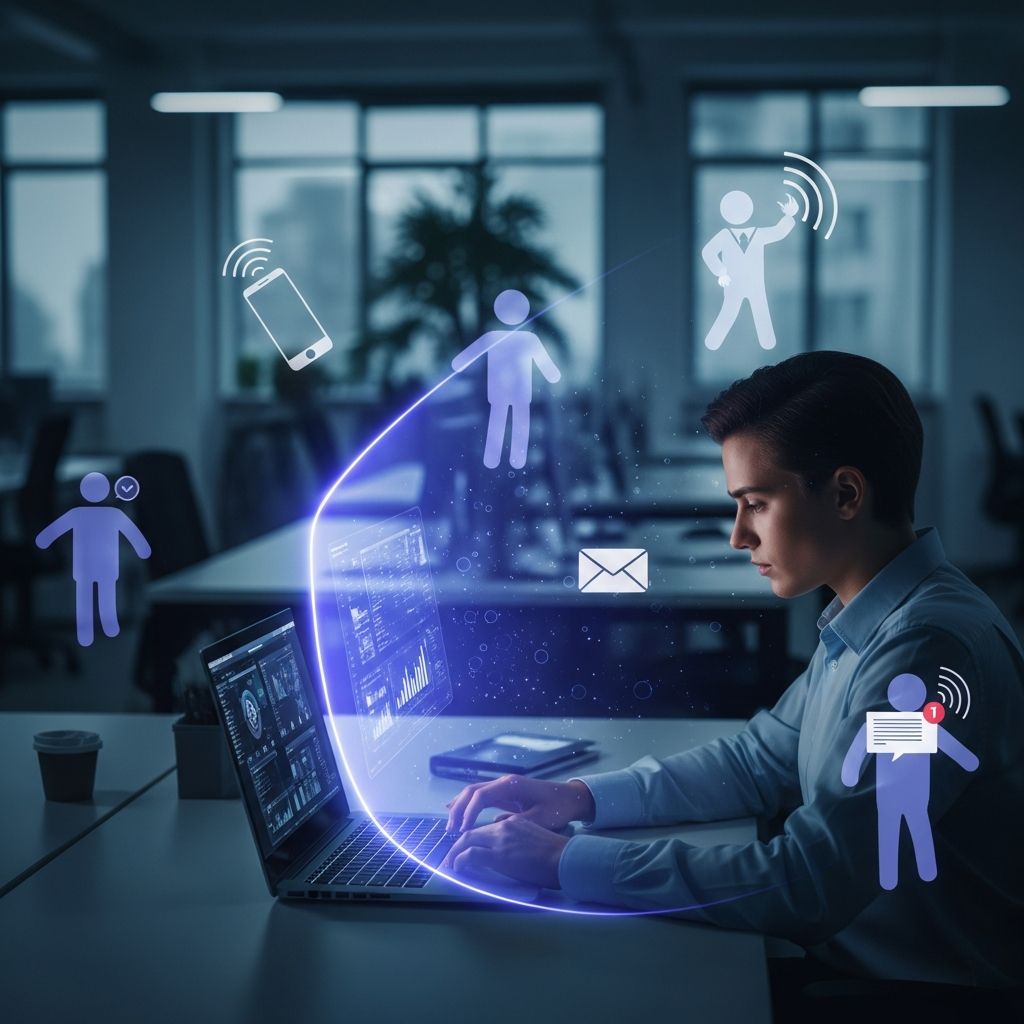
The modern workplace presents an unprecedented challenge to focused work. Employees face an estimated 50 to 60 interruptions throughout a typical workday, with approximately 80% of these being non-essential. This constant fragmentation of attention creates a significant productivity drain that compounds over time. Research demonstrates that excessive noise and task-switching can reduce productivity by up to 66%. Beyond mere time loss, interruptions fundamentally disrupt cognitive momentum, making it increasingly difficult for workers to engage in deep, meaningful work that requires sustained concentration.
The consequences extend beyond individual performance metrics. When task-switching occurs repeatedly, employees lose not just the time spent on the interruption itself, but also the time required to regain focus and re-establish context with their original work. This cognitive residue accumulates throughout the day, leaving employees mentally exhausted despite reduced output. Understanding this hidden productivity drain is the first step toward implementing meaningful change.
Environmental Design: Creating Physical Spaces for Concentration
The physical workspace profoundly influences an employee’s ability to maintain focus. One of the most overlooked yet effective interventions involves redesigning the work environment to support concentration rather than hindering it. Organizations increasingly recognize that open-plan offices, while fostering collaboration, simultaneously create acoustic chaos that overwhelms workers seeking deep focus.
Acoustic Solutions and Dedicated Focus Areas
Establishing designated quiet zones represents one of the most straightforward approaches to managing environmental distractions. These spaces function as refuge areas where employees can retreat during tasks requiring sustained concentration. Privacy booths and focus pods offer excellent acoustic isolation while remaining cost-effective, allowing multiple team members to benefit from uninterrupted work periods. Beyond permanent structures, organizations can implement flexible quiet hours during which specific areas maintain low noise levels, enabling employees to schedule their most demanding cognitive work during these windows.
For organizations unable to invest in dedicated spaces, noise-canceling headphones serve as practical alternatives. These devices create a psychological barrier signaling unavailability while simultaneously reducing ambient noise. When complemented by background sound applications—such as white noise, ambient rain, or coffee shop ambiance—headphones become powerful tools for masking disruptive office conversations and phone calls.
Visual Environment and Workspace Organization
Visual clutter represents an underestimated source of cognitive distraction. An unorganized desk with scattered papers, unnecessary items, and visual disorder consumes mental resources that could otherwise support focused work. Minimalist workspace design, featuring clear desks, neutral color schemes, and designated storage areas, significantly reduces visual distractions. Additionally, optimizing lighting conditions—positioning desks near windows and utilizing neutral-colored LED lighting—promotes sustained attention and reduces eye strain that contributes to fatigue and reduced focus capacity.
Digital Communication Architecture: Taming the Notification Epidemic
Modern digital tools designed to enhance communication have paradoxically created an interruption epidemic. Email, instant messaging platforms, and notification systems fragment attention into ever-smaller segments, preventing employees from achieving the sustained focus necessary for complex work. Restructuring digital communication practices requires both organizational policy and individual behavioral change.
Notification Management and Digital Boundaries
Organizations should establish explicit response time expectations for various communication channels. Rather than assuming immediate responses to all messages, clear protocols clarify which channels require urgent attention and which allow for batched responses. Implementing “do not disturb” modes during designated focus periods creates protected work time while maintaining emergency communication pathways.
Individual workers benefit from “notification hygiene” practices—systematically disabling non-essential alerts and consolidating communication platforms to reduce context-switching. Rather than checking messages continuously, employees can designate specific times for email and chat review, perhaps 30 minutes scheduled at day’s end. This batch-processing approach to communication preserves cognitive continuity while ensuring important messages receive attention.
Consolidation and Strategic Tool Selection
Organizations proliferate digital tools—email, Slack, Teams, project management platforms, and collaboration software—creating notification overload. Auditing technology ecosystems and consolidating redundant platforms directly reduces interruption frequency. Training employees to use application features strategically, such as scheduling message delivery or using status indicators to signal focus time, further minimizes disruptive notifications.
Personal Device Management and Smartphone Discipline
Personal smartphones represent one of the most powerful distraction sources in contemporary workplaces. The average employee checks their phone dozens of times during work hours, fragmenting attention and reducing capacity for deep work. While complete phone elimination proves unrealistic for most workers, strategic device management creates substantial focus improvements.
Practical smartphone strategies include placing phones out of sight during concentration-intensive tasks, using “do not disturb” or flight modes during focus sessions, and establishing personal phone-checking schedules rather than reactive checking. Some organizations implement policies encouraging employees to keep phones away entirely during meetings or deep work sessions. For remote workers, clear boundaries about work hours help household members understand when interruptions should be minimized.
Meeting Architecture: Reclaiming Time Through Strategic Collaboration
Meetings represent a significant interruption category that organizations can directly control. Many workplace meetings lack clear objectives, include unnecessary participants, or extend beyond necessary duration. Rethinking meeting practices directly recovers substantial focus time.
Meeting Optimization Principles
Effective meeting reduction strategies include:
- Combining multiple updates into fewer, consolidated meetings rather than scheduling separate sessions for each topic
- Sharing agendas in advance, allowing participants to prepare and reducing real-time problem-solving
- Establishing strict time boundaries and concluding sessions punctually
- Replacing unnecessary synchronous meetings with asynchronous updates shared via email or documentation platforms
When meetings transition from reactive information-sharing to strategic decision-making forums, employees retain valuable uninterrupted blocks for focused work. Organizations that audit meeting culture frequently discover that 30-40% of scheduled meetings could transition to asynchronous communication without sacrificing outcomes.
Colleague Communication and Social Boundary Setting
Well-intentioned colleagues often create interruptions through casual conversations and desk visits. While workplace relationships matter, unmanaged social interruptions significantly impact productivity. Establishing clear communication boundaries requires direct but respectful approaches.
Visible signals of focus availability—closed office doors, do-not-disturb signs, or headphones—communicate unavailability without requiring verbal rejection. For open-plan environments, establishing team norms around focus time creates mutual understanding. Some organizations designate specific hours as “focus time” when colleagues minimize social interruptions, or create “office hours” during which team members remain available for conversations. Remote workers benefit from clear boundary-setting with household members about work hours and distraction minimization strategies.
Personal Task Management: Planning and Time Architecture
Individual workers substantially control interruption impact through personal planning and time management practices. Research demonstrates that written plans reduce cognitive burden by alleviating worry about unfinished tasks, allowing mental resources to focus on current work.
Planning and Prioritization
Creating daily task lists establishes roadmaps that maintain focus when attention naturally wavers. Prioritizing tasks clarifies which work deserves protected focus time versus which tasks tolerate interruption. Regularly consulting task lists throughout the day provides anchors when concentration drifts.
Time Blocking and the Pomodoro Technique
Time blocking—allocating specific calendar periods to particular tasks—creates explicit focus commitments while signaling availability status to colleagues. This practice provides psychological containment around work sessions and reduces cognitive load associated with unstructured time.
The Pomodoro Technique, involving 25-minute focused work intervals followed by brief breaks, offers particular value for workers struggling to maintain concentration. This structured approach builds momentum—once engaged in focused work, many people continue past initial time commitments. The technique’s brevity makes it psychologically manageable for those with severe attention fragmentation, gradually extending focus capacity.
Technology Infrastructure: Supporting Rather Than Sabotaging Focus
Outdated, unreliable technology creates substantial interruptions when systems fail, software crashes, or hardware malfunctions disrupt work. Organizations should prioritize technology investments that support rather than undermine focus.
Effective approaches include:
- Maintaining modern, reliable systems that minimize technical disruptions
- Keeping software and hardware current to prevent compatibility issues and performance degradation
- Ensuring accessible IT support for rapid problem resolution when issues arise
- Thoroughly training employees on new tools before implementation to prevent productivity losses from inadequate knowledge
- Regularly auditing AI tools and automation systems to ensure they function as intended rather than creating additional rework
Implementing Integrated Interruption Reduction Programs
Most successful interruption reduction efforts combine multiple complementary strategies rather than relying on isolated interventions. Comprehensive approaches might include:
- Environmental improvements (quiet zones, acoustic solutions, lighting optimization)
- Communication protocol reforms (meeting consolidation, notification management, response time expectations)
- Individual skill development (time blocking, task planning, focus techniques)
- Cultural initiatives (focus time norms, peer accountability, leadership modeling)
- Technology optimization (tool consolidation, reliability improvements, training programs)
Frequently Asked Questions
Q: How long does it take to refocus after an interruption?
A: Research indicates that regaining focus after task-switching typically requires 15-25 minutes, during which cognitive performance remains below baseline. This makes minimizing interruptions far more effective than managing their aftermath.
Q: Can remote workers implement these strategies effectively?
A: Yes, though remote workers face different interruption sources. They benefit from establishing clear work hour boundaries with household members, creating dedicated workspace, and using the same digital communication protocols as office-based colleagues.
Q: What’s the most impactful single interruption reduction strategy?
A: While context-dependent, establishing designated focus times with protected status—signaled through visibility to colleagues—frequently yields substantial improvements because it addresses multiple interruption sources simultaneously.
Q: How should managers introduce interruption reduction changes?
A: Successful implementation requires explaining the productivity rationale to employees, piloting approaches with willing teams, measuring impact through time tracking or productivity metrics, and gradually expanding proven strategies across departments.
Q: Can smartphones be completely banned during work?
A: Complete bans create resistance and impracticality for most workplaces. Strategic limitations—designated phone-free periods, storage out of sight during meetings, or flight mode during focus sessions—prove more sustainable and effective.
References
- Top 5 Office Distractions and Effective Strategies to Overcome Them — Persy Booths. 2024. https://www.persybooths.com/blog/office-distractions
- 8 Office Distractions in the Workplace and How to Minimize Them — ActivTrak. 2024. https://www.activtrak.com/blog/distractions-in-the-workplace
- Avoid Distractions at Work and Stay Focused — Thriving Center of Psychology. 2024. https://thrivingcenterofpsych.com/blog/how-to-avoid-distractions-at-work-and-stay-focused
- The Hidden Productivity Drain: Distractions at Work — Circles. 2024. https://www.circles.com/resources/the-hidden-productivity-drain-distractions-at-work
- 20 Easy Tips on How to Avoid and Minimize Distractions — Noisli. 2024. https://www.noisli.com/blog/avoid-and-minimize-distractions
- 10 Quick Tips for Avoiding Distractions at Work — Harvard Business Review. 2019. https://hbr.org/2019/12/10-quick-tips-for-avoiding-distractions-at-work

- Integrated M.A. in Applied Linguistics, University of Hyderabad
- 5+ years in editorial, instructional, SEO, and research-based writing
Sneha is a relationships and lifestyle writer with a strong foundation in applied linguistics and certified training in relationship coaching. She brings over five years of writing experience to theskillvault, crafting thoughtful, research-driven content that empowers readers to build healthier relationships, boost emotional well-being, and embrace holistic living. Her writing and insights reflect the belief that beauty, happiness, and wellness…