
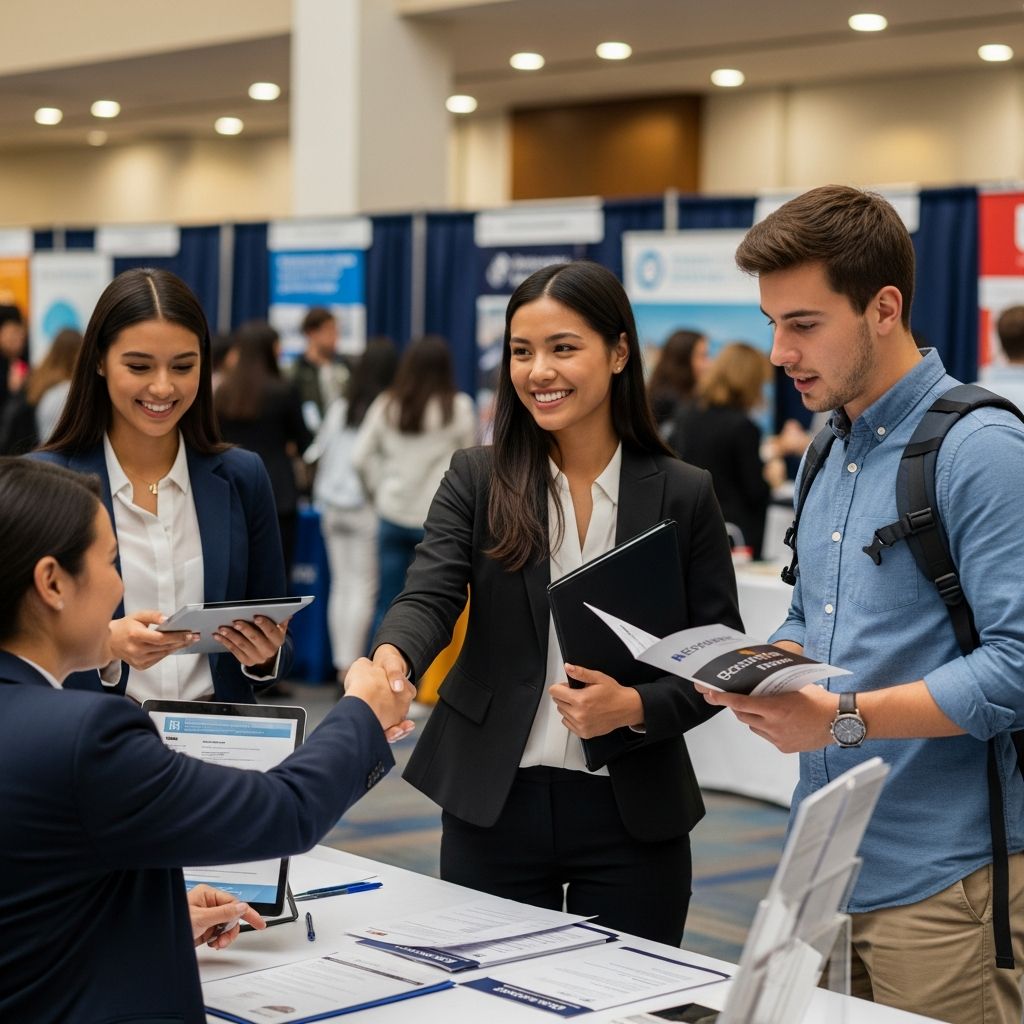
Attending your initial career fair can feel overwhelming, yet it represents a prime chance to connect with potential employers and explore professional paths. With targeted preparation, you can transform anxiety into opportunity, making memorable impressions that lead to interviews and offers. This comprehensive guide outlines actionable steps drawn from university career services expertise to help you navigate the event confidently.
Defining Your Professional Objectives
Success begins with clarity on your career aspirations. Before diving into event specifics, reflect on your strengths, preferred industries, and ideal roles. Identify sectors like technology, finance, or healthcare that align with your skills and passions. Create a prioritized list of companies attending the fair, focusing on those offering positions matching your goals.
Review employer lists provided by organizers, often available weeks in advance via event apps or websites. Prioritize 8-10 top targets to manage time efficiently, as fairs can host hundreds of booths. This focus prevents aimless wandering and ensures interactions with recruiters who value your fit.
Researching Employers Thoroughly
In-depth company research sets you apart. Visit corporate websites to understand products, services, recent news, and open roles. Explore LinkedIn profiles of attending recruiters and Glassdoor for culture insights. Note achievements like expansions or innovations to reference in conversations, demonstrating genuine interest.
Prepare 3-5 tailored questions per employer, such as ‘How does your team innovate in sustainable practices?’ or ‘What skills are most critical for entry-level engineers?’ Avoid basics like ‘What does your company do?’ as they signal unpreparedness. This preparation turns brief chats into meaningful dialogues.
| Research Step | Resources | Key Outcomes |
|---|---|---|
| Company website review | Official careers page | Open positions, values |
| LinkedIn scouting | Recruiter profiles | Personal connections |
| News scan | Recent articles | Current initiatives |
| Glassdoor check | Reviews section | Culture insights |
Perfecting Your Resume
Your resume is your calling card. Update it to highlight relevant experiences, quantifying achievements like ‘Led team project increasing efficiency by 20%.’ Tailor versions for industries if targeting diverse fields. Seek feedback from career centers or peers; many universities offer critique services.
- Print 20-30 clean copies on quality paper.
- Include a one-page format unless specified otherwise.
- Place in a professional folder for easy access.
- Have digital PDF ready for virtual fairs.
For virtual events, upload to platforms like 12twenty, ensuring public visibility. Point to key sections during talks to guide recruiters’ attention.
Crafting a Compelling Elevator Pitch
A 30-60 second pitch introduces you succinctly. Structure it: name, major, graduation year, key experiences, career interests, and company tie-in. Example: ‘Hi, I’m Alex, a computer science senior graduating in May. I interned at TechCorp developing AI algorithms and seek software roles. I’m excited about your machine learning projects.’ Practice until natural, avoiding rote memorization.
Rehearse with mirrors, friends, or recordings to refine delivery, eye contact, and enthusiasm. This pitch kickstarts 80% of fair conversations, per career advisors.
Selecting the Right Attire and Accessories
Professional dress signals seriousness. Opt for business professional: suit in neutral colors, polished shoes, minimal jewelry. Research industry norms—tech may allow business casual.
- Groom meticulously: haircut, clean nails, fresh breath.
- Carry a portfolio with resumes, notepad, pen.
- Avoid heavy bags; keep hands free for handshakes.
- For virtual: neutral background, good lighting, test tech.
Appearance influences 55% of first impressions, underscoring neatness.
Navigating the Event Layout Efficiently
Arrive early to grab maps or apps outlining booths. Take a reconnaissance lap to gauge crowds and observe interactions. Target priority employers first during less busy times, typically mornings.
Approach booths confidently: smile, firm handshake (if appropriate), state purpose: ‘Hi, I’m interested in your data analyst roles.’ Exchange contact info or LinkedIn connects. Limit chats to 3-5 minutes unless engaged deeply.
Mastering On-Site Interactions
Active listening and enthusiasm build rapport. After your pitch, ask prepared questions and reference research: ‘I saw your recent sustainability report—how can new hires contribute?’ Hand resume early, highlighting fits.
Note details post-chat: recruiter’s name, discussion points, next steps. This aids follow-ups. Stay positive, even at crowded booths.
| Interaction Phase | Do’s | Don’ts |
|---|---|---|
| Approach | Smile, eye contact | Interrupt conversations |
| Pitch | Concise, tailored | Monologue endlessly |
| Questions | Insightful, specific | Salary first |
| Close | Thank, get card | Forget notes |
Strategic Follow-Up Actions
Post-fair momentum is crucial. Within 24-48 hours, email thank-yous personalizing with shared details: ‘Thank you for discussing internship timelines at yesterday’s fair. I’m eager to apply my Python skills to your projects.’ Attach resume if requested.
Track interactions in a spreadsheet: company, recruiter, date, notes, follow-up status. Apply online promptly, referencing the fair.
Virtual Career Fair Adaptations
Hybrid events demand tech readiness. Test platforms, stable internet, webcam. Virtual booths mirror in-person: research, pitch via video, share screen for resume. Use chat for quick queries; schedule 1:1s if offered. Positive body language—smile into camera—matters equally.
Overcoming Common Challenges
Nerves? Breathe deeply, remember recruiters expect enthusiasm over perfection. Long lines? Politely join, use wait time reviewing notes. No immediate interest? View as practice; every interaction hones skills.
Track metrics: conversations held, cards collected, applications submitted. Debrief to improve future events.
Frequently Asked Questions (FAQs)
What should I do if a recruiter seems uninterested?
Gracefully thank them and move on. Use the experience to refine your approach for the next booth.
How many resumes should I bring?
20-30 for in-person fairs, adjusting for size. Digital backups always.
Is it okay to connect on LinkedIn during the fair?
Yes, ask permission and send personalized invites post-event referencing your chat.
What if I don’t have internship experience?
Highlight coursework, projects, volunteer work, and transferable skills enthusiastically.
Should I ask about salary at the fair?
No, focus on fit and opportunities. Save compensation for later interviews.
Long-Term Career Fair Benefits
Beyond immediate jobs, fairs build networks yielding future referrals. Many attendees secure roles months later via nurtured connections. Attend multiple fairs yearly, treating each as growth.
Integrate learnings: update LinkedIn with new contacts, refine resume iteratively. Career centers report prepared students 3x more likely to advance.
References
- Tips for Career Fair Success for Students — MIT CAPD. Accessed 2026. https://capd.mit.edu/tips-for-career-fair-success-for-students/
- How to Prepare for a Career Fair — University of Connecticut Career Center. 2025-09-24. https://career.uconn.edu/blog/2025/09/24/how-to-prepare-for-a-career-fair-2/
- Preparing for Career Fairs — University of Texas CNS Career Services. Accessed 2026. https://careerservices.cns.utexas.edu/resources/career-fair-guide/preparing-career-fairs
- Prepare for the Fair — University of Maryland Careers. Accessed 2026. https://careers.umd.edu/events/career-internship-fairs/prepare-for-the-fair
- Career Fair Tips — University of Illinois Chicago Career Services. Accessed 2026. https://careerservices.uic.edu/most-popular/career-fair-tips/
- How to Use a Career Fair as an Exploration Opportunity — Wellesley Career Education. Accessed 2026. https://careereducation.wellesley.edu/resources/how-use-career-fair-exploration-opportunity

- Integrated M.A. in Applied Linguistics, University of Hyderabad
- 5+ years in editorial, instructional, SEO, and research-based writing
Sneha is a relationships and lifestyle writer with a strong foundation in applied linguistics and certified training in relationship coaching. She brings over five years of writing experience to theskillvault, crafting thoughtful, research-driven content that empowers readers to build healthier relationships, boost emotional well-being, and embrace holistic living. Her writing and insights reflect the belief that beauty, happiness, and wellness…