
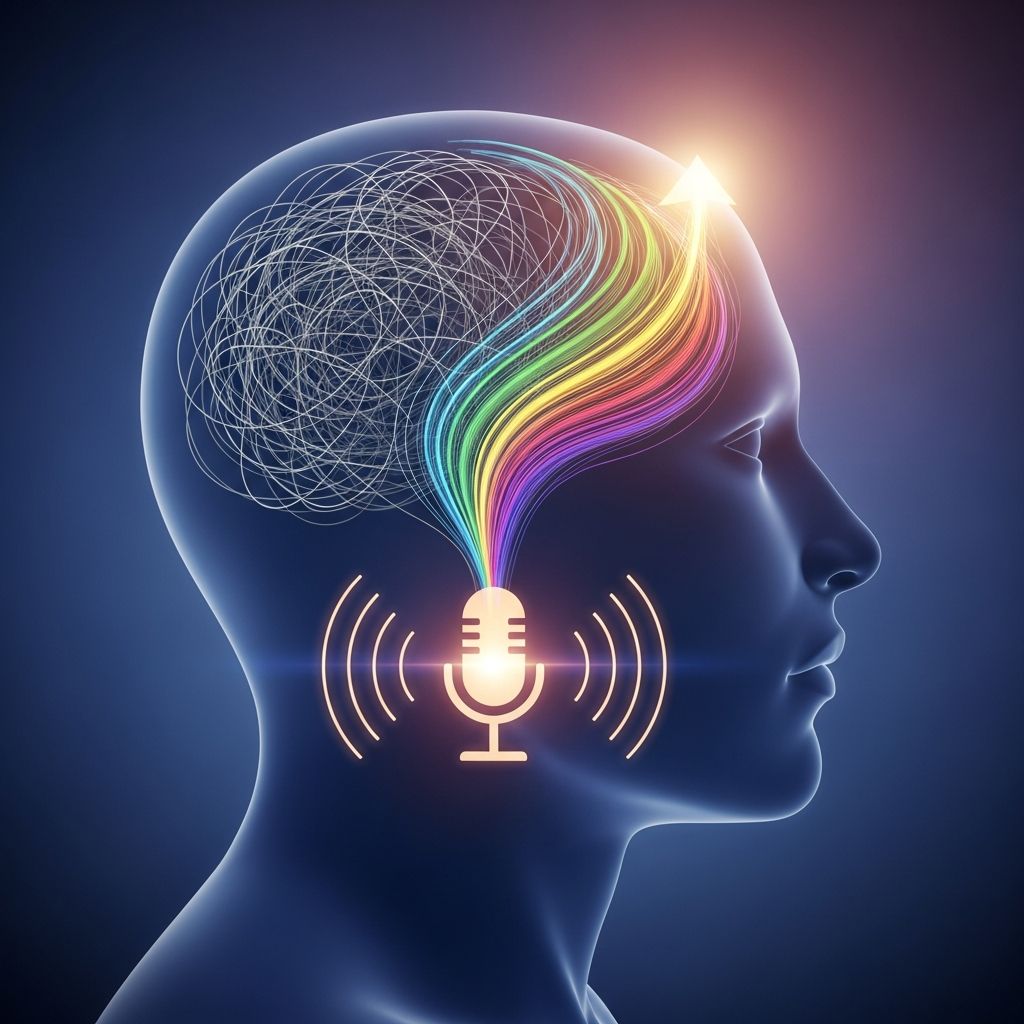
Your internal monologue shapes every decision, reaction, and outcome in life. Positive self-talk acts as a catalyst for confidence, resilience, and high performance, while negative patterns breed doubt and stagnation. By intentionally cultivating empowering inner dialogue, individuals can rewire their brains for greater achievement, as supported by neuroscience and psychological research.
Understanding the Science Behind Self-Talk
Self-talk refers to the ongoing stream of thoughts and verbalizations that influence emotions, behaviors, and cognitive functions. Research demonstrates that positive self-talk enhances brain connectivity related to executive functions, improving focus and decision-making, whereas negative self-talk can modulate motivation differently, sometimes boosting short-term performance through heightened attention. A study published in a peer-reviewed journal found that both positive affirmations like self-respect and critical self-talk alter functional connectivity in the brain, with self-criticism unexpectedly increasing cognitive task performance by fostering a less overconfident state that sharpens internal drive.
From a psychological perspective, positive self-talk activates the prefrontal cortex, the brain’s rational center responsible for self-regulation, overriding impulsive emotional responses from the limbic system. This shift promotes calmer states, fostering clarity and happiness essential for career and personal advancement. Optimistic thinkers consistently outperform pessimists, even with comparable skills, because their inner narratives emphasize possibilities over limitations.
Key Benefits of Positive Self-Talk
Adopting a constructive inner voice yields measurable advantages across mental, emotional, and physical domains.
- Boosted Confidence and Self-Efficacy: Repeated affirmations of capability reinforce belief in one’s skills, making it easier to tackle challenges with authority.
- Enhanced Resilience: Viewing setbacks as temporary learning opportunities accelerates recovery and sustains long-term focus.
- Stress Reduction: Positive dialogue buffers against anxiety, enabling effective management of high-pressure scenarios.
- Improved Problem-Solving: Shifting from obstacle fixation to solution-oriented thinking sparks creativity and efficiency.
- Physical Health Gains: Optimistic self-talk correlates with better overall well-being, influencing habits like exercise adherence.
These benefits compound over time, creating a virtuous cycle where empowered thoughts drive empowered actions.
Recognizing Harmful Self-Talk Patterns
Negative self-talk often manifests subtly, disguised as realism. Common patterns include:
| Pattern | Example | Impact |
|---|---|---|
| All-or-Nothing Thinking | “If I fail this, I’m a total failure.” | Blocks progress by ignoring incremental gains. |
| Catastrophizing | “This mistake will ruin everything.” | Amplifies anxiety and paralysis. |
| Overgeneralization | “I always mess up presentations.” | Erodes confidence through false narratives. |
| Self-Labeling | “I’m just not smart enough.” | Undermines growth mindset. |
Awareness is the first step. Journaling thoughts during stressful moments reveals these distortions, setting the stage for transformation.
Practical Techniques to Cultivate Empowering Self-Talk
Shifting to positive self-talk requires consistent practice. Here are evidence-informed strategies:
- Awareness Audit: Pause hourly to note your inner dialogue. Label negative thoughts as “unhelpful story” to create distance.
- Reframing Exercise: Replace “I can’t do this” with “This is challenging, but I’m learning step by step.” This fosters a growth mindset.
- Affirmation Anchors: Develop 3-5 personalized statements like “I am capable and resilient” and repeat them during routines such as morning coffee.
- Evidence Logging: Counter doubt by listing past successes. “I’ve overcome similar hurdles before” builds factual self-belief.
- Third-Person Perspective: Address yourself by name, e.g., “[Your Name], you’ve got the skills for this.” This reduces emotional intensity.
Incorporate these into daily habits for neuroplastic changes that solidify new patterns within weeks.
Self-Talk Strategies for High-Stakes Situations
In professional or competitive environments, tailored self-talk elevates performance. For instance:
- Pre-Performance Ritual: Visualize success while affirming preparation: “I’m ready and focused.”
- Mid-Challenge Pivot: Use instructional talk: “Stay calm, break it down, act now.” This engages the thinking brain.
- Post-Event Review: Focus on learnings: “What worked? What to adjust?” Avoid self-blame.
High-performance self-talk from the prefrontal cortex unlocks confidence and clarity, propelling career trajectories.
Building Long-Term Habits for Sustained Success
Sustainable change demands integration. Track progress with a weekly self-talk journal, rating dialogue positivity on a 1-10 scale. Pair with mindfulness apps for real-time cues. Surround yourself with uplifting influences—books, podcasts, mentors—that model empowering language.
Over months, this rewires neural pathways, making positivity default. Research confirms that persistent positive self-talk not only reduces anxiety but amplifies self-confidence and performance.
Overcoming Common Obstacles in Self-Talk Transformation
Resistance arises: Old habits feel authentic, and initial efforts may seem forced. Counter by starting small—reframe one thought daily—and celebrate micro-wins. If self-criticism surges, recognize its motivational role in moderation but pivot to balanced critique.
For deep-seated negativity, combine with therapy like cognitive behavioral techniques, which amplify self-talk gains.
Frequently Asked Questions (FAQs)
What is the difference between positive and negative self-talk?
Positive self-talk emphasizes capabilities and growth (“I can improve”), enhancing confidence and resilience, while negative self-talk focuses on flaws and impossibilities (“I’ll never succeed”), fostering doubt—though mild criticism can sometimes boost motivation.
How long does it take to change self-talk patterns?
Noticeable shifts occur in 2-4 weeks with daily practice, but lasting neural changes require 2-3 months of consistency, per neuroplasticity research.
Can self-talk improve athletic or professional performance?
Yes, it boosts focus, reduces stress, and reframes pressure as opportunity, with studies showing cognitive and physical gains.
Is negative self-talk ever helpful?
In limited doses, it heightens attention and effort to avoid failure, but chronic negativity harms well-being; balance is key.
How do I start positive self-talk if I feel inauthentic?
Begin with factual statements based on evidence (“I’ve succeeded before”) and use third-person narration to build authenticity gradually.
Case Studies: Real-World Impact
Consider athletes using pre-game affirmations to shatter records or executives employing reframing to navigate crises—outcomes align with brain connectivity enhancements from positive dialogue. One study noted self-respect self-talk improved executive functions despite occasional overconfidence pitfalls.
In summary, mastering self-talk is a skill that compounds into extraordinary results. Commit today, and watch your reality transform.
References
- The Power of Positive Self-Talk: Transforming Inner Dialogue to Boost Performance — The Mental Game. 2023. https://thementalgame.me/blog/the-power-of-positive-self-talk-transforming-inner-dialogue-to-boost-performance
- The Power of Positive Self-Talk for Self-Improvement — Godaelli Mental Health. 2023. https://godaellimentalhealth.com/the-power-of-positive-self-talk-for-self-improvement/
- The effects of positive or negative self-talk on the alteration of brain functional connectivity — PMC (National Library of Medicine). 2021-07-20. https://pmc.ncbi.nlm.nih.gov/articles/PMC8295361/
- Change Your Thoughts, Change Your Life: The Power of Positive Self-Talk — Rock Bottom Hope. 2023. https://www.rockbottomhope.org/inspirational-blog/change-your-thoughts-change-your-life-the-power-of-positive-self-talk
- 3 Ways High-Performance Self-Talk Boosts Your Career Success — University of Michigan Psychology. 2023. https://lsa.umich.edu/psych/news-events/all-news/faculty-news/3-ways-high-performance-self-talk-boosts-your-career-success.html

Medha Deb is an editor with a master's degree in Applied Linguistics from the University of Hyderabad. She believes that her qualification has helped her develop a deep understanding of language and its application in various contexts. Medha specializes in the areas of beauty, health, sports, and wellness and is committed to ensuring that the content on the website is…