
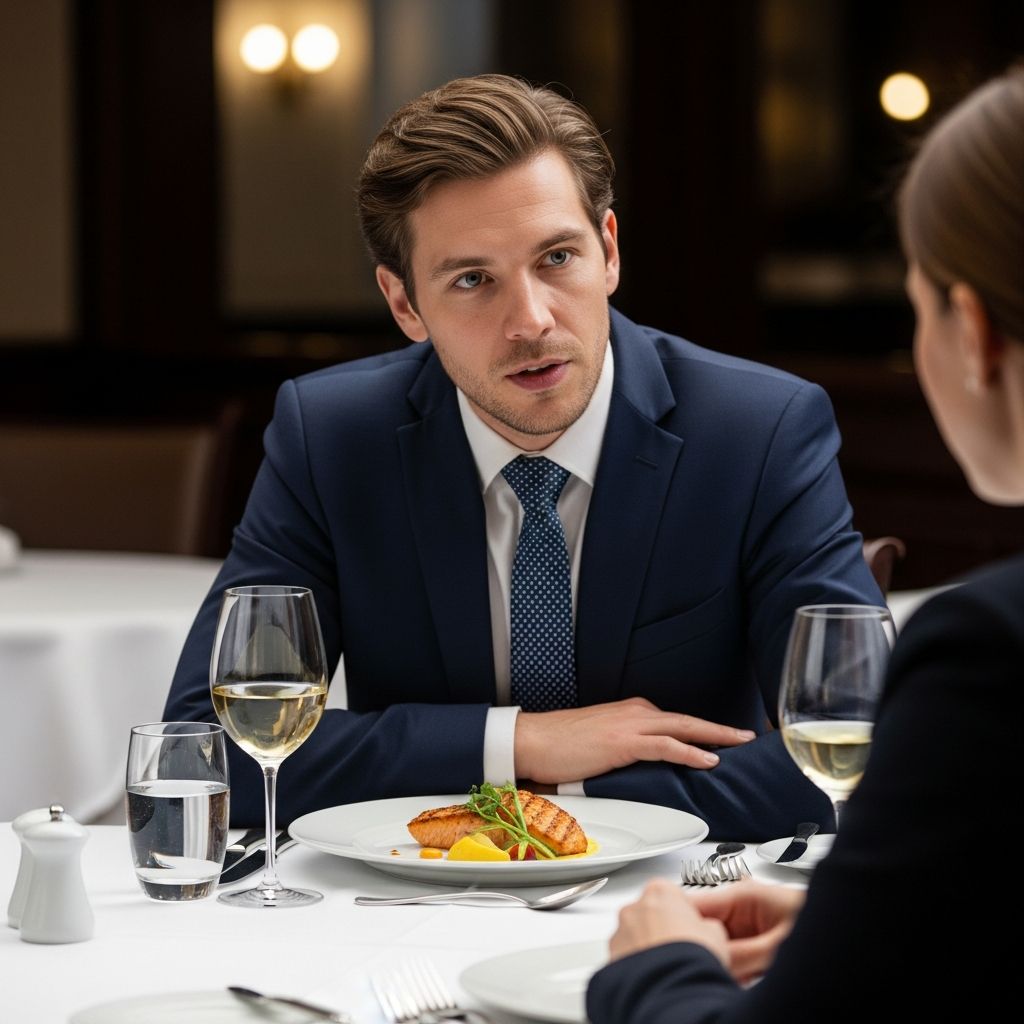
Understanding the Unique Challenge of Interviewing Over a Meal
When an employer invites you to interview over lunch, breakfast, or dinner, they are sending a signal that your evaluation extends beyond technical qualifications and standard interview responses. The meal setting represents a fundamentally different assessment framework than a traditional office interview. During these informal dining encounters, recruiters and hiring managers scrutinize not only your professional competencies but also your social presence, interpersonal skills, and ability to maintain composure in less structured environments.
The casual atmosphere of a restaurant creates both opportunities and vulnerabilities. On one hand, you have the advantage of a relaxed setting that encourages genuine conversation and allows your personality to shine through. On the other hand, the complex logistics of managing food, drink, and conversation simultaneously while being observed by your potential employer introduces multiple points where missteps can occur. Understanding this duality is crucial for approaching a meal interview with appropriate seriousness while maintaining the composure necessary to succeed.
Employers frequently use meal interviews for positions that involve client interaction, team collaboration, or public-facing responsibilities. They recognize that how you conduct yourself in a social dining situation provides valuable insights into how you will represent the organization in professional dining scenarios, client entertainment, and team social events.
Thorough Pre-Interview Research: Building Your Foundation
Success in a meal interview begins long before you arrive at the restaurant. Strategic research on multiple fronts—the employer, the restaurant, and the logistics—significantly reduces anxiety and allows you to focus entirely on the conversation and your interviewer.
Start by investigating the specific restaurant where the interview will occur. Examine the establishment’s website or review platforms to understand the atmosphere, typical clientele, and general noise level. If the restaurant is known for high decibel levels during peak dining hours, you might anticipate that the conversation will need to be louder than you typically speak in professional settings. Understanding the environment helps you mentally prepare for the actual conditions you will encounter.
The menu review constitutes a critical component of preparation. Most restaurants now provide online menus, allowing you to pre-select two or three potential dishes that meet your dietary requirements and professional dining standards. By making these decisions in advance, you eliminate the distraction of menu study during the actual interview. This preparation also prevents the common scenario where candidates spend excessive time deciding what to order while their interviewer waits.
Logistics deserve equal attention to restaurant selection. Determine the exact address, identify optimal parking locations, and if possible, conduct a test visit to the area at a similar time of day as your scheduled interview. This reconnaissance helps you anticipate traffic patterns, identify potential parking challenges, and arrive with confidence rather than stress. Getting lost or rushing to the location creates unnecessary anxiety that undermines your performance.
Naturally, your research should extend to comprehensive company investigation. Understanding the organization’s mission, recent news, key products or services, and industry position allows you to ask informed questions and demonstrate genuine interest during the meal conversation.
Strategic Timing and Arrival Management
Punctuality for meal interviews requires more planning than standard office appointments. Plan to arrive at the restaurant 15 minutes before your scheduled reservation time, not 15 minutes before the actual appointment with your interviewer. This buffer accounts for parking challenges, slight navigational errors, and the time needed to inform the host that you have arrived.
Upon arrival, introduce yourself to the host and provide your name and reservation information. Request a table near a quiet area if multiple options exist, as this facilitates conversation quality. Avoid positioning yourself at a booth directly next to the kitchen or a high-traffic pathway. If you arrive before your interviewer, position yourself at the restaurant entrance or in the waiting area where you can greet them immediately upon their arrival. This approach accomplishes several objectives simultaneously: it demonstrates respect for their time, allows you to make the first introduction, and prevents the awkwardness of them hunting for you within the restaurant.
When your interviewer arrives, stand to greet them, make direct eye contact, offer a firm handshake, and introduce yourself clearly. Allow them to lead the way to your table, following their directional cues rather than assuming seating arrangements.
The Art of Ordering: Strategic Selection Within Professional Bounds
Your food and beverage selections communicate volumes about your judgment, self-awareness, and professionalism. The ordering decision requires balancing multiple considerations: nutritional preferences, cost sensitivity, ease of consumption, and appropriateness.
The fundamental principle should guide your selection: choose foods that you can consume easily while maintaining focus on conversation and appearing polished throughout the meal. Avoid any dishes that require eating with your hands, as this necessitates gesturing while holding food or managing napkins awkwardly. Similarly, bypass salads that might leave visible debris in your teeth and soups that require careful navigation to avoid splashing or slurping sounds.
When the server arrives to take your order, observe your interviewer’s selection and approximate their price point. Your goal is to order something comparable or slightly less expensive, demonstrating that you are not taking advantage of the situation by ordering the most premium items on the menu. If your interviewer orders first and selects a moderate-priced entree, you should align your selection accordingly.
| Optimal Choices | Foods to Avoid |
|---|---|
| Grilled chicken or fish with vegetables | Messy sandwiches or burgers |
| Pasta dishes with manageable sauces | Soups or stews requiring careful handling |
| Entrees requiring fork and knife only | Foods with strong odors (garlic-heavy dishes) |
| Side salads without excessive dressing | Large leafy salads prone to debris |
| Water, coffee, or unsweetened tea | Alcoholic beverages of any kind |
The alcohol question deserves particular emphasis. Absolutely decline any alcoholic beverage, even if your interviewer orders one or explicitly encourages you to do so. Alcohol impairs judgment, loosens inhibitions, and creates the impression that you lack professionalism. The slight awkwardness of declining is far preferable to the substantial risk of compromised performance.
Similarly, avoid beverages that stain teeth or hands noticeably. Red wine, cranberry juice, and dark sodas can compromise your appearance if spilled or consumed without careful attention. Water and unsweetened tea represent safe, professional choices that will not distract from your presentation.
Table Etiquette: Demonstrating Your Professionalism Through Behavior
Your table manners directly reflect your professional maturity and consideration for others. Many interviewers specifically design meal interviews to assess social conduct because it accurately predicts how candidates will represent the organization in client-facing situations.
Place your napkin on your lap immediately upon sitting. This simple gesture prevents food from soiling your clothing and demonstrates familiarity with formal dining conventions. When eating, take small bites and ensure you have completely swallowed before speaking. This fundamental rule prevents awkward pauses, garbled speech, or the unprofessional appearance of speaking with your mouth full.
Maintain excellent posture throughout the meal by sitting upright and keeping your elbows off the table while eating. This positioning conveys engagement and confidence. Make consistent eye contact with your interviewer when they are speaking and when you are responding to their questions. Eye contact builds connection and demonstrates that you are fully present in the conversation.
Your interaction with restaurant staff provides an additional opportunity to demonstrate your character. Address servers and bartenders with courtesy, use “please” and “thank you” consistently, and treat them with the same respect you show your interviewer. Many employers view how candidates treat service staff as a revealing indicator of their true character and workplace behavior. Someone who is gracious and considerate to restaurant employees is demonstrating values that likely extend to how they treat colleagues at all organizational levels.
Manage the timing of your eating strategically. If your interviewer is about to ask you a question or is in the middle of discussing a topic you want to address, pause before taking another bite. This allows you to respond immediately without the awkwardness of asking them to wait while you finish chewing. Similarly, if you anticipate being asked a follow-up question, time your bites so you complete them before the natural pause in conversation where a response is expected.
Mastering Professional Conversation in Casual Settings
The conversational tone of a meal interview differs fundamentally from traditional office interviews. Your interviewer wants the interaction to feel like a genuine dialogue rather than a scripted question-and-answer format. However, this casualness should not be mistaken for an absence of professionalism or judgment.
Engage in thoughtful small talk before transitioning into substantive discussion of the position. Commenting on the restaurant’s ambiance, asking about your interviewer’s experience with the establishment, or inquiring about their background demonstrates social engagement. However, exercise careful judgment regarding topics. Avoid politics, religion, controversial current events, and personal gossip. These subjects can derail the interview or create unnecessary tension.
When substantive interview questions arise, respond thoroughly while demonstrating how your experience directly connects to the organization’s needs. The meal setting’s informality does not diminish the importance of thoughtful, substantive answers. Balance being personable with maintaining appropriate professional boundaries.
Prepare several intelligent questions about the organization, the position’s responsibilities, team dynamics, and company culture. These questions should emerge naturally during the conversation rather than appearing as a prepared list. Asking thoughtful questions demonstrates genuine interest, allows you to assess whether the opportunity aligns with your career goals, and balances the conversation so it does not feel like an interrogation.
Listen actively to your interviewer’s responses and follow their conversational lead. If they shift from casual topics to more detailed questions about your qualifications, recognize this transition and match their tone. Pay attention to their body language and engagement level to understand whether they want more detail on particular topics or if you should move forward.
Physical Preparation: Appearance and Materials
Dress for a meal interview exactly as you would for a traditional office interview. The restaurant setting does not warrant any relaxation of professional dress standards. Choose business attire that is clean, well-fitting, and appropriate for the industry. Your appearance communicates respect for the opportunity and demonstrates that you take the interview seriously.
Bring a professional folder or briefcase containing multiple copies of your resume, a notepad, and writing instruments. If you maintain a portfolio, bring a printed version rather than relying on digital displays. Position these materials under your chair, retrieving them only if your interviewer requests to review additional information. This approach keeps materials accessible without cluttering the table or creating a desk-like appearance during a meal.
Ensure your phone is completely silenced and remains in your bag or pocket throughout the interview. Do not glance at your phone, acknowledge notifications, or allow any digital distraction to interrupt the conversation. This demonstrates respect and focus.
Managing Challenges and Unexpected Situations
Despite careful preparation, unexpected challenges may arise during meal interviews. Developing mental strategies for handling these situations helps you maintain composure and professionalism.
If you spill food or drink, calmly address the situation without excessive apology or self-criticism. Alert your server discreetly, allow them to assist with cleanup, and smoothly transition back to conversation. Your matter-of-fact handling of minor mishaps actually demonstrates professional composure better than overreacting or appearing flustered.
If you are unsure about your interviewer’s question, ask for clarification rather than offering an inaccurate response. This demonstrates honesty and critical thinking. Similarly, if you do not know an answer to a question, acknowledge this truthfully and offer to research the topic and follow up.
If the conversation veers into uncomfortable territory or inappropriate questions, respond with professionalism and subtle redirection. You are not obligated to answer personal questions unrelated to the position, and you may politely decline while maintaining cordiality.
Frequently Asked Questions About Meal Interviews
Q: What should I do if my interviewer orders alcohol and encourages me to order a drink as well?
A: Politely but firmly decline. You might say, “I appreciate the offer, but I’m going to stick with water for now. I want to be sharp for our conversation.” Your interviewer will respect your professionalism.
Q: If I am vegetarian or have dietary restrictions, how should I handle menu selection?
A: Review the menu in advance and identify vegetarian or allergen-friendly options. Most modern restaurants clearly mark dietary accommodations. Order confidently without over-explaining your dietary choices unless directly asked.
Q: How do I handle the check when the meal concludes?
A: Do not reach for the check or offer to pay. This is the employer’s invitation and their responsibility. If they present the check, acknowledge it professionally but do not attempt to split it or contribute. Offering to pay can create awkwardness and is inappropriate in interview situations.
Q: What if I accidentally make a mistake during the meal—such as using the wrong fork or making an awkward comment?
A: Minor mistakes are normal and rarely define interview outcomes. Continue with confidence and professionalism. Most interviewers focus on your overall demeanor and qualifications, not perfectionism in etiquette.
Q: Should I take notes during a meal interview?
A: Brief note-taking is appropriate if you want to document specific information about the role or company. However, avoid extensive note-taking that disrupts conversation flow. Write down key points after the interview concludes.
Q: How should I follow up after a meal interview?
A: Send a professional thank-you email within 24 hours, referencing specific points from your conversation. This reinforces your interest and demonstrates attention to detail and professionalism.
Conclusion: Transforming Mealtime Into Opportunity
Meal interviews represent unique opportunities to demonstrate your professional presence, social intelligence, and interpersonal skills in addition to your technical qualifications. By approaching these occasions with strategic preparation, thoughtful consideration of your choices, and genuine engagement, you transform a potentially awkward situation into a meaningful dialogue that strengthens your candidacy. Remember that your interviewer has invited you to share a meal not to trap you, but to assess how you conduct yourself in professional social situations. Approach the experience with confidence, professionalism, and the knowledge that your preparation has equipped you to succeed.
References
- Tips for a Successful Lunch Interview — Indeed.com. 2024. https://www.indeed.com/career-advice/interviewing/lunch-interview
- How to Prepare for a Lunch Interview (and Ace It!) — The Muse. 2024. https://www.themuse.com/advice/lets-do-lunch-how-to-prepare-for-a-job-interview-over-a-meal
- How To Nail The Most Awkward Kind Of Interview: The Lunch Date — Monster Career Advice. 2024. https://www.monster.com/career-advice/article/how-to-nail-the-lunch-interview-0117
- Preparing For A Lunch Interview — TM Floyd & Company. 2024. https://tmfloyd.com/preparing-for-a-lunch-interview/
- The Job Interview Over Breakfast, Lunch or Dinner — The Big Game Hunter. 2024. https://thebiggamehunter.us/the-job-interview-over-breakfast-lunch-or-dinner/

Medha Deb is an editor with a master's degree in Applied Linguistics from the University of Hyderabad. She believes that her qualification has helped her develop a deep understanding of language and its application in various contexts. Medha specializes in the areas of beauty, health, sports, and wellness and is committed to ensuring that the content on the website is…