
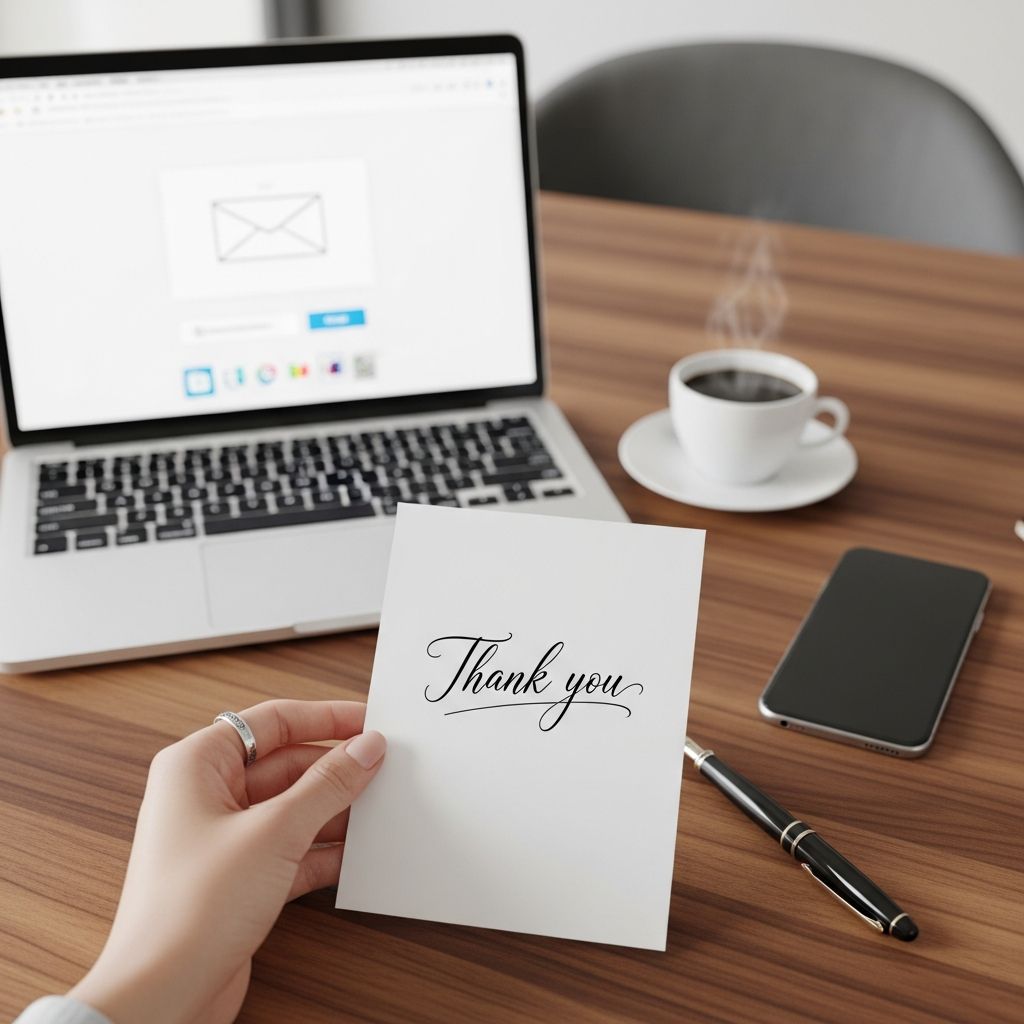
In today’s competitive job market, every interaction with potential employers counts. A thoughtfully composed thank-you note following an interview serves as a powerful tool to reinforce your candidacy. Research shows that a significant majority of hiring professionals value these gestures, with 80% considering them influential in decision-making and 22% less likely to advance candidates who omit them.
Why Thank-You Notes Remain a Job Search Staple
Despite evolving hiring practices, the post-interview thank-you note endures as a hallmark of professionalism. It transcends mere politeness, offering candidates a final opportunity to shape perceptions. Surveys indicate that 68% of hiring staff view these notes as increasingly important post-pandemic, highlighting their role in humanizing remote and virtual interactions.
These messages allow you to express appreciation for the interviewers’ time, a gesture that fosters goodwill. In a landscape where 57% of applicants skip this step, sending one immediately positions you ahead of the pack.
Key Advantages of Sending a Follow-Up Message
Implementing a thank-you note strategy yields multiple benefits that can tip the scales in your favor. Here’s a breakdown:
- Reinforces Professionalism: It demonstrates courtesy and respect, qualities that resonate in any workplace. Expressing gratitude boosts positive emotions for both parties and underscores your understanding of business etiquette.
- Highlights Enthusiasm: Reiterating your excitement for the role signals genuine interest, distinguishing you from passive candidates. Enthusiasm often weighs as heavily as qualifications in hiring choices.
- Showcases Communication Skills: A well-written note exemplifies written proficiency, attention to detail, and follow-through—critical soft skills used daily on the job.
- Enhances Memorability: Amid dozens of interviews, a personalized note makes you stand out. It provides a platform to infuse your personal brand, potentially as the sole candidate to follow up.
- Allows Skill Reinforcement: Use it to address overlooked points or emphasize fit, turning a potential weakness into a strength.
Additionally, 86% of hiring managers report that thank-you communications sway their evaluations, amplifying your visibility in group interview scenarios.
When and How to Send Group Thank-Yous
Panel interviews complicate follow-ups, but group thank-you emails are not only acceptable but strategic. They efficiently acknowledge multiple interviewers while maintaining professionalism. Data confirms 80% of recruiters appreciate these notes, viewing them as evidence of collaborative potential.
To execute effectively:
- Send within 24 hours to preserve recency.
- Personalize by referencing unique discussion points from each participant.
- Use BCC for groups if privacy is a concern, or individualize where possible.
Studies from Harvard and Wharton link sincere gratitude to over 50% gains in perceived performance, making group messages potent for building rapport.
Comparing Delivery Methods: Email vs. Traditional Mail
| Method | Pros | Cons | Best For |
|---|---|---|---|
| Quick, trackable, allows attachments; ideal for timely follow-up. | May feel impersonal if not customized. | Virtual interviews, fast-paced hiring. | |
| Handwritten Note | Personal touch, memorable physical item; stands out uniquely. | Slower delivery, risk of delays. | In-person interviews, creative fields. |
| Typed Letter (Mail) | Professional format, balances speed and formality. | Postage costs, less immediate. | Executive roles, traditional industries. |
Email dominates for its immediacy, but handwritten options create lasting impressions in select contexts. Regardless, authenticity trumps medium—keep messages concise, under 200 words.
Crafting the Perfect Thank-You Message
Structure your note for maximum impact:
- Subject Line (Email): Clear and specific, e.g., “Thank You for the Marketing Manager Interview Discussion.”
- Greeting: Personalize with names, e.g., “Dear Ms. Johnson,”.
- Gratitude: Thank them for their time and specific insights shared.
- Reflection: Reference a key topic to show engagement, e.g., “Your perspective on the team’s agile methodology resonated with my project experience.”
- Reaffirmation: Restate interest and a unique value proposition.
- Close: Professional sign-off with contact details.
Avoid generics; tailor to demonstrate attentiveness. Proofread meticulously to exhibit polish.
Addressing Common Concerns and Myths
Myths deter some candidates:
- “It’s Old-Fashioned”: Data disproves this—modern surveys affirm its relevance.
- “They Won’t Read It”: 80% do, and it influences outcomes.
- “Overkill for Disinterest”: Send anyway; networks endure, preserving future doors.
Professionals often overestimate scrutiny, per Journal of Psychological Science findings—focus on sincerity over perfection.
Sample Thank-You Templates
Individual Email Example:
Subject: Thank You for Today’s Product Designer Interview
Dear Mr. Lee,
Thank you for taking the time to discuss the Product Designer role yesterday. I enjoyed learning about your team’s innovative approach to user-centric design, particularly the recent app redesign project.
Our conversation reinforced my enthusiasm for contributing my UX expertise to your initiatives. I am eager to bring my skills in prototyping to support your goals.
Best regards,
Your Name
Group Email Example:
Subject: Appreciation for the Panel Interview – Software Engineer Position
Dear Ms. Patel, Mr. Rivera, and Dr. Kim,
Thank you all for the insightful panel interview. Ms. Patel, your overview of agile workflows was enlightening; Mr. Rivera, I appreciated the coding challenge discussion; Dr. Kim, your scalability insights aligned perfectly with my background.
I am excited about the opportunity to join your dynamic team.
Sincerely,
Your Name
Frequently Asked Questions
What if I interviewed with a large panel?
Opt for a group email addressing all by name, personalizing where possible, or send individuals if time allows. This shows efficiency and thoughtfulness.
Is it okay if I’m no longer interested?
Yes—courtesy builds bridges for future opportunities within the company or industry.
How soon should I send it?
Within 24 hours to stay top-of-mind during deliberations.
What if I forgot something important in the interview?
Briefly address it to reinforce your fit without over-explaining.
Does it matter if others don’t send one?
No—use it to differentiate yourself positively.
Potential Pitfalls to Avoid
Common errors undermine impact:
- Generic templates lacking specifics.
- Delays beyond 48 hours.
- Typos or unprofessional tone.
- Excessive length or sales pitches.
- Group emails without personalization.
Prioritize genuineness; a study notes recipients value authenticity over eloquence.
Measuring the Impact on Your Job Search
Track outcomes: note which applications with thank-yous advance. Over time, this habit correlates with higher callback rates. In high-volume hiring, it subtly shifts perceptions, with 22% of employers penalizing absences.
Gratitude’s ripple effects extend to networking; impressed interviewers advocate internally. Harvard research links expressed thanks to 50% performance perception boosts, applicable here.
Incorporate this into your strategy for sustained advantage. Even in applicant tracking systems favoring keywords, human elements like follow-ups endure.
References
- Giving Thanks: 5 Benefits to Sending a Post-Interview Thank You Note — EEIHR. 2023. https://eeihr.com/employment-expert/giving-thanks-5-benefits-to-sending-a-post-interview-thank-you-note/
- 7 Reasons Why It’s Okay to Send a Group Thank You Email After an Interview — TechNeeds. 2025-08-01. https://www.techneeds.com/2025/08/01/7-reasons-why-its-okay-to-send-a-group-thank-you-email-after-an-interview/
- Should you send a thank-you note after an interview? — USC Career Center. 2024-07-01. https://careers.usc.edu/blog/2024/07/01/should-you-send-a-thank-you-note-after-an-interview/

- Integrated M.A. in Applied Linguistics, University of Hyderabad
- 5+ years in editorial, instructional, SEO, and research-based writing
Sneha is a relationships and lifestyle writer with a strong foundation in applied linguistics and certified training in relationship coaching. She brings over five years of writing experience to theskillvault, crafting thoughtful, research-driven content that empowers readers to build healthier relationships, boost emotional well-being, and embrace holistic living. Her writing and insights reflect the belief that beauty, happiness, and wellness…