
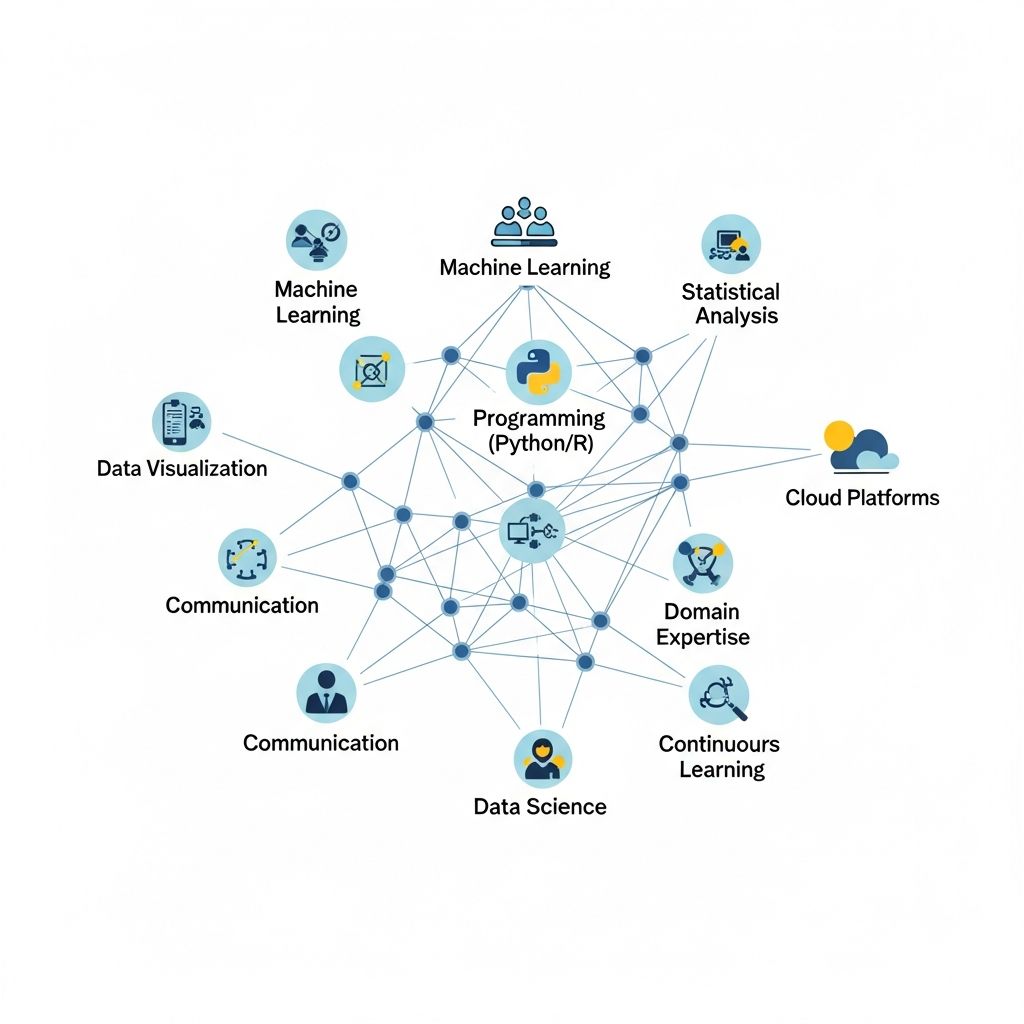
Understanding the Modern Data Science Landscape
The field of data science has evolved significantly, creating multiple viable pathways into the profession beyond traditional academic routes. Today’s organizations recognize that practical expertise and demonstrated competency often matter more than credentials alone. Whether you’re transitioning from another field or beginning your professional journey, understanding the current landscape helps you chart the most effective course toward a data science career.
Data science sits at the intersection of mathematics, computer science, and domain expertise. Professionals in this field extract meaningful insights from raw data, build predictive models, and translate complex findings into actionable business recommendations. The demand for skilled data scientists continues to outpace supply, creating favorable conditions for individuals willing to develop the necessary competencies.
Identifying Your Starting Point and Background
Your educational foundation and prior work experience significantly influence the pathway you should follow. Data scientists come from remarkably diverse backgrounds—mathematics, engineering, statistics, finance, computer science, information technology, and even specialized fields like sports analytics. Rather than viewing non-traditional backgrounds as obstacles, successful transitions leverage existing strengths while filling specific knowledge gaps.
If you already possess quantitative training in fields like mathematics, engineering, or statistics, your foundation in analytical thinking provides a head start. Conversely, if your background is primarily in software development or IT, you may need to strengthen statistical reasoning and domain knowledge. The key is honest assessment of your current skills and clear identification of areas requiring development.
Building Your Technical Foundation
Core Programming Languages
Python and SQL represent the non-negotiable foundation for any aspiring data scientist. Python’s versatility, extensive libraries, and readability make it the industry standard for data manipulation, analysis, and machine learning. SQL proficiency is equally essential—you cannot work effectively with data stored in relational databases without strong SQL skills for querying and manipulating information.
Beyond these primary languages, familiarity with R provides additional capabilities, particularly for statistical analysis and specialized visualizations. Some specialists learn Julia or other languages depending on their specific domain, but Python and SQL should be your starting point.
Mathematical and Statistical Foundations
Contrary to some misconceptions, you don’t need a graduate degree in mathematics to become a data scientist. However, functional knowledge of specific mathematical areas is essential. Your learning should focus on practical applications rather than pure theory:
- Linear Algebra: Fundamental to understanding machine learning algorithms, matrix operations, and computational efficiency
- Calculus: Essential for optimization problems, gradient descent, and understanding how algorithms learn from data
- Probability and Statistics: Critical for hypothesis testing, understanding distributions, interpreting results, and assessing model reliability
The depth of mathematical knowledge required depends on your specialization. If you plan to work on cutting-edge machine learning research, deeper mathematical training becomes necessary. For business-focused data science roles, solid practical understanding of statistical concepts suffices.
Data Manipulation and Visualization Skills
Real-world datasets are invariably messy, incomplete, and poorly organized. Data wrangling—the process of cleaning, organizing, and transforming raw data—consumes the majority of a data scientist’s time. This underappreciated skill directly impacts analysis quality and model performance. You’ll learn to handle missing values, identify outliers, standardize formats, and prepare data for analysis using tools like Python’s pandas library.
Data visualization transforms complex numerical results into understandable visual formats that communicate insights to non-technical stakeholders. Beyond creating charts, effective visualization requires understanding design principles, color theory, and how humans process visual information. Tools like Tableau, Python’s matplotlib and seaborn, and R’s ggplot2 are industry standards for creating professional visualizations.
Machine Learning and Advanced Analytics
Core Machine Learning Concepts
Machine learning represents the practical application of statistics to train algorithms that improve through experience. You need to understand both fundamental concepts and implementation approaches:
- Supervised Learning: Regression and classification problems where algorithms learn from labeled training data
- Unsupervised Learning: Finding patterns and groupings in unlabeled data through clustering and dimensionality reduction
- Model Evaluation: Assessing performance using appropriate metrics, cross-validation, and avoiding overfitting
- Feature Engineering: Creating meaningful variables that improve model performance
Practical machine learning differs from theoretical study. You need hands-on experience implementing algorithms, understanding their assumptions and limitations, and knowing when to apply which approach to specific problems.
Deep Learning and Artificial Intelligence
As AI capabilities expand across industries, understanding deep learning frameworks and AI principles has become increasingly important. You should develop familiarity with frameworks like TensorFlow and PyTorch, which power neural networks and deep learning applications. Additionally, natural language processing (NLP) skills enable you to work with text data, a growing domain across industries.
Perhaps most critically, understanding AI ethics and bias mitigation is essential. Data scientists must recognize how biases in training data propagate through models and implement strategies to reduce discriminatory outcomes. This ethical grounding distinguishes excellent data scientists from merely technically competent ones.
Structured Learning Pathways and Timelines
Self-Directed Learning Approach
Many successful data scientists have built careers through self-directed learning, leveraging online resources, documentation, and independent projects. This approach requires discipline and structured planning. A realistic timeline for moving from beginner to job-ready spans approximately 12 months of consistent effort:
- Months 1–3: Master Python fundamentals, SQL basics, Excel proficiency, and data visualization tools like Tableau. Complete foundational statistics and probability courses.
- Months 3–4: Deepen SQL and relational database knowledge. Study linear algebra, calculus, and advanced statistics. Begin exploring machine learning algorithms and their underlying mathematics.
- Months 5–6: Learn big data tools such as Apache Spark and cloud platforms (AWS, Google Cloud, Azure). Apply skills to real-world datasets through hands-on projects. Establish portfolio presence on GitHub or DataCamp DataLab.
- Months 7–8: Pursue professional certification (DataCamp, Coursera, or other recognized programs). Practice technical interviews intensively. Develop polished resume highlighting project work.
- Months 9–12: Explore specialization areas (NLP, deep learning, business analytics, MLOps). Contribute to open-source projects or participate in hackathons. Network actively with data science communities.
Formal Education Route
Traditional degrees in data science, computer science, mathematics, or statistics provide structured curricula covering all essential topics. Many graduate programs compress material into 1–2 years, providing guided learning paths and career support. Bachelor’s degrees require 4 years but offer deeper specialization and time for multiple internships or projects.
The education versus alternative credentials debate has shifted significantly. While many employers list degrees as preferred qualifications, evidence increasingly demonstrates that practical skills and demonstrated project work matter more than credentials alone. If you pursue formal education, seek programs emphasizing hands-on projects, real-world datasets, and industry connections.
Building Your Professional Portfolio
A compelling portfolio distinguishes job candidates in competitive markets. Rather than completing generic textbook exercises, prioritize projects demonstrating end-to-end problem-solving capabilities:
- Problem Definition: Start with a clear business question or research objective, not just available data
- Data Exploration: Demonstrate your ability to understand data structure, quality, and characteristics
- Methodology: Show appropriate technique selection and justify your analytical approach
- Results and Insights: Present findings clearly with visualizations that communicate key discoveries
- Code Quality: Write clean, documented, reproducible code that others can understand and build upon
- Business Impact: Connect technical results to practical implications and business value
Public visibility through GitHub repositories, Kaggle competitions, blog posts explaining your work, and personal websites significantly enhances your candidacy. Many employers value tangible evidence of your abilities over theoretical qualifications.
Complementary Skills and Professional Development
Domain Expertise and Business Understanding
Technical skills alone don’t create excellent data scientists. Understanding the business context—industry dynamics, customer needs, operational constraints, financial implications—enables you to frame meaningful problems and communicate effectively with stakeholders. Dedicate time to learning your target industry before job applications, demonstrating genuine interest and contextual awareness.
Communication and Collaboration
Data scientists must translate complex technical findings into language non-technical stakeholders understand. Strong communication skills are valued equally with technical expertise by hiring managers. This includes written clarity in reports and documentation, verbal articulation in presentations, and ability to engage in collaborative problem-solving with cross-functional teams.
Cloud Platform Proficiency
Modern data science increasingly relies on cloud infrastructure—AWS, Google Cloud Platform, and Microsoft Azure provide the computational resources and specialized tools that data scientists use daily. Familiarity with these platforms and relevant services (managed databases, containerization, deployment tools) has become essential rather than optional.
Navigating the Job Market
Entry-Level Positioning Strategies
Many competitive candidates possess similar technical skills. Your differentiation emerges through portfolio quality, specific domain knowledge, demonstrated learning capacity, and cultural fit. Consider targeting internships or contract roles initially—these provide real-world experience that accelerates career progression and demonstrates workplace capability beyond academic projects.
Geographic flexibility and willingness to accept roles slightly below your ideal position can jumpstart your career. Junior analyst or analytics engineer positions provide valuable experience that positions you for data scientist advancement within 2–3 years.
Networking and Professional Presence
Active participation in data science communities—online forums, local meetups, conferences, and professional associations—creates opportunities and keeps you current with industry trends. Engaging thoughtfully in discussions, sharing insights through blog posts or talks, and building genuine connections accelerates career development and often leads to opportunities that competitive applications alone won’t generate.
Frequently Asked Questions
Q: Do I absolutely need a degree to become a data scientist?
A: No, though it can be beneficial. Many professionals have entered the field through self-directed learning and bootcamps. What matters most is demonstrated competency through projects and certifications. Formal education ensures comprehensive coverage of fundamentals but isn’t the only viable path.
Q: How long does it realistically take to transition into data science?
A: For someone with related technical background, 6–12 months of focused learning can lead to job readiness. Those starting from non-technical backgrounds may need 18–24 months. The timeline depends on prior experience, learning pace, and available time for studying.
Q: Should I learn R or Python first?
A: Prioritize Python. It’s more widely used in industry, has better general programming capabilities, and stronger career prospects. R can be learned as a secondary language once you’re comfortable with Python fundamentals.
Q: What’s the difference between a data scientist and data analyst?
A: Data analysts focus on descriptive analysis—understanding what happened in data. Data scientists go further, building predictive models and uncovering insights that inform strategic decisions. Data scientists typically need stronger machine learning and programming skills.
Q: How important is mathematical background for data science?
A: You need functional knowledge of statistics, linear algebra, and calculus, but not necessarily a degree in these fields. Self-study focusing on practical applications can suffice. The depth needed depends on whether you’re doing applied data science or research-focused machine learning.
Q: Should I focus on specialization early in my career?
A: Build broad competency across core data science areas first. Specialization (NLP, computer vision, MLOps) becomes most valuable once you understand fundamentals. Many specializations also have overlapping foundational requirements.
References
- How to Become a Data Scientist in 2026 — DataCamp. 2025. https://www.datacamp.com/blog/how-to-become-a-data-scientist
- How to Become a Data Scientist (2026 Guide) — BrainStation. 2025. https://brainstation.io/career-guides/how-to-become-a-data-scientist
- Data Scientist Salary Guide: What to Expect in 2026 — Coursera. 2025. https://www.coursera.org/ca/articles/data-scientist-salary
- How to Become a Data Scientist (Yes, Even in 2026) — DataQuest. 2025. https://www.dataquest.io/blog/how-to-become-a-data-scientist/
- How to Become a Data Scientist — Harvard University School of Engineering and Applied Sciences. https://seas.harvard.edu/news/how-become-data-scientist

- Integrated M.A. in Applied Linguistics, University of Hyderabad
- 5+ years in editorial, instructional, SEO, and research-based writing
Sneha is a relationships and lifestyle writer with a strong foundation in applied linguistics and certified training in relationship coaching. She brings over five years of writing experience to theskillvault, crafting thoughtful, research-driven content that empowers readers to build healthier relationships, boost emotional well-being, and embrace holistic living. Her writing and insights reflect the belief that beauty, happiness, and wellness…