
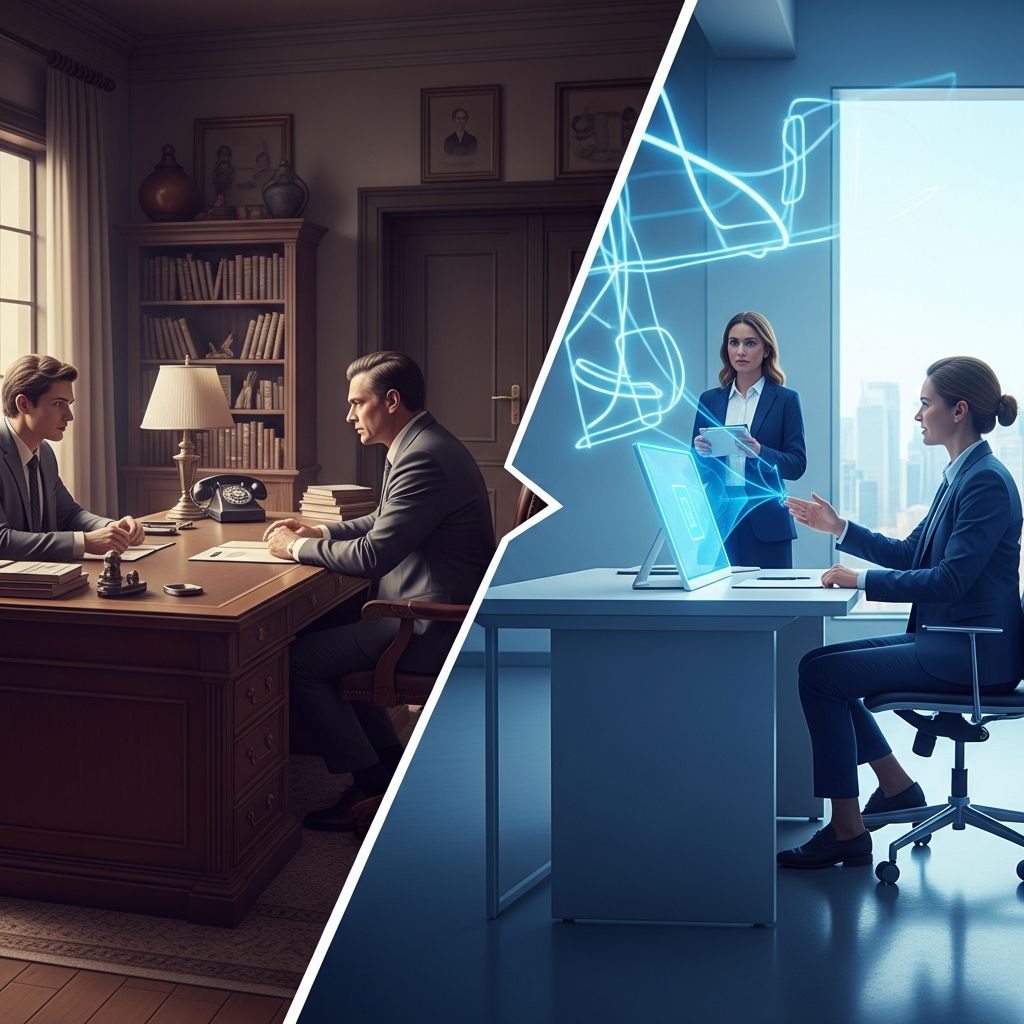
Job interviews have undergone profound changes over the decades, adapting to technological advancements, shifting workforce dynamics, and evolving employer needs. What began as informal conversations has become a sophisticated process incorporating digital tools, data analytics, and artificial intelligence. This article delves into the historical progression, current practices, and emerging trends shaping interviews in 2026 and beyond, equipping job seekers and recruiters with insights to navigate this landscape effectively.
Early Foundations: Interviews in the Industrial Age
In the early 20th century, job interviews were rudimentary affairs. Factories and offices sought reliable workers through basic assessments of physical fitness and basic literacy. Employers often hired based on personal recommendations or quick verbal exchanges, with little emphasis on skills testing. By the 1920s, as assembly lines dominated manufacturing, interviews focused on punctuality, obedience, and endurance—qualities essential for repetitive tasks.
The Great Depression of the 1930s intensified competition, turning interviews into high-stakes ordeals where desperation met scarcity. Post-World War II economic booms introduced more structured formats, influenced by psychological testing pioneered during the war for soldier selection. Companies began using rudimentary aptitude tests alongside face-to-face meetings to predict employee success.
- Key characteristics: Informal, reference-heavy, focused on reliability over innovation.
- Duration: Often under 15 minutes.
- Decision factors: Personal impression and connections.
Mid-Century Shifts: The Rise of Behavioral Evaluation
The 1950s and 1960s marked a pivot toward behavioral psychology in hiring. Influenced by academics like Carl Rogers, interviewers probed past experiences to forecast future performance. This era saw the popularization of the ‘tell me about a time when’ question, aiming to uncover real-world competencies rather than rehearsed answers.
By the 1970s, affirmative action laws in the U.S. prompted greater focus on diversity, leading to standardized interview protocols to mitigate bias. The 1980s corporate boom emphasized charisma and ambition, with panel interviews becoming common for executive roles. Resumes evolved from simple lists to detailed narratives, and mock interviews emerged as preparation tools in career counseling.
| Era | Primary Focus | Common Tools | Challenges |
|---|---|---|---|
| 1950s-1960s | Behavioral prediction | Psychological tests | Subjectivity |
| 1970s-1980s | Diversity & ambition | Panel discussions | Bias in selection |
Digital Dawn: Video and Virtual Interviews Emerge
The internet revolution of the 1990s and early 2000s digitized recruitment. Platforms like Monster and LinkedIn streamlined applications, while video calls via Skype reduced geographical barriers. The 2008 financial crisis accelerated remote hiring, making virtual interviews a necessity by the mid-2010s.
Statistics highlight this shift: 47% of professionals reported less travel due to video interviews, and over 40% of organizations noted productivity gains from these tools. By 2020, the COVID-19 pandemic cemented video as standard, with 59% of companies citing expanded talent access through remote formats. Candidates now needed strong digital presence, clear communication, and tech-savviness.
- Advantages: Cost savings, wider pools, flexibility.
- Candidate tips: Test equipment, maintain eye contact with camera, professional backdrop.
Present Day: AI and Data-Driven Assessments
In 2026, interviews blend human intuition with technology. Skills-based hiring dominates, with 65% of employers prioritizing abilities over degrees. AI tools screen resumes in seconds—recruiters spend just 5-7 seconds initially—and 85% use skills assessments as better performance predictors than resumes.
AI interview intelligence ensures consistency by analyzing responses for themes and flagging clarifications. Questions like “How do you use AI in your workflow?” are ubiquitous, testing adaptability across industries. Employers value analytical thinking, expected to be mandatory for 70% by 2030.
Remote and hybrid models persist, with proctoring tools maintaining integrity in assessments. Candidate experience is paramount: personalized communications, timely updates, and feedback loops boost satisfaction and retention.
Looking Ahead: The Next Frontier of Hiring
By 2030, interviews will likely be immersive and predictive. Virtual reality simulations could place candidates in job scenarios, assessing real-time decisions. AI will evolve to emotional intelligence evaluation via voice and facial analysis, always with human oversight for ethics.
Skills gaps persist—63% hinder innovation—driving hyper-personalized training previews in interviews. Blockchain-verified credentials will replace traditional resumes, ensuring authenticity. Diversity, equity, and inclusion remain core, with transparent algorithms combating bias.
Continuous learning is key: 39% of skills may obsolete by 2030. Interviewers probe AI collaboration and adaptability through scenarios, not direct questions.
Mastering Modern Interviews: Strategies for Success
To thrive, adopt the SOAR method (Situation, Obstacle, Action, Result) for behavioral answers. Tailor responses to company challenges, using specific examples. Demonstrate AI proficiency with tools like ChatGPT for research or automation, linking to outcomes.
- Research thoroughly: Reference company specifics.
- Practice virtually: Simulate video setups.
- Showcase soft skills: Adaptability, collaboration.
- Follow up: Personalized thank-yous.
| Trend | Impact on Candidates | Preparation Tip |
|---|---|---|
| Skills-Based | Less degree focus | Build portfolio |
| AI Analysis | Consistent eval | Use AI ethically |
| Virtual Reality | Immersive tests | Practice scenarios |
Common Interview Questions in 2026
- Tell me about a challenge you overcame using AI. Focus on process and results.
- How do you prioritize tasks in a hybrid team? Emphasize tools and communication.
- Describe adapting to new technology quickly. Use SOAR structure.
Frequently Asked Questions
What percentage of employers use skills-based hiring?
Around 65-85% prioritize skills assessments over traditional resumes for better performance prediction.
How has AI changed interview processes?
AI provides consistency, themes analysis, and personalization, reducing bias while speeding evaluations.
Are video interviews here to stay?
Yes, with 59% of firms noting broader talent access and productivity boosts.
What skills will dominate by 2030?
Analytical thinking (70% mandatory), AI collaboration, and adaptability.
How to stand out in 2026 interviews?
Frame answers around employer needs, provide evidence, and show proactive learning.
References
- Top 10 Job Interview Questions and Answers for 2026 — The Interview Guys. 2026. https://blog.theinterviewguys.com/top-10-job-interview-questions-and-answers/
- Top 10 AI Recruiting Trends: A 2026 Guide to Smarter Hiring — Joveo. 2026. https://www.joveo.com/blog/trends-in-recruitment-ai/
- 30+ Job Interview Statistics 2026: Key Hiring Trends — Second Talent. 2026. https://www.secondtalent.com/resources/job-interview-statistics/
- Top Recruiting Trends in 2026: What’s Actually Driving Better Hiring — Disher Talent. 2026. https://dishertalent.com/blog/top-recruiting-trends-2026/
- Top 6 Hiring Trends of 2026 — Criteria Corp. 2026. https://www.criteriacorp.com/blog/top-hiring-trends
- 8 Hiring Trends in 2026 — Indeed. 2026. https://www.indeed.com/hire/c/info/hiring-trends

Medha Deb is an editor with a master's degree in Applied Linguistics from the University of Hyderabad. She believes that her qualification has helped her develop a deep understanding of language and its application in various contexts. Medha specializes in the areas of beauty, health, sports, and wellness and is committed to ensuring that the content on the website is…