
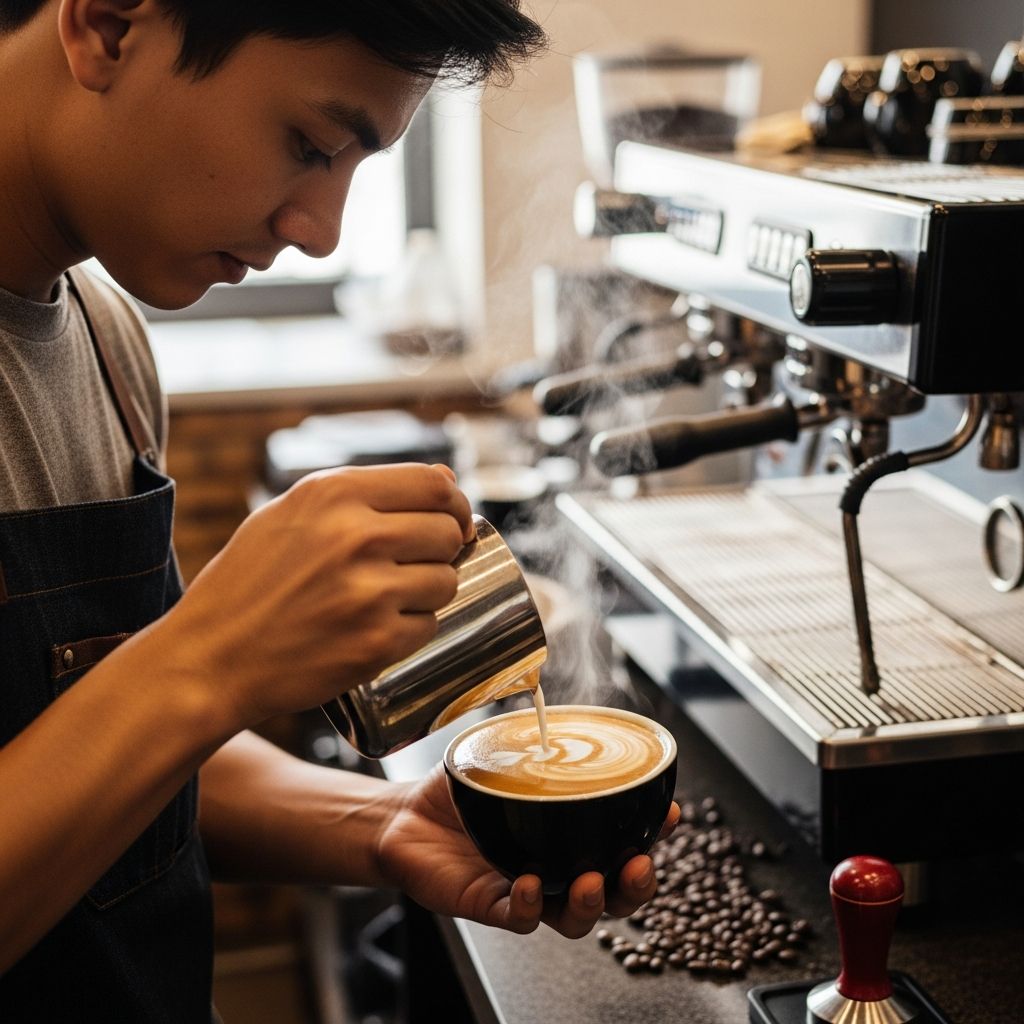
Entering the world of barista work offers a dynamic entry into the hospitality industry, blending creativity with customer interaction in fast-paced settings. This role demands a mix of technical expertise in coffee crafting and soft skills for exceptional service, paving the way for rewarding career trajectories.
Core Competencies Every Barista Must Hone
Success as a barista hinges on mastering foundational abilities that ensure consistent quality and customer satisfaction. These competencies form the bedrock of daily operations in bustling coffee environments.
- Customer Engagement Excellence: Baristas thrive by building rapport, understanding preferences, and offering tailored recommendations, turning routine orders into memorable experiences.
- Multitasking Proficiency: Handling multiple orders amid peak rushes requires seamless task-switching without compromising precision or speed.
- Attention to Precision: From measuring grounds to timing extractions, meticulous detail ensures every beverage meets high standards.
- Adaptability Under Stress: Flexible responses to sudden crowds or equipment glitches maintain workflow efficiency.
These skills not only elevate service but also foster repeat business, as positive interactions drive loyalty in competitive markets.
Technical Mastery: Coffee Preparation Fundamentals
Beyond interpersonal talents, baristas must excel in the art and science of beverage creation, leveraging equipment and techniques for superior results.
Key technical areas include:
- Espresso extraction and milk texturing for lattes, cappuccinos, and beyond, requiring precise temperature and pressure control.
- Grinder calibration and brew methods like pour-over or cold brew, attuned to bean origins and roast profiles.
- Latte art skills, where aesthetic designs enhance drink appeal and demonstrate craftsmanship.
- Equipment upkeep, from daily cleaning to troubleshooting, ensuring hygiene and reliability.
| Skill Level | Junior Barista Focus | Senior Barista Expertise |
|---|---|---|
| Brewing Techniques | Basic espresso and drip methods | Advanced pour-over, siphon, and origin-specific profiles |
| Customer Handling | Standard orders and queries | Custom blends, complaints, and loyalty building |
| Equipment Management | Routine operation and wipe-downs | Full maintenance and staff training |
Proficiency here separates novices from professionals, directly impacting taste consistency and operational smoothness.
Daily Operations: Responsibilities That Define the Role
A barista’s shift revolves around a blend of preparation, service, and maintenance tasks that keep cafés running seamlessly.
- Greeting patrons, processing orders via POS systems, and managing payments with accuracy.
- Stocking supplies, rotating inventory using FIFO principles, and prepping ingredients ahead of rushes.
- Maintaining spotless workstations, adhering to food safety protocols to prevent contamination.
- Collaborating with teams to balance front-of-house service and back-of-house prep during high-volume periods.
Performance metrics like order accuracy, service speed, and upsell success gauge effectiveness, often tracked for shifts.
Building Stamina and Team Dynamics
The physical and collaborative demands of barista work require resilience and synergy. Long hours on feet, coupled with repetitive motions, test endurance, while team coordination ensures peak efficiency.
Effective baristas communicate non-verbally through clear signals during chaos, solve issues like machine jams swiftly, and support colleagues in role-sharing.
- Physical readiness: Core strength for lifting supplies and sustained standing.
- Team synergy: Sharing workloads and providing peer feedback for collective improvement.
Entry Routes: Education, Training, and First Steps
No formal degree is typically required, but targeted preparation accelerates entry. Many begin with on-the-job training, though barista courses offer foundational knowledge in brewing and safety.
Steps to launch:
- Gain Basics: Enroll in short certifications covering latte art, tasting, and hygiene—often 1-2 weeks.
- Build Experience: Start in entry-level café roles, volunteering for bar shifts to practice.
- Certify Skills: Pursue SCA (Specialty Coffee Association) credentials for credibility in advanced techniques.
- Network Locally: Attend coffee events to connect with industry pros and uncover openings.
Employers value enthusiasm over prior experience, providing hands-on onboarding for motivated hires.
Resume and Application Strategies for Aspiring Baristas
Tailoring applications highlights relevant strengths. Use quantifiable achievements to stand out.
Resume tips:
- Segment skills: Group under ‘Beverage Prep’ (e.g., ‘Mastered 20+ espresso variations’) and ‘Service’ (e.g., ‘Reduced wait times 20% via efficient multitasking’).
- Quantify impact: ‘Handled 200+ daily transactions with 99% accuracy’.
- Customize per job: Mirror postings, like emphasizing ‘latte art’ for artisanal shops.
Cover letters should convey passion: ‘My dedication to crafting perfect pours, honed through home experimentation, aligns with your focus on quality.’
Career Advancement: From Novice to Leader
Barista roles evolve into supervisory, training, or management positions with skill progression. Seasoned pros mentor juniors, develop menus, or transition to roasting and quality control.
Progression paths:
- Senior Barista: Leads shifts, trains staff, innovates drinks.
- Shift Supervisor: Oversees operations, inventory, and metrics.
- Store Manager: Manages full teams, finances, and expansions.
- Beyond Café: Coffee buyer, trainer, or entrepreneur.
Continuous learning via workshops keeps baristas competitive in an industry valuing expertise.
Frequently Asked Questions
What are the top skills for a barista resume?
Prioritize customer service, communication, multitasking, coffee knowledge, and cash handling to showcase your fit for high-volume settings.
Is prior experience necessary to become a barista?
No, many cafés train enthusiastic beginners; highlight transferable skills like retail or hospitality in applications.
How can baristas advance their careers?
Develop advanced brewing, leadership, and business acumen through certifications and internal promotions.
What physical demands does the job involve?
Expect prolonged standing, lifting, and fast movements; stamina is key for peak-hour endurance.
Why is coffee knowledge important for baristas?
It enables precise preparation, customer education on origins and profiles, and menu innovation.
Thriving in the Coffee Industry Landscape
The barista profession rewards those who blend passion with professionalism, offering flexibility, creativity, and growth. By refining skills, embracing training, and pursuing advancement, individuals craft fulfilling paths in a vibrant sector fueled by global coffee culture.
References
- Top 10 Barista Skills to Put on Your Resume — Jobscan. 2024. https://www.jobscan.co/skills/barista
- Essential Barista Job Description: Roles, Skills, and Responsibilities — GetKnow App. 2024. https://www.getknowapp.com/blog/barista-job-description/
- Why barista skill development is important for career progression — Perfect Daily Grind. 2024-09. https://perfectdailygrind.com/2024/09/developing-barista-skills-career-progression/
- Barista: Skills, Responsibilities, Career Paths — Hcareers. 2024. https://www.hcareers.com/article/career-advice/barista-skills-responsibilities-career-paths
- Essential Barista Skills: Roles And Requirements — Sand Dust Coffee. 2024. https://sanddustcoffee.com/essential-barista-skills-roles-and-requirements/
- Barista Skills: Definition and Examples — Indeed.com. 2024. https://www.indeed.com/career-advice/career-development/barista-skills

Medha Deb is an editor with a master's degree in Applied Linguistics from the University of Hyderabad. She believes that her qualification has helped her develop a deep understanding of language and its application in various contexts. Medha specializes in the areas of beauty, health, sports, and wellness and is committed to ensuring that the content on the website is…