
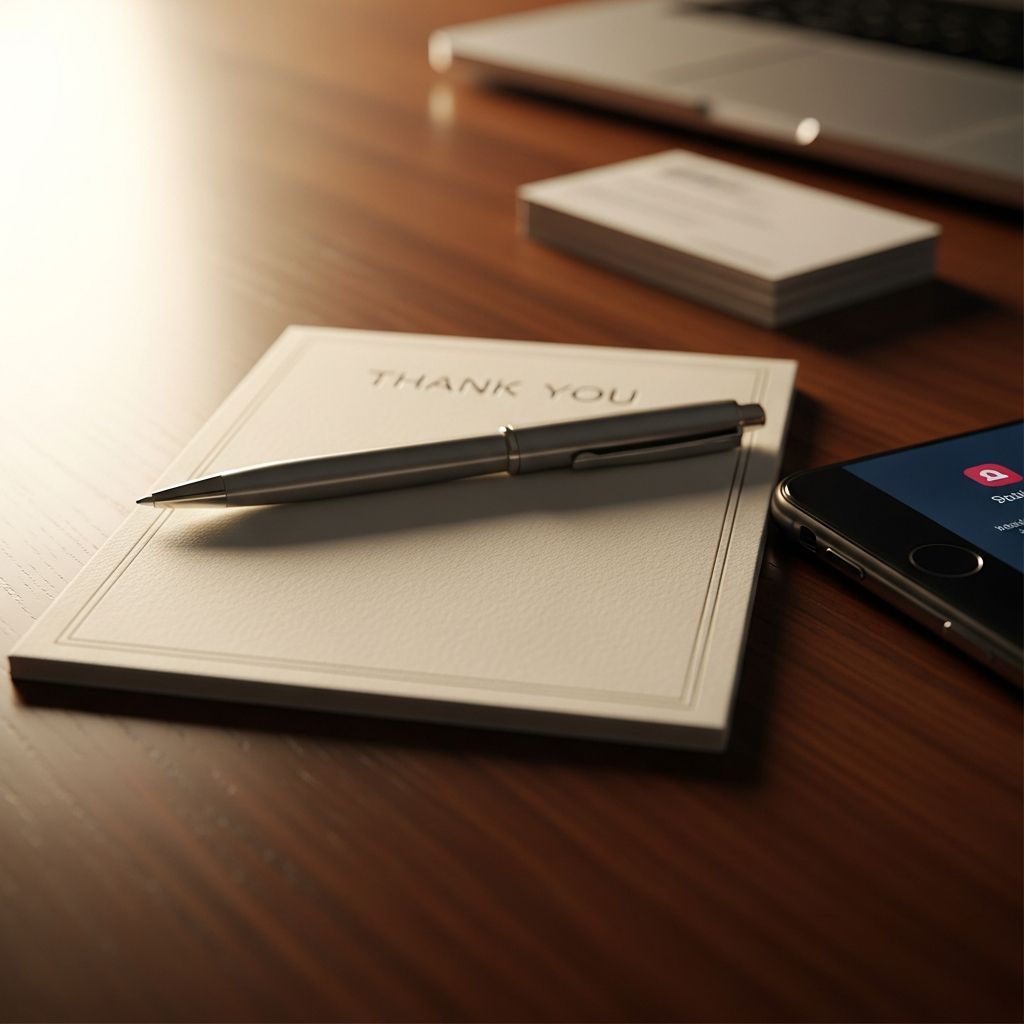
The period following a job interview represents a critical window of opportunity that many candidates underestimate. While the conversation itself may have gone well, your actions in the hours and days afterward can significantly influence how hiring managers perceive your professionalism and genuine interest in the position. One of the most strategically important yet frequently mishandled aspects of this post-interview period involves knowing when and how to send a thank you note that reinforces your candidacy without appearing overeager or, conversely, negligent.
The question of timing for post-interview thank you communications remains one of the most commonly debated topics in career advice circles. Candidates often wonder whether there exists a point at which sending a thank you note becomes counterproductive or even damaging to their prospects. Understanding the nuances of this question requires examining industry standards, psychological principles of hiring decisions, and the evolving nature of professional communication in contemporary workplaces.
Understanding the Critical Window for Thank You Communication
Research into hiring practices indicates that the hours immediately following an interview constitute the most valuable period for sending follow-up communications. During this timeframe, the interviewer’s memory remains fresh, and your interview performance is still top-of-mind in their decision-making process. The momentum generated during your conversation can be leveraged through a well-timed thank you message that reiterates your enthusiasm and qualifications.
The conventional wisdom across career development professionals suggests that sending your thank you note within 24 hours of your interview represents the optimal approach. This timeframe strikes a balance between demonstrating promptness—which communicates respect for the interviewer’s time and genuine interest in the opportunity—and allowing sufficient time to craft a thoughtful, personalized message rather than a rushed, generic response.
However, the reality of modern hiring practices presents additional considerations. Many organizations operate on compressed hiring timelines, particularly for positions in competitive fields or companies experiencing rapid growth. In such environments, even a 24-hour delay might position your message after other candidates have already submitted their follow-ups, potentially affecting the comparative impression you make on the hiring committee.
The Point of Diminishing Returns: When Timing Becomes Counterproductive
While sending a thank you note within 24 hours represents best practice, candidates frequently encounter circumstances that complicate this timeline. Travel schedules, time zone differences, unexpected work commitments, or simply not having the interviewer’s contact information immediately available can create delays. Understanding at what point a delayed thank you note transitions from acceptable to problematic requires examining both practical and psychological factors.
Most hiring professionals agree that sending a thank you note within 48 hours of your interview still demonstrates reasonable promptness and professionalism. This extended window acknowledges real-world constraints while maintaining the message’s relevance and impact. The interviewer’s recollection of your conversation remains sufficiently clear, and your follow-up still serves its intended purpose of reinforcing your interest and key qualifications.
Beyond the 48-hour mark, the efficacy of a thank you note begins to diminish noticeably. When more than two business days have elapsed since your interview, several psychological and practical complications arise:
- The interviewer’s focus has likely shifted to other candidates or organizational priorities, reducing the impact of your message
- Your delayed response might inadvertently suggest disorganization, lack of genuine interest, or poor communication planning
- The relevance of specific conversation points fades as time increases, making personalization more difficult and potentially awkward
- In fast-moving hiring processes, significant progress may have already been made in evaluating other candidates
The Impracticality of Thank You Notes After One Week
Once a full week has passed since your interview, sending a thank you note faces substantial headwinds. At this stage, your message transitions from being a thoughtful follow-up to feeling like an unexpected addition to a process that has already moved forward. Hiring managers who have already established their shortlist of candidates for second-round interviews may view an extremely delayed thank you note as evidence of poor attention to detail or minimal interest in the position.
Furthermore, a week-delayed message can appear awkward or even slightly presumptuous if the interviewer has already made decisions about your candidacy or moved on to other phases of recruitment. Rather than reinforcing your qualifications, it might raise questions about why you waited so long to express appreciation for an opportunity that apparently didn’t warrant timely attention.
That said, exceptional circumstances occasionally justify sending a thank you note even after this extended period. If you discovered new information about the company or role that directly relates to your qualifications, or if a significant development has occurred that changes the context of your interview, a note acknowledging this context and reiterating your interest might still hold value. However, such messages require careful framing to avoid appearing desperate or out of touch with professional norms.
Choosing Between Email and Handwritten Formats
The medium through which you send your thank you note carries implications for timing considerations. Email allows for immediate transmission and reaches the interviewer instantaneously, making it the most practical choice for adhering to the 24-hour window. A handwritten note, while potentially more memorable and personal, necessarily requires additional time for composition, mailing, and delivery—sometimes adding a week or more to the timeline.
Best practice recommendations often suggest a hybrid approach: sending an email thank you note within 24 hours to demonstrate promptness, then optionally following up with a handwritten note that arrives within several days. This strategy captures the advantages of both mediums without sacrificing the critical timing element that email provides.
The choice between mediums may also depend on the industry and organizational culture. Creative fields, non-profits, and organizations emphasizing personal connections sometimes view handwritten notes more favorably, potentially justifying the extended timeline. Conversely, fast-paced industries such as finance, technology, or consulting typically prioritize email communication for its speed and clarity.
Navigating Multiple Interviewers and Group Interviews
Candidates who interview with multiple people during the same session or across multiple rounds face additional complexity in timing decisions. Best practice involves sending individual thank you notes to each interviewer, personalizing each message based on that person’s specific role, questions, and the particular aspects of your conversation. This multiplied communication requires more time investment but significantly enhances your candidacy by demonstrating attention to detail and genuine engagement with each team member.
In such situations, the 24-hour window still applies, but the practical reality may extend to 36-48 hours as you craft personalized messages for each recipient. Prioritize sending notes to the primary interviewer and any executive-level participants within 24 hours, then complete messages to other panel members within the 48-hour mark. This prioritization ensures that your most critical contacts receive timely communication while managing the workload of multiple personalized messages.
Special Circumstances Affecting Timing Decisions
Certain situations warrant consideration of alternative timing strategies. If your interview was scheduled for a Friday afternoon, you may reasonably extend your timeline to Monday morning, particularly if the hiring team will not be actively reviewing applications over the weekend. Similarly, if you interviewed during a holiday week or ahead of a significant organizational event, understanding the hiring team’s actual availability can inform whether pushing slightly beyond 24 hours remains appropriate.
International interviews create additional timing complexity due to time zone differences. A candidate who interviewed with a company in a different continental time zone might reasonably interpret the 24-hour window as applying to the next business day in their recipient’s location rather than 24 literal hours. This adjustment acknowledges practical realities while maintaining the spirit of prompt communication.
The Content-Timing Relationship
The timing of your thank you note directly influences the approach and content you should employ. A note sent within hours of your interview can reference specific moments and conversations with precision, creating a more memorable and impactful message. The fresher details remain in both your mind and the interviewer’s memory, enabling more genuine and specific personalization.
Conversely, a note sent at the outer limits of acceptability (around the 48-hour mark) requires more intentionality in recalling and articulating specific discussion points. You may need to reference notes you took during the interview to accurately represent the conversation. This additional layer of consideration reinforces why sending your message sooner rather than later generally produces better outcomes.
Delayed messages also risk generic tonality, as the specific momentum and enthusiasm from your interview conversation naturally dissipate over time. What feels like genuine enthusiasm in a message sent within hours can read as forced or performative when sent days later without fresh details to support it.
Red Flags: When Not to Send a Thank You Note
While the focus of this discussion centers on appropriate timing, certain situations warrant not sending a thank you note at all. If an interviewer explicitly stated that the hiring process is complete and a decision has been made, sending a thank you note at any point would be inappropriate and potentially counterproductive. Similarly, if you have already sent a thank you note and received a response, sending additional follow-up messages risks appearing pushy or lacking in professional boundaries.
Additionally, if significant time has passed and you have learned through alternative channels that the position has been filled or the search has been abandoned, attempting to send a delayed thank you note serves no purpose and may actually damage your professional reputation with that organization for potential future opportunities.
FAQ: Common Questions About Thank You Note Timing
Is sending a thank you note within one hour too eager?
Sending a thank you note within a few hours of your interview demonstrates appropriate promptness and does not read as overeager, provided the message itself maintains professional tone and genuine personalization. Same-day communication, whether within hours or by end of business, represents standard practice.
Can I send a thank you note on a weekend?
Sending an email thank you note on a weekend is perfectly acceptable, as email provides asynchronous communication that the recipient will review when they return to work. However, if choosing a handwritten note requiring mailing, sending it on a business day ensures it enters the mail system promptly.
What if I realize an error in my thank you note after sending?
Minor errors in already-sent thank you notes should generally be ignored rather than addressed through follow-up messages. Sending a correction email would likely draw more attention to the error than leaving it alone. However, if the error significantly impacts understanding (such as misspelling the interviewer’s name or incorrectly stating the position title), a brief, professional correction may be warranted.
Is it appropriate to send a thank you note if I’ve decided not to pursue the position?
Yes, sending a thank you note remains appropriate even if you have decided to decline the position. This message demonstrates professional courtesy and maintains a positive relationship with the organization for future opportunities.
How soon is too soon to send additional follow-up communication after the thank you note?
A thank you note itself constitutes sufficient follow-up communication. Do not send additional messages unless you have specific new information to share or the interviewer has explicitly indicated they will contact you on a particular timeline and that date has passed without communication.
Conclusion: Strategic Timing as Professional Investment
The timing of your post-interview thank you note represents far more than a matter of etiquette—it constitutes a strategic element of your job search campaign. By understanding the optimal windows for communication, recognizing when timing has extended beyond useful limits, and adapting your approach based on specific circumstances and industry norms, you position yourself to maximize the impact of this important professional gesture.
The 24-hour ideal window, with 48 hours as an absolute outside limit for email communication, provides a practical framework that accommodates real-world constraints while maintaining the effectiveness of your message. Within this timeframe, your thank you note serves its intended purpose: reinforcing your enthusiasm, reiterating your qualifications, and maintaining the positive momentum generated during your interview. By respecting these timing considerations while focusing on crafting genuine, personalized messages, you enhance your candidacy and demonstrate the professionalism that hiring managers seek in their future employees.
References
- How to Write a Handwritten Thank You Note After an Interview: A Step-by-Step Guide — TechNeeds. 2024-12-31. https://www.techneeds.com/2024/12/31/how-to-write-a-handwritten-thank-you-note-after-an-interview-a-step-by-step-guide/
- 4 Sample Thank-You Emails To Send After an Interview — Indeed Career Advice. https://www.indeed.com/career-advice/interviewing/sample-thank-you-letter-after-interview
- The Best Thank-you Email Subject Line for After Interviews — The Muse. https://www.themuse.com/advice/interview-thank-you-email-subject-line
- Thank You Letter After Interview — San Francisco State University Career Center. https://career.sfsu.edu/sites/default/files/documents/06%20-%20Thank%20You%20Letter%20After%20Interviewing.pdf
- How to Write a Thank You Email After an Interview — Harvard Business Review. 2022-11. https://hbr.org/2022/11/how-to-write-a-thank-you-email-after-an-interview

- Integrated M.A. in Applied Linguistics, University of Hyderabad
- 5+ years in editorial, instructional, SEO, and research-based writing
Sneha is a relationships and lifestyle writer with a strong foundation in applied linguistics and certified training in relationship coaching. She brings over five years of writing experience to theskillvault, crafting thoughtful, research-driven content that empowers readers to build healthier relationships, boost emotional well-being, and embrace holistic living. Her writing and insights reflect the belief that beauty, happiness, and wellness…