
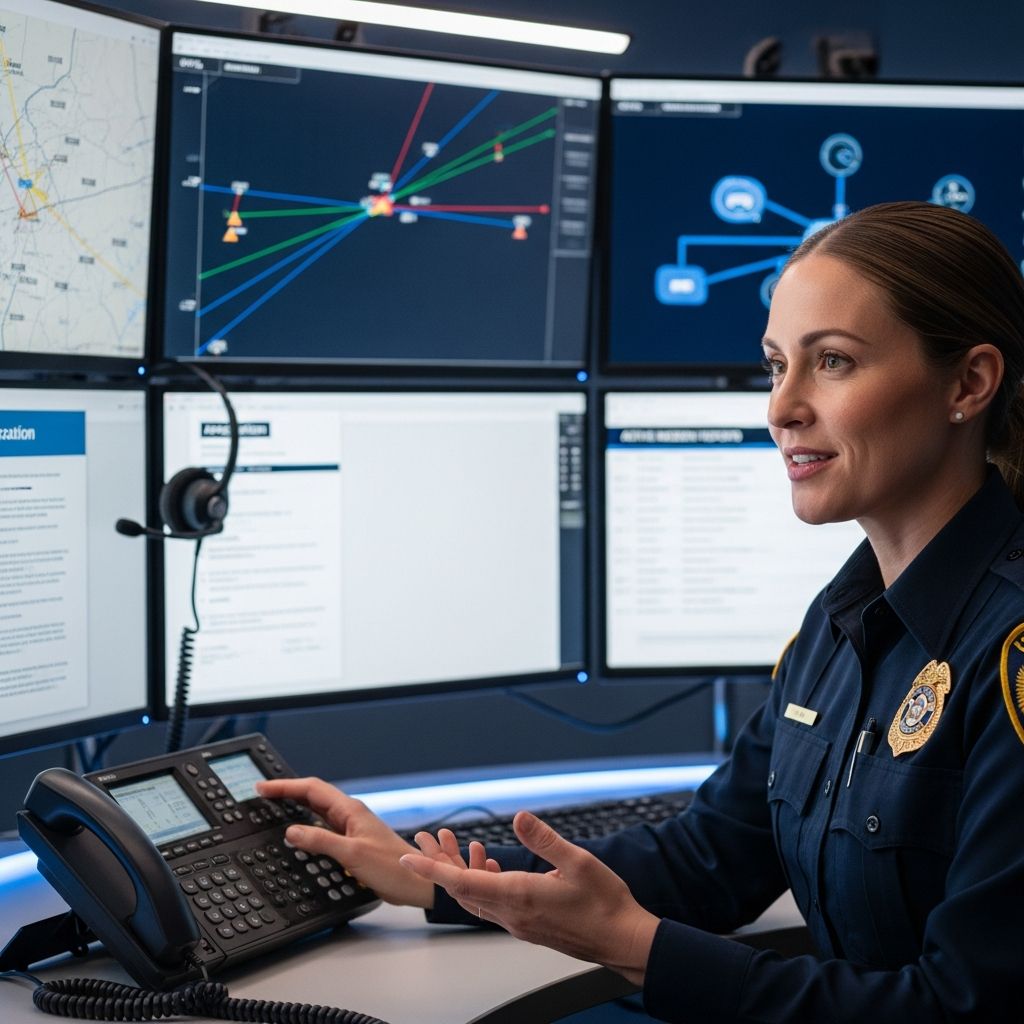
Landing a dispatcher position requires more than just technical know-how; it demands proving you can thrive in fast-paced, high-stakes environments. Dispatchers serve as the vital link between callers in need and field teams, managing everything from routine logistics to life-or-death emergencies. This guide equips you with strategies to tackle the most frequent interview questions, drawing from core responsibilities like call prioritization, resource coordination, and record-keeping.
Understanding the Dispatcher Role
At its heart, dispatching involves acting as a central communication hub. You receive incoming calls—emergency or otherwise—gather critical details, and dispatch appropriate personnel or vehicles swiftly. Responsibilities span monitoring field unit locations, updating logs, resolving issues via radio or phone, and maintaining accurate records in computer systems. In sectors like emergency services, logistics, or security, dispatchers prioritize urgency, relay vital info on traffic or obstacles, and ensure seamless operations.
Employers seek candidates who excel in multitasking under pressure, communicate clearly, and stay composed. A strong foundation in these areas positions you to shine during interviews.
General Interview Preparation Strategies
Before diving into questions, tailor your approach. Review the job description closely—note if it’s for police, fire, medical, trucking, or security dispatching, as emphases vary. Prepare a resume highlighting relevant experience, such as customer service, admin roles, or any radio/computer dispatch exposure. Practice with the STAR method (Situation, Task, Action, Result) for behavioral questions to structure responses effectively.
- Research the employer: Understand their dispatch volume, software (e.g., CAD systems), and shift structures.
- Brush up on tools: Familiarize with multi-line phones, two-way radios, GPS tracking, and logging software.
- Dress professionally: Opt for business attire, even for remote interviews.
- Mock interviews: Simulate high-stress scenarios with a partner.
Common Behavioral Questions and Sample Responses
Interviewers probe your past to predict future performance. Expect questions on stress handling, decision-making, and teamwork.
Tell Me About Yourself
This opener assesses fit. Keep it concise: 1-2 minutes linking your background to dispatching.
Sample Answer: “I’m a detail-oriented professional with three years in customer service and logistics coordination. In my last role at a delivery firm, I managed 50+ daily calls, prioritized routes using GPS software, and reduced response times by 20%. I’m drawn to dispatching for its blend of quick thinking and direct impact on operations.”
Describe a Time You Handled a High-Pressure Situation
Dispatchers face constant urgency; show resilience.
Sample Answer: “During a peak holiday shift, our team handled a system outage amid 100+ calls. I stayed calm, switched to manual logging on paper, verbally coordinated three drivers via radio, and restored order within 30 minutes, preventing delays.”
How Do You Prioritize Tasks During Busy Periods?
Highlight organizational skills.
Sample Answer: “I triage by urgency: life-threatening first, then time-sensitive deliveries, routine queries last. I use triage matrices mentally—e.g., emergencies get immediate dispatch, others queued with ETAs updated in logs.”
Technical and Role-Specific Questions
These test practical knowledge of dispatching workflows.
What Steps Do You Take When Receiving an Emergency Call?
Demonstrate protocol adherence.
- Greet calmly and confirm location.
- Gather details: nature of emergency, number of people, hazards.
- Prioritize and dispatch nearest units.
- Provide pre-arrival instructions if safe.
- Log all info in CAD and follow up.
How Would You Handle a Field Unit Not Responding?
Show problem-solving.
Sample Answer: “I’d attempt radio contact on primary/backup channels, check GPS for location, notify supervisor if no response in 60 seconds, and dispatch backup while logging the incident.”
Explain How You’d Use Dispatch Software
Reference common tools like CAD.
Sample Answer: “I’d input caller data, assign units via drag-and-drop mapping, track real-time status, generate reports on call volumes, and ensure HIPAA-compliant logging for sensitive calls.”
Scenario-Based Questions
These simulate real shifts. Practice verbalizing actions quickly.
| Scenario | Key Actions | Why It Works |
|---|---|---|
| Multiple emergencies hit simultaneously: fire, medical, theft report. | 1. Assess via questions. 2. Dispatch fire/medical first. 3. Route police to theft. 4. Update all parties. | Prioritizes life safety. |
| Driver reports traffic jam; delivery delayed. | 1. Verify via maps. 2. Reroute alternatives. 3. Notify customer. 4. Log for metrics. | Minimizes downtime. |
| Caller hysterical, poor details. | 1. Use calm tone. 2. Ask yes/no questions. 3. Confirm address via verification. 4. Dispatch and stay on line. | De-escalates, extracts info. |
Questions on Soft Skills and Teamwork
How Do You Ensure Clear Communication Over Radio?
Clarity prevents errors.
Sample Answer: “I use phonetic alphabet (Alpha-Bravo), speak slowly, confirm receipt (’10-4′), and avoid jargon unless standard.”
Describe Dealing with an Upset Caller
Empathy matters.
Sample Answer: “Acknowledge feelings: ‘I understand this is frustrating.’ Gather facts, assure action: ‘Help is en route, ETA 5 minutes.’ Follow up post-resolution.”
Questions You Should Ask the Interviewer
Flip the script to show engagement:
- What does a typical shift look like, including peak times?
- What dispatch software do you use, and is training provided?
- How do you measure success for dispatchers (e.g., response times)?
- Are there opportunities for certifications like EMD?
- What’s the team structure and backup for night shifts?
Industry Variations: Tailoring Your Prep
Emergency Services (Police/Fire/EMS): Focus on 911 protocols, CAD, stress tests. Expect typing demos (35+ WPM).
Logistics/Trucking: Emphasize route optimization, DOT regs, ELD logs.
Security: Highlight camera monitoring, incident trending, client coordination.
Post-Interview Follow-Up
Send a thank-you email within 24 hours: Reiterate a key discussion point, express enthusiasm. Example: “Thank you for discussing shift challenges. My experience with high-volume calls aligns perfectly with your needs.”
Frequently Asked Questions (FAQs)
What qualifications do dispatchers need?
High school diploma minimum; certifications like APCO for public safety helpful. Skills: typing speed, multi-tasking.
How long is a dispatcher interview?
45-90 minutes, including scenarios and skills tests.
Can I prepare for typing or skills tests?
Yes—practice 10-key, radio simulation apps, multitasking drills.
What if I lack direct experience?
Leverage transferable skills from call centers or admin roles; pursue online dispatch courses.
Are dispatcher jobs shift-based?
Often 24/7 rotations, including nights/weekends.
Final Prep Checklist
- Review STAR stories for 5 scenarios.
- Practice aloud 10 questions.
- Update LinkedIn with dispatch keywords.
- Prepare 3-5 questions.
- Rest well—clear mind for pressure sims.
With targeted prep, you’ll convey the poise and precision employers crave. Dispatcher roles offer stability and purpose—go claim yours.
References
- Dispatcher job description – Recruiting Resources — Workable. 2023. https://resources.workable.com/dispatcher-job-description
- Dispatcher Job Description — Betterteam. 2023. https://www.betterteam.com/dispatcher-job-description
- Dispatcher Job Description [Updated for 2025] — Indeed. 2025. https://www.indeed.com/hire/job-description/dispatcher
- DISPATCH JOB DESCRIPTION — Carbon County, WY (.gov). 2020. https://www.carboncountywy.gov/DocumentCenter/View/6357/DISPATCH-JOB-DESCRIPTION
- POLICE DISPATCHER JOB DESCRIPTION — PublicSafetyApp (.gov-related). 2013. https://www.publicsafetyapp.com/Jobs/customer-files/POLICE-DISPATCHER-JOB-DESCRIPTION-3-8-2013-003-.pdf
- Emergency 911 Dispatchers Job Description — PCSDMA (.gov). 2022. https://www.pcsdma.org/forms/911JobDesc.pdf

Medha Deb is an editor with a master's degree in Applied Linguistics from the University of Hyderabad. She believes that her qualification has helped her develop a deep understanding of language and its application in various contexts. Medha specializes in the areas of beauty, health, sports, and wellness and is committed to ensuring that the content on the website is…