
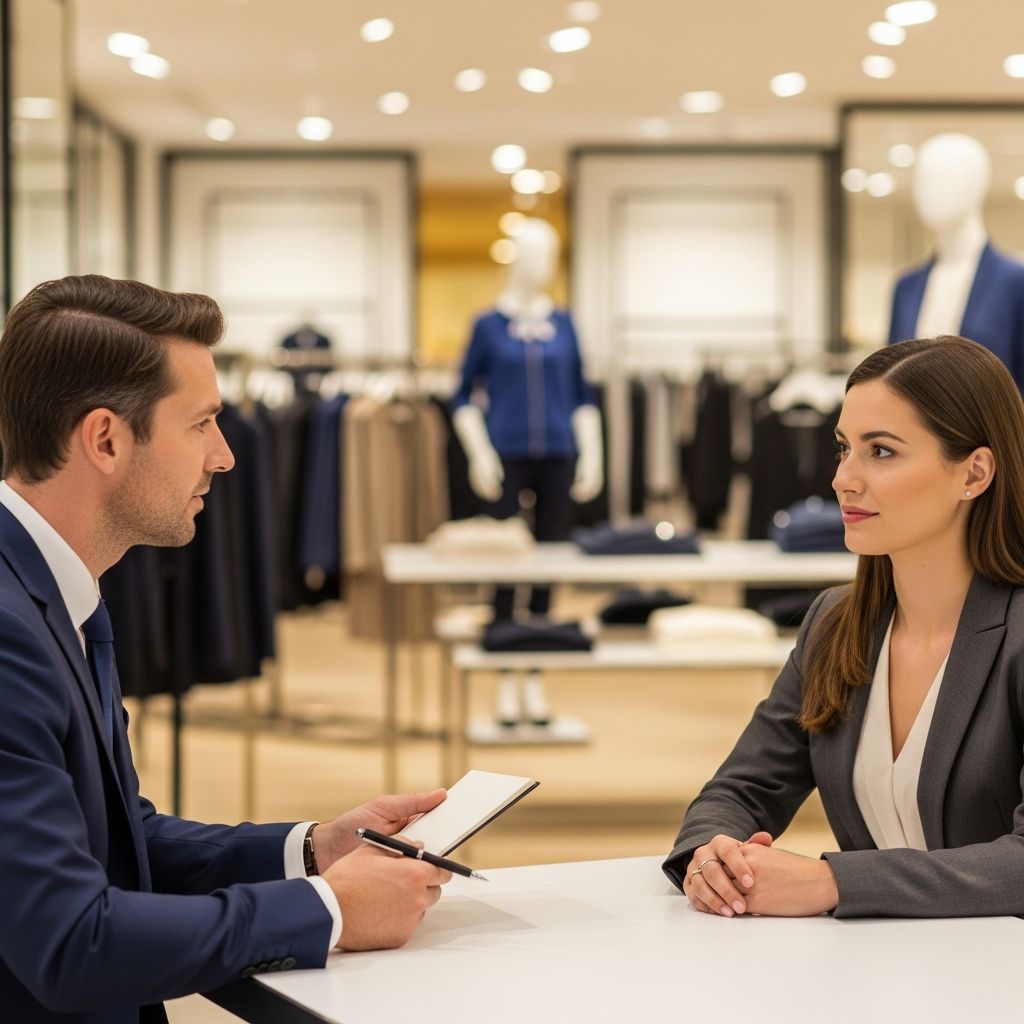
Securing a retail management position requires demonstrating expertise in leadership, operations, sales, and customer engagement. Interviewers evaluate candidates on their ability to boost store performance while fostering team success and ensuring operational efficiency.
Essential Preparation Strategies for Aspiring Retail Leaders
Before stepping into the interview room, thorough preparation sets top candidates apart. Begin by researching the company’s recent performance, store-specific challenges, and competitive landscape. Visit the location if possible to observe daily operations, staff interactions, and customer flow firsthand.
- Develop a **30-60-90 day plan** outlining initial priorities like team assessments, performance audits, and quick revenue boosters.
- Practice the **STAR method** (Situation, Task, Action, Result) for behavioral questions to provide structured, impactful responses.
- Review key retail metrics such as shrinkage rates, inventory turnover, and sales per square foot to speak confidently about data-driven decisions.
Anticipate a mix of behavioral, situational, and technical questions. Tailor your experiences to highlight measurable achievements, like increasing sales by 20% or reducing inventory loss through targeted training programs.
Core Competencies Interviewers Prioritize
Retail management roles demand a blend of soft and hard skills. Employers seek leaders who can motivate teams, optimize operations, and exceed sales targets while maintaining a customer-centric environment.
| Competency | Why It Matters | Example Focus Areas |
|---|---|---|
| Leadership | Drives team performance and culture | Team motivation, conflict resolution, performance coaching |
| Operations | Ensures smooth daily functioning | Inventory control, scheduling, loss prevention |
| Sales & Customer Service | Boosts revenue and loyalty | Sales strategies, complaint handling, merchandising |
| Strategic Thinking | Supports long-term growth | Trend adaptation, competitor analysis, goal setting |
Addressing these areas with specific examples proves your readiness to contribute immediately.
Top Behavioral Questions and Winning Responses
Behavioral questions reveal how you’ve handled real-world scenarios. Use concrete examples to illustrate your approach.
How Do You Motivate a Retail Team During Slow Periods?
Focus on leading by example and personalized recognition. Sample response: “In my last role, sales dipped in January. I organized team huddles to set micro-goals, like upselling accessories, and introduced a peer-recognition board. This lifted morale and increased upsell revenue by 15% within two weeks.”
Describe Handling a Difficult Customer Complaint
Emphasize empathy, quick resolution, and follow-up. Sample: “A customer was upset over a defective item during peak hours. I listened actively, offered an immediate exchange plus a discount, and followed up via email. The customer returned as a regular, boosting loyalty.”
Tell Us About Reducing Operating Costs
Highlight analytical skills. Sample: “I audited energy usage and implemented automated lighting schedules, cutting utility costs by 12% without impacting store appeal.”
Situational Questions to Test Decision-Making
These probe your problem-solving under pressure. Prepare by considering peak-hour chaos or policy breaches.
- Peak Hour Prioritization: “I use a priority matrix: customer safety and sales first, then restocking. During holidays, I delegate based on staff strengths and monitor via real-time sales data.”
- Underperforming Employee: “I schedule a private coaching session, set SMART goals, and provide resources. If no improvement, I escalate with documentation.”
- Shrinkage Control: “Combine audits, staff training on vigilance, and CCTV reviews. In one store, this reduced losses by 25%.”
Technical and Operations-Focused Inquiries
Show familiarity with retail systems and processes.
Your Approach to Inventory Management
Sample: “I rely on POS-integrated software for real-time tracking, supplemented by cycle counts and discrepancy investigations to maintain 98% accuracy.”
Handling Policy Violations
“Follow progressive discipline: verbal warning, written plan, then termination if needed, always documenting for fairness.”
Discuss merchandising: “I analyze foot traffic data to optimize high-margin displays, which once increased impulse buys by 18%.”
Strategic Questions Demonstrating Vision
Go beyond tactics to show big-picture thinking.
- “What competitors should we monitor?” Response: “Local independents and online giants; I’d benchmark their pricing and omnichannel strategies.”
- “How do you drive sales growth?” Response: “Through staff incentives tied to KPIs, personalized promotions via customer data, and A/B testing displays.”
Smart Questions to Ask Your Interviewers
End strong by inquiring thoughtfully, signaling engagement.
- What are the top challenges for this store in the next quarter?
- How is success measured for managers here?
- What training opportunities exist for career growth?
- How does district leadership support store initiatives?
- What key performance indicators matter most?
Avoid salary or perks initially; focus on role impact.
Common Pitfalls and How to Avoid Them
Steer clear of these errors:
- Negative Past Talk: Frame challenges positively.
- Generic Answers: Always quantify results.
- No Company Knowledge: Reference specifics from research.
- Poor Follow-Up: Send thank-you emails recapping fit.
Day-of-Interview Best Practices
Arrive early, dressed professionally. Bring resume copies and your 30-60-90 plan. Maintain eye contact, listen actively, and exude enthusiasm. Practice aloud to sound natural.
Post-Interview Actions for Success
Within 24 hours, email thanks, reiterating a key discussion point and your excitement. If no response in a week, polite follow-up.
Frequently Asked Questions (FAQs)
What should I wear to a retail management interview?
Business professional: suit or blazer with slacks/skirt, polished shoes. Reflect the brand’s polished image.
How do I prepare for panel interviews?
Address all panelists, note names/roles, and prepare group success stories.
What’s the average salary for retail managers?
According to U.S. Bureau of Labor Statistics, median annual wage for retail sales managers is around $55,000 as of 2023 data, varying by location and experience.BLS
Can I bring notes to the interview?
Yes, a notepad for questions shows preparation; don’t read from it.
How long do retail interviews last?
Typically 45-60 minutes, including Q&A.
Building Long-Term Retail Leadership Success
Beyond the interview, commit to ongoing learning. Certifications in retail management from NRF or similar enhance credentials. Network via LinkedIn and industry events. Track trends like AI-driven inventory and sustainable practices to stay ahead.
Excel by setting team OKRs, fostering inclusivity, and innovating customer experiences. Consistent performers advance to district or regional roles swiftly.
References
- Top 10 Retail Manager Interview Questions and Answers — The Interview Guys. 2023. https://blog.theinterviewguys.com/retail-manager-interview-questions-and-answers/
- Interview Questions and Answers for a Retail Manager — Indeed. 2024-01-15. https://www.indeed.com/career-advice/interviewing/retail-manager-interview-questions
- Store Manager Interview Questions and Answers — Workable Resources. 2023. https://resources.workable.com/store-manager-interview-questions
- Best Interview Questions for Retail Store Manager — Solink. 2024. https://solink.com/resources/industry-insights/interview-questions-for-retail-store-manager/
- Sales Managers Occupational Outlook — U.S. Bureau of Labor Statistics. 2023-09-06. https://www.bls.gov/ooh/management/sales-managers.htm

- Integrated M.A. in Applied Linguistics, University of Hyderabad
- 5+ years in editorial, instructional, SEO, and research-based writing
Sneha is a relationships and lifestyle writer with a strong foundation in applied linguistics and certified training in relationship coaching. She brings over five years of writing experience to theskillvault, crafting thoughtful, research-driven content that empowers readers to build healthier relationships, boost emotional well-being, and embrace holistic living. Her writing and insights reflect the belief that beauty, happiness, and wellness…