
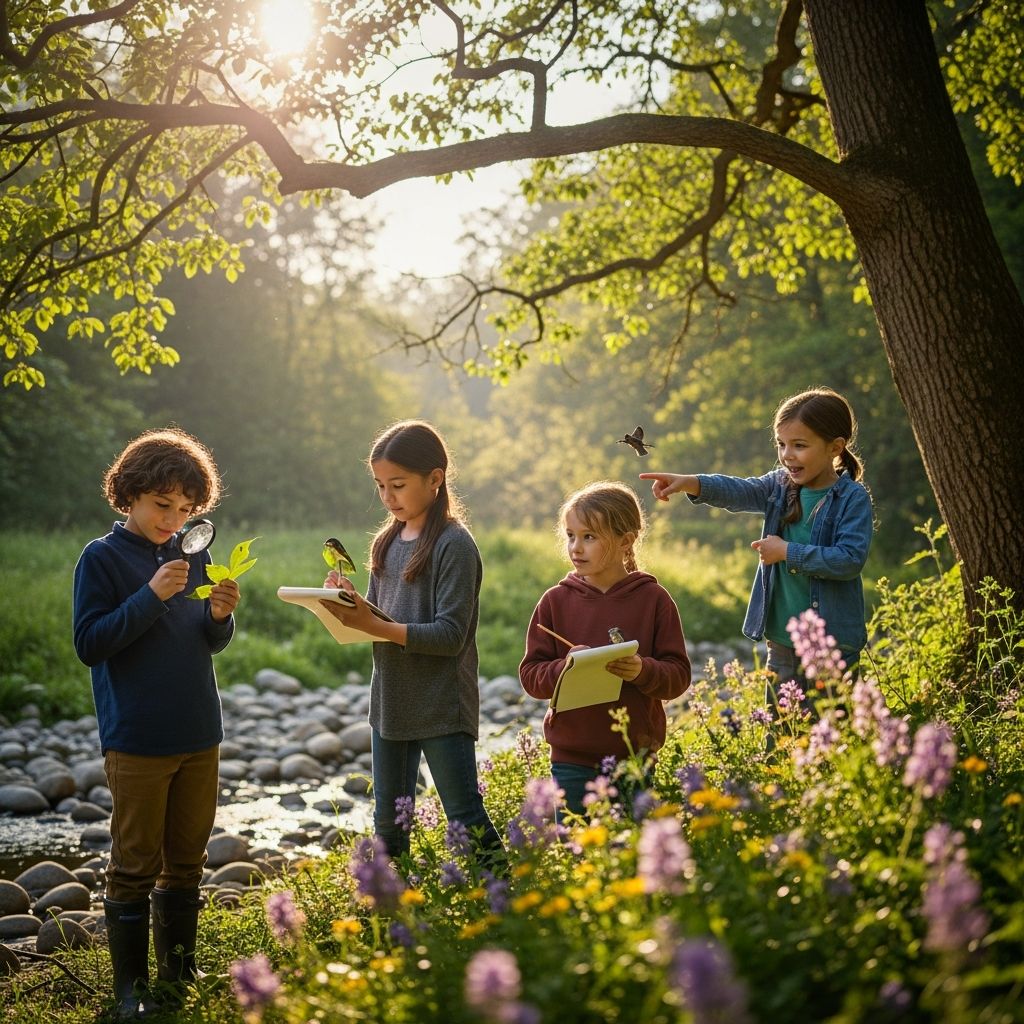
Engaging children in outdoor activities fosters a deep connection to the natural world, enhancing their observational abilities, critical thinking, and appreciation for biodiversity. These experiences go beyond traditional classrooms, promoting physical health, emotional well-being, and environmental stewardship through direct interaction with nature.
Why Outdoor Exploration Matters for Young Minds
Research highlights the profound impact of nature-based learning on child development. Regular outdoor time improves academic performance, self-regulation, and social skills. For instance, studies show that just 30 minutes daily outdoors significantly boosts young children’s ability to focus and manage emotions, laying the foundation for long-term success. Natural settings stimulate curiosity, encouraging kids to ask questions, hypothesize, and experiment in real-world contexts.
Nature activities cultivate **naturalistic intelligence**, helping children recognize patterns in ecosystems, identify species, and understand sustainability. This hands-on approach contrasts with screen-based learning, offering sensory-rich experiences that engage multiple senses simultaneously.
Essential Activities for Building Observation Skills
Start with simple, accessible tasks that sharpen senses and teach systematic observation. These can be adapted for backyards, schoolyards, or local parks.
- Nature Scavenger Hunts: Create themed lists of items like specific leaves, rocks, or insects. This encourages careful searching and categorization, turning exploration into a game of discovery.
- Bug and Insect Investigations: Provide magnifying glasses for close-up views. Discuss life cycles and habitats, noting how insects contribute to pollination and decomposition.
- Rock and Mineral Quests: Collect samples to sort by color, texture, or size. Extend learning by researching geological origins at home or in museums.
These pursuits build logic as children draw conclusions from findings, such as why certain rocks cluster near water sources.
Wildlife Watching and Identification Techniques
Observing live animals teaches patience and respect for wildlife. Equip kids with basic tools like binoculars or field guides.
- Bird Watching Sessions: Set up feeders or visit ponds. Identify species by calls, colors, and behaviors, tracking migrations seasonally.
- Animal Tracking Hunts: Look for prints, scat, or nests. Sketch findings to create personal wildlife journals.
- Bioblitz Challenges: In a short time frame, catalog as many species as possible in one area. This introduces biodiversity concepts thrillingly.
Such activities reveal ecological interconnections, like predator-prey dynamics, fostering empathy for conservation.
Creative Expression Through Nature Art
Art transforms observation into lasting memories. Use natural materials for imaginative projects.
- Rock Art Creations: Arrange stones into patterns or sculptures, exploring balance and design principles.
- Nature Sketching and Journaling: Sit quietly to draw plants or landscapes. Include notes on colors, shapes, and changes over time.
- Leaf and Flower Impressions: Press specimens or make rubbings to study vein patterns and textures.
These blend art with science, enhancing fine motor skills and visual literacy. Photography adds a modern twist, teaching composition outdoors.
Hands-On Science Experiments in the Wild
Outdoor labs make abstract concepts tangible. No fancy equipment needed—nature supplies the materials.
| Activity | Skills Developed | Materials |
|---|---|---|
| Weather Tracking | Data recording, pattern recognition | Thermometer, journal |
| Shadow Experiments | Geometry, time measurement | Chalk, sunny day |
| Soil Testing | Hypothesis testing, chemistry basics | Jars, water, dirt samples |
| Plant Lifecycle Gardens | Biology, responsibility | Seeds, pots |
Planting gardens teaches growth stages and sustainability, with students maintaining plots over weeks. Simple tests, like mixing soil with water to observe layers, reveal composition intuitively.
Integrating Subjects Across the Curriculum
Outdoor learning transcends disciplines, enriching every subject.
Math and Measurement in Nature
Use trails for distance calculations or tree circumferences for geometry. Relay races with math stations combine exercise and problem-solving.
Language Arts and Storytelling
Outdoor reading circles or collaborative tales inspired by surroundings build vocabulary. Nature journals hone descriptive writing.
Social Studies and Local History
Map school grounds or discuss indigenous land uses. Cleanup drives instill civic duty.
Physical Education with Purpose
Kinesthetic games like tag adapted to ecosystems teach movement while covering biology.
Planning Successful Outdoor Sessions
Success hinges on preparation. Choose safe, accessible sites; check weather; adapt for group sizes. Start small—10-30 minutes—to build routines. Include diverse abilities with flexible roles. Safety protocols: buddy systems, sun protection, insect repellent.
Track progress via journals or photos, celebrating growth in skills and knowledge.
Year-Round Adaptations for Seasonal Changes
- Spring: Budding plants, insect emergence—focus on renewal.
- Summer: Water studies, shade experiments—emphasize hydration.
- Fall: Leaf collections, migration watches—explore decay cycles.
- Winter: Track prints in snow, evergreen studies—adapt for cold.
Seasonal shifts provide natural curricula, teaching adaptation and cycles.
Frequently Asked Questions (FAQs)
How often should kids do outdoor nature activities?
Aim for 30 minutes daily or several hours weekly for optimal benefits in self-regulation and learning.
What if we lack nearby green spaces?
Schoolyards, sidewalks, or pots work. Urban bioblitzes catalog city wildlife effectively.
Are these suitable for all ages?
Yes—scale complexity: hunts for preschoolers, data analysis for older kids.
How do I involve reluctant participants?
Start with games or art; pair with interests like photography.
Can parents do this at home?
Absolutely—backyard hunts or balcony gardens engage families seamlessly.
Long-Term Benefits and Community Impact
Beyond immediate joy, these activities nurture lifelong environmental stewards. Children gain empathy, problem-solving, and health advantages, strengthening community ties through shared cleanups or gardens. Programs like schoolyard habitats sustain engagement year-round.
By prioritizing outdoor adventures, educators and families equip kids to thrive in a changing world, blending fun with profound learning.
References
- 11 Activities for Your Outdoor Education Curriculum — Ecology Project International. 2023. https://www.ecologyproject.org/post/11-ways-to-incorporate-outdoor-education-in-your-curriculum
- Connecting Kids and Nature — National Wildlife Federation. 2024-02-01. https://www.nwf.org/Kids-and-Family/Connecting-Kids-and-Nature
- 14 Outdoor Learning Activities — Trevor Muir. 2023-05-15. https://www.trevormuir.com/blog/outdoor-learning
- K-5 Forest Lessons — Green Schoolyards America. 2024. https://www.greenschoolyards.org/elementary-forest-lessons
- Educational Outdoor Activities to Build Nature Smarts — Connections Academy. 2023. https://www.connectionsacademy.com/support/resources/article/educational-outdoor-activities-to-build-nature-smarts/
- 5 Short Nature-Focused Activities for Young Students — Edutopia. 2020-10-20. https://www.edutopia.org/article/nature-based-lessons-young-students/

- Integrated M.A. in Applied Linguistics, University of Hyderabad
- 5+ years in editorial, instructional, SEO, and research-based writing
Sneha is a relationships and lifestyle writer with a strong foundation in applied linguistics and certified training in relationship coaching. She brings over five years of writing experience to theskillvault, crafting thoughtful, research-driven content that empowers readers to build healthier relationships, boost emotional well-being, and embrace holistic living. Her writing and insights reflect the belief that beauty, happiness, and wellness…