
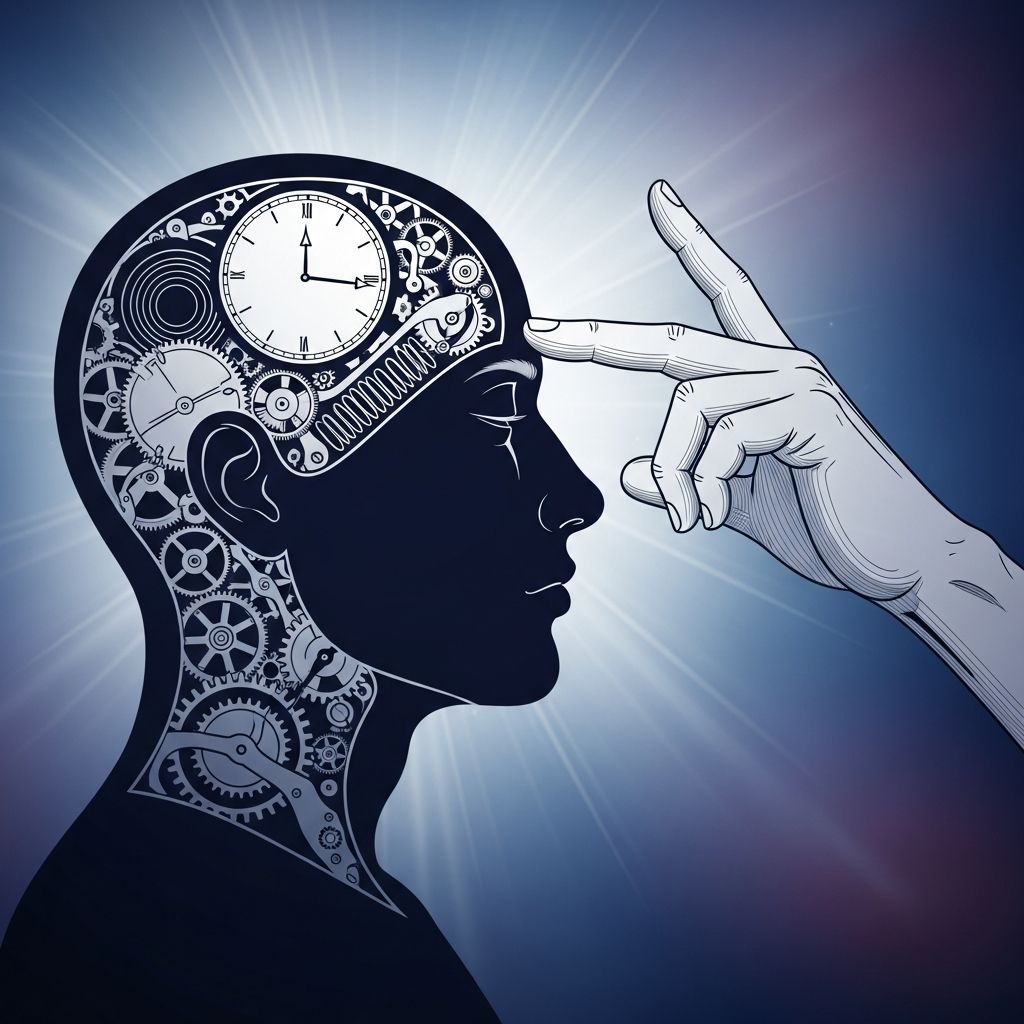
Self-control forms the foundation of personal achievement and emotional stability, enabling individuals to prioritize long-term rewards over fleeting impulses. This essential skill influences everything from daily habits to major life decisions, fostering resilience and progress in various domains.
Defining Self-Control in Modern Psychology
At its core, self-control represents the capacity to manage impulses, emotions, and behaviors in pursuit of greater objectives. Psychologists describe it as overriding automatic responses to align actions with personal standards or goals. This process involves inhibiting short-term desires to secure more substantial benefits later, distinguishing it from mere restraint by emphasizing purposeful direction.
Related closely to self-regulation, self-control operates within specific domains: cognitive focus, emotional balance, impulse management, and task persistence. For instance, concentrating amid distractions exemplifies thought regulation, while resisting unhealthy snacks demonstrates impulse control. Unlike animals driven purely by instinct, humans leverage self-control to bridge immediate urges and strategic aims.
Key definitions highlight its multifaceted nature:
- Inhibitory Control: Suppressing unwanted thoughts or actions.
- Delay of Gratification: Postponing pleasure for superior outcomes.
- Goal-Directed Behavior: Aligning conduct with predefined values.
These elements underscore self-control as a dynamic skill, not a fixed trait, trainable through consistent practice.
Why Self-Control Matters: Profound Impacts on Life
Strong self-control correlates with superior outcomes across health, finances, relationships, and career trajectories. Individuals with high self-control experience lower stress levels, enhanced physical health, and more fulfilling social connections, as they make decisions favoring future well-being over instant gratification.
Research links self-control to academic excellence, professional advancement, and financial stability. Those who delay gratification often secure better jobs, higher incomes, and healthier lifestyles, avoiding pitfalls like debt or chronic illness. Emotionally, it buffers against impulsivity-driven conflicts, promoting harmony in personal interactions.
| Domain | Benefits of High Self-Control | Consequences of Low Self-Control |
|---|---|---|
| Health | Consistent exercise, balanced diet | Obesity, addiction risks |
| Career | Productivity, promotions | Procrastination, job loss |
| Relationships | Empathy, conflict resolution | Arguments, isolation |
| Finances | Savings, investments | Debt accumulation |
This table illustrates how self-control shapes outcomes, with evidence showing it predicts life success more reliably than IQ in some studies.
The Science Behind Self-Control: Muscle or Resource?
Psychological models portray self-control as a ‘muscle’ that fatigues with use but strengthens over time. The ego depletion theory posits a limited daily reservoir, depleted by exertion and replenished by rest or glucose. Recent views challenge this, suggesting motivation and beliefs play larger roles in endurance.
Neurologically, self-control engages the prefrontal cortex, responsible for executive functions like planning and inhibition. Dual-system theories contrast the impulsive ‘hot’ system with the rational ‘cold’ system, where self-control empowers the latter to prevail.
Developmentally, self-control emerges in childhood, as seen in the famous marshmallow test, where delaying gratification predicted later achievements. Adults can cultivate it similarly, treating lapses as learning opportunities rather than failures.
Practical Strategies to Cultivate Self-Control
Building self-control requires deliberate techniques targeting mindset, environment, and habits. Start by clarifying values and setting specific, achievable goals to bridge the intention-behavior gap.
Pre-Commitment Techniques: Decide in advance to remove temptations, like deleting social media apps during work hours. This ‘Ulysses contract’ binds future actions to present intentions.
Mindfulness Practices: Regular meditation enhances awareness of urges without acting on them, bolstering prefrontal activity. Studies confirm mindfulness reduces impulsivity and improves emotional regulation.
Habit Formation: Link new behaviors to existing routines (habit stacking) for automaticity, reducing reliance on willpower. Track progress visually to maintain motivation.
Additional methods include:
- Implementation intentions: ‘If X, then Y’ plans (e.g., ‘If I feel stressed, then I deep breathe’).
- Environmental design: Stock healthy foods, organize workspaces for focus.
- Self-compassion: Forgive setbacks to avoid depletion spirals.
Overcoming Common Barriers to Self-Control
Stress, fatigue, and decision overload deplete self-control resources, leading to poor choices. Counter this by prioritizing sleep, nutrition, and breaks to sustain mental energy.
Neurological factors, like executive function deficits, or strong habitual responses challenge some individuals. Self-management therapy offers structured support, teaching reflection and impulse management for lasting change, particularly beneficial for anger or depression.
Cultural emphases on instant gratification exacerbate struggles; counter with reminders of long-term gains. When willpower wanes, leverage social accountability—sharing goals with supportive peers boosts adherence.
Self-Control in Everyday Scenarios
Apply self-control daily: Opt for workouts over lounging, listen actively in conversations instead of interrupting, or save rather than splurge. In parenting, modeling restraint teaches children resilience.
Professionally, it manifests as meeting deadlines despite distractions or handling criticism calmly. Financially, automating savings bypasses spending temptations.
Measuring and Tracking Your Progress
Assess self-control via journals logging urges resisted or goals met. Scales like the Brief Self-Control Scale provide baselines for improvement. Celebrate incremental wins to reinforce neural pathways.
Frequently Asked Questions (FAQs)
What exactly is self-control?
Self-control is the ability to regulate thoughts, emotions, impulses, and actions to align with long-term goals, often involving delaying gratification.
Can self-control be improved?
Yes, through practices like mindfulness, goal-setting, and habit building, as it functions like a strengthen-able muscle.
How does low self-control affect health?
It increases risks of poor diet, inactivity, addiction, and stress-related illnesses.
What role does self-control play in success?
It outperforms IQ in predicting achievements in academics, career, and relationships by enabling consistent effort.
Are there quick fixes for better self-control?
No true quick fixes, but pre-commitments and environmental tweaks provide immediate boosts while long-term habits build endurance.
Long-Term Transformation Through Self-Control
Consistent self-control application yields compounding benefits, reshaping identity from impulsive reactor to deliberate architect of destiny. Integrate it into routines for sustained growth, recognizing plateaus as cues for strategy refinement.
Ultimately, self-control empowers autonomy, turning aspirations into realities amid life’s chaos. Embrace it as a lifelong ally for fulfillment.
References
- Self-control – the moral muscle — British Psychological Society. 2015-10-01. https://www.bps.org.uk/psychologist/self-control-moral-muscle
- What is self-control? Definition, theory — Study.com. 2023-01-15. https://study.com/academy/lesson/what-is-self-control-definition-theory.html
- The ‘Operational’ Definition of Self-Control — Frontiers in Psychology. 2018-07-18. https://www.frontiersin.org/journals/psychology/articles/10.3389/fpsyg.2018.01231/full
- self-control — APA Dictionary of Psychology. 2022-05-10. https://dictionary.apa.org/self-control
- The ‘Operational’ Definition of Self-Control — PMC (NCBI). 2018-07-18. https://pmc.ncbi.nlm.nih.gov/articles/PMC6058080/
- Self-Control — Psychology Today. 2024-02-01. https://www.psychologytoday.com/us/basics/self-control
- What Is Willpower? The Psychology Behind Self-Control — PositivePsychology.com. 2023-11-20. https://positivepsychology.com/psychology-of-willpower/

- Integrated M.A. in Applied Linguistics, University of Hyderabad
- 5+ years in editorial, instructional, SEO, and research-based writing
Sneha is a relationships and lifestyle writer with a strong foundation in applied linguistics and certified training in relationship coaching. She brings over five years of writing experience to theskillvault, crafting thoughtful, research-driven content that empowers readers to build healthier relationships, boost emotional well-being, and embrace holistic living. Her writing and insights reflect the belief that beauty, happiness, and wellness…