
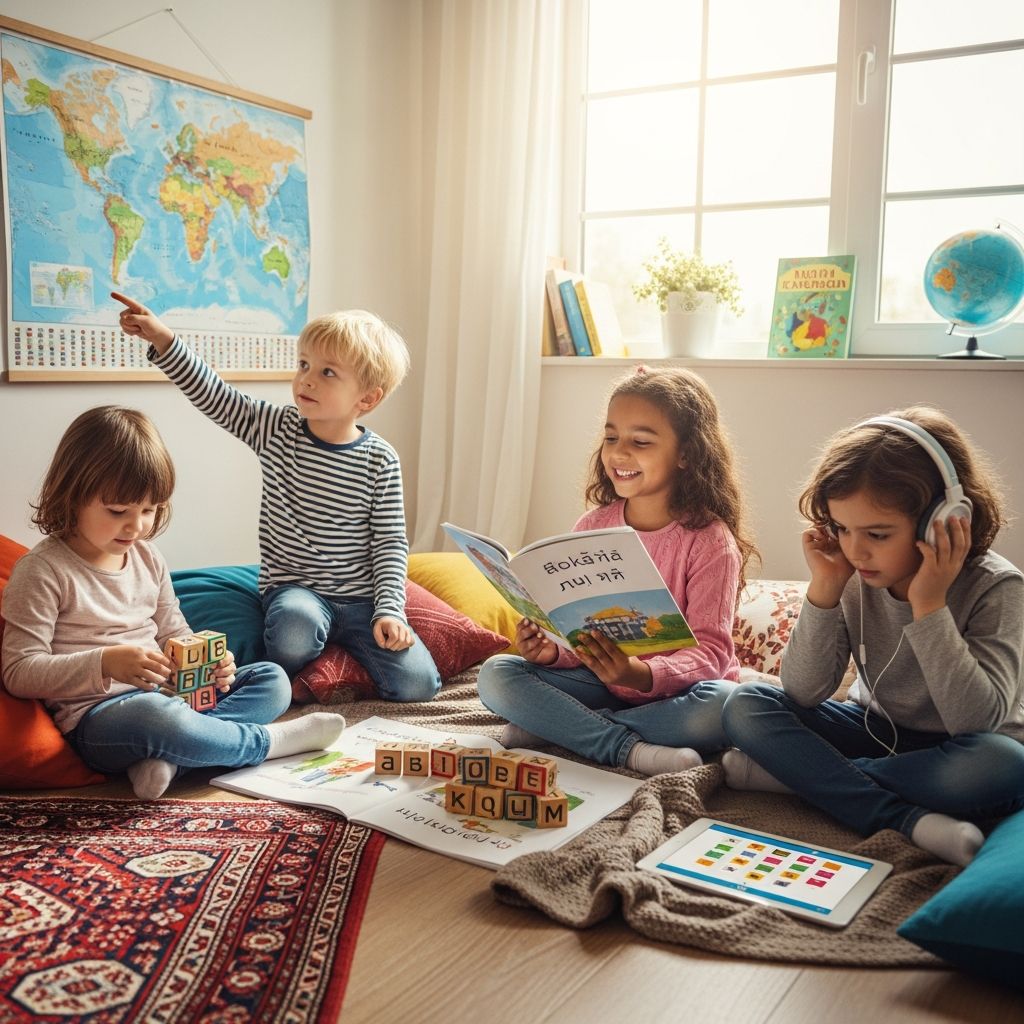
Creating a language immersion environment at home allows children to acquire new languages naturally, mimicking the proven success of school programs. Research shows immersion accelerates fluency by surrounding learners with the target language in daily life, even without parental proficiency.
Understanding Immersion Learning Basics
Language immersion involves surrounding children with a target language through instruction and interaction, rather than rote memorization. This method fosters intuitive understanding, similar to how children learn their first language. Studies from educational institutions highlight that early exposure improves cognitive skills, cultural awareness, and academic performance across subjects.
For homeschooling families, immersion adapts traditional classroom techniques to home settings. Parents need not be fluent; consistency and creativity drive results. Key benefits include enhanced memory, problem-solving, and empathy from navigating multiple linguistic worlds.
Setting Up Your Immersive Home Environment
Begin by transforming everyday spaces into language zones. Adjust device settings on phones, tablets, and computers to the target language, such as switching Netflix or YouTube interfaces. This subtle shift exposes children to vocabulary during routine use.
- Label household objects with sticky notes or printed tags in the new language.
- Place flashcards on mirrors or doors for daily reinforcement.
- Create themed areas, like a ‘kitchen corner’ with recipe cards in the target language.
These changes build passive vocabulary without formal lessons, encouraging subconscious absorption.
Leveraging Audio and Visual Media
Media serves as a cornerstone for immersion. Select age-appropriate content featuring native speakers to model pronunciation and idioms. Podcasts during car rides, music playlists at mealtime, or radio stations tuned to foreign broadcasts normalize the language’s rhythm.
Introduce variety:
- Movies and TV: Start with dubbed favorites, progressing to originals with subtitles.
- Music: Sing-alongs with lyrics displayed reinforce phrasing.
- Podcasts: Short episodes on familiar topics ease listening comprehension.
For younger learners, animated series in languages like Spanish or French combine entertainment with education, as noted in homeschooling resources.
Picture Books and Reading Materials
Visual aids bridge the gap for pre-readers. Illustrated books pair images with words, aiding association without translation. Comics and graphic novels add engagement through storytelling.
Build a library gradually:
| Age Group | Recommended Materials | Benefits |
|---|---|---|
| 3-6 years | Picture books, board books | Word-image linking |
| 7-10 years | Comics, simple chapter books | Story comprehension |
| 11+ years | Novels, magazines | Advanced vocab |
Libraries often stock multilingual titles; audiobooks narrated in the target language pair listening with reading for dual reinforcement.
Digital Tools and Interactive Apps
Apps transform screen time into productive immersion. While not standalone, they complement broader strategies with gamified practice.
- Duolingo Kids: Bite-sized lessons with rewards.
- Memrise: Mnemonic-based vocab building.
- FluentU: Real-world videos with interactive captions.
Websites in the target language, like news for kids or educational games, familiarize learners with authentic contexts. Change search engines or favorite sites to the new language for seamless integration.
Connecting with Native Speakers
Real interactions accelerate progress. Seek local communities, markets, or events where the language thrives. Invite bilingual friends for playdates conducted solely in the target tongue.
Virtual options expand reach:
- Online language exchange platforms like Tandem or HelloTalk.
- Zoom conversation partners via homeschool networks.
- Live classes from platforms like Outschool.
Exposure to dialects and casual speech hones conversational skills beyond textbooks.
Daily Routines and Habit Building
Consistency trumps intensity. Dedicate specific times: morning podcasts, lunchtime songs, evening stories. Track progress with journals noting new words or phrases.
Incorporate fun elements:
- Language-themed cooking: Follow recipes aloud.
- Games: Bingo with vocab cards or Simon Says in the new language.
- Daily challenges: Describe your day using five new words.
Parents can model enthusiasm by participating, even imperfectly, fostering a supportive atmosphere.
Overcoming Common Challenges
Resistance may arise; counter it with choice-based activities aligning interests, like sports commentary for athletes. Monitor overload by balancing immersion with native language time.
For non-fluent parents, resources like self-paced workbooks or apps with answer keys empower independent practice. Patience is key—fluency emerges gradually through repetition.
Measuring Progress and Staying Motivated
Assess via milestones: recognizing songs, holding basic conversations, or reading simple texts. Celebrate with immersion rewards, like a foreign film night.
Long-term, bilingualism yields advantages in multitasking and cultural adaptability, per educational studies.
Frequently Asked Questions
Do parents need to speak the language?
No, resources like media and apps suffice for effective immersion.
How much daily exposure is ideal?
Aim for 30-60 minutes, integrated naturally, building to more as comfort grows.
What languages work best at home?
Any, though widely spoken ones (Spanish, French, Mandarin) offer abundant materials.
Can this replace formal classes?
It complements; combine with structured lessons for optimal results.
Is immersion suitable for all ages?
Yes, adapted by age—visuals for young, discussions for teens.
Implementing these strategies turns homes into vibrant language labs, equipping kids for a multilingual world.
References
- At Home Language Immersion for Students — Connections Academy. 2023. https://www.connectionsacademy.com/support/resources/article/how-to-do-language-immersion-at-home-to-help-students-learn-better/
- Language Immersion at Home: Creative Ways — Polyglottist Language Academy. 2025-02-11. https://www.polyglottistlanguageacademy.com/language-culture-travelling-blog/2025/2/11/language-immersion-at-home-creative-ways-to-surround-yourself-with-the-target-language
- 9 Tips for Language Immersion at Home — GoAbroad.com. 2023. https://www.goabroad.com/articles/language-study-abroad/tips-for-language-immersion-at-home
- Language Learning at Home with Anne Guarnera — Humility and Doxology. 2023. https://www.humilityanddoxology.com/anne-guarnera/
- How to Add a Foreign Language to Your Homeschooling — Llamitas Spanish. 2023. https://llamitasspanish.com/foreign-language-homeschooling/

- Integrated M.A. in Applied Linguistics, University of Hyderabad
- 5+ years in editorial, instructional, SEO, and research-based writing
Sneha is a relationships and lifestyle writer with a strong foundation in applied linguistics and certified training in relationship coaching. She brings over five years of writing experience to theskillvault, crafting thoughtful, research-driven content that empowers readers to build healthier relationships, boost emotional well-being, and embrace holistic living. Her writing and insights reflect the belief that beauty, happiness, and wellness…