
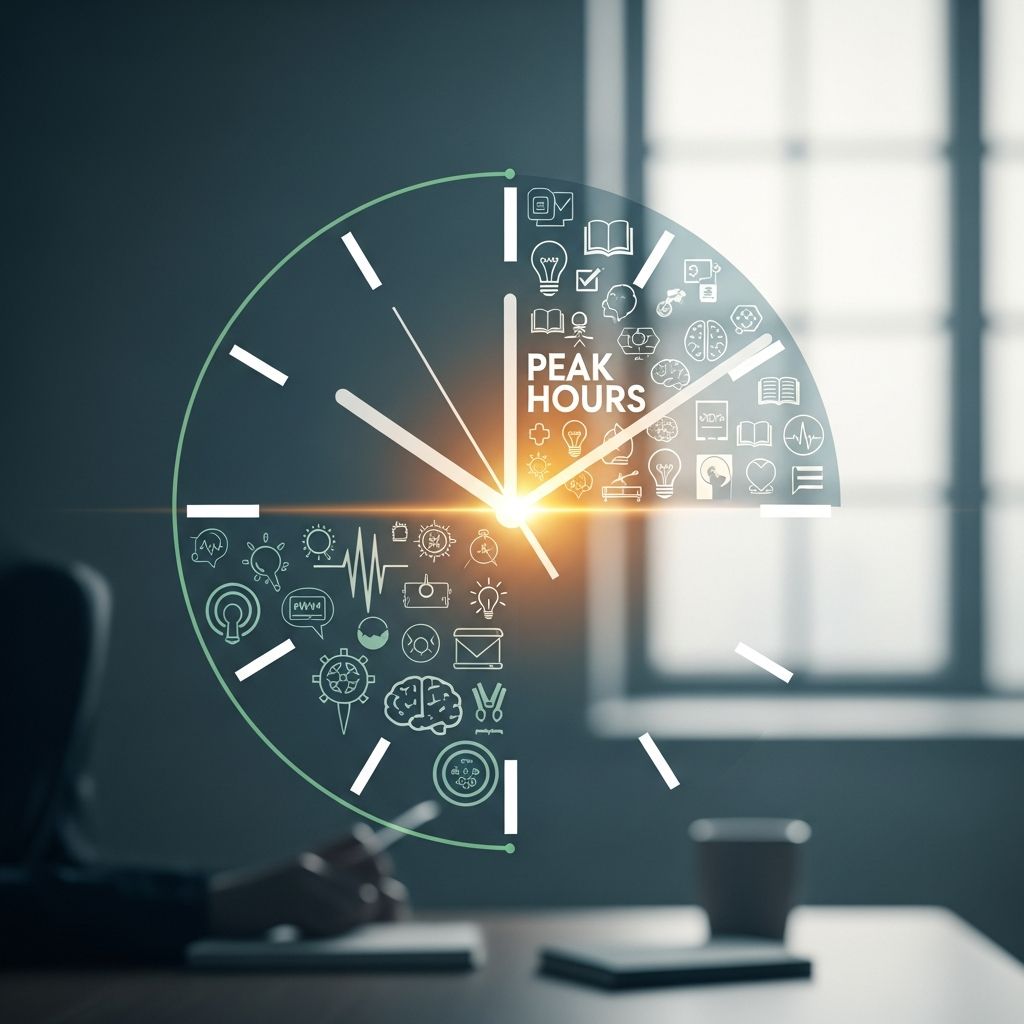
The question of when to study has puzzled students for generations. Should you tackle challenging material early in the morning when your mind feels fresh, or does late evening offer better focus? While conventional wisdom suggests that early starts align with academic schedules, emerging research reveals a more nuanced picture. The reality is that your ideal study time depends on a combination of biological factors, personal chronotype, and practical constraints. Understanding these elements can transform your approach to learning and significantly improve your academic performance.
Understanding Your Brain’s Learning Capacity Throughout the Day
Your brain does not function with uniform efficiency across all 24 hours. Instead, cognitive performance fluctuates based on circadian rhythms—the internal biological clock that regulates sleep-wake cycles, hormone release, and alertness levels. These rhythms influence how effectively your brain can absorb new information, solve complex problems, and retain knowledge.
Research into sleep and circadian neuroscience has revealed that cognitive function peaks during specific windows of the day, though these windows vary significantly among individuals. For many college-aged students, optimal learning occurs between 11 a.m. and 1 p.m., with another productive window from 4 p.m. to 10 p.m.. However, this pattern does not apply universally. Children and older adults typically show peak performance in morning hours, while younger adults often demonstrate stronger cognitive function later in the day.
The biological basis for these differences relates to how teenage and young adult circadian rhythms shift naturally. Research has documented that teenagers’ biologically natural day begins approximately two hours later than optimal for prime-age adults, contributing to why later study times often work better for this demographic.
The Science Behind Morning Cognitive Function
Many students report feeling sharp and alert during early morning hours. This sensation has biological merit. After a restorative night of sleep, your brain experiences elevated alertness and better access to working memory. The combination of mental refreshment and absence of accumulated daily fatigue creates an advantageous cognitive state.
Morning study sessions offer distinct advantages for specific types of learning:
- Enhanced retention of factual information: Names, dates, places, and specific details tend to be absorbed more effectively when studied in morning hours
- Improved focus and concentration: Fewer daily distractions and a calm environment support sustained attention
- Better integration of new material: A well-rested brain more effectively processes and organizes novel information
- Natural light exposure: Morning study in natural sunlight enhances alertness and supports healthy circadian rhythm regulation
- Minimal sleep disruption: Morning study sessions do not interfere with nighttime rest requirements
For students who find themselves naturally alert early in the day, capitalizing on these morning benefits represents an efficient study strategy. This approach works particularly well when tackling new, complex material that requires significant cognitive resources to understand and integrate.
Afternoon and Evening Study: Tapping Into Secondary Peak Hours
The transition from morning to afternoon often brings a dip in alertness, commonly attributed to the post-lunch energy slump. However, this midday trough does not represent the entire afternoon story. Research suggests that cognitive performance rebounds during the late afternoon and extends well into evening hours.
The afternoon window from 2 p.m. to 4 p.m. presents unique advantages for certain study activities:
- Review and consolidation: Material learned earlier becomes easier to revisit and strengthen
- Collaborative learning: Increased availability of study partners, tutors, and study groups makes this time ideal for group sessions
- Active recall practice: Testing yourself on previously learned material can be particularly effective during this window
- Creative problem-solving: The relaxed mental state of afternoon study can enhance creative thinking and novel approaches to challenging concepts
Evening study sessions, particularly from 4 p.m. to 10 p.m., represent a significant learning window for many students. During these hours, memory consolidation and creative learning flourish. The reduced external demands and quieter environment of evening provide an ideal setting for deep focus and sustained concentration.
Chronotypes: Your Personal Biological Preference
Beyond the general patterns of daily cognitive fluctuation exists a more fundamental individual difference: chronotype. This term describes your natural propensity to be alert and cognitively active at particular times during a 24-hour period. Essentially, chronotype determines whether you function as a morning person, evening person, or somewhere along the spectrum.
Research examining college student populations has found striking distributions across chronotypes. Studies reveal that evening-oriented individuals significantly outnumber morning-oriented students, with ratios approaching 2:1 in some college populations. This distribution carries important implications for academic scheduling and study planning.
Your chronotype is not merely a preference or habit—it reflects genuine biological differences in how your nervous system regulates circadian rhythms. Attempting to study during your off-peak hours requires fighting against your natural biological programming, resulting in reduced efficiency despite sustained effort.
Morning-Oriented Students: Strengths and Strategic Approaches
Students who naturally wake with energy and maintain high alertness through midday possess genuine cognitive advantages during morning hours. For these individuals, study success often comes through leveraging their natural rhythm:
- Schedule difficult material early: Tackle subjects requiring significant cognitive effort when your mental resources are most abundant
- Prioritize complex concepts: Use morning hours for learning new, challenging material rather than review
- Create morning-focused study groups: Collaborate with other early risers who share your natural rhythm
- Protect morning study time: Treat morning study hours as sacred time, minimizing non-essential interruptions
- Use natural light strategically: Study near windows or outdoors to reinforce alertness and support circadian rhythm alignment
Morning students should recognize that their advantage does not extend uniformly across the entire day. By afternoon or evening, energy naturally declines, making late-day study less efficient regardless of effort invested.
Evening-Oriented Students: Optimizing Later Study Hours
For the substantial portion of the student population with evening chronotypes, fighting against natural rhythms by attempting morning study sessions represents a significant inefficiency. Instead, evening-oriented learners benefit from organizing study around their peak hours:
- Reserve mornings for lighter tasks: Use early hours for review, administrative work, or lower-cognitive-demand activities
- Concentrate intense study in evening: Schedule challenging learning sessions during your peak alertness window
- Create evening study environment: Establish a dedicated space optimized for focus, with minimal distractions and controlled lighting
- Manage sleep protection: While studying late, ensure you maintain adequate sleep by establishing firm study-end times
- Build accountability: Study with evening-oriented peers to maintain motivation and create social support
Evening studiers must address one critical concern: ensuring that late-night study sessions do not compromise sleep quality or duration. Adolescents and young adults require 8-9 hours of sleep nightly for optimal cognitive function and physical health. Studying until midnight or beyond, if it results in insufficient sleep, ultimately undermines academic performance despite utilizing peak cognitive hours.
The Practical Reality: Balancing Science With Circumstance
While understanding your chronotype and peak cognitive hours provides valuable information, practical reality often constrains study timing. Class schedules, work commitments, family responsibilities, and social obligations may not align with your ideal study window. Navigating this gap requires strategic flexibility:
- Prioritize alignment where possible: When you have control over timing, choose study hours matching your chronotype
- Match task difficulty to available time: If forced to study during off-peak hours, tackle less cognitively demanding tasks
- Use multiple study sessions: Breaking study into sessions across different times of day can improve retention compared to single extended sessions
- Adapt your environment: Environmental modifications—lighting, temperature, noise levels—can partially compensate for suboptimal timing
- Establish consistent routines: Regular study times, even if not perfectly aligned with chronotype, create predictability that supports focus
Strategies for Maximizing Study Effectiveness at Any Time
Regardless of when you study, certain practices enhance learning efficiency. These evidence-based strategies work across all time-of-day windows:
Morning Study Optimization
- Begin with a nutritious breakfast to fuel cognitive function
- Study in natural light to enhance alertness and support circadian alignment
- Focus on challenging, new material when mental resources peak
- Review notes from the previous day to refresh memory before introducing new concepts
Afternoon Study Optimization
- Combat post-lunch fatigue by staying hydrated and avoiding heavy foods
- Structure study into focused intervals with brief breaks between sessions
- Use this window for active learning strategies like group discussions and peer teaching
- Engage in spaced retrieval practice and self-testing on previously learned material
Evening Study Optimization
- Create a calm, distraction-free environment to support concentration
- Use blue light filters on digital devices to minimize sleep disruption
- Establish a firm study endpoint at least one hour before intended sleep time
- Leverage the creative and consolidative benefits of evening hours for complex problem-solving and memory integration
Addressing the Sleep-Study Balance
Perhaps the most critical consideration in timing your study involves protecting sleep. No amount of optimization around peak cognitive hours compensates for chronic sleep deprivation. Students who extend evening study sessions into the night, resulting in insufficient sleep, ultimately impair the very cognitive functions they attempt to enhance.
Quality sleep remains essential for memory consolidation, emotional regulation, immune function, and long-term academic success. Students should view sleep as a non-negotiable component of effective learning rather than time sacrificed for additional study hours.
Key Takeaways for Students
The optimal study time for your academic success combines scientific understanding of circadian rhythms, honest assessment of your personal chronotype, and practical accommodation of life circumstances. Research clearly demonstrates that no single best study time exists for all students. Instead, individual variation is substantial and meaningful.
Rather than forcing yourself into a standardized schedule, identify your natural peak cognitive hours and structure your study planning around this foundation. When practical constraints necessitate studying during off-peak times, adapt your approach by focusing on less demanding tasks. Most importantly, never sacrifice sleep in pursuit of additional study time, as sleep itself represents a critical learning process that consolidates knowledge and restores cognitive capacity.
Frequently Asked Questions
What time should I study for maximum retention?
The scientifically optimal windows are 10 a.m. to 2 p.m. and 4 p.m. to 10 p.m. for most learners. However, your individual chronotype may shift these windows earlier or later. Test different times to identify your personal peak performance hours.
Is night studying harmful?
Night studying is not inherently harmful if it aligns with your chronotype and does not compromise sleep duration. However, studying too late and sacrificing sleep quantity or quality will ultimately damage academic performance.
Why do I feel more alert in the evening when school starts so early?
Your circadian rhythm may reflect an evening chronotype, which is common in younger adults. This natural tendency conflicts with traditional early school start times, explaining why later starting times often improve student performance.
Can I change my chronotype through habit?
While consistent sleep-wake schedules support overall sleep quality and circadian alignment, fundamental chronotype cannot be substantially shifted. Working with your natural chronotype rather than against it produces superior results.
How much sleep do students need?
Adolescents and young adults require 8-9 hours of sleep nightly for optimal cognitive function and overall health. Consistent sleep deprivation impairs memory, attention, and decision-making regardless of study timing optimization.
References
- New research reveals that college students study best later in the day — University of Nevada, Reno. 2017. https://www.unr.edu/nevada-today/news/2017/best-time-of-day-to-study
- The Best Time to Study: A Complete Guide to Peak Learning Hours — Toppers Sky. Accessed February 2026. https://topperssky.com/blog/the-best-time-to-study-a-complete-guide/
- The Best Time to Study: Use Your Biological Prime Time — Lecturio. Accessed February 2026. https://www.lecturio.com/blog/the-best-time-to-study-use-your-biological-prime-time/
- Day Or Night: When Is The Best Time To Study? — Oxford Learning. Accessed February 2026. https://oxfordlearning.com/best-time-day-to-study/
- Identifying the Best Times for Cognitive Functioning Using New Methods — Frontiers in Human Neuroscience. 2017-04-07. https://www.frontiersin.org/journals/human-neuroscience/articles/10.3389/fnhum.2017.00188/full
- It’s Your Off-Peak Time of Day! Time of Day Matters More for Alerting Effect of Caffeine — National Center for Biotechnology Information. 2012. https://pmc.ncbi.nlm.nih.gov/articles/PMC4067093/

- Integrated M.A. in Applied Linguistics, University of Hyderabad
- 5+ years in editorial, instructional, SEO, and research-based writing
Sneha is a relationships and lifestyle writer with a strong foundation in applied linguistics and certified training in relationship coaching. She brings over five years of writing experience to theskillvault, crafting thoughtful, research-driven content that empowers readers to build healthier relationships, boost emotional well-being, and embrace holistic living. Her writing and insights reflect the belief that beauty, happiness, and wellness…