
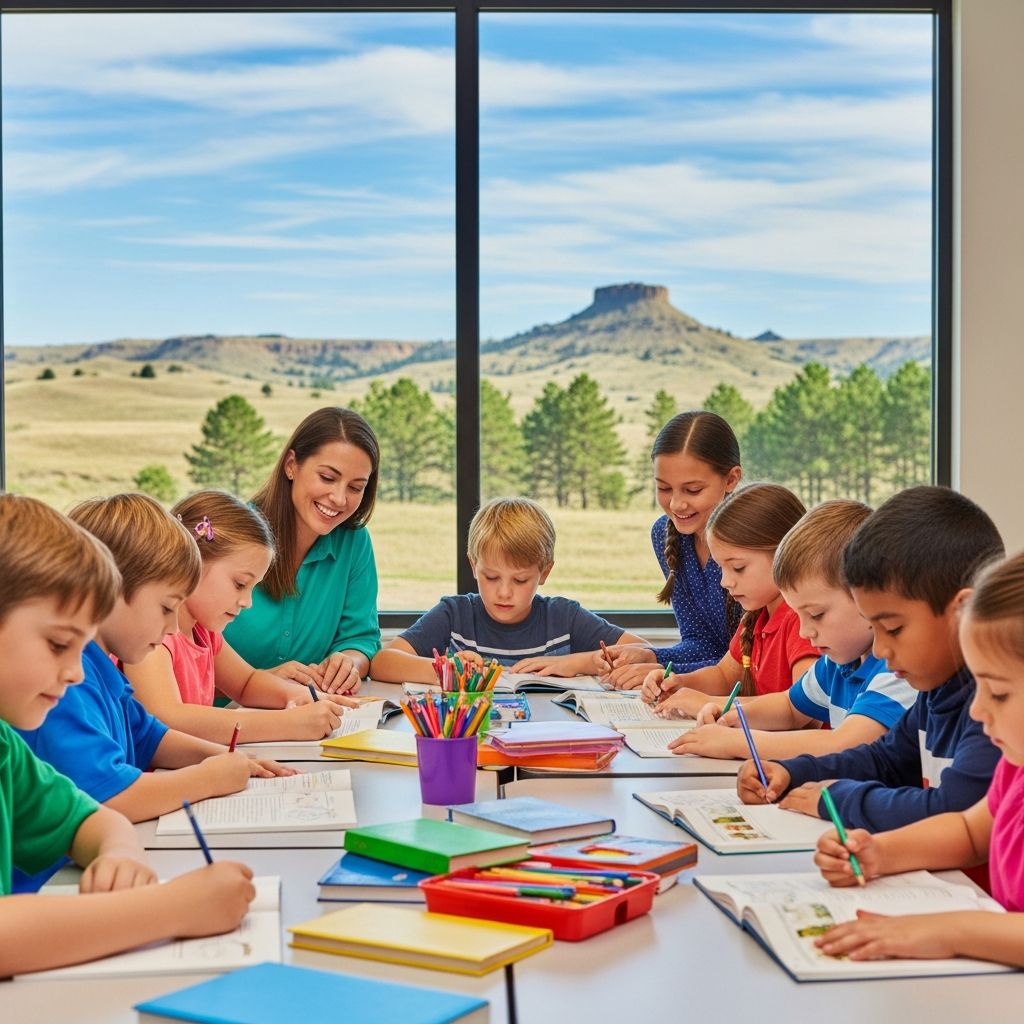
South Dakota’s public education system serves over 141,000 students through hundreds of schools statewide, offering families diverse pathways from traditional classrooms to innovative virtual programs. With open enrollment policies and growing online options, parents have flexibility to find the best fit for their children.
Overview of Public Education in South Dakota
The state’s public schools form the backbone of K-12 education, enrolling the vast majority of students. In 2022, South Dakota reported 141,888 public school students across 720 schools, supported by 10,261 teachers. This system emphasizes accessibility, with average per-pupil spending around $10,952 annually, funding free tuition for all residents. Districts vary from urban hubs like Sioux Falls to rural communities, ensuring broad coverage.
Key metrics highlight system performance: adjusted cohort graduation rates track high school completion, while enrollment data from the last Friday in September provides snapshots of participation. The South Dakota Report Card offers transparent insights into school quality, including test scores and growth measures.
Top-Performing Public Schools and Districts
Standout schools dominate rankings, particularly in districts like Brandon Valley, known for high Niche grades and positive parent feedback. Brandon Valley Intermediate School tops middle school lists with an A grade, serving 785 students at a 17:1 student-teacher ratio. Nearby, Valley Springs Elementary earns a #3 spot for elementaries, with just 67 students and an 11:1 ratio, fostering personalized attention.
Brandon Valley Middle School ranks #2 among middles, while Brandon Elementary and Robert Bennis Elementary also shine with A grades and strong reviews praising caring staff. Other notables include Dell Rapids Elementary (#10, 13:1 ratio), Arlington Junior High (#4 middle, 12:1), Adventure Elementary (#11), and Onida Elementary (#12, 9:1 ratio). These schools excel in academics, community engagement, and small-class environments.
| School Name | Grade Level | Niche Rank | Students | Student-Teacher Ratio |
|---|---|---|---|---|
| Brandon Valley Intermediate | 5-6 | #1 Middle | 785 | 17:1 |
| Valley Springs Elementary | K-4 | #3 Elementary | 67 | 11:1 |
| Brandon Valley Middle | 7-8 | #2 Middle | 719 | 17:1 |
| Dell Rapids Elementary | K-4 | #10 Elementary | 379 | 13:1 |
| Onida Elementary | K-5 | #12 Elementary | 85 | 9:1 |
South Dakota hosts 177 districts with 1,816 schools total, from Rock Creek Grant in Corson County to urban options in Minnehaha. Rural districts like Agar-Blunt-Onida prioritize low ratios for individualized support.
Open Enrollment and District Flexibility
A hallmark of South Dakota education is unrestricted open enrollment, allowing students to attend any public school statewide, regardless of residence. Inter-district transfers must be requested by the last Friday in September, while intra-district moves may occur year-round. This policy empowers families to prioritize quality over proximity, with 84.8% of K-12 students in traditional publics.
- Submit applications early to secure spots in high-demand schools.
- Districts handle transportation unless otherwise agreed.
- No tuition for open enrollment, funded by state allocations.
Virtual and Online Public School Options
Online learning expands access, especially for rural families or those needing flexibility. The South Dakota Center for Virtual Education provides courses, with districts offering full- or part-time virtual enrollment. Students remain tied to their home district, requiring personal devices and internet.
Full-time public virtual schools like South Dakota Virtual School operate tuition-free for residents, blending state standards with digital tools. National options, such as those from K12-powered programs, serve South Dakota students interstate. Registration windows apply, emphasizing proactive planning.
Private, Homeschool, and Alternative Paths
While publics dominate, alternatives abound. About 85 private schools enroll roughly 15,000 students, charging $6,372 elementary and $7,804 high school tuition on average. Homeschooling claims 6.5% of students, offering customization with minimal state oversight.
Microschools and mix-and-match models gain traction, grouping small cohorts for tailored, relationship-focused learning. These can blend homeschool pods, enrichment centers, or boutique privates. Notably absent are charter and freestanding magnet schools, though programs within districts mimic their focus on themes like arts or IB.
State Resources for School Research
Families can leverage official tools: the South Dakota Department of Education tracks enrollment on count day. NCES dashboards detail demographics and outcomes. Niche and GreatSchools provide ratings, while the Report Card benchmarks proficiency.
- Compare districts via interactive maps.
- Review graduation rates and growth indices.
- Access parent reviews for real-world insights.
Choosing the Right School for Your Family
Selecting a school involves weighing academics, ratios, location, and extras like extracurriculars. High performers like Brandon Valley offer proven results, but rural gems like Onida provide intimacy. Virtual paths suit travelers or self-paced learners, while open enrollment unlocks top options.
Consider child-specific needs: small ratios aid focus, themed programs spark passion. Budget time for applications and visits. South Dakota’s system prioritizes choice, with 721 publics complemented by privates and homeschools.
Frequently Asked Questions (FAQs)
How many public schools are in South Dakota?
There are 720 public schools serving 141,888 students.
What is open enrollment in South Dakota?
It allows attendance at any public school statewide, free of charge, with deadlines for inter-district transfers.
Are there online public schools for South Dakota students?
Yes, via the Center for Virtual Education and district programs, plus national virtual publics.
What are the best-rated schools?
Brandon Valley schools lead, with A grades and strong ratios per Niche rankings.
Can I homeschool in South Dakota?
Yes, 6.5% of students do, with flexible state guidelines.
Does South Dakota have charter schools?
No, it’s one of four states without them, but options may evolve.
References
- South Dakota – Digest State Dashboard — U.S. Department of Education, National Center for Education Statistics. 2022. https://nces.ed.gov/programs/digest-dashboard/state/south%20dakota
- South Dakota State Roadmap – Navigate School Choice — MySchoolChoice. Accessed 2026. https://myschoolchoice.com/state-roadmaps/south-dakota-school-choice
- K-12 Schools in South Dakota – Niche — Niche. 2026. https://www.niche.com/k12/search/best-schools/s/south-dakota/
- South Dakota school information by district – GreatSchools — GreatSchools. Accessed 2026. https://www.greatschools.org/south-dakota/districts/
- Distribution of Public and Private Schools: South Dakota — Learning Policy Institute. 2025-03. https://learningpolicyinstitute.org/sites/default/files/2025-03/pub_private_SouthDakota_MAP.pdf
- South Dakota Report Card — South Dakota Department of Education. Accessed 2026. https://sdschools.sd.gov
- Student Enrollment Data – South Dakota Department of Education — South Dakota Department of Education. Accessed 2026. https://doe.sd.gov/ofm/enrollment.aspx

- Integrated M.A. in Applied Linguistics, University of Hyderabad
- 5+ years in editorial, instructional, SEO, and research-based writing
Sneha is a relationships and lifestyle writer with a strong foundation in applied linguistics and certified training in relationship coaching. She brings over five years of writing experience to theskillvault, crafting thoughtful, research-driven content that empowers readers to build healthier relationships, boost emotional well-being, and embrace holistic living. Her writing and insights reflect the belief that beauty, happiness, and wellness…