
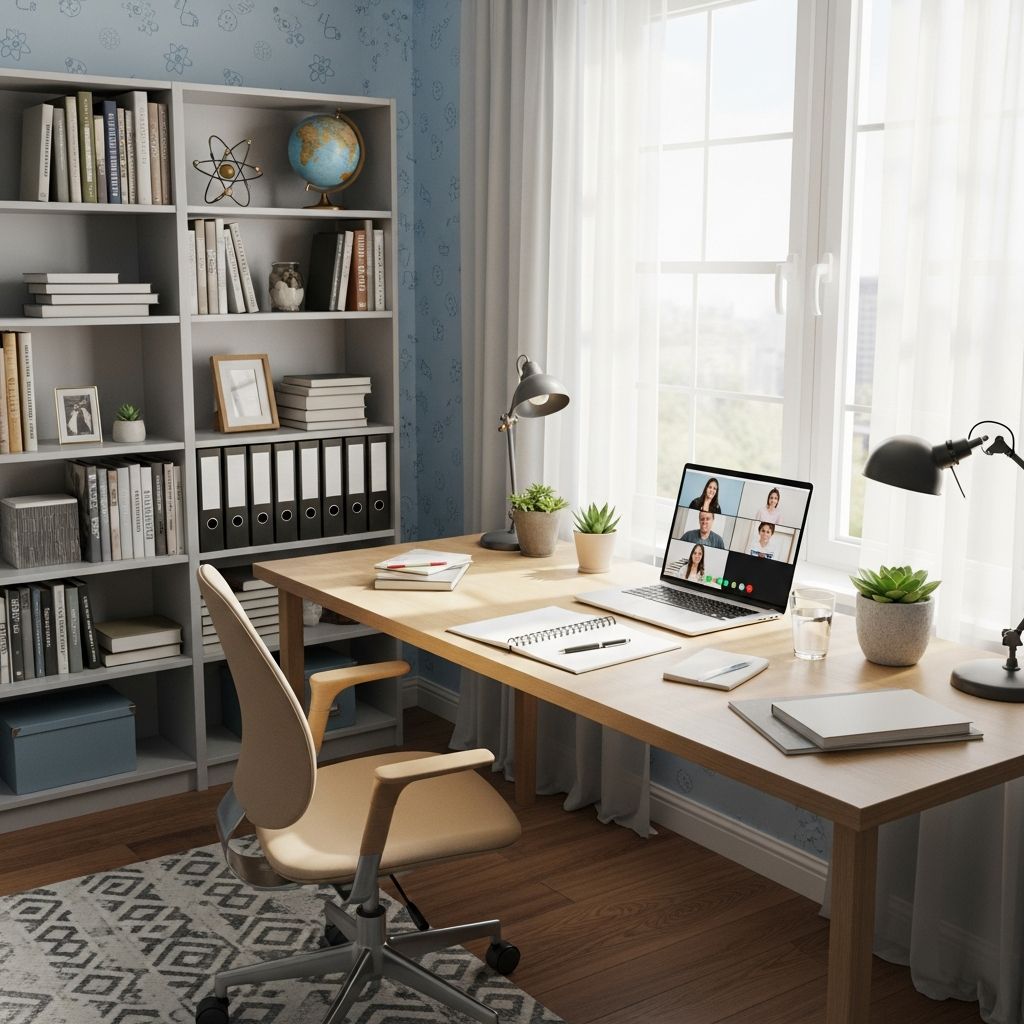
Setting up a productive home learning environment is essential for students engaged in online education. A well-designed space promotes concentration, reduces distractions, and fosters a sense of routine similar to traditional schooling. This guide explores creative ways to convert various home areas into effective study zones, drawing from practical examples and proven organizational strategies.
Selecting the Ideal Location in Your Home
Choosing the right spot is the foundation of any successful home learning setup. Prioritize areas that offer quietness and separation from daily household chaos. Homes vary in size and layout, so flexibility is key—adapt unused corners or rooms to suit your needs.
- Unused Bedrooms or Guest Rooms: These provide privacy and ample space for desks and storage without interfering with family activities.
- Dining Areas: Repurpose a seldom-used formal dining space, keeping it clear of mealtime clutter during school hours.
- Basement or Playroom Corners: Designate a section with partitions to create a semi-private zone, ideal for younger learners who need play nearby.
- Outdoor Patios or Backyards: For mild climates, set up weather-resistant tables to leverage natural light and fresh air, enhancing mood and retention.
- Closets or Alcoves: Transform compact spaces with adjustable shelving and foldable surfaces for students in tighter living situations.
A dedicated area signals to students that it’s time to focus, much like entering a school building. If full rooms aren’t available, use room dividers or curtains to define boundaries in shared spaces.
Essential Furniture and Ergonomic Choices
Furniture should support long study sessions while maximizing limited square footage. Opt for multi-functional pieces that combine work surfaces with storage to maintain tidiness.
| Furniture Type | Benefits | Space-Saving Tips |
|---|---|---|
| Adjustable Desks | Accommodates growing children; promotes good posture | Pair with wall-mounted shelves to free floor space |
| Storage Ottomans | Hides supplies; doubles as extra seating | Roll under desks when not in use |
| Loft Beds with Desks | Utilizes vertical space in small rooms | Ideal for teens; includes built-in drawers |
| Folding Tables | Easy to store; versatile for group activities | Made from repurposed doors for budget-friendly options |
Ergonomics matter: ensure desks are at elbow height, chairs support the back, and screens are at eye level to prevent strain during extended virtual classes. Adjustable options grow with the student, offering long-term value.
Technology Integration for Seamless Online Learning
Virtual schooling relies on reliable tech, so integrate devices thoughtfully into the learning space. Position computers away from high-traffic zones to minimize interruptions.
- Centralize charging stations with surge-protected hubs to keep cords organized.
- Incorporate a secondary screen like a smart TV or tablet for viewing lessons, boosting engagement without overwhelming the main setup.
- Add a printer for printable worksheets and hands-on projects, which aid comprehension for tactile learners.
- Use webcam stands or ring lights to improve video call quality, simulating a professional classroom feel.
Ensure strong Wi-Fi coverage; extenders or mesh systems help in remote home areas. Designate ‘tech-off’ rules during breaks to encourage healthy habits.
Organizing Supplies for Efficiency
Clutter competes for attention, so implement smart storage solutions. Categorize materials by subject in clear bins or drawers for quick access.
Wall-mounted clipboards or magnetic boards display ongoing work, allowing students to curate their achievements and track progress. Paper cutters and stackable trays streamline art and math tasks. Keep only daily essentials visible—store the rest to preserve a calm atmosphere.
Color Schemes and Personal Touches
Strategic colors influence mood and productivity. Blues and greens calm the mind for reading; yellows energize math sessions.
- Calming Blues: Ideal for focus-heavy subjects like reading or science.
- Invigorating Greens: Promote balance and creativity in writing areas.
- Warm Neutrals: Base walls in beiges or grays to avoid overstimulation.
Personalize with student art, motivational quotes on corkboards, or certificates. Avoid excess decor—simplicity mirrors effective educational philosophies like Montessori, emphasizing natural elements over busyness.
Minimizing Distractions and Maximizing Focus
Distractions erode learning time, so engineer the space accordingly. Face desks toward blank walls, use noise-cancelling headphones, and set family schedules to respect study blocks.
Portable dividers in open areas create visual barriers. Rotate locations for variety—kitchen tables for group work, cozy nooks for reading—to sustain interest. Outdoor shifts capitalize on nature’s benefits, improving concentration per educational research.
Lighting and Ambiance Considerations
Natural light boosts alertness; position desks near windows with sheer curtains to diffuse glare. Supplement with adjustable LED lamps mimicking daylight to combat afternoon slumps.
Plants add tranquility and air purification, while rugs define zones and dampen echoes in hard-floored rooms. These elements cultivate an inviting yet professional vibe.
Flexibility for Different Learning Styles
Accommodate varied needs: standing desks for kinesthetic learners, bean bags for relaxed reading, or whiteboards for visual thinkers. Multi-zone setups allow subject-specific adaptations, enhancing overall engagement.
Maintenance and Routine Building
Daily tidy-ups reinforce habits. Involve students in setup to build ownership. Weekly reviews adjust for evolving needs, like adding more storage as assignments pile up.
FAQs
What if I have limited space for a home learning area?
Use vertical storage, foldable furniture, and closet conversions to create compact yet functional zones without sacrificing organization.
How can I make the space appealing to reluctant learners?
Incorporate their input on colors, decor, and layouts to foster excitement and a sense of control over their environment.
Is outdoor learning viable year-round?
In temperate regions, yes—use protective enclosures; otherwise, reserve for good weather to reap cognitive benefits.
What budget-friendly furniture options exist?
Shop marketplaces for desks, repurpose doors as tables, or thrift multi-use pieces that fit small footprints.
How do I balance family life with dedicated study time?
Communicate schedules clearly and use visual cues like ‘Do Not Disturb’ signs during sessions.
References
- Create a Home Classroom for Online Learning — Wild Revival Gardening. 2020-09-01. https://wildrevivalgardening.com/pandemic-resources/home-classroom-setup-ideas
- 6 Tips for Setting up a Classroom at Home — Connections Academy. 2023-08-15. https://www.connectionsacademy.com/support/resources/article/home-classroom-design-ideas-for-online-students/
- 23 Mind-Blowing Home Classrooms Teachers Created During Distance Learning — Bored Teachers. 2020-04-10. https://www.boredteachers.com/post/23-mind-blowing-home-classrooms-teachers-created-during-distance-learning
- Designing Your Virtual Classroom For Distance Learning — Resilient Educator. 2020-03-20. https://resilienteducator.com/classroom-resources/virtual-classroom-design-tips/

- Integrated M.A. in Applied Linguistics, University of Hyderabad
- 5+ years in editorial, instructional, SEO, and research-based writing
Sneha is a relationships and lifestyle writer with a strong foundation in applied linguistics and certified training in relationship coaching. She brings over five years of writing experience to theskillvault, crafting thoughtful, research-driven content that empowers readers to build healthier relationships, boost emotional well-being, and embrace holistic living. Her writing and insights reflect the belief that beauty, happiness, and wellness…