
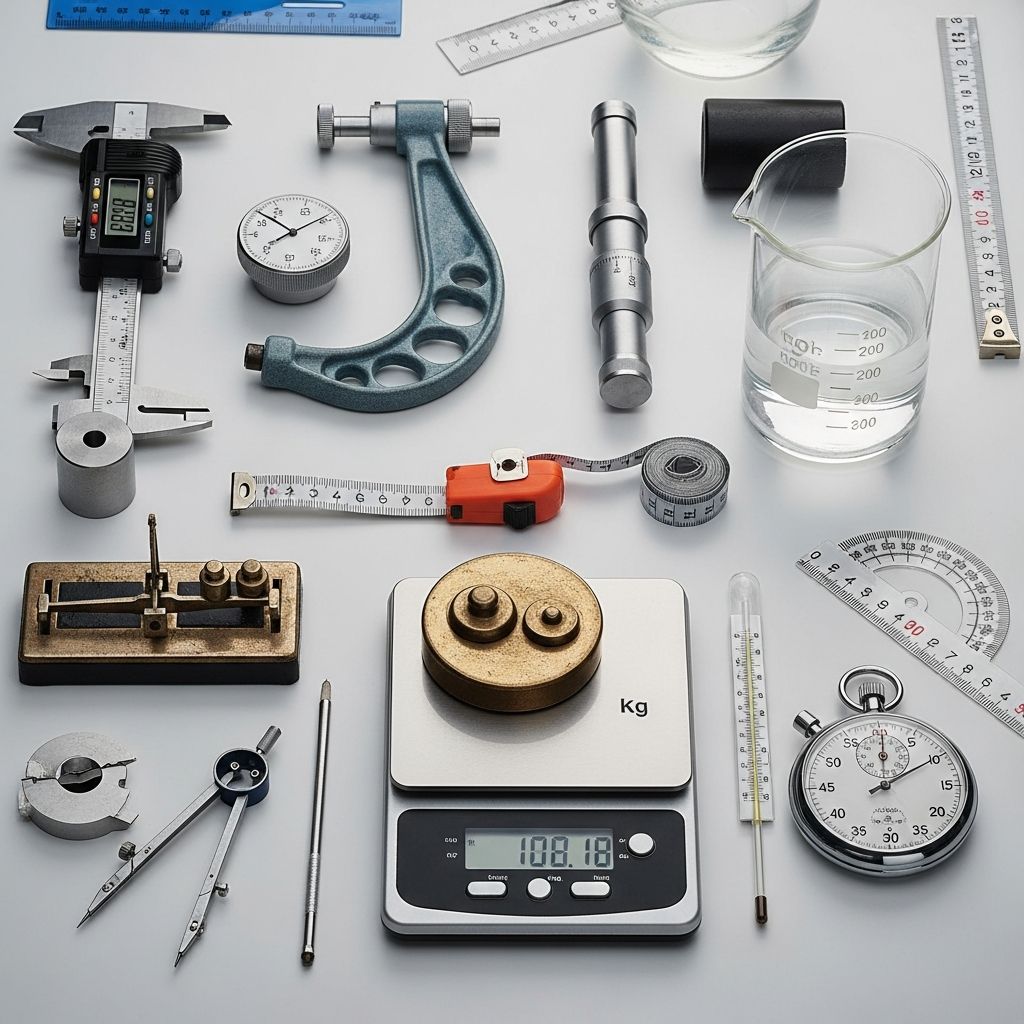
Measurement systems provide standardized ways to quantify physical quantities like length, mass, and volume, enabling precise communication worldwide. The two primary systems are the metric system, dominant globally, and the imperial system, still prevalent in select regions like the United States.
Historical Foundations of Modern Measurement
Standardized measurement emerged from ancient needs for trade and construction. Early civilizations used body parts—like the foot or cubit—for rough estimates, but inconsistencies arose across regions. The metric system originated in late 18th-century France during the Revolution, aiming for universality based on natural constants like Earth’s circumference. Officially adopted as the International System of Units (SI) in 1960, it now underpins science, industry, and commerce in over 95% of countries.
In contrast, the imperial system evolved from medieval English customs, formalized in 1824 by the British Weights and Measures Act. It spread through the Empire but faced reform pressures. Post-independence, the U.S. adapted it into customary units, retaining differences like gallon sizes. Today, imperial persists in the U.S., UK (for some uses), Liberia, and Myanmar.
Core Principles of the Metric System
The metric system’s elegance lies in its decimal foundation and seven base units, expandable via prefixes like kilo- (1,000) or milli- (1/1,000). This simplifies arithmetic: converting 2.5 kilometers to meters yields 2,500 meters by multiplying by 1,000—no fractions needed.
- Meter (m): Length, defined by light travel distance in vacuum.
- Kilogram (kg): Mass, based on the Planck constant since 2019.
- Second (s): Time, from cesium atom vibrations.
- Ampere (A): Electric current.
- Kelvin (K): Temperature, absolute zero at 0 K.
- Mole (mol): Amount of substance.
- Candela (cd): Luminous intensity.
Derived units like liter (volume, 1 dm³) and newton (force) build logically. Temperature uses Celsius (°C): water freezes at 0°C, boils at 100°C, making it intuitive for everyday and scientific contexts.
Understanding the Imperial Framework
Imperial measurement features over 20 base units, many archaic or niche, complicating memorization. It lacks a uniform scaling system, relying on historical ratios like 12 inches per foot or 16 ounces per pound.
Key length units include:
- Inch (in): ~2.54 cm.
- Foot (ft): 12 in.
- Yard (yd): 3 ft.
- Mile (mi): 5,280 ft, used for roads.
Mass uses avoirdupois (daily goods): ounce (oz, ~28.35 g), pound (lb, 16 oz), ton (2,000 lb in U.S.). Troy ounces apply to precious metals. Volume distinguishes liquid (gallon = 4 quarts) from dry measures. Fahrenheit (°F) sets water freezing at 32°F, boiling at 212°F.
Specialized units persist: furlong (660 ft) in horse racing, chain (66 ft) in surveying.
Key Distinctions: Metric vs. Imperial
Metric’s decimal coherence contrasts imperial’s irregular fractions, aiding global standardization but challenging U.S. transitions. Imperial’s cultural entrenchment maintains familiarity in construction and recipes.
| Quantity | Metric Unit | Imperial Equivalent | Conversion Factor |
|---|---|---|---|
| Length | Meter | Foot | 1 m ≈ 3.281 ft |
| Mass | Kilogram | Pound | 1 kg ≈ 2.205 lb |
| Volume | Liter | Gallon (U.S.) | 1 L ≈ 0.264 gal |
| Temperature | °C | °F | °F = (°C × 9/5) + 32 |
U.S. and imperial gallons differ: U.S. = 3.785 L, imperial = 4.546 L.
Practical Conversion Strategies
Mastering conversions bridges systems. Memorize anchors: 1 in = 2.54 cm exactly (1959 definition), 1 mi ≈ 1.609 km. Apps and charts assist, but understanding formulas empowers independence.
Temperature: °C to °F: multiply by 1.8, add 32. Inverse: subtract 32, multiply by 5/9.
Length: Inches to cm: ×2.54. Miles to km: ×1.609.
Weight/Volume: Use tables for precision; e.g., 1 lb = 453.592 g, 1 gal (U.S.) = 3.785 L.
Practice: Convert 70°F to °C (≈21°C); 5 km to mi (≈3.1 mi). Dual scales on rulers/tools ease adaptation.
Global Adoption and Regional Holdouts
SI’s scientific precision drove adoption: EU mandates metric since 1995, Australia fully converted by 1980s. U.S. legalized metric in 1866 but uses customary daily; road signs mix miles/MPG with liters on pumps. UK’s ‘metrication’ retains miles, pints for beer.
Challenges include costs, habits. Benefits: reduced errors (NASA Mars probe lost due to unit mismatch), trade ease.
Everyday Applications and Tips
Cooking: Metric’s grams/liters precise; imperial cups/pounds volumetric. Convert recipes: 1 cup ≈ 237 ml.
DIY/Home: U.S. lumber in feet/inches; metric tools elsewhere. Dual tapes help.
Fitness: Runners track km or miles; scales show kg/lb.
Tip: Learn prefixes (deci-, hecto-) and common ratios for fluency.
Advantages and Challenges of Each System
Metric excels in scalability, error reduction (10s vs. 12s/16s). Imperial suits human-scale fractions (halving yards easy). Critics note metric’s ‘cold’ abstraction vs. imperial’s ‘tactile’ history.
Hybrid use grows: U.S. science metric, consumer imperial.
Future of Measurement Standardization
SI evolves: 2019 redefinitions tied units to constants, enhancing stability. Full global metrication unlikely soon, but education fosters bilingualism. Tech like AI translators aids.
Frequently Asked Questions
Why does the U.S. still use imperial units?
Historical inertia post-independence, vast infrastructure costs for change, and legislative inaction despite 1975 Metric Conversion Act.
Is the metric system more accurate?
Accuracy depends on tools; metric’s logic minimizes calculation errors.
How do I quickly convert miles to kilometers?
Multiply by 1.6 for approximation; exactly 1.60934.
Are there differences between UK and U.S. imperial?
Yes: pint (UK 568 ml vs. U.S. 473 ml), gallon larger in UK.
Should I learn both systems?
Yes, for travel, work, global interaction.
References
- Systems of Measurement | SkillsYouNeed — SkillsYouNeed. 2023. https://www.skillsyouneed.com/num/measurement-systems.html
- System of units of measurement – Wikipedia — Wikipedia. 2024-01-15. https://en.wikipedia.org/wiki/System_of_units_of_measurement
- Units of measurement – Globalization | Microsoft Learn — Microsoft. 2024. https://learn.microsoft.com/en-us/globalization/locale/measurement-units
- Metric Vs. Imperial: Comparing the Systems – Lively Table — Lively Table. 2023. https://livelytable.com/cooking-conversions/metric-vs-imperial/
- Imperial System – Units, Comparison, Chart, Examples – Cuemath — Cuemath. 2024. https://www.cuemath.com/measurement/imperial-system/
- Comparison of the imperial and US customary measurement systems — Wikipedia. 2024-02-01. https://en.wikipedia.org/wiki/Comparison_of_the_imperial_and_US_customary_measurement_systems

- Integrated M.A. in Applied Linguistics, University of Hyderabad
- 5+ years in editorial, instructional, SEO, and research-based writing
Sneha is a relationships and lifestyle writer with a strong foundation in applied linguistics and certified training in relationship coaching. She brings over five years of writing experience to theskillvault, crafting thoughtful, research-driven content that empowers readers to build healthier relationships, boost emotional well-being, and embrace holistic living. Her writing and insights reflect the belief that beauty, happiness, and wellness…