
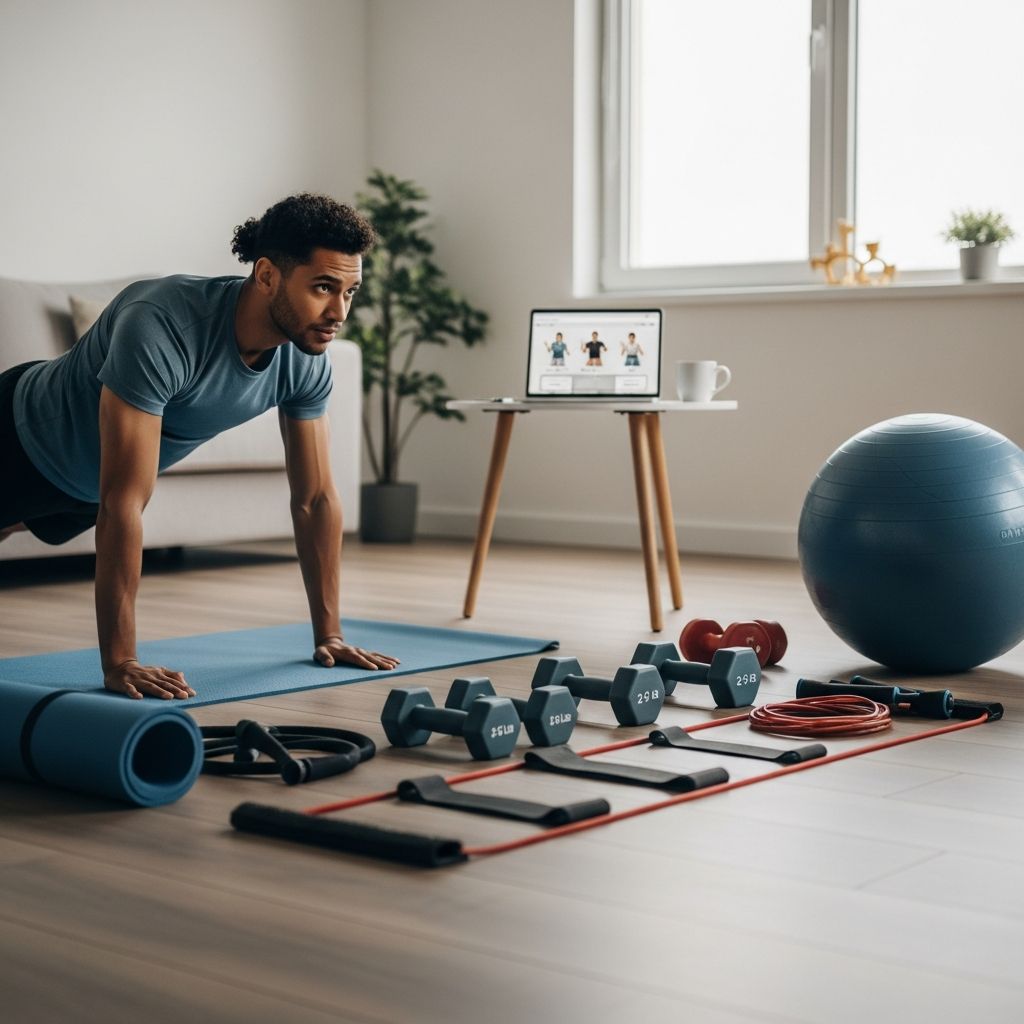
Remote learning offers flexibility but often leads to sedentary habits. Creating structured indoor fitness circuits addresses this by integrating movement into daily routines, enhancing physical health, concentration, and overall well-being for students and families.
Why Indoor Circuits Matter for Virtual Education
Indoor fitness circuits provide consistent exercise regardless of weather, ensuring students maintain energy levels for academic tasks. These routines improve cardiovascular health, build strength, and reduce screen-related fatigue. Research from health extensions highlights how short bursts of activity boost cognitive function, making them perfect for breaks between classes.
Circuits involve sequential exercises targeting multiple muscle groups with minimal equipment, ideal for home settings. They promote discipline similar to school schedules while fostering family bonding through shared activities.
Essential Equipment for Home Setup
Most circuits require no specialized gear. Use body weight, household items like water bottles for weights, or resistance bands. Clear a 6×6 foot space in a living room or hallway. Mats prevent slips, and timers ensure pacing.
- Bodyweight: Squats, push-ups, planks.
- Improvised weights: Filled bottles or backpacks.
- Optional: Yoga mat, jump rope, stability ball.
Beginner-Friendly Circuit Routines
Start with low-impact options to build confidence. Each circuit lasts 20-30 minutes, repeatable 2-3 times weekly.
Daily Energy Booster Circuit
This 15-minute routine energizes before lessons. Perform each exercise for 30-45 seconds, rest 15 seconds, cycle three times.
| Exercise | Reps/Time | Target Area |
|---|---|---|
| Marching in place | 45 sec | Cardio |
| Wall push-ups | 10-12 | Upper body |
| Seated leg lifts | 15 per leg | Core/Legs |
| Arm circles | 30 sec each direction | Shoulders |
Adapt for kids by adding music for fun.
Focus-Enhancing Midday Circuit
Ideal post-lunch to combat drowsiness. Includes stretching for flexibility.
- High knees: 30 sec.
- Chair squats: 12 reps.
- Standing torso twists: 20 per side.
- Overhead reaches: 15 reps.
Repeat twice, adding deep breaths between sets for mindfulness.
Advanced Circuits for Growing Strength
As fitness improves, incorporate intensity. These target endurance and power.
Full-Body Power Circuit
25 minutes, four rounds. Use timers for HIIT-style bursts.
- Jump squats: 12 reps.
- Bent-knee push-ups: 10-15.
- Lunges: 10 per leg.
- Plank hold: 30-45 sec.
Transition with jumping jacks for cardio spikes.
Core and Balance Challenge
Strengthens stability for better posture during long study sessions.
| Exercise | Duration | Modifications |
|---|---|---|
| Bicycle crunches | 20 per side | Slow pace for beginners |
| Side plank | 20 sec/side | Knee down |
| Leg raises | 12 reps | Bent knees |
| Superman holds | 30 sec | Arms only |
Family-Inclusive Activity Stations
Turn circuits into games for siblings or parents. Set up 4-5 stations, rotate every 2 minutes.
- Station 1: Dance freeze – Move to music, freeze on pause.
- Station 2: Balloon keep-up – Volley without hands.
- Station 3: Towel slides – Glide feet on towel for lunges.
- Station 4: Wall sits – Hold 30 sec, compete for time.
- Station 5: Shadow boxing – Punch air with footwork.
This gamification increases participation, burning calories playfully.
Adapting for Limited Space
Apartment dwellers or small rooms benefit from vertical and seated options.
- Stair stepping: Up-down for cardio.
- Chair dips: Triceps strength.
- Seated marches: Desk-friendly.
- Resistance band pulls: Door-anchored rows.
Indoor walking workouts rack up steps via marching and punches, hitting 1000+ in 10-15 minutes.
Nutrition and Recovery Tips
Pair circuits with balanced snacks like fruit and nuts for sustained energy. Hydrate well and include 5-minute cool-down stretches. Track progress in a journal to motivate.
Rest days prevent burnout; alternate with yoga flows for recovery.
Tracking Progress and Staying Motivated
Use apps for timers and challenges. Set goals like completing 5 circuits weekly. Reward with non-food treats, like extra playtime.
Variety prevents boredom: Rotate routines monthly.
Frequently Asked Questions
How often should remote learners do these circuits?
Aim for 20-30 minutes daily, 4-5 days a week, per health guidelines for youth activity.
Are these safe for all ages?
Yes, with modifications. Consult doctors for pre-existing conditions.
What if I lack motivation?
Pair with family or online classes for accountability.
Can circuits replace outdoor exercise?
They complement it, providing weather-proof consistency.
How do I scale for fitness levels?
Beginners halve reps; advanced add weights or time.
Long-Term Benefits for Academic Success
Regular circuits enhance focus, sleep quality, and mood, directly supporting learning outcomes. Families report improved routines and reduced stress.
Expand by theme: Themed days like ‘Superhero Strength’ with power poses.
References
- Fall Fitness: 7 Indoor Exercise Options — The Jackson Clinics. 2023. https://thejacksonclinics.com/transitioning-to-indoor-activities/
- 10 Ideas to Be Active Indoors! — Illinois Extension, UIUC. 2022. https://eat-move-save.extension.illinois.edu/blog/10-ideas-be-active-indoors
- 50 Indoor Wellness Activities for Rainy Days — YuMuuv. 2024. https://yumuuv.com/blog/50-indoor-activities-for-rainy-days
- Indoor fitness routine — MedlinePlus, U.S. National Library of Medicine. 2025-02-01. https://medlineplus.gov/ency/patientinstructions/000890.htm
- I’ve replaced evening strolls with home walking workouts — Fit&Well. 2024. https://www.fitandwell.com/exercise/walking/ive-replaced-evening-strolls-with-home-walking-workouts-to-keep-active-in-winter-and-these-are-my-favourites
- 50 indoor physical activities for kids — Active For Life. 2023. https://activeforlife.com/50-indoor-physical-activities-for-kids/

- Integrated M.A. in Applied Linguistics, University of Hyderabad
- 5+ years in editorial, instructional, SEO, and research-based writing
Sneha is a relationships and lifestyle writer with a strong foundation in applied linguistics and certified training in relationship coaching. She brings over five years of writing experience to theskillvault, crafting thoughtful, research-driven content that empowers readers to build healthier relationships, boost emotional well-being, and embrace holistic living. Her writing and insights reflect the belief that beauty, happiness, and wellness…