
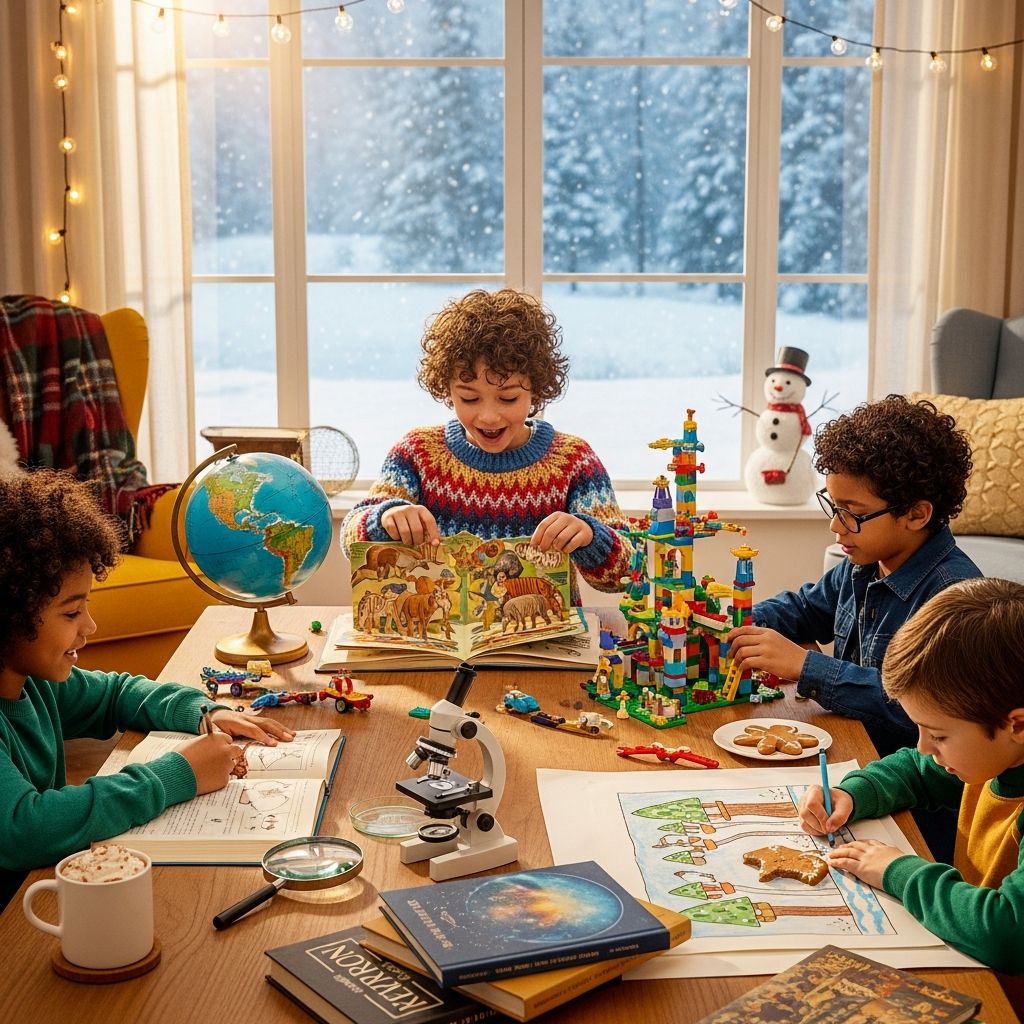
Winter breaks offer families a precious chance to blend relaxation with enrichment. Rather than letting young minds idle, these carefully curated activities weave essential skills like math, science, reading, and creativity into joyful holiday moments. Designed for children across age groups, from preschoolers to tweens, the ideas emphasize hands-on engagement, family bonding, and real-world application. Dive into a variety of indoor and outdoor pursuits that spark curiosity without feeling like schoolwork.
Indoor Science Adventures for Curious Minds
Confined by chilly weather? Turn your home into a laboratory with simple experiments using everyday items. These activities teach scientific principles through observation and hypothesis testing, building critical thinking from an early age.
- Fake Snow Creation: Mix baking soda and shaving cream to craft fluffy snow. Discuss chemical reactions as textures change, then measure volumes to introduce basic math concepts.
- Ice Lanterns: Fill balloons with water, add food coloring, and freeze overnight. Once solid, peel away the balloon for glowing lanterns that demonstrate states of matter and light refraction.
- Hot Cocoa Chemistry: Heat various liquids like milk, water, and juice with cocoa powder. Observe dissolving rates and temperature effects, practicing data recording with a simple chart.
- Snow Volcano: Layer baking soda in a dish, add vinegar dyed with winter colors. Watch fizzy eruptions while exploring acids, bases, and gas production.
- Storm in a Jar: Layer oil, water, and blue food coloring in a jar with a drop of dish soap. Shake to simulate blizzards, explaining density and weather patterns.
These experiments not only entertain but also encourage prediction and experimentation, key elements of the scientific method.
Creative Arts and Crafts for Imaginative Expression
Art provides a canvas for self-expression during breaks. Combine fine motor skills with seasonal themes to produce keepsakes that double as learning tools.
| Activity | Skills Developed | Materials Needed |
|---|---|---|
| Tinfoil Winter Scenes | Texture exploration, color theory | Tinfoil, glue, markers |
| Handprint Snowflakes | Fine motor, symmetry | Paper, paint, scissors |
| Snow Paint Outdoors | Gross motor, color mixing | Shaving cream, food coloring, trays |
| Mosaic Snowmen | Pattern recognition, shapes | Construction paper, glue, scraps |
| Arctic Fox Drawing | Observation, proportion | Paper, pencils, erasers |
Encourage children to explain their creations, boosting language skills. For older kids, incorporate history by researching winter artists like Wilson Bentley, the snowflake photographer.
Outdoor Explorations to Connect with Nature
Fresh air invigorates learning. Bundle up for hikes or backyard hunts that integrate physical activity with environmental science and geography.
- Nature Scavenger Hunt: Create a list of items like pinecones, animal tracks, or colorful leaves. Use a map to plan routes, teaching navigation and biology.
- Winter Bird Watching: Set up feeders and observe flocks. Note formations like the ‘V’ shape, discussing aerodynamics and migration patterns.
- Historical Landmark Tour: Research local sites beforehand; have kids present facts en route, honing public speaking.
- Nature Photography: Use phones or cameras to capture landscapes. Edit photos later to discuss composition and seasons’ impact on ecosystems.
- Snowflake Hunting: If snow falls, examine crystals under magnification. Compare shapes to learn about molecular structures.
These outings foster appreciation for the natural world, promoting health and mindfulness amid holiday indulgences.
Math and Logic Challenges in Everyday Play
Math hides in plain sight during breaks. Transform routines into games that reinforce numbers, geometry, and problem-solving.
- Kitchen Measurements: Double recipes for fractions practice. Weigh ingredients to grasp units and conversions.
- Menu Planning: Budget grocery lists, comparing store prices for real-world arithmetic.
- Tin Can Toss: Stack cans as targets numbered 1-10. Toss snowballs or beanbags to practice counting and addition.
- Shape Bingo: Winter-themed cards with circles (snowballs) and triangles (trees) for geometry review.
- Mitten Matching: Pair mittens by numbers or patterns, enhancing sorting and fine motor control.
Games like these make abstract concepts tangible, ensuring math fluency without worksheets.
Reading and Writing Journeys Through Stories
Literacy thrives on immersion. Curate cozy reading nooks and prompts to sustain progress over the break.
- Winter Reading Bingo: Grid with tasks like ‘read under a blanket’ or ‘winter non-fiction.’ Reward completions with stickers.
- Journaling Prompts: Daily entries on ‘a magical snow day’ build narrative skills.
- Story Retelling: After books like ‘The Mitten,’ act out with stuffed animals for comprehension.
- Word Searches and I Spy: Printable puzzles expand vocabulary with themed terms.
- Poetry Creation: Haikus about snowflakes teach rhythm and imagery.
Pair with audiobooks for variety, tracking progress to celebrate gains upon return to school.
Virtual Field Trips and Global Discoveries
Can’t travel? Digital tours bridge distances. Explore museums, zoos, and space from the couch.
- Museum Hopping: Platforms like Google Arts offer exhibits on dinosaurs or art history.
- Aquarium Dives: Virtual penguin cams teach life cycles and habitats.
- National Parks: Panoramic views spark geography discussions.
- Space Missions: NASA simulations explain orbits and planets.
- Cultural Cooks: Follow global recipes, like latkes or dumplings, while learning traditions.
These broaden horizons, introducing diversity and history interactively.
Active Games for Energy and Teamwork
Counter screen time with movement challenges that sneak in skills.
- Snowball Toss: Alphabet-labeled balls for letter recognition during throws.
- Hallway Maze: Tape paths test spatial reasoning and agility.
- Snowflake Hop: Floor mats with patterns for sequencing practice.
- Minute to Win It: Timed tasks like stacking cups build perseverance.
- Ski Jump Builds: Cardboard ramps for toys demonstrate physics.
Family competitions enhance social-emotional growth through collaboration.
Family Bonding Through Culinary Creations
Cooking unites while teaching life skills. Focus on holiday treats with embedded lessons.
- Cookie Doubling: Scale recipes for multiplication and precision.
- Global Treats: Make snowmen from various cultures’ sweets.
- Snow Ice Cream: Forage clean snow, mix with vanilla—explore purity and freezing points.
Discuss nutrition and origins for holistic learning.
FAQs: Winter Break Learning Essentials
What if it’s too cold for outdoor activities?
Opt for indoor alternatives like window birdwatching or simulated hikes via apps, maintaining the exploratory spirit.
How do I adapt activities for different ages?
Preschoolers focus on sensory play; elementary on basic concepts; tweens on research and leadership roles.
Are supplies expensive?
Most use household items; budgets under $20 cover a week’s fun.
Can these replace schoolwork?
No, but they reinforce skills playfully, preventing learning loss.
How to track progress?
Use photo journals or checklists shared post-break.
References
- Winter Break Learning Activities for All Ages — Connections Academy. 2023. https://www.connectionsacademy.com/support/resources/article/10-winter-break-learning-activities/
- Winter Break Activities: Fun & Enriching Ideas — CLMS. 2024. https://www.joinclms.org/post/winter-break-activities
- Winter Break Activities for Kids to Keep Learning — Waterford.org. 2023. https://www.waterford.org/resources/winter-break-activities/
- Engaging Winter Break Activities for Kids — Prescolaire. 2024. https://www.prescolaireus.com/index.php/news/winter-break-activities
- 10 Engaging and Educational Activities to Keep Kids Learning — Parallel Learning. 2023. https://www.parallellearning.com/post/10-ways-to-keep-your-child-learning-during-holiday-breaks

Medha Deb is an editor with a master's degree in Applied Linguistics from the University of Hyderabad. She believes that her qualification has helped her develop a deep understanding of language and its application in various contexts. Medha specializes in the areas of beauty, health, sports, and wellness and is committed to ensuring that the content on the website is…