
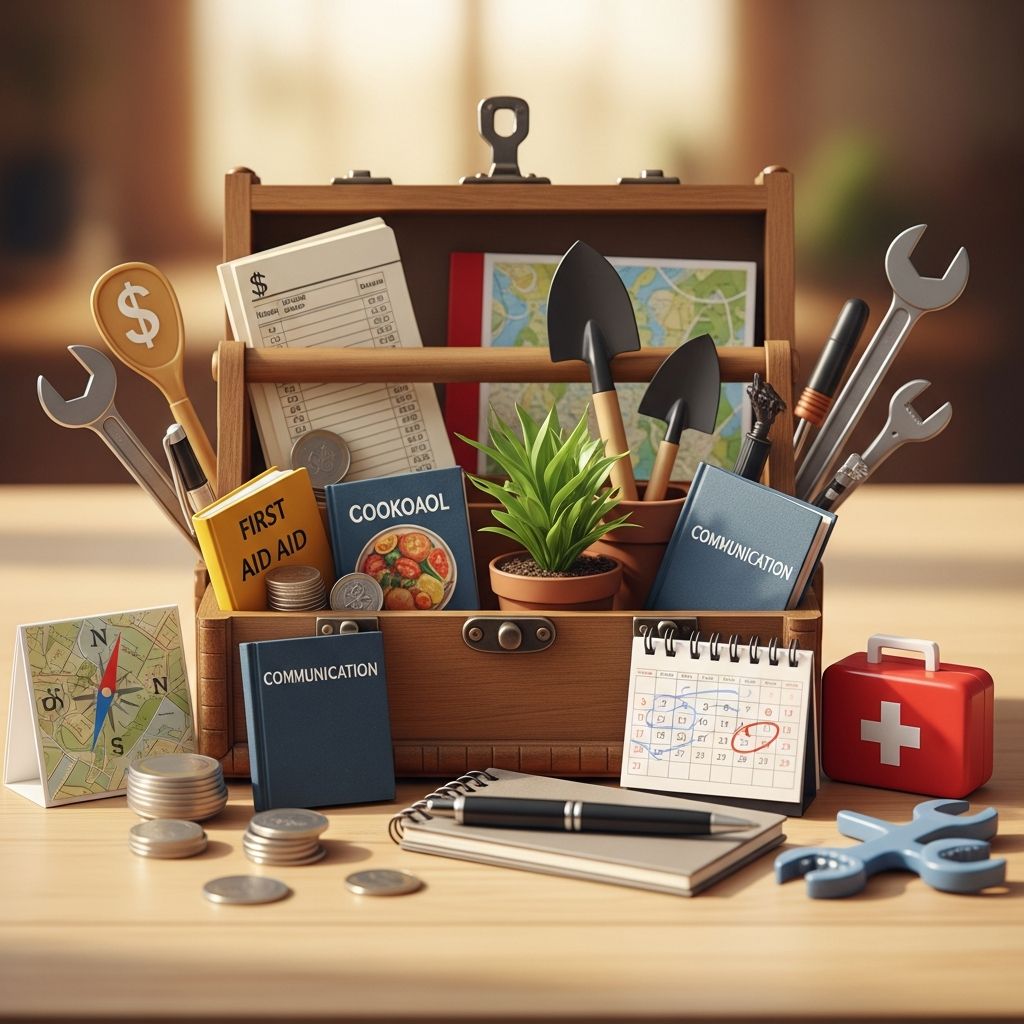
Teenagers stand at the threshold of adulthood, requiring a blend of practical knowledge and emotional strength to navigate future challenges. Mastering core life skills equips them with the tools for self-reliance, sound judgment, and personal growth. This guide outlines critical abilities across key domains, providing parents, educators, and teens with strategies to cultivate these competencies effectively.
Why Life Skills Matter in the Teen Years
The transition from adolescence to adulthood demands more than academic achievements; it calls for hands-on capabilities that promote autonomy and adaptability. Developing these skills early builds a foundation of confidence, enabling teens to handle responsibilities like managing finances, maintaining health, and resolving conflicts independently. Research from child development experts emphasizes that such training enhances resilience, reducing anxiety associated with real-world uncertainties.
Parents play a pivotal role by integrating skill-building into daily routines, offering guidance without overprotecting. This approach fosters grit—the perseverance to push through obstacles—and prepares youth for college, careers, and independent living.
Financial Foundations: Mastering Money Management
Understanding money is a cornerstone of independence. Teens who learn budgeting avoid debt traps and build saving habits that last a lifetime. Start with basics: tracking income from allowances or part-time jobs, distinguishing needs from wants, and using bank accounts responsibly.
- Teach account navigation: Explain routing numbers, deposits, and online banking security.
- Practice generosity: Encourage allocating portions for savings, spending, and giving to instill balanced values.
- Set financial goals: Use SMART criteria—Specific, Measurable, Achievable, Relevant, Time-bound—to plan for big purchases like electronics or college funds.
A practical exercise involves creating a monthly budget table, categorizing expenses to visualize spending patterns.
| Category | Budgeted Amount | Actual Spent | Difference |
|---|---|---|---|
| Food | $150 | $140 | +$10 |
| Entertainment | $50 | $60 | -$10 |
| Savings | $100 | $100 | $0 |
Financial literacy programs from educational institutions highlight how early proficiency correlates with long-term wealth accumulation.
Digital Navigation: Safe and Savvy Online Habits
In a connected world, digital literacy separates responsible users from those at risk. Teens must discern credible information, protect privacy, and use technology ethically. Key practices include verifying sources, setting screen limits, and recognizing phishing attempts.
- Critical evaluation: Question online claims by cross-checking with reputable sites.
- Privacy settings: Regularly audit social media profiles and enable two-factor authentication.
- Balanced use: Implement app timers to prioritize productivity over endless scrolling.
Educators recommend role-playing scenarios, like responding to suspicious emails, to sharpen instincts. This skill extends to career readiness, where digital tools drive job searches and remote collaboration.
Healthy Living: Cooking and Nutrition Basics
Self-sufficiency in the kitchen promotes physical well-being and cuts reliance on processed foods. Teens benefit from simple recipes that teach measurement, safety, and nutrition reading. Focus on balanced meals incorporating proteins, veggies, and whole grains.
- Essential techniques: Knife skills, boiling, baking, and meal prepping.
- Label literacy: Decode ingredients lists and nutritional values for informed choices.
- Budget cooking: Stretch dollars with staples like rice, beans, and seasonal produce.
Weekly family cooking nights reinforce these habits, linking food prep to health outcomes like sustained energy for school and activities.
Home Mastery: Chores and Organization
Maintaining a living space instills discipline and pride. Assign age-appropriate chores progressing from tidying to laundry and minor repairs, using checklists for accountability.
- Daily tasks: Making beds, dishwashing, trash removal.
- Weekly duties: Vacuuming, laundry sorting, grocery organization.
- Long-term: Basic plumbing checks or appliance care.
Visual chore charts gamify responsibilities, tracking progress to motivate completion. This routine mirrors future apartment living, easing the shift.
Time Mastery: Prioritizing and Planning
Effective time use balances school, hobbies, rest, and social life, curbing procrastination. Tools like planners or apps help prioritize tasks via Eisenhower matrices—urgent vs. important.
- Goal setting: Break annual aims into quarterly, weekly steps.
- Scheduling: Block time for study, exercise, and downtime.
- Reflection: Weekly reviews adjust habits for efficiency.
Studies show strong executive functioning reduces stress and boosts academic performance.
Solving Challenges: Critical Thinking Under Pressure
Life throws curveballs; problem-solving dissects issues into actionable steps. Teach the process: define the problem, brainstorm options, weigh pros/cons, implement, and evaluate.
- Real scenarios: Group projects gone awry or tech glitches.
- Resilience building: View failures as data for improvement.
- Collaboration: Seek input while owning decisions.
Travel programs or simulations accelerate this by immersing teens in unpredictable settings.
Connection Building: Communication and Relationships
Strong bonds rely on clear expression and empathy. Practice active listening—paraphrasing to confirm understanding—and assertive boundary-setting.
- Verbal skills: Public speaking drills and conflict resolution scripts.
- Non-verbal cues: Body language awareness in conversations.
- Networking: Introductions at events to expand circles.
Healthy relationships prevent isolation, supporting mental health through mutual support.
Inner Strength: Self-Care and Emotional Regulation
Self-care sustains well-being amid pressures. Routines include sleep hygiene (7-9 hours), exercise, mindfulness, and stress outlets like journaling.
| Self-Care Area | Daily Goal | Tracking Tip |
|---|---|---|
| Sleep | 7-9 hours | Consistent bedtime alarm |
| Movement | 30 minutes | Activity log |
| Mindfulness | 10 minutes | Breathing app |
Emotional tools like growth mindset reframing turn setbacks into growth opportunities.
Safety First: First Aid and Emergency Preparedness
Basic safety knowledge saves lives. Cover CPR basics, wound care, and home evacuation plans. Include car maintenance like tire checks and oil monitoring.
- Emergency contacts: Memorize numbers and protocols.
- First aid kit assembly: Stock and usage demo.
- Personal safety: Stranger awareness and digital tracking apps.
Drills ensure muscle memory in crises.
Future Focus: Career and Leadership Development
Prepare for work by honing resumes, interview skills, and goal-setting. Leadership emerges from initiative-taking and team contributions.
- Mentorship seeking: Connect with professionals.
- Volunteerism: Build experience and networks.
- Self-advocacy: Negotiate needs confidently.
Structured opportunities like workshops accelerate maturity.
Practical Checklists for Progress Tracking
Use these to monitor growth:
- Weekly Home Checklist: Dishes done? Room clean? Laundry folded?
- Monthly Finance Review: Budget met? Savings added?
- Quarterly Skill Audit: New recipe mastered? Conflict resolved independently?
Frequently Asked Questions
How do I motivate my teen to learn these skills?
Link skills to their interests, offer incentives, and model behaviors yourself. Involve them in planning to build ownership.
What age should these skills start?
Begin at 12-13 with basics, ramping up by 16-18 for independence.
Can online resources replace hands-on practice?
No—videos supplement but real application cements learning.
How to handle resistance or failure?
Encourage persistence; frame errors as lessons. Provide supportive feedback.
Integrating Skills into Daily Life
Weave training into routines: family meetings for planning, shared meals for cooking, group outings for communication. Consistency yields habits that endure.
References
- 9 Life Skills for Teens to Build Independence and Grit — School of Public Health at Liberty University. 2023. https://sph.edu/blogs/life-skills-for-teens/
- 25 Daily Living Skills Every Teen Should Know + PDF Checklist — Life Skills Advocate. 2023. https://lifeskillsadvocate.com/blog/25-daily-living-skills-every-teen-should-know/
- 42 Important Life Skills for Teens — We Are Teachers. 2024. https://www.weareteachers.com/life-skills-for-teens/
- 35 Life Skills For Teens To Master by Age 18 — Rustic Pathways. 2026. https://rusticpathways.com/blog/11-life-skills-every-teen-should-have-by-age-18
- 11 Essential Life Skills for Teens to Learn Now — Spark Curriculum. 2024. https://sparkcurriculum.org/essential-life-skills-for-teens/
- Basic Life Skills for Your Teen — The Jed Foundation. 2023. https://jedfoundation.org/set-to-go/basic-life-skills-introduction/
- Building the Core Skills Youth Need for Life: A Guide for Practitioners — Center on the Developing Child at Harvard University. 2022. https://developingchild.harvard.edu/resources/handouts-tools/building-core-skills-youth/

Medha Deb is an editor with a master's degree in Applied Linguistics from the University of Hyderabad. She believes that her qualification has helped her develop a deep understanding of language and its application in various contexts. Medha specializes in the areas of beauty, health, sports, and wellness and is committed to ensuring that the content on the website is…