
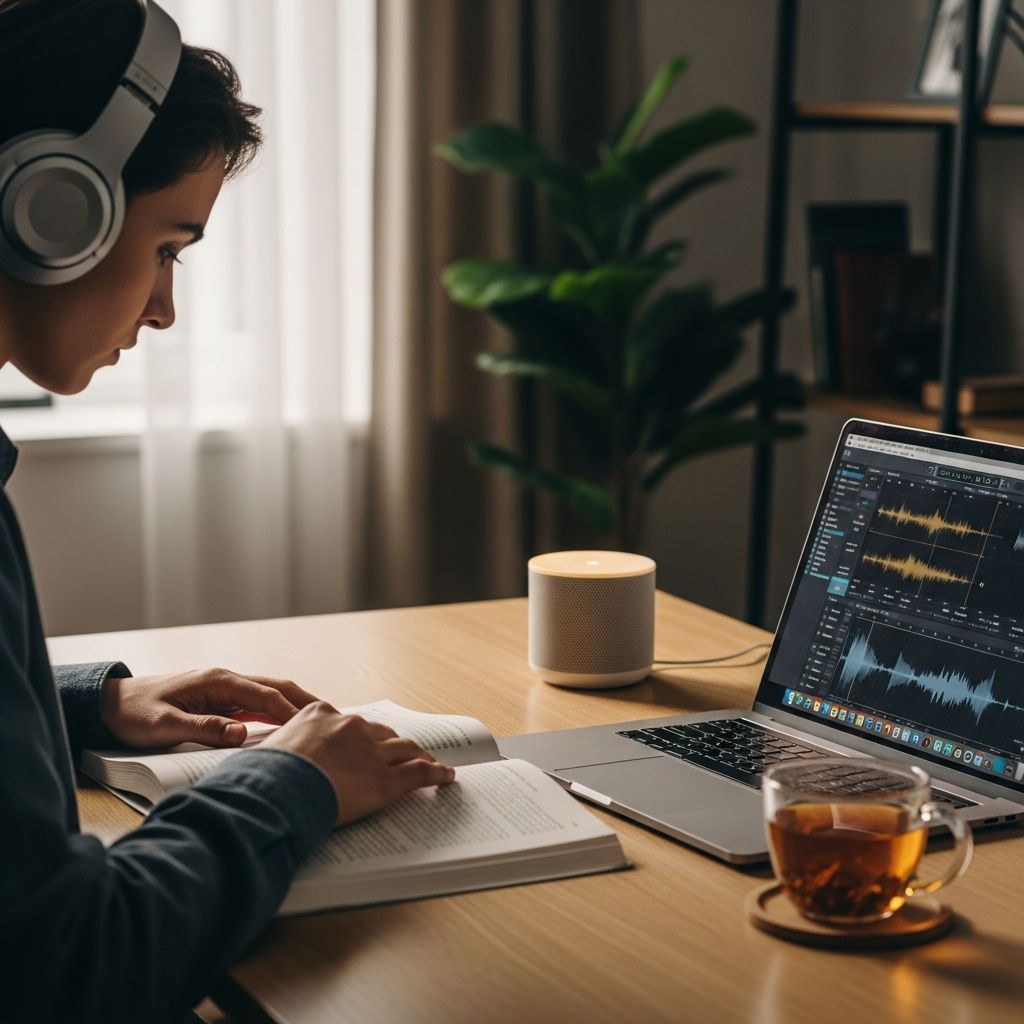
Background sounds, including music, can transform study sessions by improving concentration, mood, and retention, leading to stronger academic outcomes like higher GPAs.
Why Your Brain Craves the Right Audio Environment
The human brain thrives in environments with moderate stimulation. Complete silence often feels sterile, amplifying distractions from internal thoughts or minor noises. Introducing controlled background audio fills this gap, signaling the mind to enter a productive state. A survey of 2,000 students found 49% regularly use music while studying, with 60% reporting better effectiveness compared to quiet settings. This aligns with arousal-mood theory, where suitable sounds elevate energy and positivity, priming the brain for learning.
Nature sounds drew 30% preference, real-life ambiences 26%, and podcasts 24%, showing variety in what works. These elements mimic natural settings, reducing stress and fostering flow—a state of deep immersion.
Proven Gains in Grades and Comprehension
Students using background music often post GPAs above 3.2, linking audio to superior performance. About 81% found studying more enjoyable, and 80% felt better class-preparedness. Music’s therapeutic side resonated with 80%, aiding info absorption for 75%.
Yet, effects vary by task. Instrumental tracks support reading and math by minimizing cognitive interference, unlike lyrics which hinder language processing. A study confirmed pop lyrics reduce comprehension, but familiar music lessens distraction for habituated listeners. Working memory plays key: high-capacity individuals handle music better during complex tasks.
| Metric | With Music | Without Music |
|---|---|---|
| Average GPA | >3.2 | Lower |
| Enjoyment | 81% | Not specified |
| Info Absorption | 75% | Baseline |
| Study Hours/Week | Up to 7+ | Less |
This table summarizes survey highlights, underscoring music’s edge.
Science Behind the Beat: Key Theories Explained
Several frameworks explain audio’s study impact. The Mozart effect posits classical music directly boosts spatial-temporal skills, though broader evidence is mixed. Arousal-mood hypothesis argues tempo and mode adjust energy and emotion, with upbeat tracks energizing, calm ones soothing.
Conversely, seductive detail theory warns extraneous audio burdens working memory, especially for novices or tough material. Findings reject direct Mozart benefits but support mood mediation for simpler tasks. High working memory buffers music’s load, enabling multitasking.
Brain scans show music engages hemispheres, cutting anxiety via dopamine release and enhancing memory consolidation. Slow-tempo tunes combat fatigue during marathons like finals.
Best Sound Types for Peak Performance
- Instrumental Classics: Baroque or piano stimulate cognition without words.
- Lo-Fi and Ambient: Beat-driven, low-key vibes sustain focus.
- Nature Ambiences: Rain or waves mask noise, evoke calm.
- Video Game Soundtracks: Dynamic yet non-intrusive for immersion.
- Avoid Lyrics: Especially in verbal tasks; they split attention.
Match to task: quiet for analysis, rhythmic for recall, upbeat for creativity. Self-selected music boosts engagement across difficulties.
Practical Strategies to Audio-Optimize Studying
Curate playlists at 50-80 BPM for calm; test volumes low enough not to dominate. Alternate with silence for memory tasks. Track sessions: note focus levels, retention via quizzes.
- Assess personal style—survey your preferences.
- Experiment genres weekly.
- Combine with techniques like Pomodoro: 25-min audio bursts.
- Monitor GPA shifts or test scores.
In classrooms, student-chosen music raised comfort, confidence, retention. Apps like Brain.fm use AI for focus waveforms.
Potential Pitfalls and How to Dodge Them
Not all music helps. Lyrics impair reading; fast/heavy genres spike arousal negatively. Low working memory users struggle more. Over-reliance skips silence benefits for some.
Solution: Start instrumental, volume under 40%. If comprehension drops, switch off. Habituation reduces downsides.
Real-World Wins: From Surveys to Classrooms
CSU Global’s poll ties music to top GPAs. Classroom trials show comfort gains sans productivity loss. Med students favor genres enhancing endurance. Frontiers research flags lyrical risks but notes adaptation.
Long sessions benefit from variety, preventing habituation. 75% report better absorption, more study time.
Frequently Asked Questions
Does music really raise GPA?
Yes, students with music averaged >3.2 GPA vs. others.
Instrumental or lyrics for studying?
Instrumental; lyrics distract verbal tasks.
What if music worsens focus?
Try nature sounds or silence; depends on working memory.
Best volume level?
Low, conversational—mask distractions without overpowering.
Can any genre work?
Classical, lo-fi, ambient top lists; personalize via trials.
Wrap Your Sessions in Sound Success
Strategic audio elevates studying beyond silence’s limits. By picking brain-friendly sounds, students unlock focus, joy, retention—path to academic peaks. Experiment boldly; your optimal soundtrack awaits.
References
- Can You Enhance Study Sessions With Background Music? — Oxford Learning. 2023. https://oxfordlearning.com/can-you-enhance-study-sessions-with-background-music/
- The Influence of Background Music on Learning in the Light of Different Theoretical Approaches — PMC (Frontiers in Psychology). 2017-10-18. https://pmc.ncbi.nlm.nih.gov/articles/PMC5671572/
- The Link Between Music and Focused Studying — Barry University Blog. 2025-10-24. https://blog.barry.edu/2025/10/24/the-link-between-music-and-focused-studying-what-does-research-say/
- Study Smarter: Scientifically Backed Music For Focus — OnlineMedEd. 2023. https://www.onlinemeded.com/blog/scientifically-best-music-for-studying
- The Effects Of Background Music on Productivity In Classrooms — SEU FireScholars (PDF). 2023. https://firescholars.seu.edu/cgi/viewcontent.cgi?article=1004&context=ssp

Medha Deb is an editor with a master's degree in Applied Linguistics from the University of Hyderabad. She believes that her qualification has helped her develop a deep understanding of language and its application in various contexts. Medha specializes in the areas of beauty, health, sports, and wellness and is committed to ensuring that the content on the website is…