
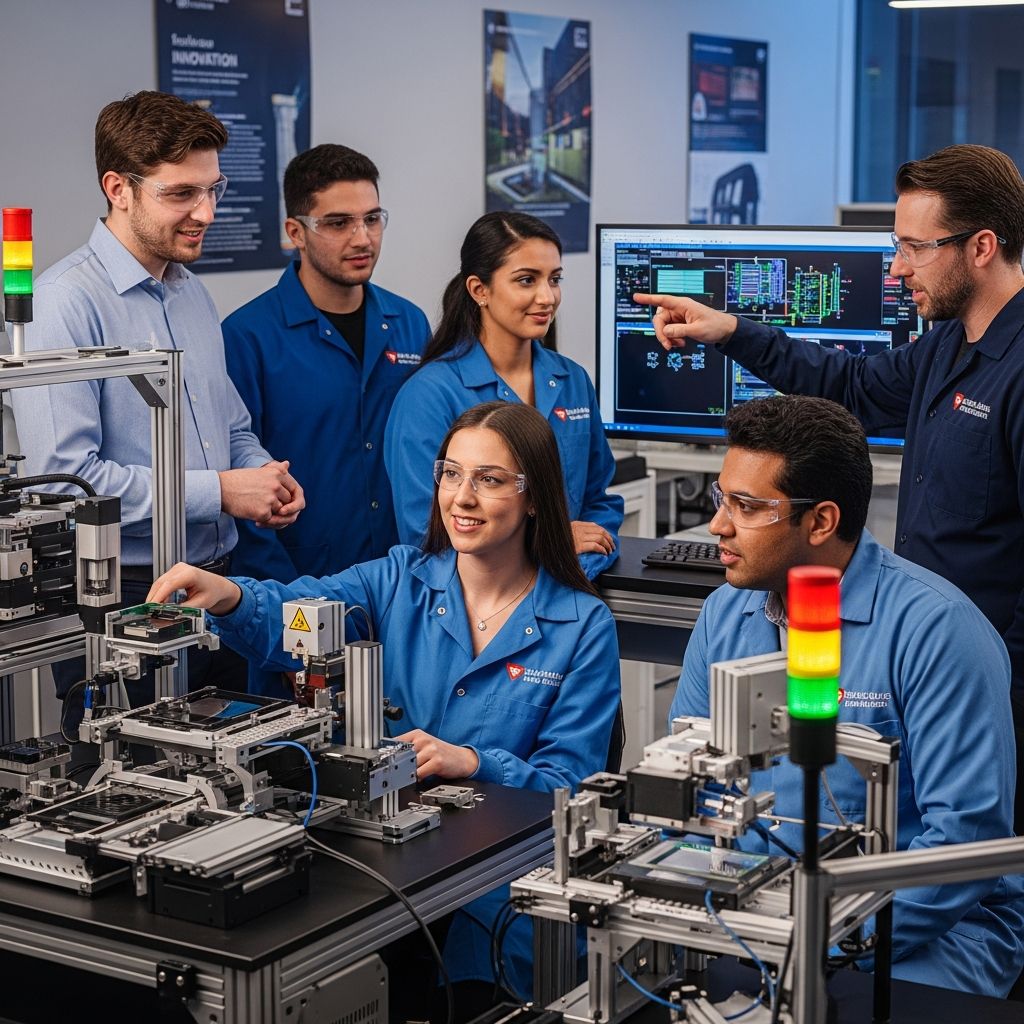
Strategic alliances between online schooling platforms and organizations like the SEMI Foundation are revolutionizing how high school students prepare for technology-driven careers. These partnerships deliver targeted training in the semiconductor industry, blending academic rigor with practical, job-ready competencies to bridge the gap between education and employment.
Understanding the Semiconductor Industry’s Demand for Talent
The semiconductor sector powers modern innovation, from smartphones to electric vehicles, creating a surge in demand for skilled professionals. Career readiness programs address this by introducing students early to industry essentials, fostering competencies like critical thinking, teamwork, and technical proficiency. Such initiatives equip learners with the tools to thrive in high-tech environments, where employers seek candidates who can adapt quickly and innovate effectively.
Online education platforms leverage these partnerships to offer virtual access to real-world applications, ensuring students in remote areas gain equal footing. By focusing on emerging technologies, programs help learners anticipate workforce shifts, such as automation and chip design advancements.
Key Benefits of Collaborative Career Preparation
Students participating in these enhanced programs report heightened confidence and clearer career paths. Hands-on elements, including virtual simulations and expert-led sessions, build essential soft skills alongside technical knowledge. For instance, workshops on professional communication and problem-solving mirror workplace scenarios, preparing learners for internships and entry-level roles.
- Skill Mastery: Develop proficiency in areas like data analysis and circuit basics through guided modules.
- Networking Opportunities: Connect with industry mentors for personalized advice and future opportunities.
- Credential Building: Earn micro-credentials that stand out on resumes and college applications.
These benefits extend to long-term outcomes, with participants showing improved job placement rates and higher earning potential. Research highlights how early exposure increases college enrollment and persistence, laying a foundation for sustained success.
Core Components of SEMI-Inspired Readiness Initiatives
Effective programs integrate eight foundational competencies: career self-development, communication, critical thinking, equity and inclusion, leadership, professionalism, teamwork, and technology use. Participants engage in practical activities like mock interviews, resume workshops, and project-based challenges tailored to semiconductor applications.
| Competency | Description | Real-World Application |
|---|---|---|
| Career & Self-Development | Proactive goal-setting and lifelong learning | Personalized career mapping in tech fields |
| Communication | Clear articulation of ideas | Team presentations on chip design projects |
| Critical Thinking | Analyzing complex problems | Troubleshooting virtual circuit simulations |
| Technology | Digital tool proficiency | Using CAD software for prototypes |
This structured approach ensures comprehensive preparation, with data showing 41% gains in job opportunity awareness and 88% resume completion rates among similar program alumni.
Real-World Experiences Through Virtual Platforms
Online learners access internships, industry tours, and guest lectures without leaving home. Virtual reality simulations allow experimentation with semiconductor processes, while live Q&A with engineers demystifies career entry points. These experiences cultivate adaptability and interpersonal skills vital for collaborative tech teams.
Partnerships also emphasize financial literacy and professional networking, teaching students to navigate job markets effectively. Success metrics include boosted school attendance and reduced dropout risks, as engaged learners see direct ties between studies and futures.
Equity and Inclusion in Tech Career Pathways
Initiatives prioritize underserved communities, offering mentorship and resources to underrepresented groups. By incorporating diverse perspectives, programs promote inclusive workplaces and address talent shortages equitably. Family involvement and youth-led planning further empower participants, fostering ownership over their trajectories.
Programs like those modeled after GEAR UP demonstrate 9% higher college enrollment and 13% better retention for low-income students, underscoring the power of targeted support.
Measuring Success: Data and Participant Outcomes
Quantitative gains are evident: 98% of program graduates affirm strengthened professional skills, with employers reporting 96% satisfaction. Return on investment is striking, with every dollar spent yielding up to $19.20 in future earnings.
- 41% increase in job search knowledge
- 32% rise in overall employment readiness
- Higher postsecondary credential attainment
Qualitative stories abound, from students securing tech apprenticeships to pursuing STEM degrees with industry backing. Communities benefit too, as skilled graduates drive local economic growth.
Innovations Driving Future-Ready Education
Corporate-school collaborations introduce cutting-edge tools like AI-driven career matching and volunteer expert networks. Platforms connect professionals with classrooms for mentorship, enhancing employee engagement while building student pipelines. Early interventions in middle school combat overwhelm, aligning skills with employer needs.
Afterschool extensions, such as college prep workshops and summer institutes, reinforce learning. Partnerships with nonprofits expand reach, ensuring broad access to high-quality preparation.
Building Sustainable Career Trajectories
Beyond immediate job readiness, these programs instill resilience and ethical leadership. Emphasis on social-emotional learning complements academics, producing well-rounded professionals. As industries evolve, adaptable learners from these initiatives lead innovation.
Sustained support through alumni networks and ongoing training ensures lifelong relevance, turning one-time participants into industry advocates.
Frequently Asked Questions
What age groups benefit most from these partnerships?
Primarily high school students, with extensions for middle school to spark early interest in tech careers.
How do online students participate in hands-on activities?
Through virtual simulations, live webinars, and remote internships facilitated by digital platforms.
Are there costs involved for families?
Most programs are free or low-cost, integrated into tuition-free online public schools.
What careers does the semiconductor focus prepare students for?
Roles in chip design, manufacturing, quality control, and related engineering fields.
How can schools initiate similar partnerships?
By reaching out to industry groups like SEMI for curriculum alignment and volunteer programs.
References
- How Career Readiness Programs Enhance Independence and Job Success — Heartwise Support. 2023. https://www.heartwisesupport.org/post/how-career-readiness-programs-enhance-independence-and-job-success
- The Importance of Early College and Career Opportunities — Institute of Education Sciences (IES). 2023. https://ies.ed.gov/learn/blog/success-after-graduation-importance-early-college-and-career-opportunities
- What Is Career Readiness and Why Is it Important? — American College of Education (ACE). 2024. https://ace.edu/blog/what-is-career-readiness-and-why-is-it-important/
- The Potential of Career and College Readiness and Exploration in Afterschool Programs — Expanding Learning. 2023. https://www.expandinglearning.org/expandingminds/article/potential-career-and-college-readiness-and-exploration-afterschool-programs
- How Schools and Corporations Can Work Together to Build Student Career Readiness — Discovery Education. 2023. https://www.discoveryeducation.com/blog/future-ready-students/how-schools-and-corporations-can-work-together-to-build-student-career-readiness/
- What is Career Readiness? — National Association of Colleges and Employers (NACE). 2023. https://naceweb.org/career-readiness/competencies/career-readiness-defined

- Integrated M.A. in Applied Linguistics, University of Hyderabad
- 5+ years in editorial, instructional, SEO, and research-based writing
Sneha is a relationships and lifestyle writer with a strong foundation in applied linguistics and certified training in relationship coaching. She brings over five years of writing experience to theskillvault, crafting thoughtful, research-driven content that empowers readers to build healthier relationships, boost emotional well-being, and embrace holistic living. Her writing and insights reflect the belief that beauty, happiness, and wellness…