
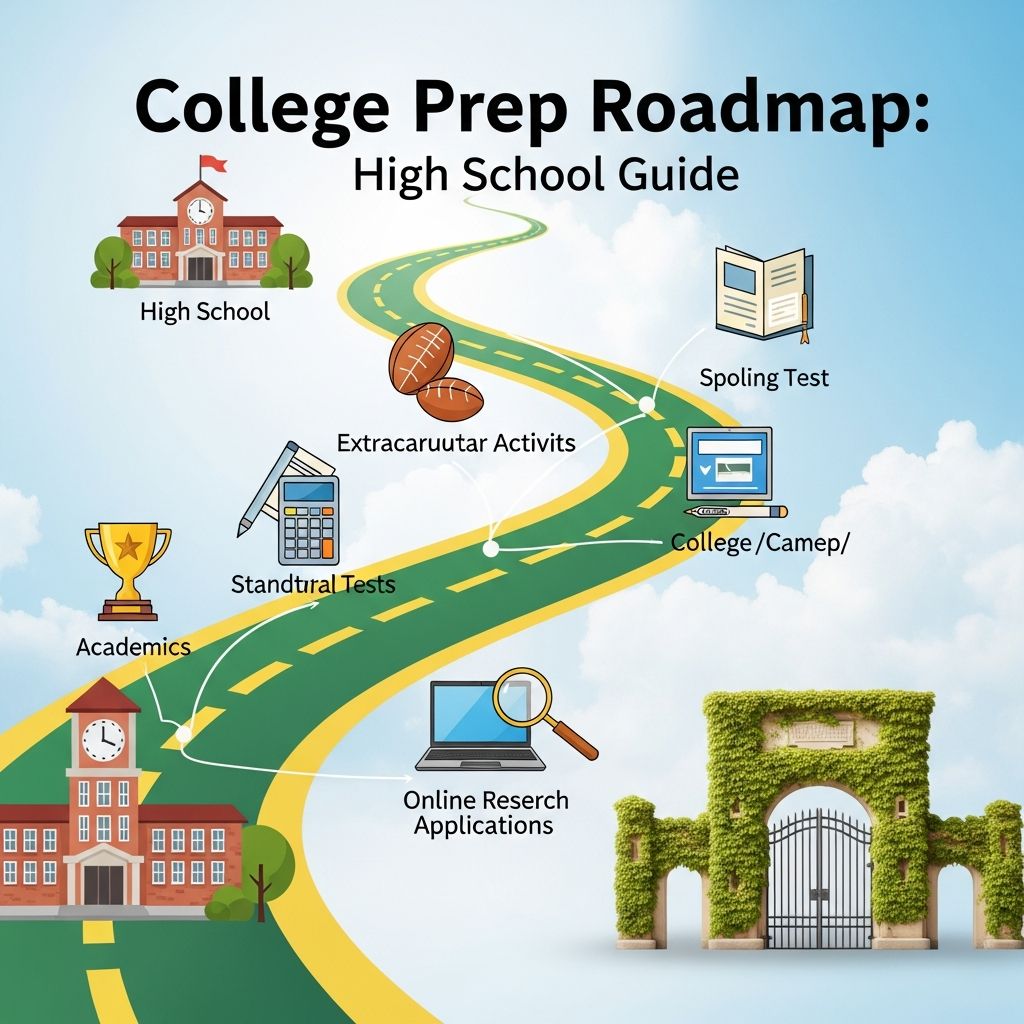
Preparing for college begins long before senior year applications. This guide offers a structured approach through each high school year, focusing on building a strong profile for admissions while managing academics, tests, and personal growth. Students who follow a deliberate plan increase their chances of acceptance to top-choice schools and securing financial support.
Building Foundations in Freshman Year
The first year of high school sets the tone for academic habits and exploration. Focus on establishing discipline and discovering interests that align with future goals.
- Connect early with your school counselor to review graduation credits, recommended courses, and options like Advanced Placement (AP) or dual-enrollment classes for college credit.
- Assess personal strengths through self-reflection: identify subjects of passion, potential majors, and career paths that match skills.
- Dive into electives, clubs, sports, or arts to test interests and build a resume of involvement.
- Volunteer during summers or breaks to gain real-world experience and demonstrate commitment.
- Consider early readiness assessments like ACT Aspire to benchmark progress.
Maintaining a high GPA from day one is crucial, as colleges review transcripts from all four years. Aim for challenging core subjects: English, math, science, history, and a foreign language.
Expanding Horizons as a Sophomore
Sophomore year ramps up preparation with standardized testing introductions and deeper career research. Balance rigor with exploration to refine college aspirations.
- Update your four-year academic plan with your counselor, incorporating honors or AP courses where feasible.
- Take the PSAT or PSAT 10 for practice and familiarity; this positions you for National Merit opportunities later.
- Boost extracurriculars by leading activities or trying new ones that spark genuine interest.
- Research careers via professional profiles on platforms like LinkedIn, noting required education and salaries.
- Launch a college search: compile a list of 15-20 schools based on size, location, majors, and outcomes like graduation rates.
Practice tests and study habits solidify here. Use free resources from College Board or ACT to simulate exam conditions.
Intensifying Efforts in Junior Year
This pivotal year demands focus on test scores, rigorous coursework, and narrowing college options. Strong performance directly impacts applications.
| Key Junior Tasks | Timeline | Why It Matters |
|---|---|---|
| Register and take SAT/ACT (first attempt in fall) | Fall/Spring | Allows retakes for score improvement |
| Meet counselor regularly for GPA/scholarship review | Each grading period | Ensures graduation and admission readiness |
| Finalize top 8-12 colleges (reach, match, safety) | Winter | Balances ambition with realism |
| Attend college fairs and virtual info sessions | Ongoing | Builds network and insights |
| Explore local scholarships | Spring | Supplements merit-based aid |
Schedule campus visits for top choices to evaluate fit beyond statistics. Use tools like the Federal Student Aid Estimator for early aid projections.
Mastering the Senior Year Application Sprint
Senior year shifts to execution: applications, essays, and decisions. Organization prevents last-minute stress.
- August-September: Review applications, note requirements (essays, supplements), and create a deadline calendar.
- Retake SAT/ACT if needed; request fee waivers via counselor.
- Secure 2-3 recommendation letters 30+ days early from teachers who know your work ethic.
- Draft and revise personal essays; seek feedback from mentors.
- Submit FAFSA as soon as it opens (October 1) with parental input.
- Complete applications via Common App, Coalition, or portals by early decision/regular deadlines.
After submissions, monitor portals for updates. When offers arrive (March-April), compare net costs including aid packages. Commit by May 1 with deposit. Avoid senioritis—final transcripts matter.
Financial Planning: Securing Your Future
College affordability requires proactive steps. Understand costs, aid types, and timelines.
- Estimate needs using FAFSA4caster or Net Price Calculators yearly.
- Prioritize FAFSA for federal grants, loans, work-study; state aid often follows.
- Hunt merit scholarships from schools, locals, and nationals; apply early.
- Explore work-study or part-time jobs balanced with studies.
Review aid offers holistically: grants first, then scholarships, loans last. Negotiate if packages fall short.
Standardized Testing Strategies
Tests like SAT and ACT influence admissions. Prep strategically for optimal scores.
- PSAT in 10th/11th for practice and scholarships.
- SAT/ACT: Take twice; superscore policies benefit multiple sitts.
- Use official prep: Khan Academy for SAT, ACT Academy.
- Test-optional trends exist, but strong scores help.
Aim for scores matching target colleges’ middle 50% ranges.
Extracurriculars and Leadership Development
Admissions seek well-rounded applicants. Depth over breadth in passions shows impact.
- Start freshman: Join 3-5 activities.
- Sophomore/Junior: Lead roles, start clubs.
- Senior: Sustain commitments; highlight in resume.
- Community service ties to values and skills.
Document hours, roles, achievements for applications.
Academic Excellence Across All Years
GPA is the strongest predictor of college success. Prioritize rigor.
- Core requirements: 4 English, 3-4 math/science/social studies, 2+ languages.
- AP/IB for challenge and credit.
- Study skills: Time management, tutoring if needed.
Colleges weigh upward trends positively.
Frequently Asked Questions
When should I start my college list?
Sophomore year; refine junior year with 8-12 fits.
Is the PSAT necessary?
Yes for practice and 11th-grade National Merit eligibility.
What if I can’t visit campuses?
Use virtual tours, fairs, alumni chats.
How early for FAFSA?
October 1 senior year; some states first-come.
Can I apply test-optional?
Check schools; submit if strong.
Stay Motivated and Organized
Use planners, apps for deadlines. Parental involvement aids logistics. Celebrate milestones like test completions. This roadmap, drawn from expert checklists, equips you for success.
References
- How to Prepare for College: 2025 Checklist — Connections Academy. 2025. https://www.connectionsacademy.com/support/resources/article/getting-ready-for-college/
- Preparing for College: Senior Year Checklist — National Association for College Admission Counseling (NACAC). 2023. https://www.nacacnet.org/preparing-for-college-senior-year-checklist/
- College Preparation Checklist — U.S. Department of Education (ERIC). 2012. https://files.eric.ed.gov/fulltext/ED542097.pdf
- High School College Prep Checklist: Freshman to Senior Year — Colleges of Distinction. 2024. https://collegesofdistinction.com/advice/freshmen-through-senior-year-high-school-checklist/
- College Preparation Checklist — University of Texas at El Paso (UTEP). 2023. https://www.utep.edu/student-affairs/scholarships/_Files/images/college-prep-checklist.pdf
- The College Planning Timeline — Coalition for College Access. 2024. https://www.coalitionforcollegeaccess.org/mycoalition-counselor-all/the-college-planning-timeline
- Prepare for College Checklists — Federal Student Aid (StudentAid.gov). 2025. https://studentaid.gov/resources/prepare-for-college/checklists

- Integrated M.A. in Applied Linguistics, University of Hyderabad
- 5+ years in editorial, instructional, SEO, and research-based writing
Sneha is a relationships and lifestyle writer with a strong foundation in applied linguistics and certified training in relationship coaching. She brings over five years of writing experience to theskillvault, crafting thoughtful, research-driven content that empowers readers to build healthier relationships, boost emotional well-being, and embrace holistic living. Her writing and insights reflect the belief that beauty, happiness, and wellness…