
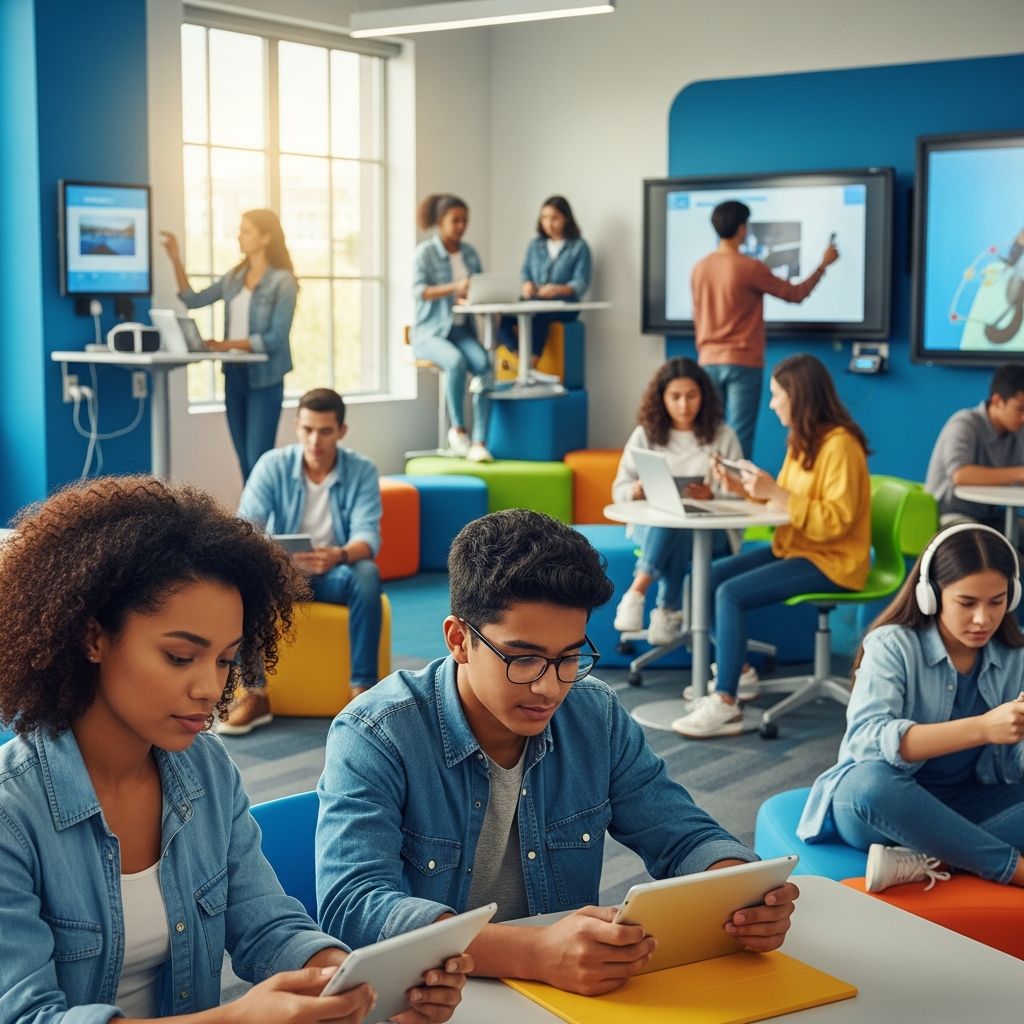
The teenage years present significant challenges, with students navigating academic pressures, social dynamics, and increasingly, mental health concerns. When traditional brick-and-mortar schools fail to meet the needs of struggling learners, alternative educational pathways become essential. Virtual high schools represent a transformative option for students facing academic difficulties, social anxiety, bullying, or other obstacles to learning. By leveraging technology and personalized instruction, these digital platforms create supportive learning environments where at-risk teens can rebuild confidence and achieve meaningful educational progress.
Understanding the Landscape of Student Struggle
Contemporary adolescents face unprecedented challenges. Research indicates that substantial percentages of high school students experience mental health difficulties that directly impact their academic engagement. Approximately 29% of students report experiencing poor mental health, a condition that significantly correlates with declining grades and school disengagement. Beyond mental health concerns, students may struggle with bullying, peer pressure, learning disabilities, or personal circumstances that make traditional classroom attendance difficult or counterproductive.
When conventional schools cannot provide adequate support, families increasingly explore alternative educational models. Virtual high schools offer a fundamentally different approach—one built around student needs rather than standardized institutional requirements. This shift has proven transformative for many struggling teens seeking academic recovery and personal growth.
The Architecture of Flexibility: Learning on Your Terms
One of the most significant advantages of virtual education is the ability to learn according to individual schedules and preferences. Unlike traditional schools that operate within fixed time blocks, online programs allow students to access coursework whenever their cognitive function is optimal. Some students concentrate better in early mornings, while others reach peak focus in evenings. Certain learners require quiet, distraction-free environments, while others thrive with background activity.
This flexibility extends beyond time of day. Students can learn from home, libraries, coffee shops, or outdoor spaces—anywhere with internet connectivity. For teens managing personal responsibilities like part-time employment or family obligations, this flexibility eliminates the false choice between school and life responsibilities. Students can structure their day to accommodate work schedules, caregiving duties, or medical appointments without sacrificing educational progress.
The ability to pace learning individually represents another crucial dimension of flexibility. Students who need extended time to master complex concepts can spend additional days on challenging material. Advanced learners can accelerate through content they grasp quickly, pursuing advanced coursework or additional electives without administrative barriers. This personalization reduces the anxiety associated with forced standardization and creates conditions for genuine mastery.
Customized Academic Pathways and Course Variety
Traditional high schools operate within budget and facility constraints that limit course offerings. Virtual schools transcend these limitations, providing access to diverse electives rarely available in brick-and-mortar institutions. Students can pursue specialized interests in game design, marine biology, culinary arts, or digital media production alongside core academic requirements.
This expanded curriculum diversity serves a critical psychological function. When students study subjects aligned with their interests and passions, engagement naturally increases. This engagement produces better learning outcomes and reinforces academic identity. For struggling students accustomed to failure, the opportunity to excel in personally meaningful subjects rebuilds self-efficacy and motivation.
Advanced learners also benefit from expanded options. Career Technical Education (CTE) pathways, Advanced Placement (AP) courses, and honors curricula prepare college-bound students for competitive admissions while validating their academic ambitions. The digital delivery format means students can access these advanced offerings regardless of their district’s resources, democratizing educational opportunity.
Reducing Environmental Stressors and Sensory Overload
Traditional school environments contain constant sources of distraction and stress. Hallway noise, peer conversations, social hierarchies, unexpected disruptions, and the sensory complexity of crowded spaces create cognitive load unrelated to learning. For students with attention difficulties, anxiety, or neurodivergence, these environmental factors compound academic challenges.
Virtual learning eliminates most environmental stressors. Students control their learning environment completely, removing unnecessary sensory input and creating conditions optimized for concentration. The quieter, more predictable nature of online learning allows cognitive resources to focus on academic content rather than managing environmental stress.
This environmental control particularly benefits students with:
- Attention-deficit/hyperactivity disorder (ADHD)
- Sensory processing sensitivities
- Anxiety disorders triggered by crowded or unpredictable spaces
- Autism spectrum characteristics affecting social or sensory processing
- Processing differences requiring extended focus periods without interruption
Mental Health Support Through Reduced Social Pressure
Bullying, peer pressure, and social anxiety represent significant barriers to learning for many teenagers. Students facing bullying cannot concentrate on academics while managing social threat and emotional distress. Peer pressure creates constant pressure to conform, perform, or manage social expectations. Social anxiety generates physiological stress responses that interfere with cognitive function.
Online schools fundamentally alter the social dynamic. Students study in safe environments where they control social interaction. Rather than navigating complex, sometimes hostile social hierarchies, students can participate in structured social activities aligned with their interests and comfort levels. This customized socialization maintains important peer connection while eliminating forced proximity to bullies or sources of social anxiety.
The mental health benefits of this reduced social pressure are substantial. Students report decreased anxiety, improved mood, and renewed engagement in activities they previously abandoned. For teens experiencing depression or other mental health conditions, the removal of constant social stressors creates mental space for recovery and healing.
Personalized Instruction and Accessible Teacher Support
Virtual schools employ credentialed teachers who provide individualized attention impossible in traditional large-class settings. Teachers use multiple instructional strategies accommodating diverse learning styles, whether students learn through visual, auditory, kinesthetic, or reading-writing modalities.
Teacher accessibility fundamentally differs from traditional schools. Rather than brief office hours or classroom-bound interactions, online students can reach teachers through multiple channels—email, video conferencing, phone calls, and chat systems. Many programs offer weekly support sessions where teachers provide additional instruction to students needing reinforcement. This continuous accessibility ensures students receive help when they need it, preventing skill gaps from accumulating into insurmountable obstacles.
For struggling students, this individualized attention rebuilds educational confidence. Rather than sitting silently in confusion during classroom lectures, students receive targeted support addressing their specific learning barriers. Teachers understand each student’s needs intimately, adapting instruction accordingly and celebrating progress authentically.
Comprehensive Support Systems Beyond Academics
Quality virtual schools recognize that academic success requires addressing whole-student needs. Many programs employ school counselors and special education teachers who provide support for mental health, learning disabilities, and personal challenges. This holistic approach acknowledges that struggling students often face complex, interconnected barriers requiring multifaceted support.
Counselors help students navigate course selection, manage stress, develop study skills, and access mental health resources. Special education teachers ensure students with documented disabilities receive legally mandated accommodations and specialized instruction. This comprehensive support framework transforms virtual schools from purely academic platforms into institutions supporting student wellbeing.
Rebuilding Confidence and Academic Identity
Students who have experienced academic failure often internalize negative self-perceptions. Years of struggling in classroom settings, receiving failing grades, or being labeled as \”slow\” or \”lazy\” damage academic self-concept. These students approach new academic situations expecting failure, creating self-fulfilling prophecies.
Virtual schools interrupt this cycle by creating conditions for success. Smaller class sizes, individualized pacing, and aligned instruction help students experience genuine mastery. As students complete assignments successfully, understand complex concepts, and improve grades, their academic identity shifts. They begin viewing themselves as capable learners rather than perpetual failures. This psychological shift represents perhaps the most important outcome virtual schools facilitate—the restoration of belief in one’s academic potential.
Accessibility for Students with Learning Disabilities
Students with learning disabilities often struggle in traditional schools despite having average or above-average intelligence. The mismatch between their learning style and classroom instruction creates frustration and academic difficulty. Virtual schools offer advantages for these students through personalized pacing, alternative instructional methods, and technology accommodations.
Digital platforms provide accessibility features supporting various disabilities. Text-to-speech technology supports students with reading difficulties. Speech-to-text tools assist students with writing challenges. Extended time features accommodate processing speed differences. Customizable interfaces reduce cognitive load for students with attention difficulties. These technological affordances level the academic playing field, allowing students to demonstrate knowledge despite learning differences.
Practical Considerations for Virtual School Transition
While virtual school offers substantial benefits, successful transitions require intentional preparation. Students must develop self-directed learning skills, manage their own schedules, and maintain motivation without classroom structure. Families should consider:
| Consideration | Key Questions to Address |
|---|---|
| Student Readiness | Does your student possess or can they develop self-directed learning skills? Do they have reliable internet access and a quiet study space? |
| Family Involvement | What level of parental support can you realistically provide? Are you available to monitor progress and encourage consistency? |
| Program Quality | Is the program accredited? What teacher qualifications and student support services does it provide? |
| Socialization Needs | Does your student require structured peer interaction? Does the program offer virtual clubs, group projects, or in-person events? |
| Cost and Accessibility | Are there tuition costs? Does your state offer tuition-free online public school options? |
Frequently Asked Questions About Virtual High School
Will my student receive an accredited diploma?
Yes, accredited virtual public schools award standard high school diplomas recognized by colleges and employers. Ensure the program holds regional or national accreditation before enrolling.
How much does online high school cost?
Many states offer tuition-free online public schools. Private virtual programs may charge tuition. Research your state’s options before assuming costs.
Is there socialization in online school?
Yes, though structured differently. Students participate in virtual clubs, group projects, discussion forums, and sometimes in-person school events. The difference is that socialization is optional and customizable rather than mandatory and constant.
What if my student falls behind?
Virtual schools build flexibility into their systems precisely for this situation. Students can adjust pacing with teacher guidance, retake assignments, or focus on specific skills needing reinforcement without stigma or peer awareness.
How much parent involvement is required?
This varies by program and student age. Younger teens typically need more oversight, while older students can work more independently. Discuss expectations with your specific school.
References
- How Online School Helps Struggling Teens — Connections Academy. 2024. https://www.connectionsacademy.com/support/resources/article/online-school-for-struggling-teens/
- 5 Reasons Why Online High School is Great for Struggling Teens — Compass Charter Schools. 2024. https://www.compasscharters.org/5-reasons-why-online-high-school-is-great-for-struggling-teens/
- How Online Education Can Support Student Mental Health — Penn Foster Education. September 2024. https://partners.pennfoster.edu/blog/2024/september/how-online-education-can-support-student-mental-health
- Centers for Disease Control and Prevention Youth Risk Behavior Survey — CDC. 2021. https://www.cdc.gov/
- Students with Anxiety Benefit from Online School — Holston Academy. 2024. https://holsonacademy.org/students-with-anxiety-benefit-from-online-school/
- Unlocking Potential: The Benefits of Virtual Schools for Kids with Learning Disabilities — Insight Washington. 2024. https://insightwa.k12.com/blog/community-social/unlocking-potential-the-benefits-of-virtual-schools-for-kids-with-learning-disabilities/

- Integrated M.A. in Applied Linguistics, University of Hyderabad
- 5+ years in editorial, instructional, SEO, and research-based writing
Sneha is a relationships and lifestyle writer with a strong foundation in applied linguistics and certified training in relationship coaching. She brings over five years of writing experience to theskillvault, crafting thoughtful, research-driven content that empowers readers to build healthier relationships, boost emotional well-being, and embrace holistic living. Her writing and insights reflect the belief that beauty, happiness, and wellness…