
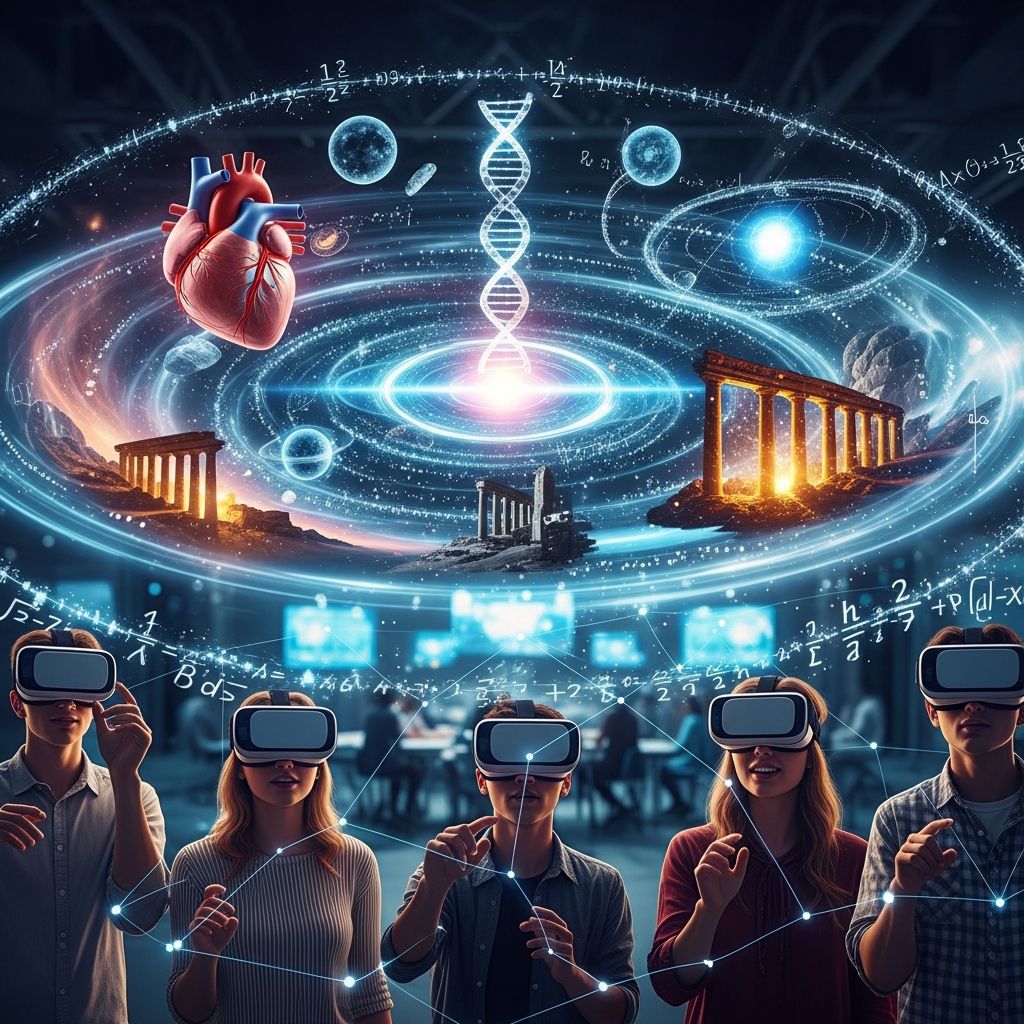
The landscape of educational experiences has undergone a dramatic transformation in recent years. What once required buses, budgets, and careful logistical planning can now happen seamlessly within classroom walls through technology. Virtual field trips represent one of the most significant innovations in modern education, fundamentally changing how students engage with curriculum content and discover the world beyond their textbooks.
Understanding the Virtual Field Trip Revolution
A virtual field trip is fundamentally an experiential learning journey conducted through digital technology and accessed from within a school or home environment. Unlike passive online learning, these expeditions leverage video conferencing, interactive online platforms, and immersive digital environments to deliver educational experiences that mirror—and often exceed—the value of traditional in-person field trips. Students can interact with content, ask questions of expert hosts, and explore at their own pace, creating a dynamic learning experience that adapts to individual needs and interests.
The evolution from classroom-based instruction to these hybrid learning models reflects a broader recognition that student engagement and retention improve dramatically when learners can actively participate in their education rather than passively receive information.
Democratizing Educational Access and Opportunity
One of the most transformative aspects of virtual field trips is their capacity to eliminate long-standing barriers to equitable education. Traditional field trips often remain inaccessible to many students due to transportation costs, admission fees, and logistical constraints that disproportionately affect schools in underfunded districts. These financial hurdles mean that students from lower-income families frequently miss out on crucial experiential learning that enriches their understanding and expands their worldview.
Virtual expeditions fundamentally restructure this equation. A single internet connection grants access to experiences that would otherwise require substantial travel and expense. Within a single school day, students can visit multiple destinations across the globe: touring cutting-edge research facilities, examining museum collections, exploring archaeological sites, and observing natural wonders—all without leaving their school building. This democratization ensures that a student’s ZIP code no longer determines the quality and breadth of their educational experiences.
Breaking Through Geographic and Physical Constraints
Beyond cost considerations, virtual field trips overcome physical limitations inherent in traditional excursions. Students can explore environments that are dangerous, inaccessible, or simply too distant for practical visits. A geology class might examine Mars rovers operating on an extraterrestrial surface. A biology class might observe cellular processes invisible to the naked eye. A history class might walk through ancient civilizations reconstructed with archaeological precision.
For students with mobility limitations, chronic health conditions, or anxiety disorders that make travel challenging, virtual field trips provide pathways to experiences previously unavailable to them. The inclusive nature of digital exploration means that every student, regardless of physical capability, can participate fully in these enriching learning opportunities.
Enhancing Cognitive Development and Learning Outcomes
Educational research increasingly demonstrates that virtual field trips produce measurable improvements in student learning. Studies reveal that students frequently achieve higher performance on comprehension assessments, demonstrate stronger retention of information, and develop more sophisticated skills when learning occurs within immersive virtual environments.
The mechanisms underlying these improvements are well-documented. Immersive experiences engage multiple sensory channels simultaneously, creating richer neural pathways for memory formation. When students can interact with learning material through embodied engagement—manipulating objects, navigating spaces, making real-time decisions—their brains process information more deeply than through passive observation alone. This active participation generates what educators call “presence,” the psychological sense of actually being within the learning environment, which correlates strongly with improved comprehension and knowledge transfer.
Fostering Executive Function and Cognitive Flexibility
Beyond immediate content mastery, virtual field trips cultivate broader cognitive capabilities essential for success in an interconnected world. When students navigate diverse environments, encounter different perspectives, and explore unfamiliar concepts, they develop what psychologists term “cognitive flexibility”—the mental agility to shift thinking patterns when confronting new information or perspectives. This adaptability has implications far beyond individual field trips, preparing students for the complex problem-solving demanded in higher education and professional contexts.
The self-directed nature of many virtual experiences also strengthens executive function skills. Students often control pacing and exploration pathways, making autonomous decisions about what to investigate and how deeply to examine particular elements. This autonomy builds agency and motivation, as learners experience genuine ownership of their educational journey.
Enriching Career Awareness and Professional Discovery
Virtual expeditions frequently incorporate exposure to professional environments and career pathways that students might never otherwise encounter. A visit to a biotechnology laboratory introduces the daily reality of scientific research. A tour of a journalism newsroom reveals how media organizations function. A virtual meeting with environmental scientists working on climate adaptation demonstrates career possibilities that connect personal interests to meaningful work.
This career exposure is particularly valuable for students from communities with limited professional networks. When young people can observe diverse career environments and interact with working professionals in various fields, they expand their conception of possible futures and develop more informed educational and career aspirations.
Pedagogical Flexibility and Curriculum Customization
Unlike standardized textbooks or rigid curriculum frameworks, virtual field trips offer remarkable adaptability to specific classroom contexts and student interests. Educators can select experiences aligned with current unit content, pause to address student questions, and adjust pacing based on observed engagement levels. Some virtual field trips feature live expert hosts who can respond dynamically to student inquiries, creating genuine dialogue rather than predetermined content delivery.
This flexibility enables teachers to personalize learning pathways. A classroom studying environmental science might pursue different virtual investigations depending on whether the learning focus is renewable energy, wildlife conservation, or climate systems. The same platform can serve radically different pedagogical objectives based on how educators utilize it.
Integrating Social-Emotional Learning Components
Many contemporary virtual field trips incorporate social-emotional learning elements that address growing recognition of students’ psychological and social development needs. These experiences can foster empathy by placing students in the perspectives of people from different cultures and circumstances. Collaborative elements encourage teamwork and communication skills. Guided reflection activities promote self-awareness and emotional regulation.
Practical Implementation and Resource Optimization
From an administrative perspective, virtual field trips offer significant advantages in resource allocation and logistical simplification. Schools eliminate transportation costs, admission fees, and the planning complexity associated with coordinating buses, managing student behavior in unfamiliar settings, and securing appropriate supervision ratios. These resources can be redirected toward other educational priorities while still providing enriched learning experiences.
The preparation burden also decreases substantially. Teachers need only ensure technological access and student readiness, without managing the extensive logistics traditional field trips demand. Post-experience follow-up activities also become more straightforward to coordinate when all students participate from the same location.
Technical Requirements and Infrastructure Considerations
Successful implementation requires reliable internet connectivity and appropriate devices, representing the primary technical barriers. Schools with limited broadband infrastructure or insufficient computer access may face challenges, though many districts are increasingly prioritizing these technological investments as recognition grows of their importance for educational equity. Alternatively, some schools balance virtual and in-person experiences, using virtual field trips for distant locations while allocating travel resources to important local opportunities.
Engagement, Motivation, and Learning Enthusiasm
Perhaps most compelling is the consistent finding that virtual field trips significantly elevate student engagement and intrinsic motivation to learn. The novelty and interactive nature of these experiences create classroom excitement that contrasts sharply with conventional instruction. Students report higher enjoyment levels and demonstrate increased attentiveness when participating in immersive virtual learning compared to traditional lectures or textbook-based instruction.
This elevated engagement produces cascading benefits. More motivated students exhibit improved attendance, demonstrate greater persistence with challenging content, and develop more positive attitudes toward academic learning generally. The enthusiasm generated by virtual field trips can reignite curiosity in students who have become disengaged from traditional classroom experiences.
Expanding Horizons Beyond Community Boundaries
Virtual field trips fundamentally expand students’ awareness of the broader world. Students from small towns or rural areas can explore major metropolitan centers, international landmarks, and diverse communities. This exposure fosters global awareness and cultural understanding, preparing students for citizenship in an interconnected world. The ability to virtually “travel” anywhere creates what many educators describe as a “sense of possibility”—the recognition that the world contains far more diversity, opportunity, and wonder than students might perceive from their immediate surroundings.
Comparison: Virtual and Traditional Field Trips
| Dimension | Virtual Field Trips | Traditional Field Trips |
|---|---|---|
| Cost | Minimal to moderate | High (transportation, admission, supervision) |
| Accessibility | Universal (internet access required) | Limited by geography and ability |
| Repetition | Multiple experiences in one unit | Typically single destination per year |
| Safety Concerns | Minimal to none | Travel-related and environmental risks |
| Expert Interaction | Global specialists available | Local or host-site personnel |
| Physical Engagement | Interactive digital manipulation | Real-world tactile experience |
| Flexibility | Fully customizable to curriculum | Predetermined itineraries |
Frequently Asked Questions
- What technology do students need to participate in virtual field trips?
- Most virtual field trips require internet access and a device such as a computer, tablet, or smartphone. Some immersive experiences use virtual reality headsets for enhanced engagement, though these are not typically required for basic participation.
- Can virtual field trips fully replace traditional field trips?
- Educational experts generally recommend a balanced approach. Virtual field trips effectively supplement in-person experiences, providing access to distant locations and specialized content. Local field trips offer irreplaceable tactile experiences and community connections that virtual visits cannot replicate.
- How much do virtual field trips cost schools?
- Many platforms offer virtual field trips at no cost or minimal subscription fees. Some specialized experiences may require payment, though costs typically remain significantly lower than traditional field trip expenses.
- Are virtual field trips effective for all age groups?
- Research indicates benefits across K-12 education, with particular effectiveness for middle and high school students. Early elementary students benefit from shorter, interactive experiences, while upper-level students can engage with more complex content.
- How do teachers prepare students for virtual field trips?
- Effective preparation includes establishing learning objectives, introducing relevant vocabulary, framing the experience within current curriculum units, and explaining interactive features students will encounter.
Future Developments in Virtual Educational Experiences
As technology continues advancing, virtual field trips are becoming increasingly sophisticated. Augmented reality applications overlay information onto real-world views. Artificial intelligence personalizes experiences to individual learning styles. Blockchain technology enables secure credential verification for specialized learning achievements. These developments promise even more engaging and educationally powerful experiences in coming years.
Conclusion: A Paradigm Shift in Educational Access
Virtual field trips represent far more than a technological novelty or temporary pandemic-era adaptation. They constitute a fundamental reimagining of how educational experiences can be delivered equitably to all students, regardless of economic circumstance, geographic location, or physical ability. By combining accessibility, affordability, and proven learning effectiveness, virtual expeditions democratize opportunities previously available only to privileged populations.
The most forward-thinking educational institutions are neither abandoning traditional field trips nor relying exclusively on virtual alternatives. Instead, they recognize that these modalities serve complementary purposes within comprehensive educational strategies. Virtual field trips provide broad access to global experiences and specialized content, while traditional excursions offer irreplaceable direct engagement with local communities and tactile learning opportunities. Together, they create learning environments that prepare students not just with knowledge, but with the cognitive flexibility, motivation, and global awareness necessary for thriving in an increasingly interconnected world.
References
- Leverage Virtual Field Trips to Engage Students in Authentic Learning Experiences — AVID Open Access. Accessed February 6, 2026. https://avidopenaccess.org/resource/leverage-virtual-field-trips-to-engage-students-in-authentic-learning-experiences/
- 10 Reasons Why Virtual Field Trips Benefit Students — Banyan Global Learning. August 8, 2022. https://banyangloballearning.com/2022/08/08/10-reasons-why-virtual-field-trips-benefit-students/
- Virtual Field Trips vs Traditional: Which is Better? — Professional Learning Board. Accessed February 6, 2026. https://professionallearningboard.com/virtual-field-trips/
- Educational, Engaging, Accessible: The Benefits of Virtual Field Trips — KaiXR. Accessed February 6, 2026. https://www.kaixr.com/post/benefits-of-virtual-field-trips
- Benefits of Taking a Virtual Field Trip in Immersive Virtual Reality — National Center for Biotechnology Information, U.S. National Library of Medicine. 2022. https://pmc.ncbi.nlm.nih.gov/articles/PMC9023331/

- Integrated M.A. in Applied Linguistics, University of Hyderabad
- 5+ years in editorial, instructional, SEO, and research-based writing
Sneha is a relationships and lifestyle writer with a strong foundation in applied linguistics and certified training in relationship coaching. She brings over five years of writing experience to theskillvault, crafting thoughtful, research-driven content that empowers readers to build healthier relationships, boost emotional well-being, and embrace holistic living. Her writing and insights reflect the belief that beauty, happiness, and wellness…