
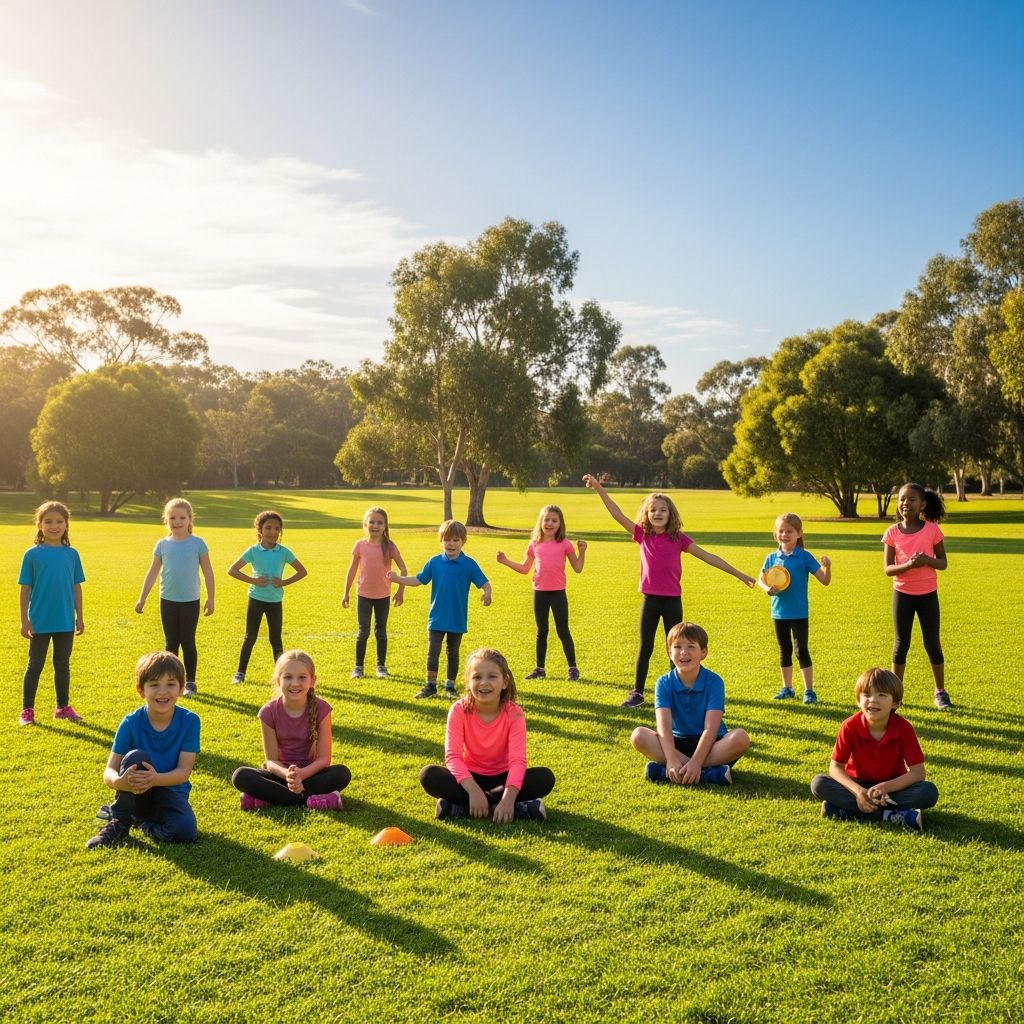
Online learning offers flexibility, but keeping children active is essential for their health and focus. The Centers for Disease Control and Prevention (CDC) recommends at least 60 minutes of daily physical activity for kids, a guideline echoed by the American Academy of Pediatrics. These 10 original outdoor PE activities are tailored for virtual school students, using everyday items in backyards or parks to foster fitness, teamwork, and skill-building.
Why Outdoor PE Matters for Online Students
Physical education isn’t just playtime—it’s crucial for developing motor skills, boosting mood through endorphins, and enhancing cognitive function for better learning. For homeschoolers or virtual academy enrollees, outdoor sessions combat screen fatigue and meet state-mandated PE credits. Simple setups ensure accessibility, regardless of group size or weather.
- Health Benefits: Improves cardiovascular health, strength, and flexibility.
- Social Gains: Encourages interaction in learning pods or family play.
- Educational Value: Teaches strategy, listening, and perseverance.
Activity 1: Agility Maze Challenge
Create a winding path using cones, ropes, or sidewalk chalk to test navigation and quick movements. Kids weave through the maze, incorporating jumps, crawls, and spins for full-body engagement. Start simple for beginners, adding timers for competition. This builds spatial awareness and lower-body strength, adaptable for solo or group play.
Activity 2: Command Relay
Designate a leader who calls out actions like ‘star jumps’ or ‘high knees’—players execute only if prefixed with a code word. Incorrect moves lead to fun penalties like extra laps. Perfect for listening skills and explosive power, this classic evolves with themes like animal movements for creativity.
Activity 3: Precision Target Throw
Set up buckets or marked zones at varying distances for tossing beanbags, balls, or socks. Score by color-coded targets to track progress. Enhances hand-eye coordination and accuracy; vary for ages by adjusting distances or adding wind challenges.
| Distance | Points | Suitable Age |
|---|---|---|
| 5 feet | 1 pt | 4-6 |
| 10 feet | 3 pts | 7-9 |
| 15 feet | 5 pts | 10+ |
Activity 4: Winter Ball Pitch
In cooler months, form soft snowballs or use lightweight balls to lob into hoops or at targets like trees. Increase difficulty by retreating farther. Promotes throwing technique and arm endurance, turning chilly days into active fun.
Activity 5: Boundary Ball Rally
Use a beach ball or lightweight volleyball over an imaginary line (drawn with chalk or string). Rally without letting it drop, scoring on ground hits. No net needed—ideal for small spaces and young kids developing volley skills.
Activity 6: Square Jump Grid
Draw a numbered grid on pavement with chalk. Toss a marker into a square, then hop through avoiding it, hopping single or double-footed. Retrieves marker on return. Timeless for balance and sequencing, solo-friendly with multiplayer turns.
Activity 7: Chase and Freeze
One ‘chaser’ tags others, who freeze in silly poses until freed by a tagged peer. Rotate roles frequently. Boosts cardio and creativity; variations include zone limits for safety.
Activity 8: Speed Dash Variations
From straight sprints to relays with carries (sponges soaked for water transfer, sacks for hopping). Dress warmly for winter. Elevates heart rates, teaching pacing and team relay tactics.
Activity 9: Hoop Hurdle Circuit
Lay hoops in a line; players jump in patterns (one/two feet, spins). Advance by passing extra hoops forward. Improves rhythm and agility.
Activity 10: Parachute Team Lift
With a large sheet or tarp, teams lift and maneuver a ball across, or shake to ‘volley.’ Add shoe hunts underneath for chaos. Fosters cooperation and core stability.
Adapting Games for All Seasons and Abilities
Modify for inclusivity: shorten distances for beginners, add helpers for motor challenges. Summer? Hydrate often. Winter? Layer up and warm up indoors first. Track progress with journals to motivate.
Integrating PE into Virtual School Schedules
Slot 30-60 minutes mid-morning or post-lunch. Log activities for credits. Combine with academics, like math in scoring.
Frequently Asked Questions (FAQs)
How much daily PE do online students need?
CDC guidelines suggest 60 minutes of moderate-to-vigorous activity daily for children aged 6-17.
What if we lack space or equipment?
Most use household items; small yards work with scaled versions.
Can these meet state PE requirements?
Yes, document time, activities, and reflections for portfolios.
Ideas for rainy days?
Shift indoors with jumping jacks or dance videos.
How to make it educational?
Incorporate counting, colors, or science (e.g., projectile motion).
References
- Physical Activity Guidelines for Americans, 2nd Edition — U.S. Department of Health and Human Services. 2018-11-15. https://health.gov/sites/default/files/2019-09/Physical_Activity_Guidelines_2nd_edition.pdf
- Physical Activity and Physical Education: Relationship to Growth, Development, and Health — National Academies Press (Institute of Medicine). 2013-10-31. https://nap.nationalacademies.org/catalog/18314/physical-activity-and-physical-education-relationship-to-growth-development-and-health
- School Health Guidelines to Promote Healthy Eating and Physical Activity — Centers for Disease Control and Prevention. 2023-09-12. https://www.cdc.gov/healthyschools/npao/pdf/MMWR-School-Health-Guidelines.pdf
- Active Healthy Development: Physical Activity Guidelines for Children & Adolescents — American Academy of Pediatrics. 2024-01-22. https://publications.aap.org/pediatrics/article/154/1/e2024066874/196686

Medha Deb is an editor with a master's degree in Applied Linguistics from the University of Hyderabad. She believes that her qualification has helped her develop a deep understanding of language and its application in various contexts. Medha specializes in the areas of beauty, health, sports, and wellness and is committed to ensuring that the content on the website is…