
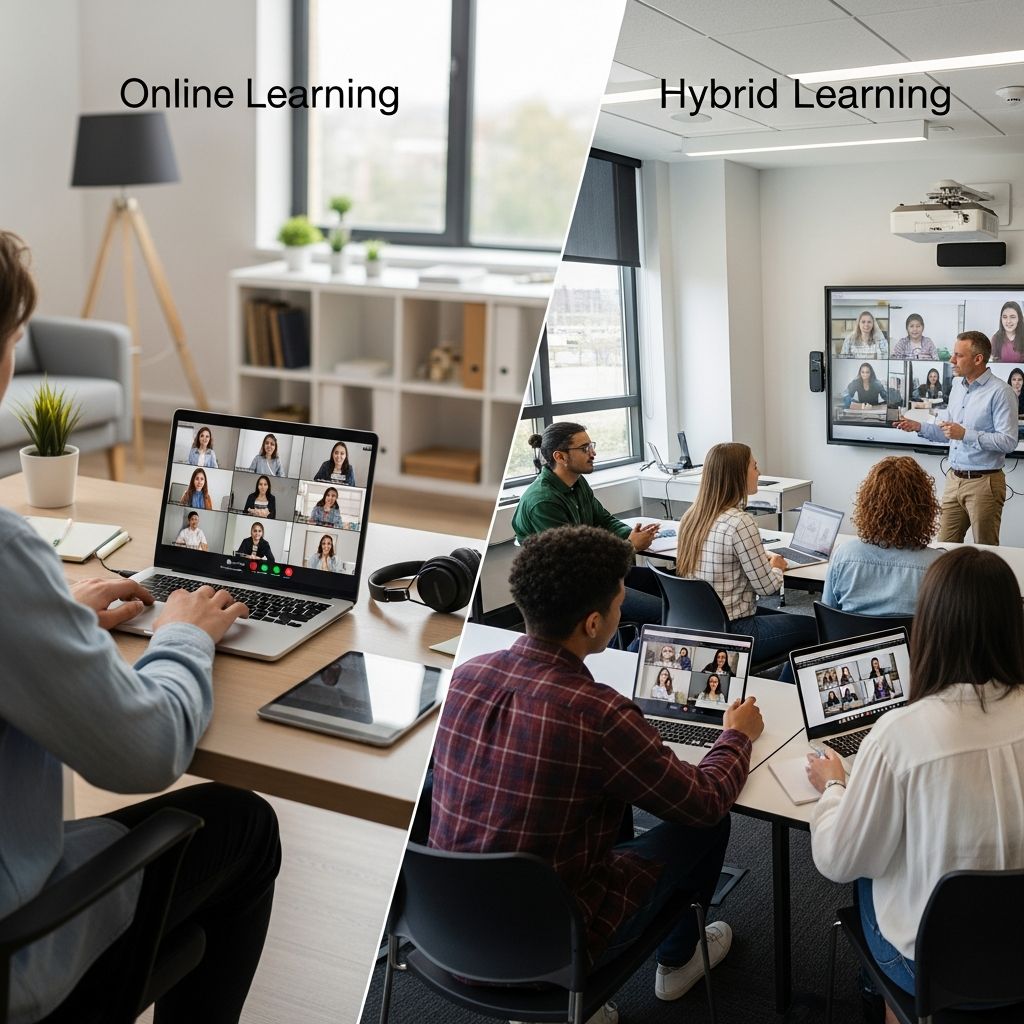
Fully online learning delivers education entirely through digital platforms, while hybrid learning combines scheduled in-person sessions with online components for a balanced approach. This comparison examines their structures, advantages, drawbacks, and ideal applications to help families and educators decide.
Defining the Core Models of Modern Education
Online learning operates 100% virtually, enabling access from any location without physical attendance. Students engage via video lessons, discussion forums, and digital assignments at their own pace. In contrast, hybrid learning integrates 25-50% in-person instruction with the rest online, requiring periodic campus visits alongside remote work.
These models emerged prominently post-pandemic, with over 55% of U.S. colleges now offering online or hybrid options, shifting from traditional full-time in-person formats. Hybrid setups provide structured face-to-face time, such as weekly lectures, complemented by self-directed online modules.
Flexibility and Scheduling: Tailoring to Life Demands
**Online learning excels in flexibility**, allowing students to study anytime, anywhere, ideal for those balancing jobs, family, or travel. No commuting saves time and costs, and self-paced progression suits varied schedules or time zones.
Hybrid learning offers **moderate flexibility**, with fixed in-person days (e.g., 1-2 per week) and flexible online portions. This suits students needing routine but some adaptability, though travel to sites is required.
| Aspect | Online Learning | Hybrid Learning |
|---|---|---|
| Schedule Control | Full (anytime access) | Partial (fixed in-person dates) |
| Location Needs | None (home/device-based) | Periodic site visits |
| Best For | Busy professionals, remote areas | Local students seeking balance |
Interaction with Teachers and Peers
Hybrid models shine in **direct engagement**, providing face-to-face teacher feedback, group activities, and immediate clarifications during in-person sessions. This builds stronger relationships and fosters community. Online relies on virtual tools like Zoom or forums, which can feel less personal and delay responses.
- Hybrid: Real-time discussions enhance understanding and motivation.
- Online: Email or recorded sessions limit spontaneity but allow rewatching.
Socialization is higher in hybrid due to physical presence, aiding emotional growth, while online offers virtual collaboration but fewer organic connections.
Personalized Learning and Pacing
Both support customization, but differently. Online emphasizes **self-paced paths**, catering to independent learners with access to vast resources like digital libraries. Visual or auditory students benefit from repeatable videos. Hybrid blends this with **guided in-person support**, accommodating collaborative types through group work and tailored advice.
Self-discipline is key for online success, building workplace skills, whereas hybrid’s structure boosts accountability via attendance. Studies show in-person elements increase engagement and retention.
Engagement, Feedback, and Outcomes
Hybrid enhances engagement through varied experiences—live demos, hands-on activities—combined with online tools. Feedback is swift in-person, aiding quick corrections. Online engagement depends on course design; asynchronous elements allow flexibility but risk lower motivation, with dropout rates of 40-80% noted in some programs.
Students report better understanding in structured settings with personal interaction. Hybrid mitigates online isolation by renewing focus during face-to-face time.
Technology Requirements and Accessibility
Both demand reliable internet and devices, but online requires constant access without backups like classroom computers. Hybrid provides on-site tech during visits, easing barriers for some. Rural or low-income students may favor hybrid if sites are local, though online expands options for remote areas.
Pros and Cons: A Balanced View
| Model | Pros | Cons |
|---|---|---|
| Online |
|
|
| Hybrid |
|
|
Which Model Suits Your Student?
Choose **online** for independent, schedule-variable learners thriving in digital environments. Opt for **hybrid** if social interaction, routine, or hands-on guidance is crucial—ideal for extroverts or those building discipline gradually. Consider learning styles: self-starters favor online; collaborative students prefer hybrid.
Programs like ASU Prep Digital highlight hybrid’s value for personalized support. Ultimately, align with goals—academic growth, career prep, or social development.
Frequently Asked Questions
What is the main difference between online and hybrid learning?
Online is 100% virtual; hybrid mixes in-person (25-50%) with online for balanced delivery.
Is hybrid learning better than fully online?
It depends: hybrid boosts interaction and engagement for many, but online offers superior flexibility.
Can hybrid classes build self-discipline?
Yes, combining structure with independent online work teaches accountability effectively.
How do these models accommodate different learning styles?
Online suits self-paced visual/auditory learners; hybrid supports social, hands-on types.
What tech is needed for success?
Reliable device and internet for both; hybrid adds travel to sessions.
Future Trends in Blended Education
Hybrid models are evolving with AI tools for personalized feedback and VR for immersive online sessions, bridging gaps further. Post-pandemic data shows sustained demand, with institutions refining hybrids for optimal engagement. Families should trial options where possible to match needs.
This analysis draws from educational trends, emphasizing informed choices for thriving in either model. (Word count: 1624)
References
- Hybrid Class vs Online: Choosing the Best for Your Student — ASU Prep Digital. 2023. https://www.asuprepdigital.org/blog/hybrid-class-vs-online/
- Online Learning vs Hybrid Learning — InterCoast Colleges. 2023. https://intercoast.edu/articles/online-learning-vs-hybrid-learning/
- The Differences between Hybrid and Blended Learning — Laurel Springs. 2023. https://laurelsprings.com/blogs/blended-vs-hybrid-learning/
- Pros and Cons of Synchronous, Asynchronous, and Hybrid Learning — Class.com. 2023. https://www.class.com/blog/the-benefits-and-drawbacks-of-synchronous-asynchronous-and-hybrid-online-learning/
- Remote and In-Person Learning: Utility Versus Social Experience — PMC (PubMed Central). 2022-12-20. https://pmc.ncbi.nlm.nih.gov/articles/PMC9769479/

Medha Deb is an editor with a master's degree in Applied Linguistics from the University of Hyderabad. She believes that her qualification has helped her develop a deep understanding of language and its application in various contexts. Medha specializes in the areas of beauty, health, sports, and wellness and is committed to ensuring that the content on the website is…