
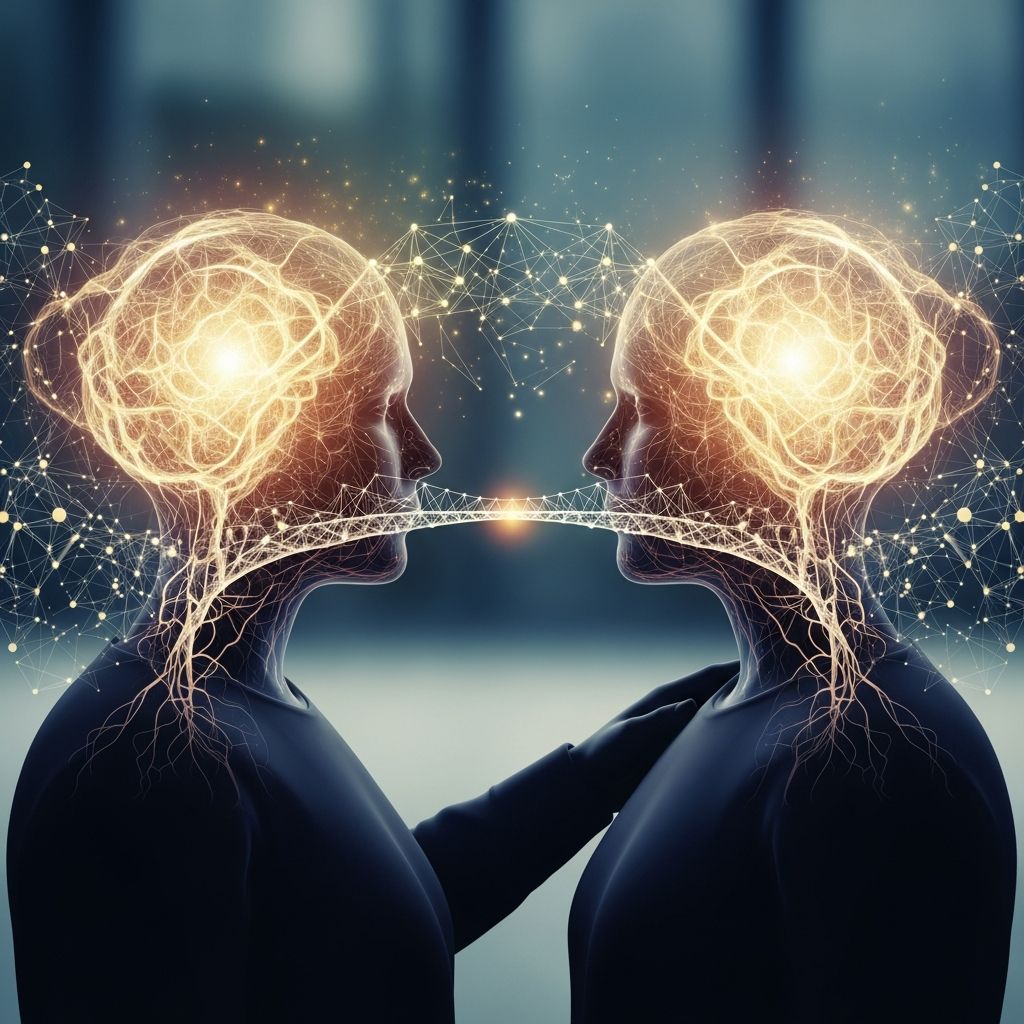
Empathy forms the cornerstone of effective interpersonal interactions, enabling individuals to connect deeply with others by grasping their emotions, thoughts, and motivations. This skill transcends mere sympathy, involving active efforts to perceive the world from another’s viewpoint, which fosters trust and collaboration in diverse settings.
The Foundations of Empathetic Understanding
At its core, empathetic understanding relies on recognizing that human behavior stems from a complex interplay of biological, psychological, and environmental factors. Genetics influence temperament and predispositions, while neurochemistry—such as levels of serotonin and dopamine—affects mood and decision-making. Personality traits, captured in models like the Big Five (extraversion, neuroticism, conscientiousness, agreeableness, openness), predict behavioral patterns and responses to stress.
Environmental shaping through conditioning further molds actions: classical conditioning links stimuli to responses, while operant conditioning uses rewards and punishments to reinforce behaviors. Cognitive processes, including beliefs and problem-solving, drive internal motivations, as outlined in cognitive theory. Humanistic perspectives emphasize self-actualization and personal growth as innate drives.
Why Empathy Drives Stronger Connections
Understanding others enhances social bonds by promoting cooperation and clear communication. Social behavior, rooted in theory of mind—the ability to attribute mental states to others—distinguishes human interactions. Nonverbal cues and paralanguage often convey more intent than words, modifying messages through physical and vocal signals.
In professional environments, such as healthcare, grasping human behavior in social contexts improves patient outcomes by addressing adherence barriers and interaction styles. This framework integrates individual traits with broader systems, aiding interprofessional coordination.
Core Techniques for Perceiving Emotions Accurately
Developing the ability to read emotions requires attention to subtle indicators. Facial expressions, posture, and tone reveal underlying feelings, often processed unconsciously where 95% of behaviors originate. Implicit tests measuring quick responses uncover hidden biases and automatic reactions.
- Facial Micro-Expressions: Brief flashes of true emotion, lasting milliseconds, signal authenticity versus masking.
- Postural Shifts: Open stances indicate receptivity; closed arms suggest defensiveness.
- Vocal Patterns: Pitch rises with anxiety; steady tones convey confidence.
Practice observing these in low-stakes settings to build intuition, drawing from physiological approaches that link behavior to neural networks.
Active Listening: The Gateway to Insight
Active listening involves fully concentrating, comprehending, and responding thoughtfully, moving beyond hearing words to capturing essence. It counters unconscious biases by encouraging paraphrasing and open-ended questions.
| Passive Listening | Active Listening |
|---|---|
| Interrupting or multitasking | Maintaining eye contact and nodding |
| Assuming understanding | Reflecting back: “It sounds like you’re feeling…” |
| Focusing on response | Seeking clarification with questions |
This technique aligns with behavioral analysis, identifying antecedents and consequences to influence positive change. In developmental contexts, it supports growth across lifespan stages, from Piaget’s cognitive phases to Erikson’s psychosocial milestones.
Decoding Nonverbal Communication Signals
Nonverbal cues comprise over half of message impact, encompassing body language, gestures, and proximity. Cultural variations affect interpretations—personal space norms differ globally—but universals like crossed arms signaling withdrawal persist.
Proxemics, or use of space, reveals comfort levels: intimate zones for close relations, social for acquaintances. Gestures like steepled fingers denote authority, while fidgeting betrays unease. Integrating these with verbal content prevents miscommunication, especially in multicultural teams.
Cultivating Perspective-Taking Abilities
Perspective-taking requires mentally stepping into another’s shoes, suspending judgments to explore their frame of reference. This counters egocentrism, enhanced through exercises like role-reversal scenarios.
- Imagine their background: Consider upbringing, experiences, and stressors.
- Ask exploratory questions: “What led to that view?”
- Avoid assumptions: Challenge personal filters shaped by your own genetics and environment.
Such practices leverage neuroplasticity, allowing brain adaptation via repeated exposure, ingraining empathetic habits.
Navigating Barriers to True Comprehension
Common obstacles include preconceptions, emotional triggers, and cultural gaps. Denial and self-sabotage arise from fear or misunderstanding, while stress amplifies neurotic traits.
To overcome:
- Self-Awareness: Reflect on biases using journaling.
- Patience: Allow time for trust-building.
- Validation: Acknowledge feelings before advising.
Relational Frame Theory aids by framing behaviors relationally, beyond simple conditioning.
Practical Applications in Daily Life
In relationships, empathy resolves conflicts by validating partners’ views. Parenting benefits from attuned responses to children’s developmental needs. Workplaces see improved teamwork via inclusive leadership that reads team dynamics.
Public health leverages HBSE for behavior change campaigns, targeting environmental influencers. Technology design incorporates user behavior insights for intuitive interfaces.
Building Lasting Empathetic Habits
Consistency transforms skills into automatic responses. Daily mindfulness sharpens awareness of unconscious processes. Feedback loops—seeking others’ perceptions of your understanding—refine abilities.
Long-term, this yields resilient social networks, reducing isolation and enhancing well-being. Studies affirm conscientious individuals excel in stress regulation through such traits.
Frequently Asked Questions (FAQs)
What is the difference between empathy and sympathy?
Empathy involves sharing and understanding feelings, while sympathy is feeling pity without deep comprehension.
How can I improve my active listening skills?
Practice paraphrasing, minimize distractions, and use nonverbal affirmations like nodding.
Why do nonverbal cues matter more than words?
They convey 55-93% of emotional content, revealing unspoken truths.
Can empathy be learned at any age?
Yes, neuroplasticity enables growth throughout life via deliberate practice.
How does culture affect understanding others?
It shapes norms for expression and space, requiring adaptive awareness.
References
- Understanding Human Behavior – A Physiological Approach — iMotions. 2023. https://imotions.com/blog/learning/best-practice/understanding-human-behavior/
- Human behavior — Wikipedia. 2024-02-01. https://en.wikipedia.org/wiki/Human_behavior
- Human Behavior in a Social Environment — NCBI StatPearls. 2023-08-14. https://www.ncbi.nlm.nih.gov/books/NBK574501/
- An Introduction to Behavioral Psychology — Rivier University. 2023. https://www.rivier.edu/academics/blog-posts/an-introduction-to-behavioral-psychology/
- How to study human behavior — Noldus. 2023. https://noldus.com/blog/how-to-study-human-behavior
- Understanding Human Behavior — MentalHealth.com. 2023. https://www.mentalhealth.com/blog/understanding-human-behavior

- Integrated M.A. in Applied Linguistics, University of Hyderabad
- 5+ years in editorial, instructional, SEO, and research-based writing
Sneha is a relationships and lifestyle writer with a strong foundation in applied linguistics and certified training in relationship coaching. She brings over five years of writing experience to theskillvault, crafting thoughtful, research-driven content that empowers readers to build healthier relationships, boost emotional well-being, and embrace holistic living. Her writing and insights reflect the belief that beauty, happiness, and wellness…