
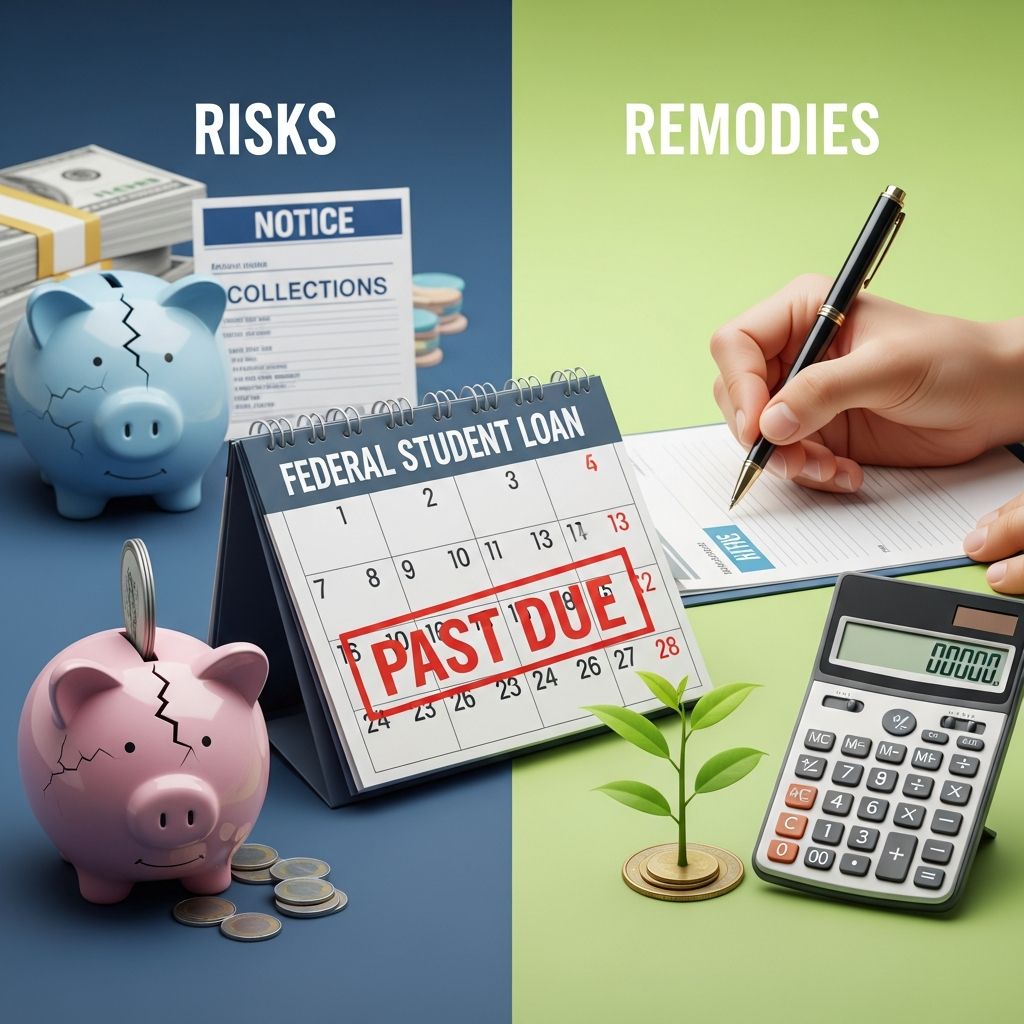
Federal student loans offer flexible repayment options, but missing payments triggers a series of escalating consequences that can harm your credit, finances, and future borrowing ability. Understanding this timeline—from initial delinquency to full default—empowers borrowers to act quickly and explore relief programs before irreversible damage occurs.
The Payment Timeline: From Delinquency to Default
Federal student loans enter delinquency the moment a payment is missed, even by one day. Servicers immediately flag the account and begin sending notifications to encourage prompt payment. This early stage provides a window to resolve issues without long-term harm.
- Day 1 Late: Account marked delinquent; reminders sent via email, mail, or phone.
- 30 Days Late: Potential late fees apply for certain older loans, up to 6% of the missed amount. Direct Loans post-2010 typically waive these.
- 90 Days Late: Delinquency reported to major credit bureaus (Equifax, Experian, TransUnion), impacting credit scores significantly—potentially by 150+ points.
- 270 Days Late: Loan enters default status, accelerating all penalties.
This progression underscores the urgency: early intervention prevents credit reporting and severe enforcement actions.
Immediate Financial Penalties and Fees
Beyond delinquency status, late payments incur direct costs. For Federal Family Education Loan Program (FFELP) loans held commercially, servicers can charge fees up to 6% of the principal and interest due—for a $300 payment, that’s $18 per instance. Newer Direct Loans avoid these fees, but capitalization of unpaid interest increases the total balance over time.
| Time Late | Federal Direct Loans | FFELP/Commercial Loans |
|---|---|---|
| 0-29 Days | No fee; delinquency noted | Possible fee up to 6% |
| 30-89 Days | Interest accrues | Late fee + interest |
| 90+ Days | Credit report impact | Credit report + fees |
These fees compound quickly, especially if multiple payments are missed, turning a manageable debt into a mounting burden.
Credit Score Damage: A Long-Term Hit
After 90 days, servicers report delinquencies, staining credit reports for seven years. This lowers scores dramatically, complicating rentals, new credit, or employment background checks. A 2025 New York Fed analysis highlights drops exceeding 150 points from prolonged lates. Recovery requires consistent on-time payments post-resolution, but the mark lingers.
Default Consequences: Severe Enforcement Actions
Default hits at 270 days (about 9 months) of non-payment, making the full balance—including principal, interest, and fees—due immediately. The U.S. Department of Education then activates aggressive collection tools without court orders.
- Wage Garnishment: Up to 15% of disposable income seized directly from paychecks. Employers must comply.
- Tax Refund Offset: Federal refunds intercepted via Treasury Offset Program.
- Loss of Aid Eligibility: Ineligible for future federal loans, grants, or work-study.
- Collections and Litigation: Account referred to agencies; potential lawsuits.
These measures persist until rehabilitation or consolidation resolves the default.
Federal vs. Private Loans: Key Differences
While this guide focuses on federal loans, private loans accelerate consequences. They may report lates after 30 days and default after 90-120 days, with variable fees (flat or percentage-based). Federal loans provide more protections and relief paths, making them preferable for struggling borrowers.
| Aspect | Federal Loans | Private Loans |
|---|---|---|
| Late Fee Timing | 30 days (select loans) | Often immediate |
| Credit Reporting | 90 days | 30 days |
| Default Timeline | 270 days | 90-120 days |
| Garnishment | No court needed | Court order required |
Preventing Escalation: Proactive Strategies
Borrowers facing hardship should contact servicers immediately. Options include:
- Income-Driven Repayment (IDR) Plans: Cap payments at 10-20% of discretionary income; forgiveness after 20-25 years.
- Deferment: Pauses payments for unemployment, school, or economic hardship—no interest on subsidized loans.
- Forbearance: Temporary payment suspension; interest accrues on all loans.
- Loan Rehabilitation: Nine on-time payments to exit default, restoring aid eligibility.
Autopay enrollment often yields a 0.25% interest rate reduction, aiding timely payments.
Steps to Recover from Delinquency
- Assess Status: Log into StudentAid.gov for account details.
- Contact Servicer: Negotiate payment plans or hardship options.
- Apply for Relief: Submit IDR applications online.
- Rehabilitate if Defaulted: Make affordable voluntary payments for 9 months.
- Consolidate: Combine loans into a Direct Consolidation Loan to freshen payment history.
Acting within the first 90 days maximizes options before credit reporting.
Real-World Impacts: Stories and Statistics
Millions grapple with repayment; in 2025, delinquency rates hovered amid economic pressures. Defaulted borrowers face average $30,000+ balances with lifelong credit hurdles. Proactive users of IDR see 70% lower default risk, per federal data.
Frequently Asked Questions (FAQs)
What counts as a late federal student loan payment?
Any payment not received by the due date marks the loan delinquent, starting the clock on penalties.
How long until a missed payment hurts my credit?
Federal servicers report after 90 days of delinquency.
Can I avoid default after 270 days?
Yes—rehabilitation or consolidation removes default status.
Does missing one payment ruin my credit forever?
No; it reports after 90 days but ages off after 7 years with good history rebuilding.
Are there grace periods for federal loans post-graduation?
Yes, typically 6 months before repayment begins.
Long-Term Financial Planning Tips
To safeguard against future lates, budget with apps tracking due dates, build emergency funds covering 3-6 months of payments, and refinance only after establishing solid credit. Regular servicer check-ins ensure alignment with life changes like job shifts.
Federal student loans’ flexibility—unlike private debt—means recovery is viable. Prioritize communication and official channels for sustainable repayment.
References
- What Happens If You Miss a Student Loan Payment? — NerdWallet. 2025. https://www.nerdwallet.com/student-loans/learn/missed-student-loan-payment
- What Happens If You Don’t Pay Your Student Loans? — College Ave. 2025. https://www.collegeave.com/articles/what-happens-if-you-dont-pay-your-student-loans/
- What Happens If You Don’t Pay Your Student Loans? — Sallie Mae. 2025. https://www.salliemae.com/blog/not-paying-student-loans-back/
- What Happens if I Miss a Student Loan Payment? — SoFi. 2025. https://www.sofi.com/learn/content/missing-a-student-loan-payment/
- Consequences of Defaulting on a Federal Direct Loan — Springfield College (.edu). 2025. https://springfield.edu/financial-aid/loan-programs/defaulting
- How Falling Behind on Student Loan Payments Can Impact You — ELFI. 2025. https://www.elfi.com/how-falling-behind-on-student-loan-payments-can-impact-you/
- What happens if I don’t pay back my student loan? — Federal Student Aid (.gov). 2025. https://studentaid.gov/help-center/answers/article/what-happens-if-i-do-not-pay-back-student-loan

- Integrated M.A. in Applied Linguistics, University of Hyderabad
- 5+ years in editorial, instructional, SEO, and research-based writing
Sneha is a relationships and lifestyle writer with a strong foundation in applied linguistics and certified training in relationship coaching. She brings over five years of writing experience to theskillvault, crafting thoughtful, research-driven content that empowers readers to build healthier relationships, boost emotional well-being, and embrace holistic living. Her writing and insights reflect the belief that beauty, happiness, and wellness…