
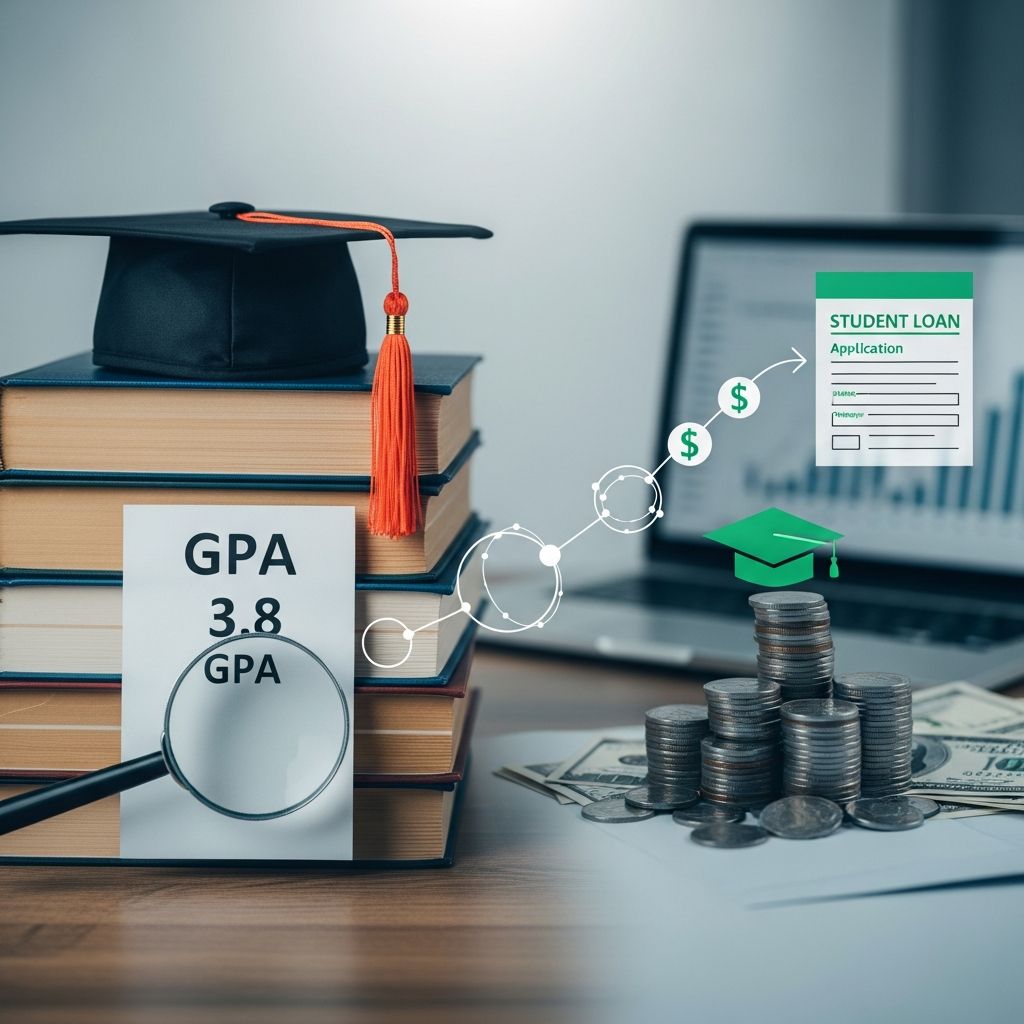
Your academic performance plays a pivotal role in higher education financing, but its direct influence on student loans varies by type. While federal loans prioritize financial need over grades for initial approval, maintaining a minimum GPA ensures ongoing eligibility through Satisfactory Academic Progress (SAP) standards. Private loans sidestep GPA almost entirely, focusing instead on creditworthiness.
Understanding Federal Student Loans and Academic Thresholds
Federal student loans, accessed via the Free Application for Federal Student Aid (FAFSA), do not use high school or initial college GPA as a barrier to entry. Eligibility hinges on factors like citizenship, enrollment status, and family income. However, once enrolled, a cumulative GPA below 2.0 typically triggers SAP reviews, potentially suspending aid disbursement.
SAP encompasses three pillars: GPA maintenance, credit completion pace (often 67% of attempted credits), and maximum timeframe (150% of program length). Institutions evaluate these termly. Falling short places students on warning status for one term, after which suspension looms without improvement.
- GPA Minimum: Undergraduates need 2.0; graduates often 3.0.
- Pace Requirement: 67% completion rate sustains progress toward degree.
- Timeframe Limit: Exceeding 150% attempted credits ends aid eligibility.
For instance, failing classes drops GPA and pace, risking aid loss. Transfer credits count toward pace but not always GPA, complicating calculations.
How Poor Grades Trigger Financial Aid Disruptions
A single failed class may not derail aid if prior performance buffers GPA above 2.0. Multiple failures, however, invite probation and suspension. During warning periods, aid continues, but subsequent shortfalls demand appeals or academic plans.
Appeals succeed with documented mitigating circumstances like illness or family issues, paired with probationary plans requiring, say, term GPAs of 2.25+ and full credit completion. Limited to three appeals per degree, failure resets to self-recovery: hit SAP standards independently.
| SAP Status | Consequences | Recovery Path |
|---|---|---|
| Warning | Aid continues one term | Meet standards next evaluation |
| Suspension | No aid; appeal needed | Approved appeal or raise GPA/pace |
| Max Timeframe | Automatic suspension | Appeal only if degree completable |
State programs like HOPE/Zell Miller integrate SAP, recalculating on grade changes and counting all post-high-school attempts.
Private Student Loans: Grades Take a Backseat
Unlike federal aid, private lenders emphasize credit score, debt-to-income ratio, and income over GPA. Low grades rarely disqualify outright unless signaling broader risks, but cosigners often bridge gaps for those with thin credit histories.
Shop lenders via platforms comparing rates without hard credit pulls. Federal loans remain preferable for fixed rates, income-driven repayment, and forgiveness absent in private options.
Beyond Loans: GPA’s Ripple Effects on Other Aid
Scholarships and grants demand “satisfactory progress,” often mirroring SAP with GPA floors. Merit awards favor high achievers; slipping below thresholds prompts repayment or cancellation.
- Grants (Pell): SAP suspension halts future disbursements.
- Scholarships: Merit-based ones tie directly to GPA benchmarks.
- Work-Study: Federal portion requires SAP compliance.
High GPAs unlock competitive scholarships, indirectly easing loan reliance.
Strategies to Safeguard Loan and Aid Eligibility
Proactive steps mitigate GPA risks:
- Monitor Progress: Track cumulative GPA and pace via student portals quarterly.
- Seek Support Early: Tutoring, advising prevent minor dips from escalating.
- Appeal Wisely: Gather evidence for one-term probation plans.
- Retake Courses: Both original and repeat count toward pace; grades average for GPA.
- Diversify Aid: Apply for scholarships insulating against SAP issues.
Reinstating eligibility post-suspension demands raising GPA to 2.0+ and 67% pace within timeframe, or successful appeal.
Common Pitfalls and How to Avoid Them
Withdrawals count as attempted but unearned credits, eroding pace. Incompletes delay evaluations until resolved. Major changes extend timeframes but risk pace shortfalls if credits don’t transfer fully.
Academic probation precedes SAP suspension; address root causes swiftly to avert both.
Frequently Asked Questions (FAQs)
Can I get federal loans with a low high school GPA?
Yes, FAFSA ignores high school GPA for initial federal loans. College SAP governs ongoing access.
What if I fail one class on financial aid?
Impact depends on overall GPA/pace. One failure often survivable; multiples trigger warnings.
Do private loans check GPA?
Rarely; credit and income dominate. Cosigners help poor-credit applicants.
How do I regain suspended aid?
Raise GPA to minimum, hit pace, or win appeal with academic plan. Max three appeals.
Does transferring schools reset SAP?
No; prior attempts carry over for pace/timeframe, though GPA may recalculate.
Planning Ahead: Balancing Academics and Finances
Integrate academic and financial strategies from freshman year. Regular FAFSA renewals, scholarship hunts, and grade checks form a robust safety net. When loans prove necessary, prioritize federal for protections, supplementing with private only as needed.
Poor grades challenge but don’t doom funding prospects. Consistent effort sustains eligibility, minimizing debt while maximizing opportunities.
References
- Does Your GPA Affect Your Fed Student Loan? | College Raptor — College Raptor. 2023. https://www.collegeraptor.com/paying-for-college/articles/questions-answers/does-your-gpa-affect-your-student-loans/
- Satisfactory Academic Progress Policy | Financial Aid — Georgia Tech Financial Aid. 2024-2025. https://finaid.gatech.edu/manage-aid/academic-progress
- Can I get a student loan if I have poor grades? – CollegeVine — CollegeVine. 2023. https://www.collegevine.com/faq/5517/can-i-get-a-student-loan-if-i-have-poor-grades
- Do Grades Affect My FAFSA Eligibility? – Fastweb — Fastweb. 2023. https://www.fastweb.com/financial-aid/articles/do-grades-affect-my-fafsa-eligibility
- What Happens if You Fail a Class With Financial Aid | BestColleges — BestColleges. 2024. https://www.bestcolleges.com/student-finance/fail-class-with-financial-aid/
- School-Determined Requirements | 2024-2025 Federal Student Aid Handbook — U.S. Department of Education FSAPartners. 2024-07-01. https://fsapartners.ed.gov/knowledge-center/fsa-handbook/2024-2025/vol1/ch1-school-determined-requirements

Medha Deb is an editor with a master's degree in Applied Linguistics from the University of Hyderabad. She believes that her qualification has helped her develop a deep understanding of language and its application in various contexts. Medha specializes in the areas of beauty, health, sports, and wellness and is committed to ensuring that the content on the website is…