
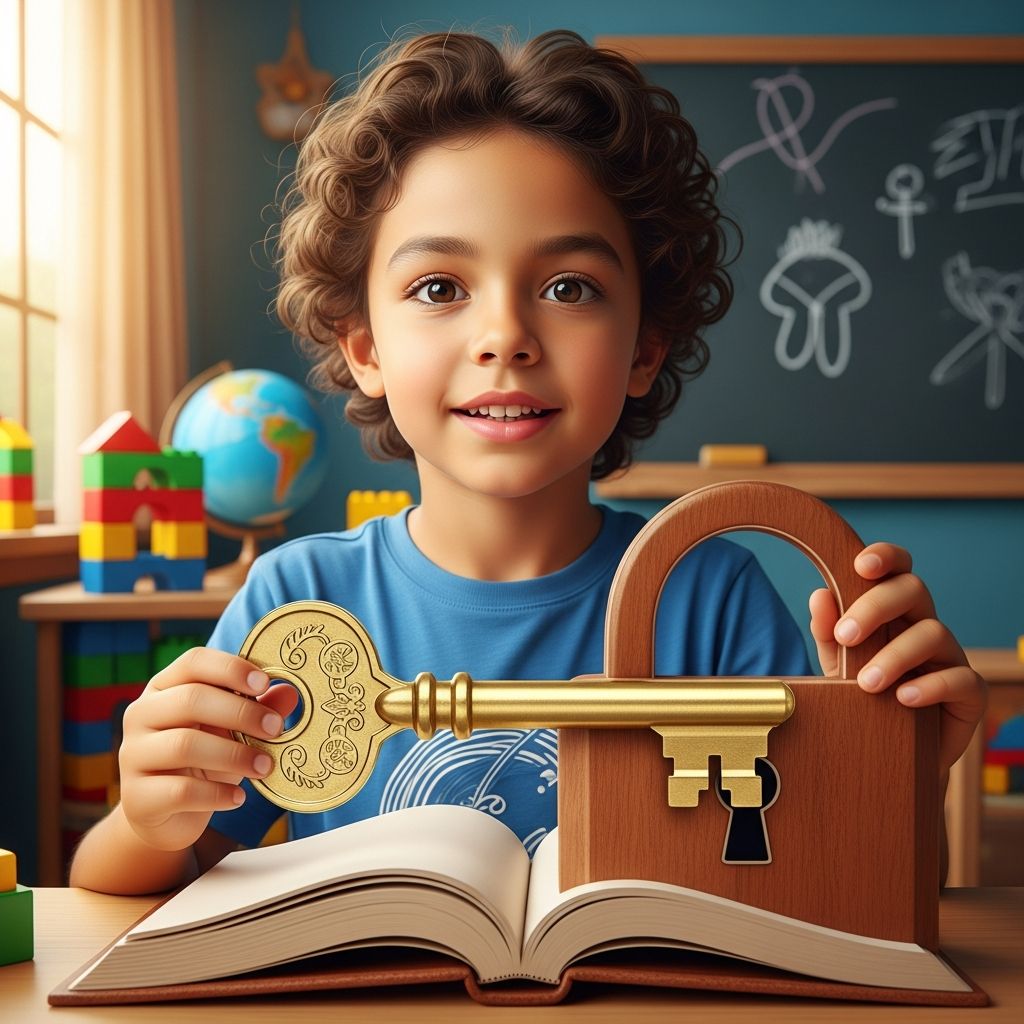
Riddles serve as powerful tools for elementary students, fostering essential cognitive skills through playful puzzles that encourage deep thinking and creativity. By integrating riddles into daily learning, parents and educators can make education more engaging while building foundational abilities like logic and comprehension.
The Cognitive Power of Riddles in Early Education
Riddles challenge children to interpret clues, draw connections, and arrive at solutions, promoting functional thinking that links new concepts to prior knowledge. This approach prepares students for advanced math like algebra by developing pattern recognition and relational reasoning early on. Research highlights how such activities enhance persistence and confidence, turning potential frustration into triumphant discovery.
In classrooms and homes, riddles shift focus from rote memorization to active problem-solving, making learning feel like an adventure. They build resilience as children learn to revise ideas and collaborate, skills vital for lifelong success.
Boosting Language and Literacy Through Wordplay
Word-based riddles strengthen phonics, vocabulary, and reading comprehension by requiring kids to analyze sounds, rhymes, and meanings simultaneously. For instance, puzzles involving “hink pinks”—two-syllable rhymes—help young learners grasp spelling-sound relationships.
- Vocabulary Expansion: Children encounter and deduce new words, enriching their lexicon naturally.
- Comprehension Skills: Rereading clues for hidden meanings improves close reading and inference.
- Metalinguistic Awareness: Kids reflect on language structure, aiding spelling and grammar mastery.
These activities are particularly effective for early elementary grades, where simple riddles build listening and verbal skills during group sessions.
Enhancing Math Proficiency with Numerical Puzzles
Math riddles apply arithmetic and geometry in contextual scenarios, reinforcing concepts beyond drills. They demand logical reasoning, blending calculation with strategy to solve for unknowns.
| Math Topic | Riddle Example | Skill Targeted |
|---|---|---|
| Place Value | “I have 3 tens and 5 ones. What number am I?” (35) | Numerical decomposition |
| Geometry | “Four equal sides, angles not right. What am I?” (Rhombus) | Shape properties |
| Fractions | “Half of twelve, twice that is?” (12, since half of 12 is 6, twice 6 is 12) | Operations application |
Such puzzles make abstract ideas tangible, improving fluency and problem-solving for grades 3-5.
Fostering Creativity and Imagination
Riddles spark lateral thinking, encouraging unconventional solutions that nurture creativity essential for science and arts. By associating unrelated ideas, children develop imaginative links, as noted by educators linking riddles to classroom joy and engagement.
- Imagination boosts: Puzzles prompt visualization of scenarios.
- Emotional benefits: Success builds self-esteem and optimism.
Creativity flourishes in team settings, where debating answers hones communication.
Critical Thinking and Problem-Solving Mastery
At the heart of riddles is critical analysis: dissecting clues, testing hypotheses, and justifying answers. This mirrors scientific methods, teaching persistence and strategy.
For upper elementary students, complex riddles stretch reasoning, promoting debate and explanation—key for abstract thought in later grades. Parents report stronger family bonds through shared solving, mastering question-asking for clarity.
Social and Emotional Growth via Collaborative Play
Group riddles cultivate teamwork, turn-taking, and empathy as peers negotiate solutions. They enhance social skills, reducing anxiety around mistakes in a game-like format.
- Confidence surge: Correct answers foster pride.
- Better relationships: Collaborative wins build trust.
Even independent work teaches self-reliance, with journals tracking thought processes for reflection.
Tailoring Riddles for Different Grade Levels
Adaptability makes riddles ideal for differentiation, scaling complexity to match abilities.
Kindergarten to Grade 2: Building Basics
Picture-supported riddles focus on listening and simple logic, like “What has keys but can’t open locks?” (Piano). Benefits include early inference and sharing confidence.
Grades 3 to 5: Deepening Challenges
Logic puzzles like “I speak without a mouth and hear without ears. I have no body, but I come alive with the wind. What am I?” (Echo) hone comprehension and math ties.
Extension for Advanced Learners
Multi-step riddles with timers add competition, preparing for middle school rigor.
Practical Integration Strategies for Home and School
Incorporate riddles seamlessly for maximum impact.
- Morning Warm-Ups: Start days with one riddle to activate brains.
- Lesson Transitions: Use subject-linked puzzles for smooth shifts.
- Homework Alternatives: Assign riddle sets over worksheets for fun practice.
- Riddle Journals: Log solutions and reasoning to track growth.
- Family Nights: Team challenges strengthen bonds.
Visual aids or apps enhance accessibility for diverse learners.
20 Engaging Riddles for Elementary Practice
Here’s a curated set, grouped by focus.
Vocabulary Builders
- What gets wetter as it dries? (Towel)
- I have cities but no houses. What am I? (Map)
- What has a head, a tail, but no body? (Coin)
Math Mind-Benders
- I’m tall when young, short when old. What am I? (Candle—links to measurement)
- What has hands but can’t clap? (Clock)
Logic Challenges
- What can travel around the world while staying in a corner? (Stamp)
- What has one eye but can’t see? (Needle)
- I’m light as a feather, but the strongest person can’t hold me for long. What am I? (Breath)
Creativity Sparks
- What can you catch but not throw? (Cold)
- What has roots nobody sees, is taller than trees, up it goes yet never grows? (Mountain)
- I’m always hungry, I must be fed. The finger I touch will soon turn red. (Fire)
Expand with themes tied to curriculum for relevance.
Measuring Success: Tracking Riddle Impact
Observe improved focus, quicker clue analysis, and voluntary rereading as signs of growth. Surveys or journals reveal confidence gains; pair with assessments for data.
Common Challenges and Solutions
| Challenge | Solution |
|---|---|
| Frustration from difficulty | Provide hints or scale down |
| Lack of engagement | Gamify with points/teams |
| Time constraints | Use short daily doses |
FAQs: Riddles in Elementary Learning
Q: Do riddles really improve test scores?
A: Yes, by enhancing comprehension and reasoning, leading to better retention and application.
Q: How often should we use riddles?
A: 3-5 times weekly, 10-15 minutes, for sustained benefits without overload.
Q: Are digital riddle tools effective?
A: They boost interactivity; combine with offline for balanced development.
Q: Can riddles help struggling readers?
A: Absolutely, through repeated reading and phonetic play.
Q: What’s the best age to start?
A: Kindergarten, with visuals scaling up complexity.
References
- 6 Ways to Use Riddles to Enhance Your Teaching — Reading and Writing Redhead. 2023. https://readingandwritingredhead.com/riddles/
- How These 25 Riddles Can Help Your Elementary Student — Connections Academy. 2023. https://www.connectionsacademy.com/support/resources/article/how-25-riddles-can-help-your-elementary-student/
- How Riddles Help Kids Learn | Benefits of Riddles for Children — Riddles.com. 2024. https://www.riddles.com/blog/89/benefits-of-riddles
- The Benefits of Riddles in Education — Smile and Learn. 2023. https://www.smileandlearn.com/en/the-benefits-of-riddles-in-education/
- Riddles – The Way of Fostering Your Children’s Thinking — Novak Djokovic Foundation. 2022. https://novakdjokovicfoundation.org/riddles-the-way-of-fostering-your-childrens-thinking/
- Discover How Riddles Can Improve Your Child’s Creativity — Connections Academy. 2023. https://www.connectionsacademy.com/support/resources/article/discover-how-riddles-can-improve-your-childs-creativity/
- Teaching Metalinguistic Awareness and Reading Comprehension with Riddles — Reading Rockets. 2023. https://www.readingrockets.org/topics/comprehension/articles/teaching-metalinguistic-awareness-and-reading-comprehension-riddles

- Integrated M.A. in Applied Linguistics, University of Hyderabad
- 5+ years in editorial, instructional, SEO, and research-based writing
Sneha is a relationships and lifestyle writer with a strong foundation in applied linguistics and certified training in relationship coaching. She brings over five years of writing experience to theskillvault, crafting thoughtful, research-driven content that empowers readers to build healthier relationships, boost emotional well-being, and embrace holistic living. Her writing and insights reflect the belief that beauty, happiness, and wellness…