
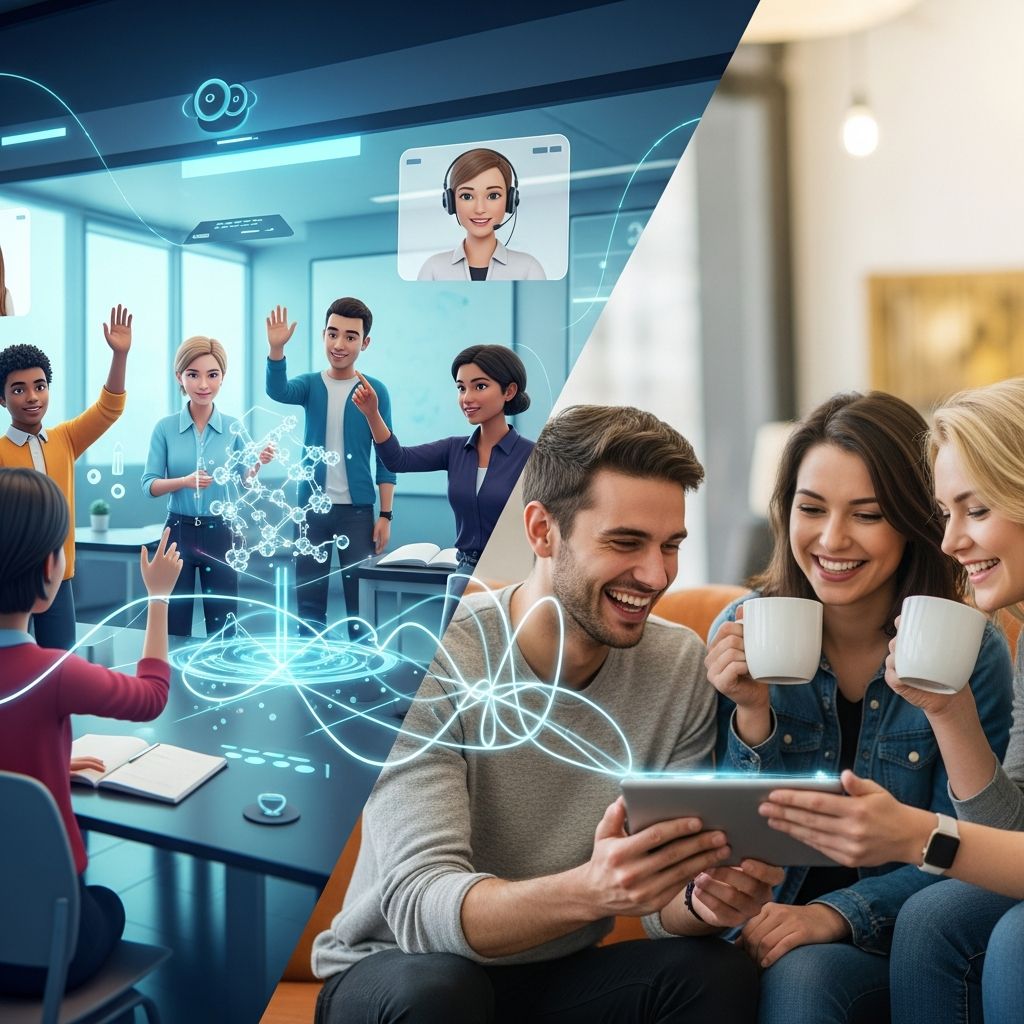
A widespread misconception suggests that students in virtual learning environments lack opportunities to develop crucial interpersonal abilities. However, research and educational practice demonstrate that remote learning can provide robust pathways for building social competence, confidence, and meaningful relationships. Understanding how virtual education fosters social development helps parents and educators create intentional opportunities for students to thrive socially while pursuing academic goals.
Understanding the Foundation of Social Development
Social competence begins developing long before formal schooling starts. Young children acquire foundational abilities through family interactions, gradually learning to share, take turns, and navigate basic social conventions. As children mature, their social repertoire expands to include conversational skills, emotional regulation, and the ability to function effectively within group settings. These early foundations create the psychological framework that enables adolescents and young adults to manage complex peer relationships, resist negative influences, and maintain authentic connections across diverse social contexts.
A strong social foundation provides more than just popularity or comfort in social situations. It equips individuals with the confidence to remain true to their values when facing pressure, the resilience to navigate conflict constructively, and the flexibility to adapt their behavior appropriately across different environments. Students with developed social skills can read social cues, interpret the unstated expectations of various peer groups, and modify their approach without compromising their integrity.
The Five Primary Sources of Social Learning
Contrary to the assumption that schools represent the primary venue for social development, research in social development identifies five distinct contexts where young people learn interpersonal skills. Recognizing these multiple pathways helps parents optimize their child’s social experiences regardless of educational setting.
- Family environments where children first practice cooperation, respect, and emotional expression
- Peer groups and friendship circles that provide experiential learning in negotiation and belonging
- Community organizations and volunteer settings that build teamwork and leadership
- Extracurricular activities and clubs that connect individuals around shared interests
- Educational institutions where formal instruction and incidental learning reinforce social competencies
This framework reveals that virtual students can access social learning opportunities across all five domains by intentionally engaging with each source. The flexibility of remote education often allows students to participate more extensively in community, extracurricular, and volunteer activities than traditionally schooled peers.
How Virtual Classrooms Facilitate Social Interaction
Modern online schools employ multiple mechanisms to create dynamic social learning environments. Live virtual classes enable real-time interaction between students and instructors, establishing ongoing relationships and collaborative learning experiences. Students participate in synchronized discussions, group projects, and peer feedback activities that mirror many social benefits of traditional classrooms.
One particularly valuable aspect of virtual education involves developing the competency to ask for help and advocate for oneself. When remote learners recognize they need assistance, they must actively communicate this need through email, chat, or synchronous meetings. This skill—identifying when to request support and how to articulate that request clearly—represents a critical social competency that extends far beyond academics. Students who master this ability develop confidence in their voice and agency, recognizing that seeking help demonstrates wisdom rather than weakness.
Collaborative group work in virtual settings teaches students to navigate group dynamics, negotiate different perspectives, and coordinate tasks across digital platforms. These experiences directly address social-emotional learning objectives, building understanding of how individuals function interdependently within larger systems. Students learn practical leadership skills, conflict resolution approaches, and the dynamics of collaborative decision-making.
In-Person Field Experiences and Real-World Connection
Many virtual school programs incorporate in-person field trips and community events that bridge digital and physical interaction. These gatherings transform online classmates into three-dimensional peers, enabling students to practice transitioning between digital and face-to-face communication modalities. The sustained relationships built online provide a foundation of familiarity that makes in-person meetings less intimidating and more productive.
Field experiences offer unstructured social time during travel, meals, and breaks—moments where informal friendship development occurs naturally. Students discover shared interests beyond academics, discover personality dimensions not evident through a screen, and create lasting memories that deepen peer bonds. For virtual learners, these occasional in-person gatherings often feel more intentional and special than daily hallway encounters in traditional schools.
Leveraging Digital Tools for Social Connection
Parents educated in traditional school environments sometimes view screen-based communication with skepticism, equating technology use with social isolation. Contemporary reality reveals a more nuanced picture. Digital platforms enable safe, supervised social interaction that extends peer connection beyond school hours. A group of elementary or middle school students participating in an online game within a controlled, private communication space experiences genuine social engagement—practicing conversation, negotiating rules, managing emotions during competition, and developing friendships.
Online gaming and digital recreation serve important social functions for remote learners. Competitive gaming scenarios require students to communicate clearly, coordinate strategies, handle disappointment, and celebrate others’ success. These interactions build social resilience and conflict-resolution skills in low-stakes environments where mistakes carry no permanent consequences. Students practice managing frustration, receiving feedback, and maintaining composure under pressure.
Digital communication tools also democratize peer interaction for students who struggle with social anxiety or processing speed in real-time conversation. The ability to compose responses thoughtfully, revisit conversations asynchronously, and maintain relationships across geographic distances creates more inclusive social opportunities for neurodiverse learners and those with social communication differences.
Community Service and Belonging
Volunteer activities represent particularly powerful vehicles for social development, offering students tangible opportunities to contribute meaningfully while building relationships with diverse community members. The social benefits of volunteering extend beyond skill-building to encompassing purpose, belonging, and identity development. When students dedicate time to causes they care about, they discover aspects of themselves and meet peers who share their values.
Volunteering teaches interactive competencies that formal education cannot fully convey:
- Teamwork across age groups and backgrounds different from typical school peer groups
- Leadership through taking initiative and guiding others toward shared goals
- Problem-solving in real-world contexts with genuine stakes and consequences
- Perspective-taking through direct contact with diverse community needs and populations
- Interdependence through recognizing how individual effort contributes to collective impact
Virtual school students often have greater scheduling flexibility to pursue volunteer commitments than their traditionally schooled counterparts. This increased availability allows deeper involvement in causes they care about, developing authentic relationships with mentors and fellow volunteers, and discovering vocational interests through experiential exploration.
Clubs, Interests, and Identity Development
Extracurricular clubs and activity groups provide perhaps the most natural context for age-appropriate peer connection. Unlike classroom environments where participation is mandatory and relationships are somewhat arbitrary, students joining clubs self-select based on genuine interests. This interest alignment creates intrinsic motivation for interaction and natural conversation topics that build authentic friendship.
Participation in interest-based groups teaches students to:
- Navigate social dynamics within teams pursuing common objectives
- Understand diverse working styles and personality types
- Develop leadership skills through assigned roles and responsibilities
- Practice compromise and collaborative decision-making
- Meet new people who expand their social and intellectual horizons
- Deepen existing relationships through sustained time and shared experiences
The flexibility inherent in remote education often enables students to participate in more clubs and activities than traditionally scheduled school permits. Students can engage with both school-sponsored virtual clubs and community-based organizations that meet their interests, creating rich social portfolios across multiple contexts.
Strategies for Supporting Social Development in Virtual Learning
Parents play an essential role in facilitating their virtual learner’s social development by intentionally connecting them with opportunities across the five learning domains. Rather than expecting schools to provide all social learning, parents can function as curators of experiences that address their child’s developmental needs and interests.
Creating intentional social calendars helps ensure regular peer interaction across multiple contexts. This might include weekly synchronous class sessions, monthly field trip events, regular club participation, volunteer commitments, and informal gaming or social time with online classmates. Balanced scheduling prevents students from either over-isolating or becoming overwhelmed by social demands.
Facilitating home-based peer connections recognizes that virtual classmates can become genuine friends who meet in-person occasionally. Parents can support these friendships by enabling video calls, game sessions, or local meetups when geography permits. These friendships provide the stability and depth that contribute most powerfully to mental health and resilience.
Modeling social competence provides children with observable examples of how adults navigate relationships, resolve conflict, and build community. Children learn as much from how parents interact with others as from explicit instruction about social skills. Discussing social situations, naming emotions, and processing interpersonal challenges together builds children’s reflective capacity.
Addressing Concerns About Virtual Social Development
When virtual learners experience social difficulties—whether isolation, anxiety, or friendship challenges—the issue typically reflects insufficient connection across the five learning domains rather than a deficit of virtual education itself. The solution involves expanding and diversifying social opportunities rather than abandoning remote learning.
Students who struggle with in-person social anxiety often find remote education creates the psychological safety needed to develop competence gradually. As comfort and skill increase, incremental in-person exposure becomes less threatening. The reduced social pressure of virtual classrooms can allow socially anxious students to build confidence before facing more demanding face-to-face environments.
Virtual education also provides advantages for students with neurodivergence, processing differences, or social communication challenges. The ability to regulate sensory input, process communication at their own pace, and access support without peer awareness creates conditions where many students thrive socially and academically.
Building Lasting Social Foundations
The goal of intentional social development during the school years is equipping young adults with the competence, confidence, and resilience to navigate whatever social environments they encounter after graduation. Whether in college, careers, or community roles, individuals benefit from having developed the ability to read social contexts, communicate authentically, manage conflict, collaborate effectively, and build meaningful relationships.
Virtual learning students who engage purposefully across multiple social domains—school, community, extracurricular, volunteer, and peer friendship contexts—develop these competencies just as thoroughly as traditionally schooled peers. The specific delivery mechanism matters less than the presence of intentional, consistent social learning opportunities that challenge students to grow while supporting their success.
Parents of virtual learners who recognize that social development requires active engagement with all five primary learning sources can create rich developmental experiences that strengthen both academic learning and social competence. By viewing the flexibility of remote education as an asset rather than a liability, families can craft social experiences tailored to their child’s needs, interests, and developmental trajectory.
References
- Building a Strong Social Foundation for Students Learning Online — Connections Academy. Retrieved February 2026. https://www.connectionsacademy.com/support/resources/article/building-a-strong-social-foundation-for-students-learning-online/
- The Social and Emotional Effects of Distance Learning — Echo360. https://echo360.com/articles/the-social-and-emotional-effects-of-distance-learning/
- Online Learning Can Still Be Social — Harvard Business Publishing. https://hbsp.harvard.edu/inspiring-minds/online-learning-can-still-be-social
- Social Thinking Connects Academic Learning to Social Learning — Social Thinking. https://www.socialthinking.com
- Teach Social Skills with Zero Prep — Everyday Speech. https://everydayspeech.com

- Integrated M.A. in Applied Linguistics, University of Hyderabad
- 5+ years in editorial, instructional, SEO, and research-based writing
Sneha is a relationships and lifestyle writer with a strong foundation in applied linguistics and certified training in relationship coaching. She brings over five years of writing experience to theskillvault, crafting thoughtful, research-driven content that empowers readers to build healthier relationships, boost emotional well-being, and embrace holistic living. Her writing and insights reflect the belief that beauty, happiness, and wellness…