
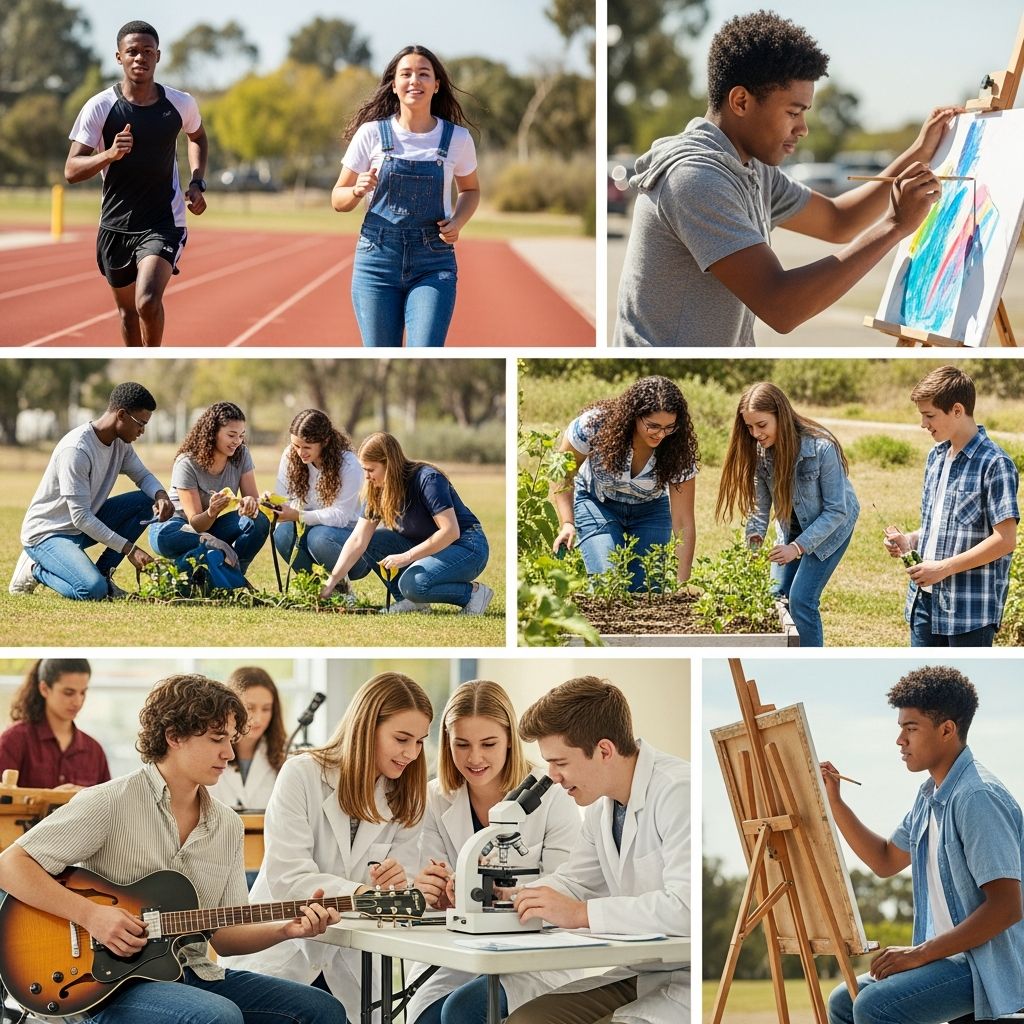
Extracurricular activities represent voluntary engagements outside standard academic curricula, offering students structured opportunities to explore passions, hone skills, and form connections. These pursuits, ranging from sports teams to debate clubs, play a pivotal role in holistic development by bridging classroom learning with real-world application.
Defining Extracurricular Engagement
At their core, extracurricular activities involve supervised, school-affiliated programs that occur beyond regular class hours. They encompass sports, arts, academic clubs, and community service, providing a platform for students to pursue interests not fully addressed in traditional education. Unlike co-curricular elements tied directly to coursework, these are elective and student-driven, fostering autonomy and initiative.
Participation rates vary, but studies indicate regular involvement correlates with enhanced outcomes. For instance, students engaging at least twice weekly show marked improvements in discipline and engagement.
Boosting Personal Growth and Resilience
One of the foremost advantages lies in personal development. Extracurriculars cultivate leadership by encouraging students to take charge in group projects or team roles, building confidence through tangible achievements. Time management emerges as a critical skill, as balancing schoolwork with practices demands prioritization and discipline.
- Resilience building: Overcoming setbacks in competitions or performances teaches perseverance.
- Self-confidence: Mastering new challenges leads to a stronger sense of self-worth.
- Goal setting: Structured activities instill habits of planning and follow-through.
Artistic endeavors like theater or music further promote emotional expression, aiding in stress relief and emotional regulation.
Enhancing Social Connections and Teamwork
Social benefits are profound, as these activities create environments for collaboration and diverse interactions. Students learn teamwork by working toward shared objectives, whether scoring goals or staging plays.
Communication skills sharpen through debates, presentations, or coaching interactions, while exposure to varied backgrounds fosters empathy and cultural awareness. Clubs centered on shared identities or interests provide belonging, crucial during transitional years like middle school.
| Activity Type | Social Skill Developed | Example Benefit |
|---|---|---|
| Sports Teams | Teamwork & Cooperation | Learning to support teammates under pressure |
| Clubs & Societies | Communication & Empathy | Building networks across diverse groups |
| Performing Arts | Interpersonal Dynamics | Navigating group rehearsals and feedback |
This table illustrates how different activities target specific social competencies, contributing to lifelong relational abilities.
Academic and Cognitive Gains
Far from detracting from studies, extracurriculars often elevate academic performance. Participants exhibit higher GPAs and positive school perceptions, with one study noting 56.9% of involved students viewing school favorably versus 37.5% of non-participants.
Practical application of concepts occurs in real scenarios—science clubs apply physics, while debate hones critical thinking. Motivation surges as students find purpose, reducing disengagement. Cognitive flexibility improves through problem-solving in varied contexts.
- Study clubs offer peer tutoring, bolstering weak areas.
- Music involvement links to better math proficiency.
- Overall, graduates from high school are more likely among participants.
Mental Health and Well-Being Improvements
Mental health benefits are well-documented. Involvement correlates with lower anxiety, depression, and screen time, alongside higher life satisfaction and optimism. Emotional outlets in arts reduce stress, while team settings combat isolation.
A 2023 Afterschool Alliance study found regular participants 18% less likely to consume alcohol, 39% less prone to marijuana use, and 28% less absent without cause. Parents overwhelmingly (89%) affirm support for emotional growth.
College and Career Readiness
For older students, extracurriculars distinguish applications. Admissions officers value demonstrated commitment, leadership, and diverse interests, signaling readiness for higher education.
Exploration aids major and career discovery—robotics might spark engineering pursuits. Soft skills like networking and responsibility transfer directly to professional settings.
Popular Extracurricular Options and Their Unique Value
Diverse choices cater to varied talents:
- Athletics: Promote fitness, discipline, and camaraderie; reduce depression risk into adulthood.
- Arts (Music, Theater, Visual): Enhance creativity, self-expression, and cognitive skills.
- Academic Clubs (Debate, Robotics, Science Olympiad): Deepen subject mastery and research abilities.
- Community Service/Volunteering: Instill civic duty and empathy.
- STEM/Tech Clubs: Prepare for innovative fields with hands-on projects.
Selecting based on interest ensures sustained engagement and maximum benefit.
Balancing Involvement for Optimal Outcomes
While benefits abound, moderation prevents burnout. Parents and educators should monitor schedules, prioritizing 2-3 activities. Schools can aid by offering flexible options, especially in virtual formats for accessibility.
Encourage passion-driven choices over resume-padding to sustain intrinsic motivation.
FAQs on Extracurricular Activities
What age is best to start extracurriculars?
Middle childhood (ages 9-13) is ideal for building belonging and skills, though earlier exposure via play-based activities lays foundations.
Do extracurriculars hurt grades?
No—participants often have higher GPAs and graduation rates due to improved engagement and time management.
How many activities should a student join?
2-3 per week balances benefits with rest; quality trumps quantity.
Are virtual extracurriculars effective?
Yes, they provide similar social and skill-building opportunities, especially for remote learners.
Can shy students benefit?
Absolutely—low-pressure clubs build confidence gradually through shared interests.
Empowering Students Through Extracurricular Paths
In summary, these activities forge well-rounded individuals equipped for life’s demands. From resilience to real-world skills, their impact endures, making them indispensable for modern education.
References
- What is an Extracurricular Activity? – Darrow School — Darrow School. 2023. https://www.darrowschool.org/admissions/admissions-blog/what-is-an-extracurricular-activity
- Extracurricular activities: what they are and their benefits — British School Barcelona. 2023. https://www.britishschoolbarcelona.com/blog/extracurricular-activities-what-they-are-and-their-benefits/
- Benefits of Extracurricular Activities | BASIS Charter Schools — BASIS Charter Schools. 2023. https://enrollbasis.com/benefits-of-extracurriculars/
- Benefits of Extracurricular Activities for Kids – WebMD — WebMD. 2023. https://www.webmd.com/parenting/benefits-extracurricular-activities-kids
- The Benefits of Extracurricular Activities – Wilson College Online — Wilson College. 2023. https://online.wilson.edu/resources/benefits-of-extracurricular-activities/
- Extracurricular Activities: Benefits and Balance — Parent and Teen. 2023. https://parentandteen.com/extracurricular-benefits-balance/
- Extracurricular Activities—Extra Beneficial: The Role of Motivation — PMC (PubMed Central). 2004-09-15. https://pmc.ncbi.nlm.nih.gov/articles/PMC12493012/

- Integrated M.A. in Applied Linguistics, University of Hyderabad
- 5+ years in editorial, instructional, SEO, and research-based writing
Sneha is a relationships and lifestyle writer with a strong foundation in applied linguistics and certified training in relationship coaching. She brings over five years of writing experience to theskillvault, crafting thoughtful, research-driven content that empowers readers to build healthier relationships, boost emotional well-being, and embrace holistic living. Her writing and insights reflect the belief that beauty, happiness, and wellness…