
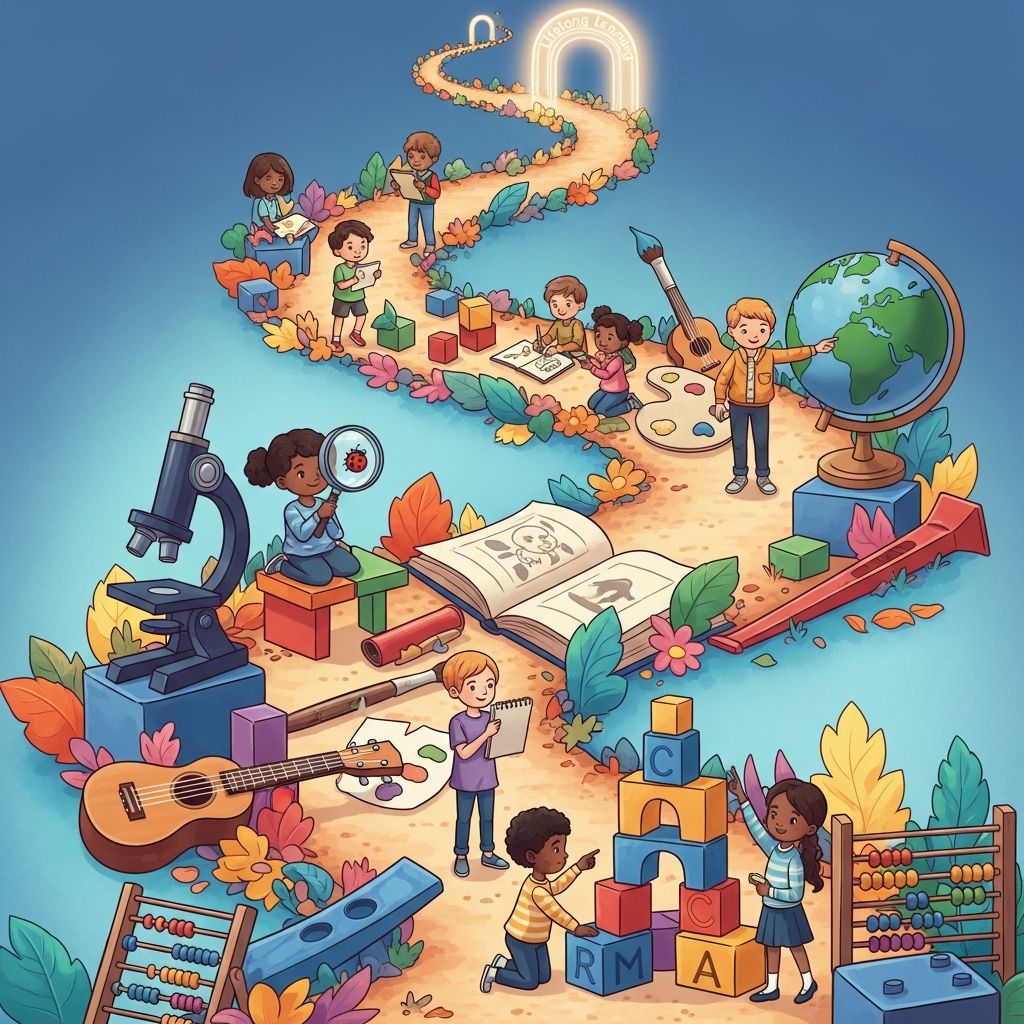
Play-based learning stands as a cornerstone of effective early childhood education, transforming traditional classrooms into vibrant hubs of discovery and growth. By harnessing children’s natural curiosity, this approach fosters holistic development across cognitive, social, emotional, and physical domains, setting the foundation for academic and personal success.
The Foundations of Play in Child Development
At its core, play is not mere recreation but a critical mechanism for brain development. Young children learn best through hands-on experiences that align with their developmental stages, allowing them to explore concepts in meaningful ways. Research highlights how play stimulates neural connections, enhancing memory, attention, and executive function skills essential for future learning.
Unlike rote memorization, play encourages active participation, where children experiment, fail, and iterate, building resilience and a growth mindset. This process-oriented method prioritizes the journey over outcomes, empowering kids to direct their own explorations while teachers provide subtle guidance.
Cognitive Growth Unleashed by Play
Play sharpens cognitive abilities by immersing children in problem-solving scenarios. Activities like building with blocks or sorting objects teach categorization, spatial reasoning, and cause-and-effect relationships. Studies show that children engaging in such play demonstrate improved memory recall and sustained concentration compared to those in structured drills.
Critical thinking flourishes as kids navigate open-ended challenges, hypothesizing and testing ideas. For instance, constructing a tower involves predicting stability and adjusting strategies, mirroring real-world scientific inquiry.
- Problem-Solving: Children devise solutions during puzzles or games, enhancing logical reasoning.
- Creativity: Open play sparks innovative thinking, as kids invent stories or inventions.
- Abstract Thinking: Pretend scenarios help grasp complex ideas like time or quantity.
Social and Emotional Foundations Built Through Interaction
Collaborative play is a powerful builder of social competencies. Group activities demand communication, negotiation, and empathy, teaching children to share perspectives and resolve conflicts peacefully. Imaginative role-play, such as pretending to be shopkeepers or doctors, cultivates emotional intelligence by allowing safe expression of feelings.
Emotionally, play creates a low-stakes environment for self-regulation. Children practice coping with frustration—when a block tower topples—and celebrate triumphs, fostering confidence and self-worth. Evidence from pediatric research links these experiences to long-term benefits, including stronger relationships and mental health.
| Skill Area | Play Example | Key Benefit |
|---|---|---|
| Social | Group pretend play | Develops empathy and teamwork |
| Emotional | Role-playing emotions | Builds resilience and self-awareness |
| Cognitive | Puzzle solving | Enhances focus and logic |
Physical Development Through Active Exploration
Dynamic play promotes gross and fine motor skills vital for overall health. Running, climbing, and manipulating small objects refine coordination, balance, and dexterity. These movements not only strengthen muscles but also support brain-body connections, improving readiness for writing and other academic tasks.
Incorporating sensory elements—like sand, water, or textured materials—further enriches physical learning, heightening awareness and sensory integration.
Guided Play: Balancing Freedom and Structure
While free play offers autonomy, guided play—where educators scaffold learning within playful contexts—yields superior outcomes. Teachers might introduce a ‘weather station’ during dramatic play to embed science vocabulary, boosting retention without stifling creativity. Research confirms guided play outperforms both free play and direct instruction in areas like vocabulary and spatial skills.
This hybrid model respects child agency while aligning with curriculum goals, making learning equitable and engaging across diverse backgrounds.
Practical Strategies for Playful Classrooms
Implementing play-based methods requires intentional design. Create flexible spaces with zones for building, role-play, and sensory exploration. Rotate materials to sustain interest and rotate based on themes like nature or community helpers.
- Observe Interests: Watch children’s play to tailor activities.
- Set Learning Intentions: Weave objectives into fun setups.
- Encourage Reflection: Prompt discussions on ‘what worked’ post-play.
- Partner with Families: Share home activity ideas for reinforcement.
At home, parents can replicate this with everyday items: kitchen tools for measuring math or dress-up clothes for storytelling.
Evidence from Research: Proven Long-Term Impacts
Decades of studies affirm play’s efficacy. A review by the American Academy of Pediatrics notes play-based participants excel in problem-solving and social-emotional domains, predicting better life outcomes. NAEYC research emphasizes guided play’s role in equitable skill-building, particularly for vocabulary and STEM concepts.
Comparative analyses show play trumps didactic methods in motivation and retention, with children sustaining attention longer and viewing learning positively.
Overcoming Challenges in Play-Centric Education
Critics worry about academic rigor, but data counters this: play enhances, not hinders, foundational skills. Time constraints can be addressed by integrating play daily in short bursts. Teacher training focuses on facilitation over instruction, ensuring confident implementation.
FAQs on Play-Based Learning
How does play-based learning differ from traditional methods?
It emphasizes child-led exploration over teacher-directed lessons, prioritizing process and joy for deeper understanding.
Can play-based learning prepare children for standardized tests?
Yes, by building critical thinking and focus, it equips kids with transferable skills outperforming rote prep.
What age group benefits most?
Primarily ages 3-8, when play aligns with rapid brain development.
How can parents support play at home?
Provide unstructured time with open-ended toys; join in without over-directing.
Is guided play better than free play?
Guided play combines freedom with targeted learning, showing greater gains in key skills.
Shaping Tomorrow’s Innovators Today
Embracing play redefines education as joyful, inclusive, and effective. By nurturing curious minds through exploration, we equip children not just to succeed, but to thrive in an unpredictable world.
References
- Benefits of Play Based Learning in Early Education — My Teaching Cupboard. 2023. https://www.myteachingcupboard.com/blog/benefits-of-play-based-learning
- Benefits of Play-Based Learning — The Goddard School. 2023. https://www.goddardschool.com/blog/benefits-of-play-in-learning
- The Power of Play-Based Learning in Early Childhood Education — Concordia University Nebraska. 2023. https://www.cune.edu/news/power-play-based-learning-early-childhood-education
- The Power of Playful Learning in the Early Childhood Setting — National Association for the Education of Young Children (NAEYC). 2022-06-01. https://www.naeyc.org/resources/pubs/yc/summer2022/power-playful-learning
- The Importance of Play-based Learning in Early Education — Institute of Education Sciences (IES). 2023. https://ies.ed.gov/learn/blog/prioritizing-play-importance-play-based-learning-early-education
- Why Play-Based Learning Matters, and Activities You Can Try at Home — CHS Learn. 2023. https://www.chslearn.org/resources/for-families/why-play-based-learning-matters-and-tips-you-can-try-at-home/

Medha Deb is an editor with a master's degree in Applied Linguistics from the University of Hyderabad. She believes that her qualification has helped her develop a deep understanding of language and its application in various contexts. Medha specializes in the areas of beauty, health, sports, and wellness and is committed to ensuring that the content on the website is…