
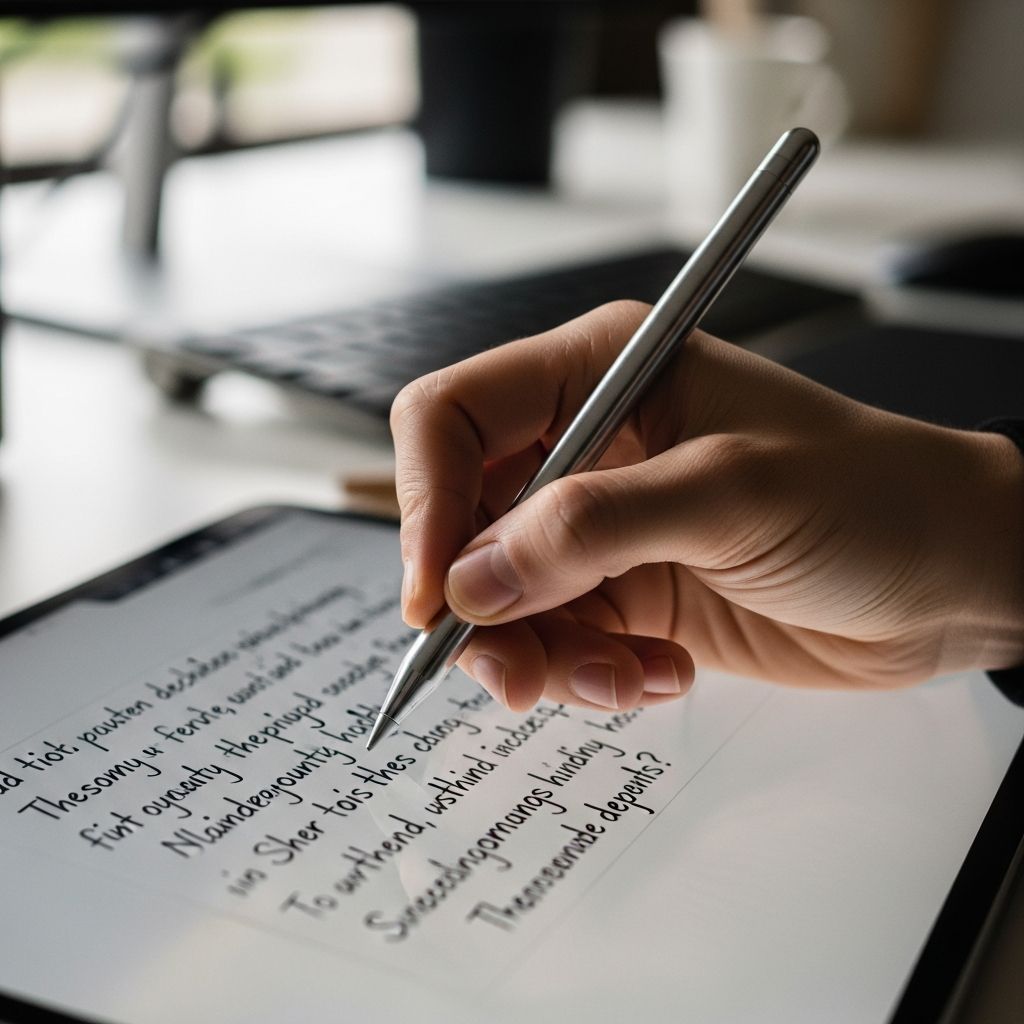
In an era dominated by keyboards and touchscreens, the skill of handwriting faces questions about its relevance. Yet, research underscores its profound impact on cognitive development, literacy acquisition, and overall academic performance. Far from obsolete, putting pen to paper activates unique brain pathways that digital alternatives cannot fully replicate.
The Cognitive Power of Penmanship
Handwriting engages multiple brain regions simultaneously, fostering deeper learning than typing. Neuroimaging studies reveal heightened neural activity when children form letters by hand compared to merely observing or keyboarding them. This process strengthens connections between visual recognition, motor control, and memory formation.
Specifically, the physical act of shaping letters reinforces letter identification and phonemic awareness—key predictors of reading success. Children who practice handwriting show improved recall of letter shapes, names, and sounds, laying a robust foundation for decoding words. Without this tactile experience, learners may struggle with foundational literacy skills.
Bridging Handwriting and Reading Proficiency
Handwriting instruction directly bolsters reading abilities, particularly in early education. Kindergarten programs emphasizing letter formation yield gains in spelling, word recognition, and comprehension. As fluency in writing letters develops, cognitive resources free up for higher-order tasks like understanding text meaning.
- Phonics integration: Writing words links sounds to symbols, enhancing phonological decoding.
- Vocabulary expansion: Automatic letter production allows focus on sentence structure and word relationships.
- Long-term retention: Handwritten notes outperform typed ones in memory tests due to elaborate brain encoding.
These benefits persist beyond preschool, with studies linking early handwriting practice to stronger reading and math outcomes through fifth grade.
Building Essential Motor Skills
Beyond academics, handwriting cultivates fine motor dexterity critical for daily tasks. Coordinating eyes, hands, and fingers to form precise strokes develops hand-eye coordination, grip strength, and spatial awareness. These skills underpin activities from buttoning clothes to playing instruments.
Young children progress from clumsy scribbles to legible script through repetition, automating complex movements via muscle memory. Deficiencies here can hinder broader physical development, affecting everything from sports to artistic pursuits.
| Skill Area | Handwriting Contribution | Long-Term Impact |
|---|---|---|
| Fine Motor Control | Precise finger and wrist movements | Improved dexterity for tools and crafts |
| Hand-Eye Coordination | Tracking letter paths on paper | Better performance in sports and drawing |
| Spatial Planning | Arranging letters on lines | Enhanced organization in writing and math |
Academic Performance and Assessment Realities
Despite digital shifts, handwriting dominates schoolwork, especially for younger students. Surveys indicate elementary children produce up to 90% of assignments by hand, while even older learners handwrite half their output. Legible penmanship influences essay scores and exam results, where poor script can obscure content quality.
Fast, fluent handwriting enables students to focus on ideas rather than mechanics during timed tests—a staple in formal qualifications. Early investment in these skills prevents underachievement and supports composition length and quality through high school.
Navigating the Digital vs. Traditional Debate
Typing offers speed for note-taking, but lacks handwriting’s depth for learning. Brain scans confirm handwritten practice activates learning centers more robustly, aiding retention for exams and creative tasks. Cursive, in particular, teaches fluid connections vital for signatures, historical documents, and teacher feedback.
Educators must balance both: digital tools for efficiency, handwriting for foundational growth. Programs integrating handwriting into fun activities—like story creation—sustain engagement while building skills.
Practical Strategies for Parents and Teachers
Incorporating handwriting need not be drudgery. Short daily sessions, as little as 15 minutes, yield significant gains in fluency and legibility.
- Start with play: Use sand trays or finger paints for letter formation.
- Personalize: Practice name-writing to spark motivation.
- Integrate subjects: Pair handwriting with journaling or math word problems.
- Model fluency: Share handwritten lists or letters.
Tools like lined paper and ergonomic grips aid beginners, transitioning to cursive for advanced flow. Consistent practice ensures automaticity, freeing mental energy for critical thinking.
Evidence from Research: Key Findings
Systematic reviews affirm handwriting’s role in literacy. A 2022 analysis found kindergarten instruction boosts reading metrics like letter knowledge and word reading. Longitudinal data ties preschool motor skills to fifth-grade achievement.
Even modest interventions prevent writing difficulties, emphasizing early, explicit teaching. These insights counter narratives dismissing handwriting amid tech proliferation.
Future Implications for Education
As curricula evolve, retaining handwriting alongside digital literacy prepares students holistically. Policymakers should prioritize it in standards, recognizing its irreplaceable cognitive and motor benefits.
By valuing this analog skill, we equip learners for a hybrid world where deep thinking and precise execution matter.
Frequently Asked Questions (FAQs)
Is handwriting still necessary with computers everywhere?
Yes, it uniquely supports brain development and literacy in ways typing cannot, per neuroscience research.
At what age should children learn handwriting?
Begin with scribbles around age two, formal instruction in preschool/kindergarten for optimal gains.
Does cursive matter today?
Absolutely—for fluency, signatures, and historical texts, enhancing overall writing speed.
How much practice is enough?
15-20 minutes daily builds fluency without overwhelming young learners.
Can poor handwriting affect grades?
Yes, illegible work impacts scoring on handwritten assessments common in schools.
References
- Why is Handwriting Important? — National Handwriting Association. Accessed 2026. https://nha-handwriting.org.uk/handwriting/why-is-handwriting-important/
- 7 Reasons Why Handwriting Is Important for Kids — Highlights for Children. 2023-10-15. https://parents.highlights.com/7-reasons-why-handwriting-important-kids
- The Importance of Handwriting for Today’s Students — EPS Learning. 2024-05-20. https://www.epslearning.com/insights/importance-of-handwriting
- Handwriting: Beneficial to Reading and Often Misunderstood — Iowa Reading Research Center, University of Iowa. 2024-07-01. https://irrc.education.uiowa.edu/blog/2024/07/handwriting-beneficial-reading-and-often-misunderstood
- The Neuroscience Behind Writing: Handwriting vs. Typing — PMC/NCBI. 2024. https://pmc.ncbi.nlm.nih.gov/articles/PMC11943480/
- The Importance of Teaching Handwriting — Reading Rockets. 2023. https://www.readingrockets.org/topics/writing/articles/importance-teaching-handwriting

- Integrated M.A. in Applied Linguistics, University of Hyderabad
- 5+ years in editorial, instructional, SEO, and research-based writing
Sneha is a relationships and lifestyle writer with a strong foundation in applied linguistics and certified training in relationship coaching. She brings over five years of writing experience to theskillvault, crafting thoughtful, research-driven content that empowers readers to build healthier relationships, boost emotional well-being, and embrace holistic living. Her writing and insights reflect the belief that beauty, happiness, and wellness…